Russia

Has Putin resurrected the West?

From our UK edition

I think Putin will have been surprised. I mean: I was surprised. Weren’t you? Not, necessarily, that Ukraine should have been resisting as valiantly as it is; nor even that Russia’s supposedly unstoppable war machine should have found itself out of petrol on a chilly highway from which the road signs have been removed. But surprised by the sheer force and volume and unanimity of the international cry of: no, this will not stand. That is one thing, even amid the unspeakable human cost of the war in Ukraine, to feel encouraged by. If this invasion does, as many have said, mark the beginning of a new order in European security and great power politics, isn’t it a sign that it could be a stronger, better, less complacent one?
Yes, Russia could use nuclear weapons

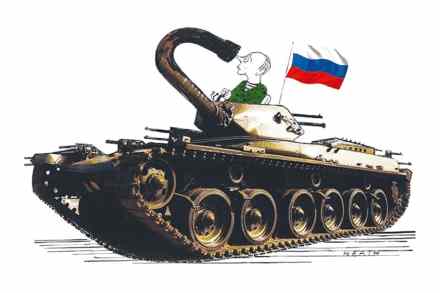
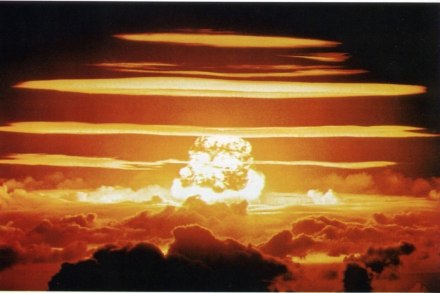
“Nuclear war is part of our strategic culture. Yes, we would start one if our homeland, our way of life, was threatened, absolutely. Why wouldn't we?” That’s what a retired Russian diplomat told me on the sidelines of a track-two dialogue between US, Russian and Chinese experts back in 2012. And to be honest, for several years, I didn’t believe him. I took his comments as bragging, atomic machismo, if you will. The context of the conversation was a response to a question to my Russian colleague on the subject of Moscow’s nuclear weapons doctrine and thinking. Russia for several years has believed in the concept of escalating nuclear tensions to deescalate tensions, or what defense scholars call “escalate to deescalate.

Biden’s confusion over sanctions

Russia’s military aggression against Ukraine requires a swift and effective Western response. But according to neoconservative and liberal internationalist pundits like columnist Walter Russell Mead, the invasion marks nothing less than an assault on the “world order” akin to Nazi aggression at the opening of World War II. “Not since Hitler attacked the Soviet Union in 1941 has a European leader committed an act of aggression as brutal or as nakedly cynical as Mr. Putin’s unprovoked attack on Ukraine,” Mead writes in the Wall Street Journal.

War in Ukraine has divided Putin’s court

From our UK edition

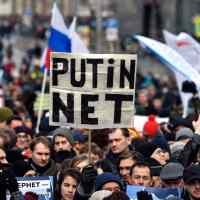
It is striking how little enthusiasm there is in Russia for Vladimir Putin’s war in Ukraine – but for some, it has become an opportunity to steal a march and curry favour with the boss. Thousands of Russians have been out on the streets protesting against the conflict, despite the heavy-handed and unstinting response of the security forces. Journalists and experts, sports stars and cultural icons have been making their opposition clear as well. Even those within the system, including senior diplomats and businesspeople, aren’t trying to hide how far they were blindsided by Putin’s decision to invade, and how little they appreciated it.

The end of the post-Cold War era

From our UK edition

Russia’s invasion is not just an effort to retake what was once part of the Soviet Union. It is a push to use military force to overturn the post-Cold War settlement. In fact, the invasion cannot be understood without first understanding what that settlement looked like and why Russia wants to overturn it, despite the high costs. In the 1980s, when Vladimir Putin was a KGB agent in East Germany, the Soviet Union had become an arteriosclerotic state. It was unable to keep up with the US in high-technology arms, unable to legitimate its rule with Marxist-Leninist ideology, and unable to afford the cost of maintaining its empire in Eastern Europe.

A new Europe is emerging from this crisis

From our UK edition

With every hour that Kiev holds out, the geopolitics of Europe changes more. Germany, which so values its prohibition on sending weapons into warzones, has just announced that it is sending 1,000 anti-tank weapons and 500 Stinger missiles to support the Ukrainian forces. I expect that defence spending will rise considerably in the coming years Germany is also allowing other Nato members to export arms with German-made parts to Ukraine — which will make a material difference to the supplies that the Ukrainian government receives. Yesterday evening, it was announced that Russian banks are going to be cut off from Swift.

China is tying itself in knots over Ukraine

From our UK edition

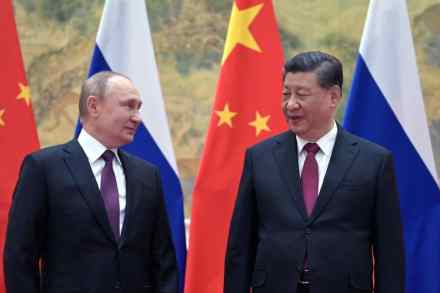
A few hours after Vladimir Putin sent his tanks into Ukraine, Beijing announced that Russian wheat, previously barred because of fungal contamination, was now disease-free and large scale imports to China would begin. It was a first tangible sign of Xi Jinping’s willingness to cushion the blow of western sanctions on the Russian economy, and in effect underwrite Putin’s Ukrainian aggression. Russia is one of the world’s biggest wheat producers, and trade is highly vulnerable to western restrictions. China’s wheat lifeline followed the signing last month of a 30-year contract for Russia to supply natural gas to China’s north east and a commitment to far greater energy cooperation.

It’s time for Germany to stand up to Russia

From our UK edition

In his novel The Loyal Subject, which appeared on the eve of the first world war, Heinrich Mann, the brother of Thomas, satirised Wilhelmine Germany as a hotbed of chauvinistic nationalism. The servile nationalism that Mann mocked could not be further from the ethos of the Federal Republic of Germany today. So pervasive is Germany’s eirenic disposition that on Thursday, as Russian president Vladimir Putin ravaged Ukraine, Lieutenant General Alfons Mais, the head of the German army, took the unusual step of turning to LinkedIn to ventilate his exasperation at the impotence of his own fighting forces. ‘In my 41st year of peace-time service, I would not have thought that I would have to experience a war,’ Mais stated on Thursday.

No, China isn’t about to invade Taiwan

I have a medal for winning the Cold War. And I'm not alone — they were awarded to all members of the military and federal civilian employees who served during the Cold War. That included me, at the tail end, with the State Department. Ironically, my so-called Cold War service was in Taiwan. I probably should return the thing; the Cold War is far from over. Part of the Cold War's real conclusion is playing out in Ukraine in real time. Is Taiwan, another hanging chad from that era, next? Is President Xi watching a weakened America giving in to the Russians and seeing his chance to seize Taiwan? Nope. Taiwan is not Ukraine is not Taiwan. The two places only exist next to each other in articles like this one because both are the results of American policy.

Are Russians turning against Putin?

From our UK edition

One of the reasons why I judged — wrongly — that Vladimir Putin would not order an all-out invasion of Ukraine was the likelihood of a protracted war. But another was the possibility of popular protest in Russia, which could have potentially destabilising effects on the Kremlin. After sporadic protests in the hours immediately after the invasion, all of them ending in arrests or dispersal by police — citing Covid restrictions — Thursday evening sprang a surprise. Young people came out in their hundreds with homemade placards saying 'nyet voine', no to war, not just in Moscow and St Petersburg, where political engagement tends to be higher, but in nearly 50 towns and cities across Russia. https://twitter.com/ragipsoylu/status/1496905869983768581?

To hurt Putin, go for oil and gas – not Swift

From our UK edition

Both the British and the Americans have been explicit that it is the Europeans who are blocking Russia being cut from Swift. Removing Russia would be a sound step, but it is far less important than a western agreement not to buy Russian oil and gas would be. Sadly, though, there is little chance of this happening — too many countries are dependent on Russian gas — which means $700 million a day will continue to flow into Moscow, strengthening the Kremlin’s belief that it can ride out whatever sanctions are imposed on it. Depressing as this may be, there are things the UK can do using domestic law that would inflict pain on the Putin circle.

Is Britain prepared for the cost of sanctions?

From our UK edition

Sanctions hit both sides: this is a point that Joe Biden has made to Americans and Olaf Scholz is making to Germans. But Boris Johnson is not (so far) talking about the economic implications of this war. They will be — and in fact, already are — profound.  When Russian tanks moved into Ukraine, the price of gas for next-day delivery in the UK shot up 40 per cent. A study by Investec yesterday suggested this means typical household energy bills — already expected to approach £2,000 in April — could end up closer to £3,000. Quite a hit for a country already facing a cost-of-living crisis. And this is just one way in which the conflict could impact household budgets.

Will the West shut Russia out of Swift?

From our UK edition

You may never have heard of the Society for Worldwide Interbank Financial Telecommunications — or at least not by its full name. Even if you had you may have mistaken it for a fairly inconsequential trade body that holds rather dull conferences in hotel function rooms in places like Frankfurt.  Yet it finds itself at the centre of the West’s response against Vladimir Putin. Swift, as it is otherwise known, is the system by which banks communicate in order to undertake cross-border financial transactions. This morning the Ukrainian foreign minister pleaded with the West to cut off Russia from the system. Britain would like to do just that, as would some of the smaller EU states.

Putin’s path to war in three speeches

With regard to the illegal war being waged by Russia against Ukraine, no one has any right to be surprised. For all the understandable and justifiable outrage over Russian president Vladimir Putin’s decision to abandon diplomacy and launch what appears to be an unprovoked act of aggression, a look at prior statements by Mr. Putin shows that, with the passage of time, patience and rationality gave way to irrationally, paranoia and ultimately the decision to launch an armed conflict. Any proper accounting of the history of the downturn in US-Russia relations must include Putin’s 2007 address to the Munich Security Conference. To many, this was a kind of point of no return, with Putin putting the US and its European allies on notice: there are red lines not to be crossed.

The stakes for Europe are even higher than in 1938

Any analysis of the Ukraine situation risks lagging behind the news. As of the time this article was published, Russia had conquered the former Chernobyl nuclear power plant. Its forces are only about sixty miles away from Ukraine’s capital, Kyiv, which has already experienced shelling. Russians have also attempted to capture Antonov International Airport, just fifteen minutes away from the capital’s ring road. Meanwhile, European leaders are resorting to the usual responses: “concerned,” “strongly condemning." There is even a Twitter account mocking the EU’s approach to all major crises, called “Is EU Concerned?” The response to the invasion of Ukraine is not spared from similar mockery. Here in Europe, it feels like 1938 all over again.

ukraine

Let Russia choke on Ukraine

At least for the moment, it looks like Russian president Vladimir Putin is intent on conquering Ukraine, a nation he's never believed has the right to exist. While the fog of war always limits accurate real-time military analysis, it seems for now that Russia has committed to annexing at least large sections of Ukraine and is winning the day militarily with ease. Of course, the media has predictably gone into overdrive, warning of World War Three, gas prices that will stay high for years and perhaps even Putin attacking NATO and nuclear war. But let’s put away the hysterics for a moment and think about the here and now. Russia’s goal in Ukraine has always been clear and does not involve war on NATO or even conquering Ukraine in its entirety.

The Ukraine invasion is good news for Wall Street

From our UK edition

Don’t be fooled by the pictures that will shortly start to emerge of traders apparently tearing their hair out against of backdrop of red screens. A proper crisis is exactly what Wall Street traders want — to provoke yet another stimulus package, as well as the cancellation of interest rate rises. In the Alice in Wonderland world of bubblenomics, bad news is good, and good news is bad. If we have good economic figures, there is a danger that the Fed, the Bank of England and other central banks will take away the punch bowl. On the other hand, all we need is a sudden crisis that gives the impression, however briefly, that the world is coming to an end — and back will come the bowl, with an even stronger mix than before.

Read: The Prime Minister’s address to the nation as Russia invades Ukraine

From our UK edition

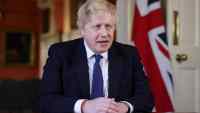
Shortly after 4 o’clock this morning I spoke to President Zelensky of Ukraine to offer the continued support of the UK, because our worst fears have now come true and all our warnings have proved tragically accurate President Putin of Russia has unleashed war in our European continent. He has attacked a friendly country without any provocation and without any credible excuse. Innumerable missiles and bombs have been raining down on an entirely innocent population. A vast invasion is underway — by land, by sea, and by air. And this is not, in the infamous phrase, some faraway country of which we know little. We have Ukrainian friends in this country; neighbours, co-workers.