Russia

Starmer leads on oligarchs at a strange PMQs

From our UK edition

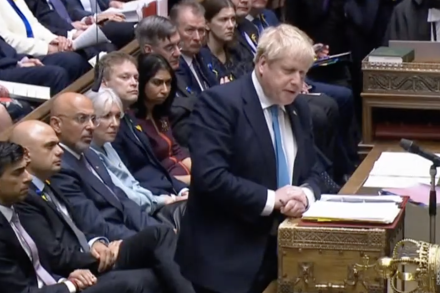
Prime Minister's Questions today had a strange tonal disconnect to it. The session began with a standing ovation for the Ukrainian ambassador Vadym Prystaiko, who was watching from the gallery. Normally, clapping is banned in the Commons, but today the Speaker tore up protocol and MPs from across the house (and journalists, who by convention don't clap anything) stood up to applaud Prystaiko. It was a moving moment. But it was not matched by the tone of Boris Johnson, either in his exchanges with Keir Starmer or indeed in the rest of the session. The Labour leader chose to focus on sanctions and economic crime.
No-fly zones won’t work, but what about aid to Ukraine?

From our UK edition

Vladimir Putin's forces are encircling the cities of Kharkiv, Kherson and Mariupol, and a 40 mile-long convoy of Russian armoured vehicles is north of Kiev on the seventh day of fighting in Ukraine. The coming days are likely to see greater barbarity from the Russian President after he failed to get his way in the first few days of the invasion. Those days are also likely to stretch into weeks as Putin lays siege to these cities until they are his. The debate about what the West should be doing to needs to widen out So far the political debate in the West has been dominated by a noisy argument about a no-fly zone: something all leaders have repeatedly ruled out on the grounds that it would lead to direct combat between Nato and Russia.

The Putin apologists of the European parliament

From our UK edition

Never underestimate Vladimir Putin, and certainly never underestimate his advisers. Well before the first Russian rockets exploded in metropolitan Kiev, he had achieved a major foreign policy success by sabotaging the EU’s ability to present a united front against him. Ever since the days of Gerhard Schroeder, Russia had deftly weaponised German politicians’ commitment to Ostpolitik and German people’s desire for a comfortable bourgeois life, and this undoubtedly paid off. Before the invasion the EU’s paymaster was less than enthusiastic about sanctions when reminded of the sunk costs of Nord Stream 2 and its short-sighted but temporarily lucrative decision to depend both on Russian gas and the profits it made by selling the machinery to extract it.

The creeping authoritarianism of facial recognition

In an effort to lower crime rates, American law enforcement is pushing to combine facial recognition with expanded video surveillance. Politicians worried about their re-election chances due to a perceived crime wave see the expansion as necessary. It’s a sharp swing from 2019 and 2020, when cities like San Francisco and New Orleans were banning or at least enacting limits on facial recognition technology due to privacy concerns. Now, New Orleans plans to roll back its facial recognition prohibition. The Virginia State Senate gave law enforcement a late Valentine’s Day gift by passing a facial recognition expansion bill on February 15 — the Democrats who unanimously approved a ban on facial recognition last year suddenly changed their minds, as did five Republicans.

Putin is making the EU great again

The Europeans have been jolted awake from their deep Pax Americana slumber, when the continent was largely content to eat the spoils of economic prosperity and allow the United States to do the heavy lifting on all things security. And we have Vladimir Putin to thank for it. Russia’s nearly week-long invasion of Ukraine has shocked the conscience of many who believed Europe would never return to the dark days of large-scale land warfare.

Will grandees return their Russian honours?

From our UK edition

It's five days since Vladimir Putin invaded Ukraine and there's no sign of the pressure letting up. Arms continue to be exported across Europe to aid Kiev's war effort while financial penalties continue to be applied. The latest sanctions levied against Russian banks include cutting them off from Visa and Mastercard, and consequently Apple Pay and Google Pay.   But it's not just in the military, diplomatic and economic spheres that Moscow is being targeted. Cultural boycotts threaten to wreck Russia's aspirations of World Cup glory in Qatar this summer while Eurovision has also announced the country will not be welcome. One act of individual defiance is the return of honours given by Putin's state to notable individuals across Europe.

Boris rules out a no-fly zone over Ukraine

From our UK edition

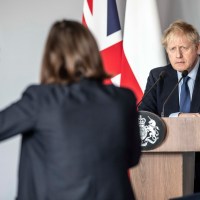
What can the UK do to ensure that Vladimir Putin fails in Ukraine? The Prime Minister has just given a press conference in Poland with his counterpart Mateusz Morawiecki where he repeated his assertion that 'Putin will fail' and that the West 'will succeed in protecting and preserving a sovereign, independent and democratic Ukraine'. The Russian president, he said, had underestimated the resolve of Ukraine and its allies.

llya Kaminsky

Ilya Kaminsky’s poetry in a time of war

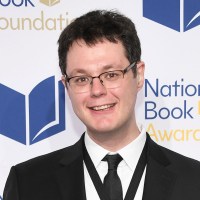
There is currently a poem going viral on Twitter. “We Lived Happily During the War” is by the Ukrainian-American poet Ilya Kaminsky, and it is the first poem of his prize-winning collection Deaf Republic (2019). It is easy to see why it feels particularly relevant: Kaminsky was born in the former Soviet city of Odessa, which is now under attack from Russia. The poem opens: “We Lived Happily During the War” And when they bombed other people’s houses, we protested but not enough, we opposed them but not enough. It is a heart-breaking meditation on the way normal life continues despite crises. The speaker describes how “I took a chair outside and watched the sun.” But he ends with a plea: “we (forgive us) / lived happily during the war.

Has Putin’s invasion changed the world order?

From our UK edition

Is Russia’s invasion of Ukraine ‘a turning point in history’? Does it spell the end of the American era, and the beginning of a new Cold War between the West and a Russo-Chinese axis of authoritarians? Some invoke the image of 1939. After assuring the world that he was interested only in protecting his fellow Germans in the Sudetenland, Adolf Hitler annexed the rest of Czechoslovakia and then invaded Poland, setting off world war two. Are the Russians in the Donbass the modern equivalents of the Sudeten Germans? Where will Putin stop? Others draw an analogy to 1948 and Stalin’s drawing of an Iron Curtain across Eastern Europe, followed by the Sino-Soviet axis in Asia after the Communists took over China in 1949.

taiwan

What does Ukraine really mean for Taiwan?

No one should think that Vladimir Putin’s invasion of Ukraine means that Xi Jinping will decide to use force against Taiwan anytime soon, if ever. China is not Russia, nor Taiwan Ukraine. Yet neither should policymakers presume that Beijing will not be influenced by what happens on the other end of Eurasia. Washington must consider whether and how Putin’s aggression has raised the stakes in defending Taiwan from the People’s Republic of China. At the least, US strategists will seriously have to assess whether a global environment in which norms of international behavior are regressing may serve to spur Beijing to military action that once seemed unlikely.

The GOP isn’t quitting on Trump

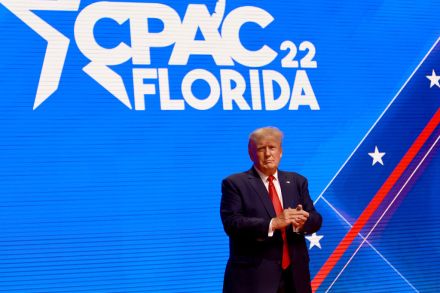
Will he or won't he? Americans tired of the rampant speculation are surely having a relief-filled two months. First Tampa Bay Buccaneers quarterback Tom Brady responded to a hasty ESPN report by announcing his retirement from the NFL. Then, former president Donald Trump told a roaring crowd at CPAC that he intends to run for America's highest office a third time. "We did it twice, and we’ll do it again,” Trump said. “We’re going to be doing it again." Trump's announcement is a gut punch for other 2024 contenders who secretly hoped he'd step back and play kingmaker.

Putin’s endgame is preserving ‘his’ Russia

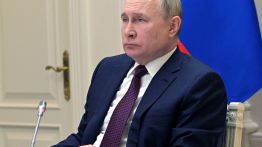
Vladimir Putin’s war in Ukraine does not appear to be going well, and the Russian economy is about to experience the full force of Western sanctions. American social media is already in a celebratory mood. But caution is in order — it’s never smart to underestimate your opponent. Putin was expecting sanctions, and he and his war planners could not have discounted Ukrainian resistance, even if they underestimated its intensity. Maybe they did expect the invasion to be a cakewalk and are taken aback by how difficult it’s proved to be in just these first few days. But as of now the invasion still seems to be on its timetable, and its military objectives are achievable. Russians are surrounding Kyiv.

Liz Truss is having a good war

From our UK edition

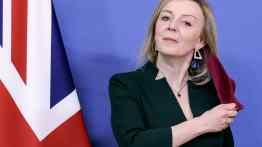
Liz Truss gave a striking statement in the Commons this afternoon on the action the government was taking to respond to the Russian invasion of Ukraine. It contrasted to the approach taken by some of her colleagues, because it contained a number of admissions about the impact of this action. For the first time, the Foreign Secretary stated that Britain would 'have to undergo some economic hardship as a result of our sanctions'. This has been implicit over the past few days, but Truss was the first to say it clearly. She added that 'our hardships are nothing compared to those endured by the people of Ukraine', and also warned that the war could last months or years.

‘Staying Switzerland’ on Ukraine is impossible

From our UK edition

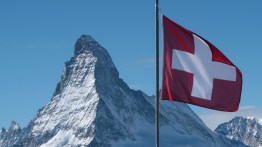
The striking thing about the financial sanctions on Russia is not their severity, but just how many countries are joining in the effort. Switzerland has today announced that it will adopt the EU sanctions on Russia, particularly significant because it has been the biggest recipient of private transfers by Russians in recent years. The fact that such a traditionally neutral country is imposing sanctions will deepen the wedge between Putin and the rest of the ruling elite. Meanwhile in Asia, Japan, South Korea and Singapore have signed on to the economic measures on Russia.

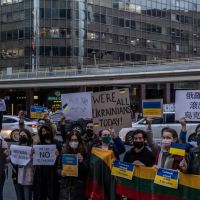
Will Britain welcome Ukrainian refugees?

From our UK edition

Immigration used to be the most-discussed issue in British politics. It gets less attention these days, for reasons too varied to go into here. But even though some voters have been focused on other things, there have been significant changes. Some have been good. Others bad. And the bad ones are about to collide with the Ukrainian crisis. The positive bits of the immigration story have mainly been around regulated, economically-driven migration. Britain’s post-EU migration regime is, well, not as bad as it could have been. It’s not as easy as it was for EU nationals to come here to work, but it’s a bit easier for non-EU nationals to enter. The overall effect has been less a tightening of entry rules than a rebalancing.

takes

And now the dumbest takes about Ukraine

If hot takes brought peace, mankind would never know war again. At least, that’s the impression one is left with after spending time on Twitter during Russia’s horrific invasion of Ukraine. Some social media users seem to operate under the understanding that they are legally required to put their first — and often worst — opinions immediately onto the internet for all to see. Many of these tweets reflect the understandable human tendency to grasp at an explanation for terrible events. Laurie Garrett, a Pulitzer Prize-winning writer who is considered an oracle of sorts on the coronavirus pandemic, put forth an interesting theory. “It’s been suggested that #Putin isn’t thinking properly, perhaps due to long #COVID19,” she wrote.

Germany has rejected Merkel’s military legacy

From our UK edition

‘We are witnessing a turning point… the world is not the same anymore,’ said German Chancellor Olaf Scholz yesterday in a speech that will be remembered as the country’s biggest military shift since 1945. Staring down the barrel of Putin’s gun, Scholz announced a massive and immediate cash injection for Germany’s armed forces as well as a long-term commitment to higher defence spending. Russia’s unprovoked attack on Ukraine has pulled Germany out of decades of complacency and misguided pacifism. Foreign minister Annalena Baerbock seemed genuinely shocked at the discrepancy between Putin’s words during her visit to Moscow last month and his actions in Ukraine. She has said she feels betrayed: ‘stone-cold lied to.