Ronald reagan

The moral cost of inflation

From our US edition

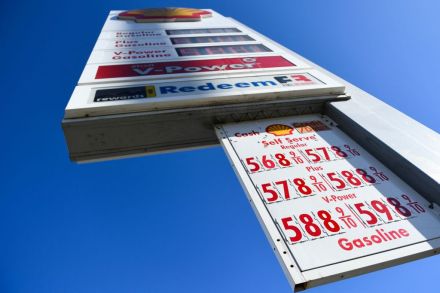
Inflation is about far more than rising prices. In this excerpt adapted from Inflation: What It Is, Why It’s Bad — and How to Fix It, the book’s authors explain how the debasement of money ultimately corrupts society. The scenario is fairly standard: central banks devalue money; prices shoot up. Governments look for ways to tamp down inflation by keeping people from spending. They also respond with price controls, capital controls, higher taxes. Governments grow larger and often impose more constraints. People lose their freedom, and worse.

inflation

Has liberalism destroyed itself?

According to Vladimir Putin, liberalism is an ‘obsolete’ doctrine, a worn-out political philosophy no longer fit for purpose. In this well-timed, rather urgent book, Francis Fukuyama attacks that view and puts a vigorous case for the defence. Despite its faults, liberalism is a force for good, he says, and it remains the only political philosophy capable of taking on the authoritarians of Moscow and Beijing. But the despots are not the central focus of his argument. The biggest threats to the liberal society, he writes, come from within. In Fukuyama’s crisp retelling, the liberal ideal emerged in the aftermath of Europe’s wars of religion. The notion that people could only exist as part of a rigid group had led to division, antagonism and slaughter.

How we got to inflation

From our US edition

And just when everything was looking so tidy — the Ukraine war, a new Covid subvariant, mass shootings, a woked-up Disney operation — what should come along to light up our lives but 8.5 percent inflation? And who, I ask you, ought to wonder? Like acid reflux and obstreperous two-year-olds, inflation ranks high among human durable goods: always looming, never gone for long, even when it pulls back, and even then leaving its indelible marks. This, due to another human durable: the determination of governments, autocratic as well as democratic, to mishandle the pretended spreading of economic joy.

bewilderment

How to avoid World War Three

From our US edition

The Russian assault on Ukraine has awakened the West to the fact that we may be back in a Cold War — or worse. After a few decades’ respite in which the United States did not find itself in conflict with any nuclear powers, presidents must consider a world in which nuclear-armed Russia and China actively oppose US interests and deliberately test American resolve. This reality will become even more complicated if a hostile Iran gets its hands nuclear weapons too. The return of Cold War-style geopolitics means the return of Cold War-style statecraft. Presidents will once again face the difficult task of calibrating their actions to advance US goals while avoiding escalation toward possible nuclear confrontation.

presidents
populists

Revenge of the populists

From our US edition

In February 2021 the FBI indicted L. Brent Bozell IV for crimes committed during the Capitol riot. The significance of Bozell’s presence in the rabble that broke into the Senate chamber was not lost on the media. “Mr. Bozell’s father is a high-profile right-wing activist known for infusing his politics with Christian values,” the New York Times mentioned in its write-up of the arrest. And Bozell’s grandfather, L. Brent Bozell Jr., had been William F. Buckley Jr.’s debate partner, Joseph McCarthy’s and Barry Goldwater’s ghostwriter, the founder of Triumph and organizer of the first anti-abortion protest in the United States. Liberal critics traced the arc of the American right from Bozell Jr.

What would have happened in the Falklands if Thatcher had been a man?

Argentina invaded the Falkland Islands 40 years ago. I had joined the Daily Telegraph as a reporter in 1979 and was by then a leader writer. The Falklands was the first really seismic story I had encountered. What made it so exciting was that it was both genuinely absurd and genuinely important. The absurdity lay in Argentina’s vainglory. It violently claimed a right to the islands which not one single Falklands resident accepted. Its caudillo, General Galtieri, was from the comic-opera school of Latin American dictators, covered with gold braid and frequently drunk. In his invasion broadcast, he invoked the Virgin Mary. But Our Lady wisely ducked the contest, leaving the Iron Lady to sort it out.

When actors become politicians

From our US edition

The similarities between acting and politics are obvious. Someone stands on a stage, wearing makeup and an appropriate costume. With suitable gravitas, they read out a speech that someone else has written. If it goes well, there is applause. (If not, there can be booing, or a riot.) If they are good at their job, they can continue at a high-profile level for a considerable time, and arouse great public affection. If they are not, they are either swiftly forgotten or, at worst, become a figure of public loathing, a status that they might never live down for their rest of their lives.

P.J. O’Rourke, a conservative of enjoyment

From our US edition

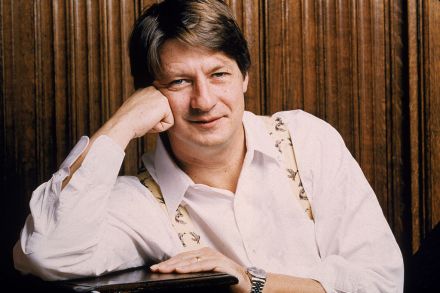
The politics of the moment are pompous, bilious, unforgiving, over-stuffed, hypocritical beyond the normal standards for political hypocrisy: in other words, designed — as if by divine ordinance — for the gifts of P.J. O’Rourke. I must add, I’m afraid, the late P.J. Rourke. He died the day after Valentine’s Day due to complications from cancer, at age seventy-four. RIP. The world hadn’t heard a great deal about him in a while, likely because he was ailing. This was rotten timing. The current Washington DC sideshow reflects and confirms what Patrick Jake O’Rourke had been saying about politics for some long while. Such as: “I believe in original sin, and politics may be its name.

p.j. o’rourke

Sleep is Joe Biden’s superpower

From our US edition

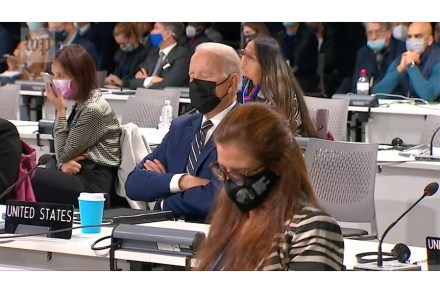
As usual, P.G. Wodehouse put it best. “What is it Shakespeare calls sleep, Jeeves?,” Bertie Wooster inquires of his faithful manservant. “Tired Nature’s sweet restorer sir.” "Exactly. Well there you are, then,” Bertie complacently concurs. Perhaps it was this exchange that President Biden was pondering during the opening speeches at the COP26 when he apparently dozed off. A variety of interpretations of Biden’s behavior are possible. A charitable one is that he was behaving like any rational human being listening to a bunch of self-important gasbags would and simply tuned out. Another one, assiduously touted by his detractors, is that the old duffer simply can’t hack it any longer. Take him out in public for a few hours and it isn’t sleepy but somnolent Joe.

sleep

The straitened situation of conservatism

From our US edition

For the past seven and a half decades Western politicians have been exhorting voters to ‘believe’ or ‘have faith’ in democracy. They should have been addressing themselves instead. The unpleasant truth is that 20th- and 21st-century politicians on the right have never believed that constitutional democracy based roughly on the American model could ever satisfy the masses by giving them the material loot and freedom they expect, while those on the left have always thought it does not go far enough in granting themselves the power and authority they require.

conservatism

Let the president play on the beach or the golf course

From our US edition

Every president is criticized, sooner or later, for taking too many days off, for lounging around when we’ve hired him to work. Since the media hates Republicans, that criticism is usually directed at them, but even some liberal publications have noticed that — shock! — Democratic presidents play golf, too. That criticism, most recently in Amber Athey’s article in The Spectator, is wrong. It misses the bigger, more important issues — and not just because our country would be well served if most presidents did less, not more. It’s fun to compare the President with Ferris Bueller’s Day Off, but there are three problems with criticizing presidents for escaping to their beach house in Delaware or their ranch in Texas or California.

president

There is no appetite for the Paul Ryan doctrine

From our US edition

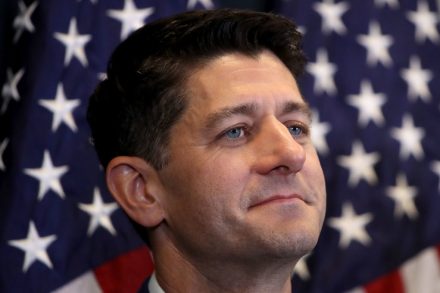
After whispering a prayer to St Ronald Reagan, Paul Ryan rose to his feet, solemnly kissed his bible, Atlas Shrugged, and gave a speech at the Gipper's presidential library in Simi Valley about the perils of personality cults. Though the former Republican House speaker did not attack Donald Trump directly on Thursday, it was obvious who was on his mind. 'If the conservative cause depends on the populist appeal of one personality, or on second-rate imitations, then we're not going anywhere,' Ryan said. And if the conservative movement fails, he warned, 'it will be because we gave too much allegiance to one passing political figure, and weren't loyal enough to our principles'. Ryan also called the audience away from the culture war.

paul ryan

What Walter Mondale meant

From our US edition

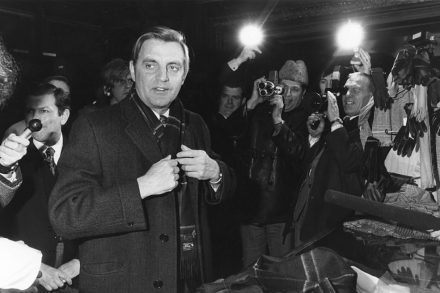
Walter Mondale, who has died aged 93, is destined to be a trivia question: 'which die-hard liberal did Reagan beat by a landslide in 1984?’ That’s unfair. He had brains, looks and a presidential temperament. He was just out of time. Here’s my Mondale anecdote. I interviewed him for my PhD in 2005 at his office in Minneapolis. He offered me a coffee; I said yes, and was then stunned when he got up from his desk and made it himself. This is unheard of in US politics. 'I can’t wait to tell the folks back home that a vice president of the United States made me coffee,’ I said. Mondale sighed. 'Nowadays,’ he replied, 'it’s nice just to have something to do.’ He had a great sense of humor; the problem was it was deadpan and it paled in comparison to Reagan’s.

walter mondale

The quick-witted Russian who saved millions of lives

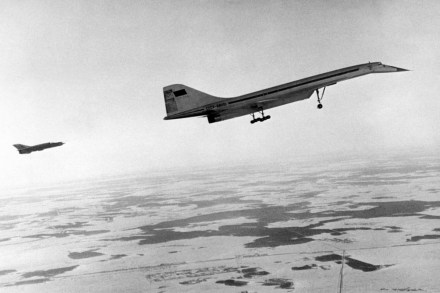
Spectator contributors were asked: Which moment from history seems most significant or interesting? Here is Dominic Cummings’s answer: In the early morning of 26 September 1983, Stanislav Petrov of the Soviet Union’s Air Defence Force was on duty, monitoring his country’s satellite system, when the siren sounded. His computer indicated that the US had just launched five nuclear-armed intercontinental ballistic missiles, and protocol required him to notify superiors immediately. Soviet strategy was to ‘launch on warning’, and many in Moscow believed Ronald Reagan was planning a first strike.  But Petrov had a gut feeling this was a false alarm. Five missiles seemed too few, and the system itself was new.

Republican resurrection

From our US edition

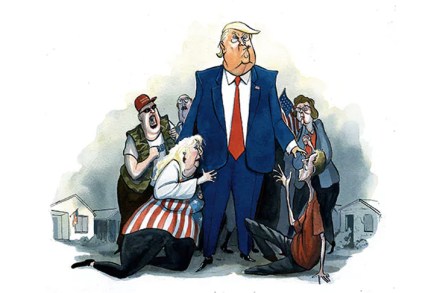
When Donald Trump took his famous escalator ride, the Republican party was too attached to abstract principles at the expense of the material interests of its own voters. It wasn’t even doing a particularly good job of adhering to its preferred ideological abstractions. Whatever the Democratic party’s ideological failings, its leadership understands the importance of delivering tangible benefits to the electoral coalition that puts them in power (although their newfound suburban voters could be in for a rude awakening if the Democrats ever get too much power). Trump presented an opportunity to change this.

populism republican

Rise and rise of the San Francisco Democrat

From our US edition

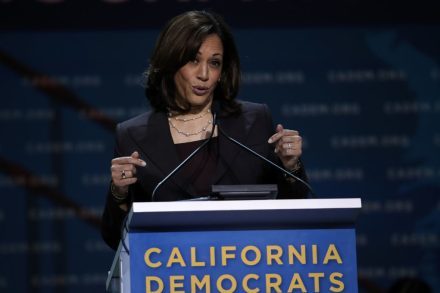
Kamala Harris’s selection as the Democratic vice presidential nominee has been touted as the remarkable success story of a daughter of immigrants from India and Jamaica. It is that. But it also represents the dramatic ascendency of a subset of the Democratic party that used to be dismissed as the ‘loony left’ of politics: the ‘San Francisco Democrats.’ The phrase ‘San Francisco Democrat’ was coined by Jeane Kirkpatrick, Ronald Reagan’s UN ambassador, who brandished it as a weapon at the 1984 GOP convention in Dallas. San Francisco was where the Democrats nominated Walter Mondale to challenge Reagan.

san francisco

Are we living in the golden age of political satire?

From our US edition

Stamford, Connecticut My first novel was published 34 years ago under the title The White House Mess, a wordplay on its Navy-run dining rooms. I’d spent two years as vice president George H.W. Bush’s speechwriter and had read a number of White House memoirs, all of which had two themes: 1) it wasn’t my fault, and 2) it would have been much worse if I hadn’t been there. The novel was a satirical — in today’s terminology, a ‘fake’ — White House memoir by a clueless but loyal chief of staff of a future administration that would be sworn in on January 20, 1989.

satire

Neocons come home to roost

From our US edition

Dolphins returned to the canals of Venice during the COVID-19 lockdown, and neoconservatives are returning to the Democratic party. Bill Kristol and his colleagues at the Bulwark support Joe Biden for president, even though an anti-Trump Republican of sorts briefly jumped into the race. Michigan congressman Justin Amash earned the esteem of the Kristol crew when he collaborated with Democrats to impeach Donald Trump last year. But the Bulwark feared that if Amash was on the ballot as the Libertarian party’s presidential nominee, he’d take votes away from Biden.

neocons

How government can learn from disasters

From our US edition

Soon enough, Congress will hold hearings to investigate the federal response to the Wuhan virus pandemic. It is almost a guarantee those efforts will find failures, as no government is ever really prepared for 100-year catastrophic events. We’d like to think our government can handle anything, but, as countless Inspector General reports show, the federal government routinely fails to do the ordinary work of government. Expecting flawless execution with the extraordinary is delusional. I should know because 15 years ago I served as a senior-level official at the US Department of Homeland Security. My various roles exposed me to several events that contained valuable lessons I see playing out yet again in America’s response to the Wuhan pandemic.

government

You’ll keep saying ‘I’m sorry, did I hear that correctly?’: Fiasco reviewed

Kevin Katke was quite a man. He had no military training, no political background and no espionage experience. Nonetheless, his hatred of communists and can-do attitude made him the pre-eminent idiot savant of private American intelligence throughout the Reagan administration. It was a peripatetic career that culminated with him spearheading a bungled plot to oust a leftist regime in Grenada while holding down a full-time job at Macy’s. Call it the American dream. I learnt this — along with dozens of other things to make you say, ‘I’m sorry, did I hear that correctly?’ — listening to Fiasco (Luminary), a political-history podcast whose second season retells the bizarre and shambolic story of the Iran-Contra scandal.