Ronald reagan

Trump’s Chinese tariffs are simply a scare tactic

From our US edition

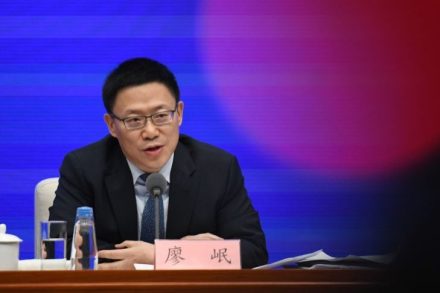
Ever since Donald Trump began his trade war with China there have been two possibilities: firstly, that he intends tariffs to form a permanent feature of the landscape in relations between the US and China: a protectionist device designed to protect American jobs indefinitely; or secondly, that he sees his tariffs as a shock tactic devised to draw China into talks which it would otherwise be loathe to join, and with the ultimate aim of freeing up trade. The latest development, halving a set of tariffs which had been in place since September and canceling another set which had been due to come into place this week, points heavily to the latter.
chinese tariffs

Will Trump enter the hypersonic nuclear arms race?

From our US edition

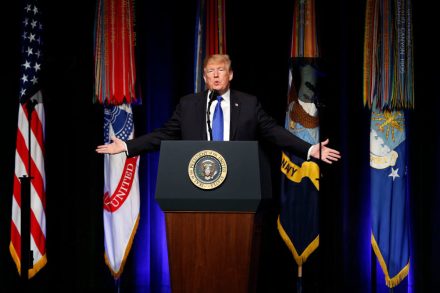
The Pentagon is urgently reviewing just how and when the president might launch nuclear missiles as a dangerous new nuclear arms race breaks out. Hypersonic missiles are capable of flying at around 12,000 miles per hour, or Mach 20. That would reduce the US response time to as little as five minutes — too short for the president to enter the launch codes into the ‘football’ (actually a briefcase) that is never more than a few feet away. Instead, some officials argue that Artificial Intelligence should manage the US response. AI could gather information about launches, likely targets, and the most effective counter-responses — and be empowered to launch nuclear missiles without human intervention.

nuclear arms

When in the course of Human Events

From our US edition

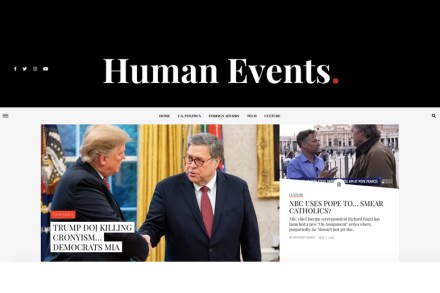
The eccentric debut of Raheem Kassam and financier-attorney Will Chamberlain’s new Human Events is here. Ronald Reagan’s favorite magazine is now Raheem’s roundhouse. So how does it look? Not the worst. Eager to solidify the bridge between the Trumpzine of today and the conservative periodical of old, the site is highlighting a forty-something Trump shaking hands with the Gipper. ‘This is no time for “peacetime” Republicans,’ say the editors, dissolving any pretense of partisan non-affiliation. ‘This is a time for brawlers. And we are here to brawl.’ On tap for week one: Donald Trump Jr., Chamberlain’s legal analysis of the Mueller exoneration, the popular populist Italian writer Alessandra Bocchi and Conservative Inc. grandee Dennis Prager, among others.

human events

RIP, The Vishnu

From our US edition

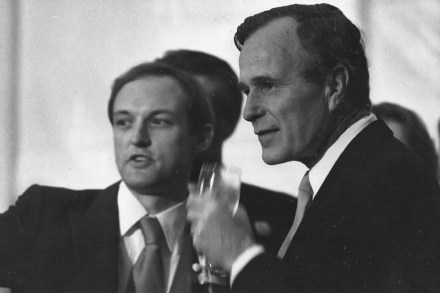
The world knew him as ‘Bush 41.’ I knew him by a different name during the time I worked for him as his speechwriter when he was Vice President. In those days, the staff called him ‘The Vishnu.’ It was his own devising. He’d been to India on a state visit, where they’d presented him, amid much pomp and ceremony and clanging of brass, with a statue of the four-armed Vedic deity Vishnu. Its plaque described Vishnu’s numerous godly qualities, among them: omniscience, omnipotence, and his title ‘Preserver of the Universe.’ Mr Bush immediately recognized a kindred godhead. He began referring to himself, in staff memos and aboard Air Force Two’s loudspeakers as ‘The Vishnu.’ In more intimate settings, simply, ‘The Vish.

christopher buckley george h.w. bush

The spying game: when has espionage changed the course of history?

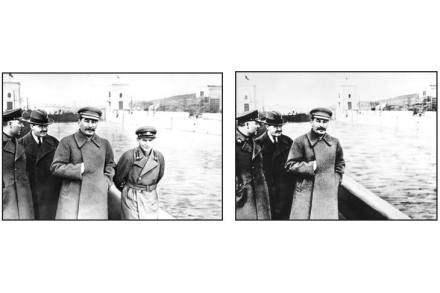
Espionage, Christopher Andrew reminds us, is the second oldest profession. The two converged when Moses’s successor Joshua sent a couple of agents to spy out ancient Jericho. There they were sheltered by the madam of the local brothel. All three are heroes in Israel today. Generals and politicians have always needed secret information to track and outmanoeuvre their foreign and domestic enemies. So they place spies, suborn traitors, eavesdrop, decipher other people’s messages, subvert their governments, assassinate their servants and sabotage their property. The technology has changed massively over the centuries; the aims and the basic methods have not.