Robert jenrick

Letters: Let children drink

Chagos stupidity Sir: To British Establishment watchers, Michael Gove’s dissection of the dubious and devious machinations of Jonathan Powell, Richard Hermer, Philippe Sands et al over the Chagos Islands (‘The guilty men’, 31 January) should come as no surprise. Powell, in the Irish Troubles context in particular, has form. His negotiating position more resembled that of an imported diplomat than an official of the UK government. What is surprising in the Chagos fiasco, however, is the seeming gullibility of some at least on the American side. Are they, one wonders, working to a covert agenda of withdrawal and retrenchment, or are they just very stupid? Terry Smith London NW11 Democracy denial?

Letters: The Tories and Reform have little to unite them

Class war Sir: Your leading article, ‘More in common’ (24 January), laments the ‘civil war’ between Reform and the Conservatives. But this division goes much deeper. Reform’s core support is the patriotic white working class in the so-called Red Wall seats – the people (often male) who supported Brexit and flocked to Boris Johnson in 2019 when he promised to get Brexit done. They are cultural conservatives but economic statists. That’s why (against his better instincts) Nigel Farage backs steel and water nationalisation and is soft on welfare and pensions. Reform’s natural political bedfellows are not the Tories, but the SDP (left economically, right culturally).

Does British politics reward traitors or faithfuls?

22 min listen

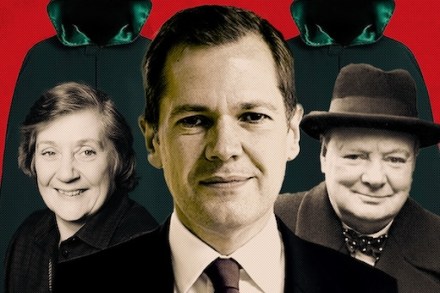
With the Conservatives on watch for further defectors, academic Richard Johnson and Conservative peer Danny Finkelstein join James Heale to discuss whether British politics rewards traitors or faithfuls. Richard points out that often personal success is dependent on whether the party goes on to be a major or minor player in British politics; Winston Churchill and Shaun Woodward fared better, while Shirley Williams and Mark Reckless had less success. Danny – whose political career began with the SDP in the 1980s – also takes us through his personal experience and the challenges of defecting, from ideology and demography to the perception of betrayal. How fundamental is the shift taking place in British politics? Produced by Patrick Gibbons.

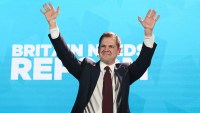
Robert Jenrick: Why I defected to Reform

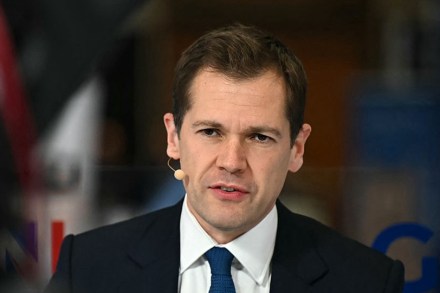
Those pondering why Robert Jenrick defected to Reform UK have focused on the political momentum of Nigel Farage or the performance of Kemi Badenoch, but the key conversation was the one he had with his father on Boxing Day. ‘He’s a very straight talker,’ Jenrick explains when we meet at Reform’s headquarters on Tuesday afternoon. ‘He said, “If you weren’t in politics and there was a general election to-morrow, which party would you vote for?” I said, “Reform.” He said, “If you weren’t in politics, weren’t a candidate, had no particular loyalty, who would you want to be prime minister if the choice was Keir Starmer, Kemi Badenoch and Nigel Farage?” I said, “Nigel Farage.” He said, “Well, be honest with yourself and become a Reform MP.

The Tories and Reform should present a united front

In the summer of 1643, as the dispute between Charles I and parliament raged on, Sir William Waller wrote to his friend Ralph Hopton to lament with ‘what a perfect hatred’ he detested ‘this war without an enemy’. The hardening of hearts between the Conservatives and Reform UK resembles a similarly self-defeating civil war – a family dispute more public and bitter even than the Fall of the House of Beckham. Just over a year ago, Robert Jenrick narrowly lost the Tory leadership contest to Kemi Badenoch. For some, his defection to Nigel Farage’s party was the overdue exit of a shameless careerist who never accepted coming second.

Which royals have appeared in court?

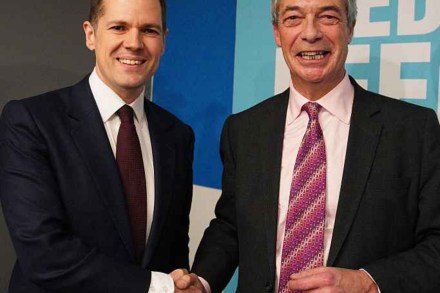
Political frenemies Nigel Farage accepted Robert Jenrick into Reform UK in spite of having previously called him a ‘fraud’ (for boasting about securing hotels for migrants when in government and then campaigning against them in opposition). Some more political make-ups: — David Cameron called Nick Clegg his ‘favourite joke’ before forming a coalition with him in 2010. — Donald Trump chose J.D. Vance as his running-mate in 2024 in spite of Vance having called him ‘America’s Hitler’ and a ‘really bad person’. — George H.W. Bush served as Ronald Reagan’s vice-president between 1981 and 1989 in spite of having previously accused him of ‘voodoo economics’.

The death of the special relationship – and was Jenrick right to leave the Tories?

45 min listen

This week: Michael and Maddie ask whether the so-called special relationship between Britain and the United States has finally reached breaking point. As Donald Trump’s threats over Greenland and his reversal on the Chagos Islands unsettle allies, has the British right begun to turn decisively against him? Was the special relationship ever more than a comforting myth – and what does a more erratic, transactional America mean for Britain’s security, sovereignty and strategic future? Then: Robert Jenrick’s dramatic defection to Reform UK. Was his exit from the Conservatives a naked career move, or a genuine ideological break forged by failure on migration and borders?

Jenrick vs Badenoch: who won yesterday’s defection?

10 min listen

Yesterday was a breathless day in Westminster. The defection of Robert Jenrick spawned plenty of headlines and even more memes. But now that the dust has settled, how has the news been received? Was it a total victory for Reform, and evidence that they are slowly swallowing up the Tory party, or is Kemi still in the race? Today, the assisted dying bill is back in the Lords. As discussions about this legislation drag on, does its implementation look increasingly unlikely? Oscar Edmondson speaks to Tim Shipman and James Heale. Produced by Oscar Edmondson.

Jenrick vs Badenoch: who won yesterday's defection?

Inside Jenrick & Reform’s shotgun marriage

15 min listen

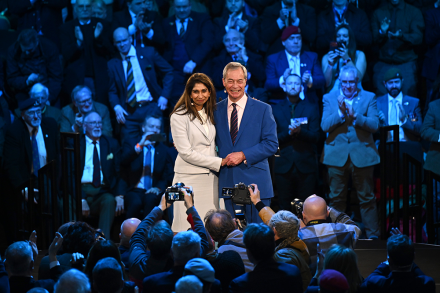
Robert Jenrick has sensationally defected to Reform. After a day that started with his sacking from the Conservatives – over plotting to reject – continued with the will-he-won’t-he drama of whether Farage would accept him as a new Reform member this afternoon; it ends with a press conference welcoming him to Farage’s gang. So what happens now? Kemi Badenoch was praised for her show of strength in swiftly expelling Jenrick, but she is undoubtedly weakened after this news and her frontbencher looks considerably lighter. Is this an inflection point for the Conservative party? And what role will Bobby J play in Reform – could he be their new shadow chancellor? Oscar Edmondson, Tim Shipman and James Heale discuss a hectic day on the British right. Produced by Oscar Edmondson.

Inside Jenrick & Reform's shotgun marriage

Is Jenrick joining Reform?

8 min listen

Kemi Badenoch has sacked Robert Jenrick from the shadow cabinet, removed the Tory whip and suspended his party membership. In a video on X she claims, ‘I was presented with clear, irrefutable evidence that he was plotting in secret to defect in a way designed to be as damaging as possible’. The Tories compiled a bundle of evidence that included a dinner between Jenrick and Nigel Farage last month, and the fact that he had discussed switching to Reform with at least two allies. It is understood that he left a copy of his defection speech lying around, which included passages criticising Conservative colleagues. Is this – as we all suspect – the prelude to perhaps Reform's biggest coup yet? Tim Shipman and James Heale discuss. Produced by Megan McElroy and Oscar Edmondson.

The gym, the hairdresser, the campaign trail: the inside story of Kemi’s first year

On the day of the local elections in May, when the Tories suffered a historic setback, Kemi Badenoch went to the gym and got her hair done. A screenshot of the Tory leader’s diary, leaked by a disgruntled Conservative, shows she planned a Harley Street dental appointment at 9 a.m., followed by 90 minutes at a boutique pilates gym at 11 a.m., followed by an hour-long visit to the hairdresser at 1 p.m. Plenty of politicians take it easy on election day, but the leak is significant because it shows someone still wants to wound her. For her internal enemies, she remains on probation. ‘Thousands of loyal Conservative party activists went out that morning in a desperate attempt to door-knock voters,’ an internal critic charged.

Imagine what Enoch Powell might have said

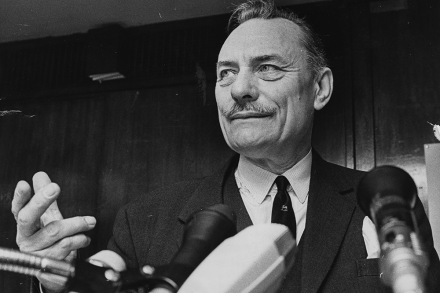
The great John O’Sullivan has a story about Enoch Powell which he keeps promising to put into print. Since he still hasn’t done so, I will risk repeating it here. It occurred during a conversation some years after the Rivers of Blood speech. A group of conservatives were talking, and Powell was among them. At some point one of those present referred to the 1968 speech and asked Powell: ‘Why did you do it?’ Powell’s reply started something like this: ‘When the lark sings in the morning they do not say – “Oh lark why dost thou sing?” When the nightingale gives forth her song…’ and so on. After Powell had gone through an array of the bird kingdom metaphors, he came to his clincher: ‘And so it was with me that day in Birmingham.

Robert Jenrick is right

I’ve just got back from doing a spot of shopping in my local town – and do you know what struck me? How white it was. Absolutely heaving with ghostfaces. In fact, in the hour or so that I spent there I don’t think I saw a single non-white person, apart from some young ladies leaving the local tanning salon who were the colour of a glass of Tango and that doesn’t really count. It is OK to say this, incidentally, if you then use it as a basis to attack the town’s lack of diversity and demand the government ship a few ethnics in, regardless of whether or not they fancy the idea. It is not OK if you are expressing happiness in the fact that the town is all white – if, for example, I had written the words ‘Thank the living Lord Jesus Christ!’ after my second sentence.

Who’s listening to the Tories? Live from conference

39 min listen

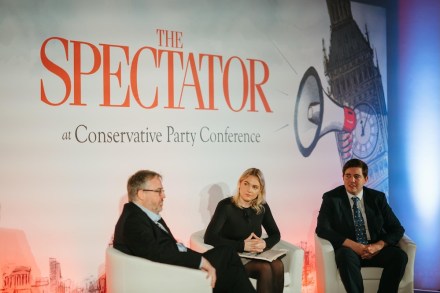
Tim Shipman, James Heale and Lucy Dunn record live at Conservative party conference in Manchester. What's the mood at conference – and has Kemi done enough to neutralise her detractors? Tim says he expects there to be no immediate leadership challenge but the Conservatives need to get real about the 'attention economy' they're faced with. What inspiration can they take from Tory grandee Michael Heseltine? And can they 'make conservative sexy again'? Plus, audience questions on the upcoming budget and the challenges for the Conservatives in both Wales and Scotland. Produced by Patrick Gibbons.

Tim Shipman, Colin Freeman, Rachel Clarke, Michael Gove & Melanie Ferbreach

40 min listen

On this week’s Spectator Out Loud: Tim Shipman interviews shadow justice secretary Robert Jenrick (plus – Tim explains the significance of Jenrick’s arguments in a special introduction); Colin Freeman wonders why the defenders of Ukraine have been abandoned; Rachel Clarke reviews Liam Shaw and explains the urgency needed to find new antibiotics; Michael Gove reviews Tom McTague and ponders the path that led to the UK voting to leave the EU; and, Melanie Ferbreach provides her notes on made-up language. Produced and presented by Patrick Gibbons.

Reform’s camp following, masculine rage & why do people make up languages?

51 min listen

First: Reform is naff – and that’s why people like it Gareth Roberts warns this week that ‘the Overton window is shifting’ but in a very unexpected way. Nigel Farage is ahead in the polls – not only because his party is ‘bracingly right-wing’, but ‘because Reform is camp’. Farage offers what Britain wants: ‘a cheeky, up-yours, never-mind-the-knockers revolt against our agonisingly earnest political masters’. ‘From Farage on down,’ Roberts argues, ‘there is a glorious kind of naffness’ to Reform: daytime-TV aesthetics, ‘bargain-basement’ celebrities and big-breasted local councillors. ‘The progressive activists thought they could win the culture war simply by saying they had won it’, but ‘the John Bulls and Greasy Joans are stirring again’.

Robert Jenrick: ‘Asylum seekers should be detained in camps’

On a table in Robert Jenrick’s parliamentary office lies the first part of Ronald Hutton’s biography of Oliver Cromwell, a conventional MP who became radicalised by events and usurped a monarch. The shadow justice secretary is very on message when it comes to the prospect of regicide in the Conservative party (‘I’m just doing my job. Kemi is the leader’). But as one who recently travelled to Calais to berate the French authorities for facilitating Channel small boat crossings, Jenrick has found unlikely inspiration in another bloody-minded leader. ‘I’ve been reading biographies of de Gaulle over the summer and he had a line that “Treaties are like roses, they last as long as they last”. I think that’s where we are.

What will save the Tories? The economy, or Robert Jenrick?

16 min listen

Lots to discuss today: Robert Jenrick takes on TfL, a Nazi jibe from the attorney general and allegations of shoplifting made against our own Michael Simmons. But we start with Keir Starmer’s big speech yesterday, where the theme was ‘get Nigel’, after polling from More in Common showed that framing the election as a two-horse race could be beneficial to Labour. They are attempting to cut the Tories out altogether but, in response, the Conservatives plan to use fiscal credibility as the battleground to crawl back up the polls. Will the economy save the Tories? Elsewhere, Robert Jenrick is the star of the week after a video of him reprimanding fare-dodgers on the Tube went viral, racking up more than ten million views on X.

Debate: should Kemi Badenoch go?

30 min listen

Kemi Badenoch has come in for criticism since becoming leader of the opposition – for her energy, her performances at PMQs and her inability to galvanise her shadow cabinet. On this podcast, James Heale hosts the trial of Kemi Badenoch and asks whether someone else might be better placed to take the Tories into the next election and – more importantly – who that prince (or princess) across the water could be. The Spectator’s assistant content editor William Atkinson makes the case for the prosecution, while Michael Gove sets out why the Tories should stick with Kemi. Lara Brown, our new commissioning editor, acts as the jury. ‘If your house is on fire you don’t wait a year to call the fire brigade,’ says William.