Restaurants

Bruton is suddenly the place to be – and I have a theory why: At the Chapel reviewed

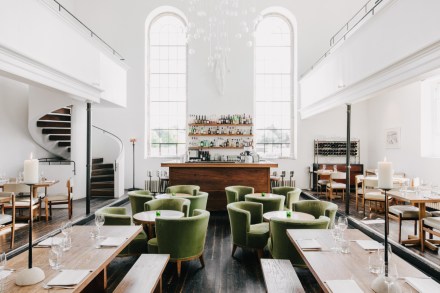
At the Chapel, Bruton, is a restaurant and hotel in a former chapel in Bruton. This was once an ordinary town in Somerset, with a note in the Domesday Book, a ruined priory and a famous dovecote on a hill. Bruton is known for a flood in 1917 – it was the second-largest one-day rainfall measured in the UK – but another calamity was coming. In 2014 the art gallery Hauser & Wirth, with branches in London, Zurich and New York, decided it needed a premises in Bruton, and a restaurant called the Roth Bar and Grill. There is also an Instagram-friendly farmhouse to rent on this site. When I toured it, the price was £666 a night, including the art and, I hope, a food gift basket and, I suspect, an ancient native Briton graveyard.
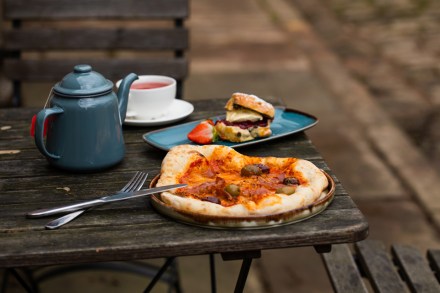
A Margherita in Tolkien’s Middle-earth: Pizza in the Courtyard at Sarehole Mill reviewed

Sarehole Mill is four miles south of the centre of Birmingham. If this were a fairy tale, and it should be, it would follow that Birmingham swallowed Sarehole a century ago, like a dragon and its prey. I like Birmingham: I like its optimism, its violence and its multiplex, which can match any American Midwest mall in competitive dystopia and idiocy. Birmingham has energy, and that swallowed Sarehole, but unfortunately for Birmingham, there was a writer who cared: John Ronald Reuel Tolkien.Sarehole was his childhood palace, and now, more reluctantly I would imagine, his memorial pizzeria.

‘Thinks of the diner, not the chef’: Claridge’s Restaurant, reviewed

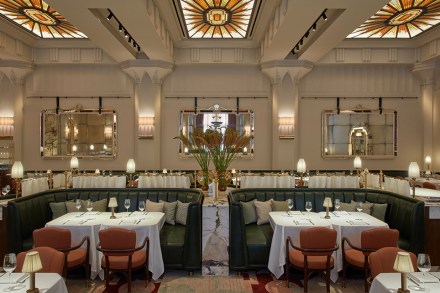
The BBC made a very odd documentary about the renovation of Claridge’s: The Mayfair Hotel Megabuild. They filmed, agog, as the hotel grew eight new storeys – three above, and five below – between 2014 and 2021 while staying open: guests slept and ate, unaware of ‘Narnia doors’ to the building site. (That Narnia is where guests aren’t indicates what Claridge’s employees cannot put into words without spontaneously combusting.) Labourers dug the basement by hand and impersonated the Artful Dodger when management toured. The BBC described the new penthouse at length without mentioning that it is gross, with a grand piano in a glass box on a terrace like a Richard Clayderman-themed nightmare. A roof was assembled off-site and stuck on as for a doll’s house.

Big Little Bavaria on Thames: Bierschenke bierkeller reviewed

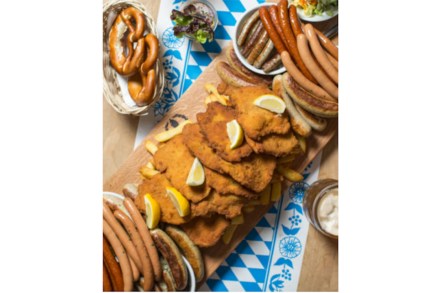
I am not sure the vast Bierschenke bierkeller in Covent Garden is successful, even if it is skilful: I worry it is the wrong place for it. People go to Covent Garden to buy gym clothes, watch musical theatre and pick up men, not to find Wagner and pigs and the drumbeat of the earth: Covent Garden is more Kit Kat Club than Twilight of the Gods with sausage. I am not saying you must be into Götterdämmerung to enjoy this restaurant. It just helps. There is no atmosphere I can find, and I think this is deliberate: a beer hall is an existential void to fill  It used to be in the City of London, and that worked. City men are savages, mining for gold: they would absolutely kill a pig. That is what beer halls are, base: wheat, fat, sweat.

Hold the haggis: the changing face of Scottish food

Ask someone south of the border for their thoughts on Scottish cuisine and they’ll inevitably offer up thoughts of two Gaelic gastronomic inventions: haggis and deep-fried Mars bars.  Despite the wealth of produce available – and exported – from the country, Scottish fare has struggled to shake its tartan-clad clichés Despite the wealth of produce available – and exported – from the country, Scottish fare has struggled to shake its tartan-clad clichés. Take a table in London and you’ll find Orkney scallops, Isle of Mull oysters, highland venison and Outer Hebridean whisky on restaurant menus, while bonnie chefs like Quo Vadis’s charismatic Jeremy Lee and industry darling Adam Handling lead the capital’s kitchens.

The rise of the open-fire restaurant

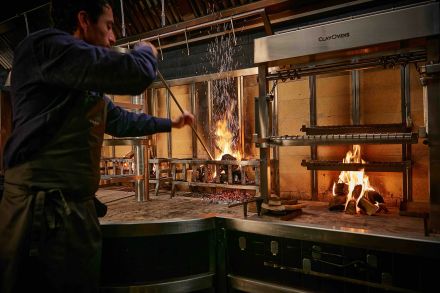
Burn the formal white tablecloths and fling open the kitchen doors. The latest craze in restaurant culture is open-fire cooking – where chefs sweat it out over roaring flames in full view of their customers. And the simple, raw nature of this method of food preparation seems to have set diners’ imaginations alight.  ‘Cooking outside over flames is primal and in our DNA as human beings,’ says Andrew Clarke, co-founder of Acme Fire Cult – one such restaurant in Dalston, north London. ‘The smell of woodsmoke and animal fats hitting the hot coals stirs up something deep inside.’ For Tomos Parry, chef and co-owner of Brat – another open-fire restaurant – the flavour that can be achieved from this style of cooking adds an extra dimension to most dishes.

My culinary journeys: restaurants worth travelling for

Whenever it is suggested travelling south or north of the Thames to visit an ‘amazing’ restaurant I usually start conjuring up excuses. Across London seems a journey too far for food – but going across an ocean for it can be worthwhile. In NYC last year, I found myself with an evening off and, staying in the Lower East Side, made my way to the Bowery Meat Company. The menu was perfect: steak and seafood, excellent cocktails, and sides which included sublime creamed spinach and whipped potato that threatened to float off the plate. I usually eat oysters naked, but Bowery’s version – baked under a parmesan crust – was irresistible. The steak was thick, juicy and cooked to perfection, the fries hot and crunchy.

A taste of 1997: Pizza Express reviewed

As the government withers this column falls to ennui and visits Pizza Express. As David Cameron, who left the world stage humming, said of Tony Blair: ‘He was the future once.’ So was David Cameron, and so was Pizza Express: I bet they meet often. It was founded in 1965 by Peter Boizot, who shipped a pizza oven from Naples and a chef from Sicily and opened in Wardour Street. That branch closed in 2020. Boizot grew up in Peterborough but lived in continental Europe for a decade, and he learnt three things: an Italian restaurant must be bright; good pizza must be slightly charred (burning food is underrated); children need restaurants too. These changes were sensational, and Pizza Express was launched on the stock exchange in 1993.

Where to find the best Michelin-starred meals on a budget

Even Michelin-starred chefs, it seems, aren’t immune from the cost-of-living crisis. In a bid to make fine dining more affordable, Jason Atherton has cut prices across the board at Pollen Street Social, his flagship Mayfair restaurant (the three-course set lunch now costs £49.50 – down from £75 – and wines start from £7.50 a glass). At two Michelin-starred Kitchen Table on Charlotte Street, the cost of a 20-course set menu has come down by a third (from £300 to £200).  But even before we all started squeezing our belts, there were options for enjoying high-end food at not-so-high prices – if you knew where and when to go. Follow our guide to the best-value Michelin-starred meals around the UK.

As good as pub food gets: The Red Lion, East Chisenbury, reviewed

The Red Lion, East Chisenbury, is in the Pewsey Vale on the edge of Salisbury Plain. Wiltshire’s strangeness surpasses even Cornwall and its menhirs: it has the greater volume of ghosts. I once spent an eerie day in Imber, the deserted village on the plain – the inhabitants were given 47 days’ notice to leave in November 1943, so American soldiers could shoot up Imber in preparation for invading Normandy. Its church of St Giles, perfectly maintained, is open one day a year in September. Its pub, the Bell Inn, was sold to the Ministry of Defence, and is not a fine restaurant with rooms but a red-brick ruin, with the glass of the windows shot out: Daphne du Maurier’s ideal, the Manderley of pubs.

Home cooking, but idealised: 2 Fore Street reviewed

The restaurant 2 Fore Street lives on Mousehole harbour, near gift shops: the post office and general store have closed, leaving a glut of blankets and ice cream, the remnants of Cornish drama. It’s a truism that Mousehole is hollowed out – tourism changes a place, and no one knows that better than Mousehole. Eating at 2 Fore Street gives the visitor the opportunity to examine what they have done with what they call love. There’s a mania for creating 30 perfect soufflés a night thatI cherish  Mousehole is one of those cursed villages that gather in the south-west: haunted in winter and glutted in summer, to paraphrase ‘The Pirates Next Door’.

Wuthering Heights in Devon: the Pilchard Inn, Burgh Island, reviewed

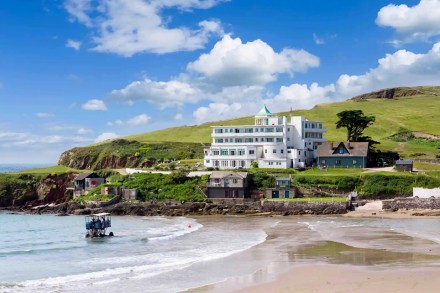
The Pilchard Inn sits at the entrance to Burgh Island, a minute tidal island off the coast of south Devon. The island is home to the Burgh Island Hotel, an eerie Art Deco masterpiece built by the son of a screw mogul, which dominates the view from Bigbury-on-Sea like Coney Island: it is more apparition than hotel. The hotel is faded, fascinating, plated in Art Deco and decorated with vast screws. I wonder if this is a joke: there is little information about the early years of the house, which vibrates with depravity and things unsaid. To compound the mystery, Agatha Christie wrote here in a shack by the sea, eating cream from a tub as she murdered people in her head, and wrote it down for money. The hotel inspired And Then There Were None and Evil under the Sun.

Regulators should not roll over for Revolut

Since we launched our Economic Innovator (originally ‘Disruptor’) awards in 2018, I’ve had enjoyable contacts with well over 100 entrepreneur-led high-growth companies picked as finalists from across the UK. Most I met at convivial pitching lunches; the rest told me their stories by Zoom or phone. Only one chosen finalist has ever shunned both the lunch and the opportunity for a call: it was Revolut, the London fintech venture that’s currently hustling for a UK banking licence. Revolut’s 38-year-old Russian-born founder Nikolay Storonsky has built a serious disruptor, valued in 2021 at $33 billion. Though Schroders – as a Revolut shareholder – has marked that figure down to $18 billion, it still bears comparison with Barclays and NatWest at £25 billion each.

It’s time to ban young children from restaurants

When you have small children just getting them out of the door can be traumatic. Finding and applying each shoe can be enough to provoke a tantrum – and not just in the parent. And no, they can’t bring their Power Rangers swords, because we are going out to lunch and everyone knows that plastic swords and restaurants don’t mix.  Eventually you will arrive at the restaurant, although it will 20 minutes later than the booking. As you push the buggy inside, the establishment falls quiet like the Slaughtered Lamb in An American Werewolf in London. There’s a scrape of chairs – a pause – then the chatter resumes. But in that moment everyone is thinking the same thing: please don’t sit next to us.

The quest for child-free dining

From our US edition

The people who follow my social media know that I’m not kidding when I say that restaurants should ban children. You can’t avoid kids in certain fast-food or large outdoor-patio situations, but on the whole, children in restaurants are a horrible war crime. So when Nettie’s House of Spaghetti, a red-sauce joint in Tinton Falls, New Jersey, announced in February that it would be banning kids, my inbox flooded with the story. “We love kids,” the restaurant wrote. “We really, truly, do. But lately, it’s been extremely challenging to accommodate children at Nettie’s. Between noise levels, lack of space for high chairs, cleaning up crazy messes and the liability of kids running around the restaurant, we have decided that it’s time to take control of the situation.

restaurants

Do London’s oldest restaurants still cut the mustard?

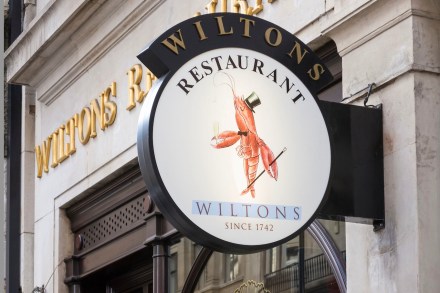
When George William Wilton opened his shellfish-mongers close to Haymarket in 1742, he could never have imagined that his business would still be thriving 280 years later. The place has outlived ten monarchs and is as old as Handel's Messiah. Before visiting, I imagined a typically Hogarthian scene with portly gentlemen in dandruff-flecked suits feasting on potted shrimp and vintage port. Perhaps they had dropped by for a 'spot of luncheon' before toddling off to their various clubs at nearby St James's.  Up until relatively recently you might well have witnessed just such a quintessentially English scene; sadly, the agreeable old buffers who would once have frequented places such as Wiltons no longer exist in quite the same way.

A themed restaurant done right: The Alice, Oxford, reviewed

The Alice lives in a ground-floor room of the Randolph Hotel in Oxford, which venerates the fantastical and the savage, as Oxford does. The savage lives in the Randolph’s dedicated crime museum with cocktails: the (Inspector) Morse Bar. The Alice is named for two women: Alice Liddell, the daughter of the ecclesiastical dean of Christchurch College – the grandest and most unfinished Oxford college – who posed for photographs for Lewis Carroll, became Alice of Wonderland and later invented a ladyship (an act as English as anything that ever happened here).

Making a home through food

From our US edition

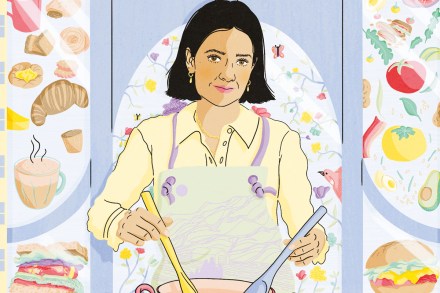
At the age of sixteen, chef and restaurateur Forough Vakili, now forty, left Iran to meet a brother she barely knew, eventually settling in America. She didn’t return for eleven years. As a member of the minority Baháʼí faith, which teaches the value of all people, regardless of gender or religion, Vakili had hit a wall in her homeland. “I came here so I could continue my education,” she says, when we speak over Zoom. “We didn’t have many rights back in Iran — there wasn’t a lot offered for us after finishing high school.” It was in Vienna, waiting for her American visa, that Vakili reconnected with her brother for the first time since she was a toddler. Six months later she moved in with him, his wife and three daughters in Atlanta.

Vakili

How hidden fees spiraled out of control 

From our US edition

Last week, a friend was halfway through a Hollywood wax when she complained to her beautician about stubborn hairs that were often missed. “That’ll be extra,” she was told. Apparently now the outcome of a Hollywood — famously meaning that your entire vagina is left completely bare — depends on what the beautician you have at the time can be bothered to do. She paid the money. What’s worse is that she didn’t even recount this story to me with pure, incandescent rage. When she finished talking and saw me red-faced and flapping my arms about, she laughed calmly and said, “It happens all the time now.”  Tragically, this does happen all the time. Last week, I went to Rome and decided that I’d get my hair done for the trip. A treat, I know.

hidden fees

The wacky world of immersive dining

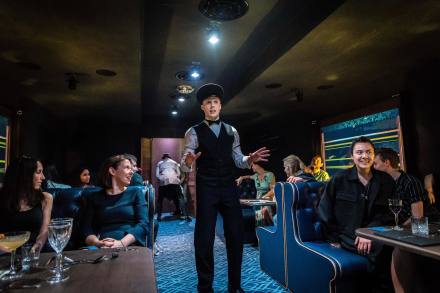
The human desire to turn life's mundanities into something altogether more agreeable never ceases to amaze and amuse. Take our homes, for instance. Once we were content to live in caves as long as they kept us dry and were reasonably warm. Then we decided it would be more appealing to build our own caves but with the added benefit of shag-pile carpets, front doors and locks to keep the jungle at bay. This ability to cocoon ourselves from an outside world that had once housed us became something of a status symbol and so we built bigger, more elaborate caves loaded with ostentatious accoutrements such as silk wall linings and sweeping marble staircases leading to bedrooms nobody used.