Restaurants

‘A constant good in this world’: Simpson’s in the Strand reviewed

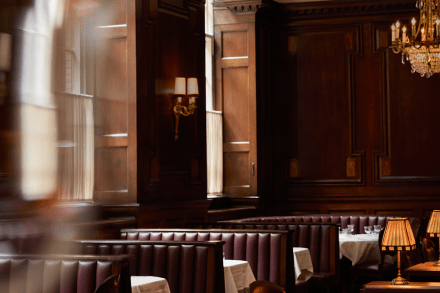
Simpson’s in the Strand is a dream palace, and its fortunes are as tidal as the river. It is on the site of John of Gaunt’s Savoy Palace, destroyed in the Peasants’ Revolt. It began as a cigar divan and chess club, was subsumed into the Savoy Hotel, built with the profits from The Mikado, and was beloved by Churchill and Wodehouse, who described it as an Elysium where you were ‘at liberty to eat till you were helpless, if you felt so disposed’. It then decayed. I’ve come here for 30 years and, grand as it was, Simpson’s smelt of beef and the 1922 committee by the end. No

I wanted to rescue this waiter 

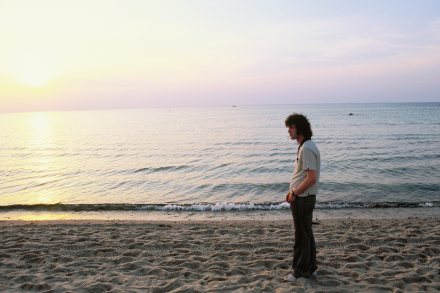
‘Something I like to do with all my tables is ask what brings you here today?’ said the young waiter as he sat us down and began to talk. If I’d known he would still be talking nearly two hours later I think I would have got up and walked out. We were in a lovely riverside restaurant in Warwickshire for my mother’s birthday. But we were going to have to run the gauntlet of being served by a smiley young man who was under the impression that everything was about him. He was pale, long-haired, very tall and thin and bendy, as if a gust of wind would blow

‘An adequate meal for a Cornish giant’: Brasserie Angelica reviewed

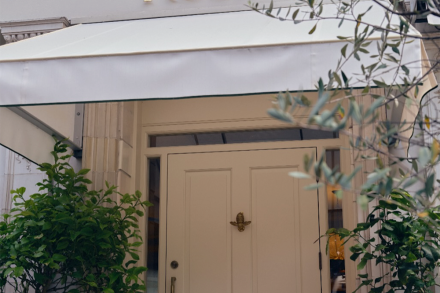
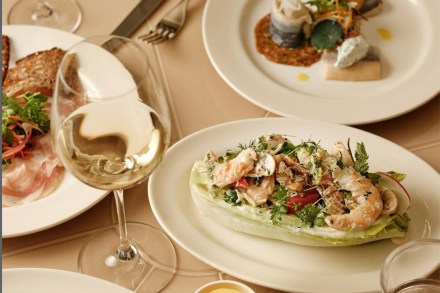
Brasserie Angelica is the – is the word signature? – restaurant inside the Newman, Fitzrovia, a new hotel that has landed in the capital like a spaceship containing aliens who are into menswear. I don’t mind buildings that look like they don’t belong. Fitzrovia is charming because it feels like remnants left by other places. We have too much Edwardiana already: in the Aldwych– formerly the best surviving medieval part of London after the Great Fire – I feel like I am stomping through cakes of stone. The Newman is a wail in glass and brick on a quiet lane near Gower Street. There are pale awnings, brass fittings and

Treasure Britain’s last railway dining car while you still can

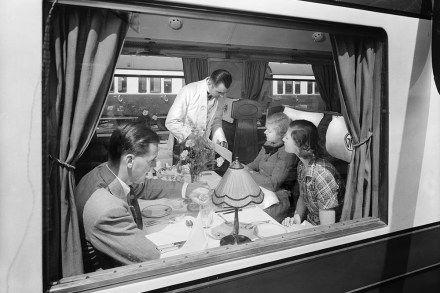
The 17.48 from Paddington does not, on first sight, seem exceptional. Over-hard seats, over-bright lights and a scrum at the ticket barriers: none of these is special. The modern Hitachi trains are solid but dull. Only Isambard Kingdom Brunel’s great arching iron roof adds splendour to the scene. But pause by coach L on the daily London to Carmarthen express and you might notice a small miracle. This train is one of the very last in Britain to carry a proper dining car. To its immense credit, GWR, the route’s operator, cooks and serves decent meals on six services a day: three at lunchtime and three in the evening, on

In days of war, we need trifles: Mezzogiorno reviewed

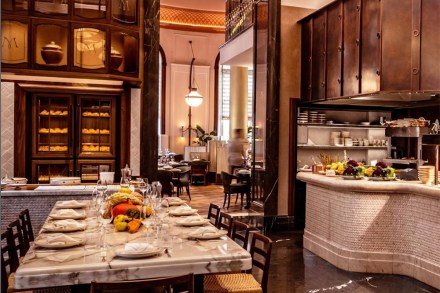
Mezzogiorno is a very serious, golden Italian restaurant inside the Corinthia London Hotel on Northumberland Avenue. Restaurants are increasingly gold these days, as if for a crocodile of Scrooge McDucks trooping through the wreckage of liberalism looking for money, nuts and guns. It follows the trajectory of my beloved Raffles at the OWO [Old War Office] round the corner. What was once a Ministry of Defence building – though formerly a hotel – is now a (quite good) pizza joint. When the time comes, I hope the drones know. Ignore the lie that gold restaurants serve tiny portions for tiny people. These are vast Mezzogiorno is by the gifted Francesco

I’m sick of London’s food scene

Do you remember the Cereal Killer Café? The year was 2014: a time of sleeveless plaid shirts, Mr Pringle moustaches, man buns and undercuts. This was the era of proto vapes and misplaced millennial hope, of the indie band Vampire Weekend and trilby hats mistaken for fedoras. When the Cereal Killer Café opened in Brick Lane that year to sell cereal and milk for stupid prices, it signalled the acme of hyper-gentrification and the ‘peak’ east London aesthetic. Many of us saw its pandemic-related closure in 2020 as a sign that sanity had returned to the capital’s restaurant scene. We were wrong. The Cereal Killer Café might be gone but

Al fresco dining is overrated

The daffodils are out, and so, therefore, are the optimistic diners. A couple of rickety tables and wonky chairs are dragged out from their storage and plonked on a bit of uneven concrete on what passes as pavement in London. They are a strange breed, this first flush of outdoor diners who think a tiny ray of weak sunlight breaking through the two-degree cold heralds the start of summer. I’m not talking about the people braving the elements under a leaky conservatory roof, crowded around outdoor heaters and wrapped in blankets, who are best known as smokers or vapers. No, I mean the hardy, ‘freezing fresh air is better than

Food for adults remembering childhood: Dover Street Counter reviewed

Dover Street Counter is the tiny sister of The Dover, a very good restaurant on – who knew? – Dover Street, Mayfair. This is the site of P.G. Wodehouse’s fictional Drones Club, if following Wodehouse’s paths is your way of coping, and there is nothing wrong with that. There are some bad restaurants in Mayfair now, with slutty Roman gods and monumental Caesar salads; passive-aggressive tributes to Elizabeth II in bad cake, and enslaved fish staring at sex workers with the mute anguish of recognition. This is better. Good restaurants have the gift of suppressing fear, and this is one such The Dover is delivered by professionals for adults –

Like dining with Elrond in Rivendell: Corenucopia reviewed

Corenucopia by Clare Smyth is in Belgravia, amid a line of interior-design shops, and it is prettier than all of them. It is a female paradise on the ground floor of a mansion block, dedicated to art nouveau and ‘comfort’ food. There are plaster tree branches peeking from the walls and the menu script looks elvish. It is rare that whimsy does not make me kick things, and few things are more whimsical than plaster forests, but Smyth, also of the three-Michelin-starred Core, is one of the great cooks working now. From her, whimsy is merely voice; or, rather, I forgive her. We eat malted sourdough with Ampersand butter and

Beloved by Chinese tourists – and the Labour party: Phoenix Palace reviewed

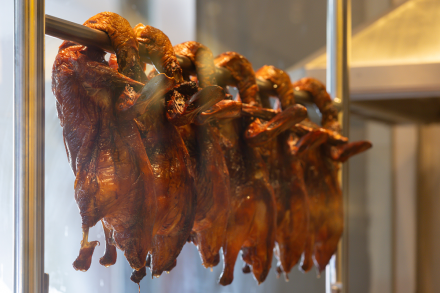
The exterior of the Phoenix Palace is cream with golden letters like the napkin and the Laffer curve, and it is squeezed below an Art Deco mansion block in Baker Street. The street is self-effacing, stuck between the Marylebone Road and the Sherlock Holmes museum, which exists because London is, among other things, morbid. The cuisine is Cantonese. Understatement is a feint here, though; the Phoenix Palace is famous, and always on the best dim sum lists. It is beloved by Chinese tourists and students, and, weirdly, the Labour party, whose grandees smile uneasily from photographs, like hostages to the economy, and rice. The food comes near instantly. That is

How dirty is your Michelin-starred restaurant?

Michelin stars were pitted against hygiene scores when Gareth Ward, chef-patron of the two-Michelin starred restaurant Ynyshir, was recently given a hygiene rating of… one.  Ynyshir, which sits on the edge of Eryri national park near Machynlleth in Ceredigion, has held its second Michelin star since 2022, making it the first restaurant in Wales to receive two of the accolades. The restaurant offers a single 30-course tasting menu, to which changes cannot be made for allergies or preferences, at a cost of £468 per person. Its most recent food hygiene inspection found that its management of food safety required ‘major improvement’. The cleanliness and condition of facilities and the building also needed ‘improvement’, while their food

A restaurant so perfect I hesitated to review it

Sometimes you find it, H.G. Wells’s door in the wall, but to tapas: a restaurant so perfect you hesitate to review it. Each critic kills the thing she loves, because to love it is to change it. But I can’t just review palaces for psychotics containing lamps that should not exist, comforting though the idiocies of the very rich are. So here is a review of 28 Church Row, Hampstead. I will try not to make it read like a Hampstead novel about the unreliability of memory, but I might forget to do this. Church Row is the prettiest street in Hampstead: a ragtag of Georgian houses beloved by television

Scott’s vs Mayfair

Kingsley Amis was obsessed with Scott’s on Mount Street, Mayfair, and he knew a lot about food. He ate himself to death. In his unwise James Bond continuation novel Colonel Sun – Ian Fleming also loved Scott’s – Amis had Bond ponder that ‘every meal taken in those severe but comfortable panelled rooms [is] a tiny victory over the new hateful London of steel and glass matchbox architecture’. Bond then presumably dropped his knickers, because there is as much projection in Amis and Fleming as there is in this column. Even so, I know how they feel about Scott’s. Mayfair is now the UAE with democracy and rain. It is

Italian food is revolting

About a week into an open-ended early pandemic stay in Ortigia, the antique, tourist-beloved spit off Siracusa on Sicily’s eastern coast, I had an epiphany. I hated the food. I’d just had a few bites of a clammy aubergine parmigiana, and a plate of oily tuna steak dressed with a bit of lemon was on its way to me. I felt sick and couldn’t face another bite – and yet, supposedly, I was right in the heartlands of the finest continental gastronomy. This, at least, is the orthodoxy of the world, of tourists low- and high-end and home cooks everywhere – and especially in Italy itself. And now their devotion

Table manners are toast

Food courts appear to be everywhere in London at the moment and, for reasons too boring to go into here, I found myself at three of them across the capital in the space of four days last week. (Yes, before you ask, I am beginning to question my life choices as a result.) Not that there is anything innately wrong with food courts as a concept, of course. If you’ve been to one, you’ll know the drill, which is essentially that they are semi-industrial spaces lined with vendors plying all manner of street food from locations that aren’t too challenging to the average British diner. The fashionable new breed of

Survival here is about logistics: Disneyland Paris reviewed

Alcoholics know that hell is denial, and there is plenty at Disneyland Paris in winter. This is a pleasure land risen from a field and everyone has after-party eyes, including the babies. The Disney hotels operate a predictable hierarchy: princesses at the top, Mexicans at the bottom. We, the Squeezed Middle, are at the Sequoia Lodge with Bambi, where I learn that I like canned birdsong, and that is fair. You don’t consume dream worlds, because that is not their nature. They consume you. We stand in the Magic Kingdom and stare at Mickey Mouse-shaped food and a fake Bavarian castle – it’s Ludwig’s, not Sleeping Beauty’s – painted pink.

Why does Netflix never show us business heroes?

God bless Netflix: I’ve just watched all 28 episodes of Foyle’s War, the 1940s detective series set in Hastings and London that first aired on ITV more than 20 years ago. Pedants may have spotted minor anachronisms or been irritated by London scenes filmed in Dublin, presumably for tax breaks. But for me, the whole oeuvre – Spitfires, ration books, moustaches and all – stands as a monument of meticulous and compelling period drama. And as an amateur actor who always struggles to keep a straight face on stage, I’m in awe of Michael Kitchen’s gift of expressing Detective Chief Inspector Foyle’s moral outrage and inner pain by the tiniest

A right royal travesty: Lilibet’s reviewed

Elizabeth II was a god and a commodity: now she is gone it is time for posthumous exploitation. Lilibet’s is a restaurant named for her childhood nickname at 17 Bruton Street, Mayfair, on the site of the house where she was born. It was inevitable that Elizabeth II would eventually get a personal restaurant. Princess Diana ate in the Café Diana – English breakfasts and kebabs – on the Bayswater Road and George VI is the inspiration for the superb Guinea Grill – mostly sausages, or rather it is the sausages I remember – near Lilibet’s. Because that is what the British do to our monarchs and their intimates. We

With Tanya Gold

21 min listen

A woman that needs no introduction for regular Spectator readers, Tanya Gold has been the Spectator’s restaurant critic since 2011. On the podcast she tells Lara why – while it might be annoying – fellow critic Jay Rayner is never wrong, why the pandemic was ‘disgustingly great’ for food critics and how she has become ‘enslaved’ to her aga. Plus, she discusses her favourite restaurants from Hampstead to Cornwall – though it sounds like she would trade them all in for the mini egg, which she calls ‘the highest form of food’. Produced by Patrick Gibbons.

The rise of the performative chef

Let me introduce you to the performative chef. The performative chef is a man. He is between 23 and 29 years of age. Both of his arms are covered in fine-line tattoos. His favourite tattoo is a quote from Philip Larkin that reads: ‘They fuck you up, your mum and dad. They may not mean to, but they do.’ His parents are in fact lovely people, but he’ll never tell you that. He sports a mullet (or buzzcut depending on the season). He rides a fixed-gear bike to work. He exclusively wears oversized clothes. He talks to every stranger that will listen about getting an eyebrow piercing. He studied classics