Recipes

I made the Epstein cookies

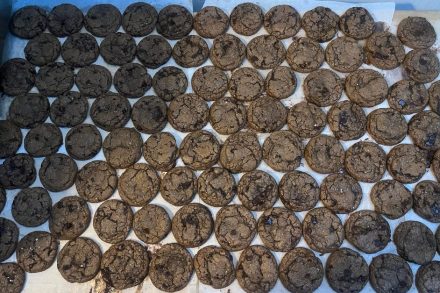
Is it wrong to bake cookies from a recipe addressed to a pedophile and sex trafficker? When I found the recipe for chocolate chip cookies on page 169 of Jeffrey Epstein’s birthday book, I read and re-read it expecting there to be some sinister inside joke, perhaps a hidden dash of adrenochrome or instructions to “massage” the dough. The surrounding page contains a woman’s redacted photograph and references Epstein’s “mentorship,” while the other 237 feel like a cross between various expressions of human depravity: part ransom letter, part porn magazine and part teenage girl’s diary. Where does an innocent cookie recipe fit in among this?

epstein cookies

How ice cream got cool

From our UK edition

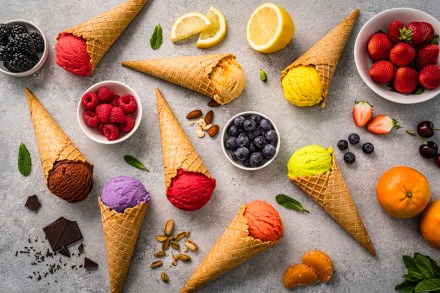
In the depths of winter last year, an ice cream and wine bar opened in Islington. The Dreamery serves ice creams and sorbets in silver goblets with tiny vintage spoons. On the ceiling is a glowing mural of happy cows and a sun with a face, resembling a child’s finger-painting (the artist is Lucy Stein, daughter of Rick). Outside, neighbours whisper about a recent Dua Lipa spotting. The Dreamery is inspired by the Parisian ice cream and wine bar Folderol, and makes fairly sophisticated flavours such as salted ricotta blueberry and Greek mountain tea. It is TikTok chic – a gamble, after Folderol unwillingly became a viral sensation and ended up sticking up signs saying: ‘No TikTok. Be here to have fun, not to take pictures.

The Bloody Mary deserves more than brunch

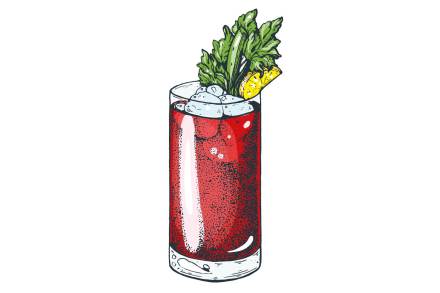
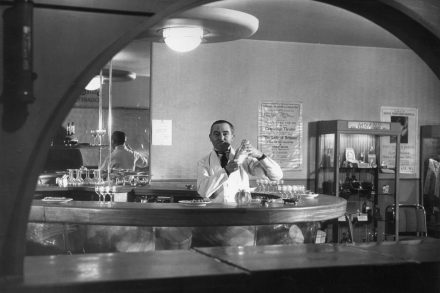
Regular readers of my cocktail column probably get the formula by now: I give a short history of the drink in question, probably with an anecdote about my time in bartending, then provide a classic recipe, following by various flavor and format variations. But the Bloody Mary doesn’t fit neatly into that structure. For one thing, the drink’s origin has never been firmly established — given that it started as a spiked tomato juice, how could there be? Do we really care who invented the vodka-cranberry? The Bloody Mary is the same way. It probably came around during the 1920s, gaining popularity in the 1930s. By 1939, you see the first real mentions of it in print.

Bloody Mary

Cocktails for a merry, tipsy Christmas

Not to live up to Irish stereotypes, but for me, Christmas wouldn’t be complete without booze; and so, for this seasonal column, it’s only fitting that I recommend some perfect yuletide drinks to get you slammed under the Christmas tree. There are two broad bases you can work with for Christmas drinks — creamy ones and those with seasonal spices. You can do both, but these are the two broad playing fields, and just because you don’t like one kind doesn’t mean you won’t like the other. There aren’t a lot of cocktails using cream (the classic or the alcoholic Irish one); the trick is to use a good Irish cream and add it to existing non-alcoholic drinks. Want a nice boozy milkshake? Want a hot chocolate that gets you blitzed? A creamier espresso martini?

Christmas

A sip of the Vieux Carré

It’s 1951 and the Hotel Monteleone burns bright, a gilded island of light and liquor adrift in the New Orleans dark. Inside, the air is thick with the sweet tang of cigar smoke and the murmurs of polished conversation. Over in the Swan Room, the trumpets blare, their brassy notes cutting through the gentle chatter, their absence filled with the lively, gravelly voice of Louis Prima. The crowd sways in rhythm, caught between the pulse of jazz and the flicker of chandelier light. Outside, the French Quarter is still alive.

Vieux Carré

Culling cookbooks

How do you choose ten cookbooks out of more than a hundred collected over sixty years? With difficulty. After my beloved husband Richard died, I decided that the only place I would want to live without him was in Meursault, France. The most difficult part was having to leave behind my cookbook collection. For a food writer, it was a daunting challenge. Here is what made the cut. I obviously couldn’t get rid of my father Bob Jones’s The Outdoor Picture Cookbook, published in 1954 and launched to Americans over their morning coffee on NBC’s Today show. He demonstrated how to cook his famous grilled chuck steak as Arlene Francis and Dave Garroway looked on with a bevy of buckets at the ready in case of fire.

cookbook
mojito

Shaking up the mojito

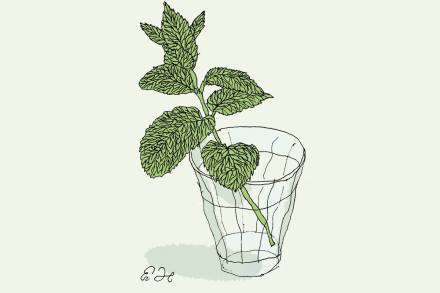
Barmen despise making mojitos. The descendant of various Caribbean rum-based cocktails, they only became truly popular in the early 2000s. It’s not that they’re that difficult or require too many ingredients — and they’re nothing compared to hellish drinks like the Ramos gin fizz — but the mojito has several qualities that, combined, make it intensely frustrating. Namely, the mojito is very refreshing, can be drunk quickly and looks pretty, and therefore one order will spark a rush of others.

Baked Alaska has become more accessible than ever

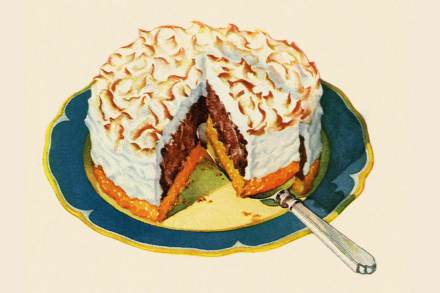
This doesn’t feel right. I am wrapping plastic around a freshly baked cake, preparatory to putting it in the freezer for thirty minutes. Then, I’m supposed to take it out and gingerly unmold a bowl of ice cream on top of it. Back into the freezer after that for another hour or so. The bowl of ice cream is lined with plastic wrap and filled with layers of raspberry sorbet, mango sorbet and chocolate ice cream. The ice cream was pressed flat to fill up all the gaps, and it went into the deep freeze two hours ago. Will it be firm enough to hold a beautiful dome shape as it unmolds onto the cake? Or will it slither and slide everywhere? I’m making Baked Alaska — or what seems to be a modern twist on it.

Baked Alaska

Margarita magnificence: a consummately customizable cocktail

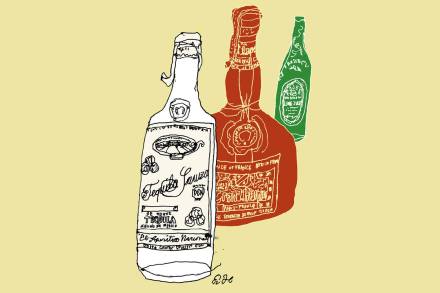
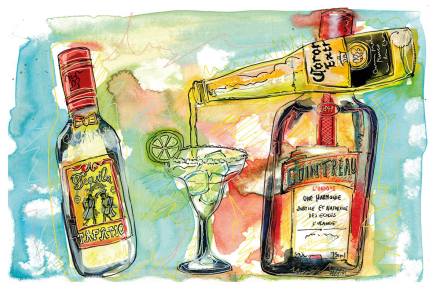
Despite being one of the most popular cocktails in the world, most margaritas are made poorly — intentionally. Nobody buys a margarita in a plastic cup for its complex flavor and balanced profile. They’re for long days out on the beach, to cool you down and kick things up — and they’re mostly made quickly and sweetly, like slushies with crushed ice. Frozen margaritas are the invention of Dallas restaurateur Mariano Martinez, who started serving them in 1971 from a converted soft-serve ice-cream machine, but the exact origin of the classic margarita was at some unknown far earlier date. Margaritas were introduced to Americans in the 1950s, with the arrival of Sauza and Cuervo tequilas, and by the 1960s, had secured their place as one of the nation’s most popular cocktails.

margaritas

The boozed-up beers of summer

Some undetermined time in the long past, possibly in 1890s Montana, a miner had finished a long and tiring day and needed a refreshing beer. But after aparticularly taxing shift, a beer wasn’t going to cut it alone. He asked the barman for a shot of whisky as well — and washed it down with his pint. It’s hard to call the boilermaker a cocktail, and inventing one certainly wasn’t on the mind of our tired protagonist. To this day, mixing beer and spirits is not generally the province of mixologists; it’s a combination more often favored by partygoers looking to get slammed as entertainingly and quickly as possible.

beers

Loving and tweaking the Long Island Iced Tea

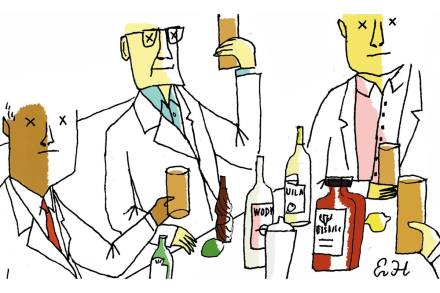
Want to get drunk, fast? To most, that’s the point of the Long Island Iced Tea. It’s not so much a drink as a chemical formula designed to make an enormous percentage of alcohol consumable in a single glass. When I worked at a cocktail bar, a man once ordered two, and I asked if he would like me to hold on the second until his guest arrived. He replied, “No thanks, they’re just for me.” He proceeded to down both within a few minutes, for what surely began either a wild or very bad night. For the unfamiliar, Long Island Iced Tea contains almost every liquor you can imagine and no actual iced tea (though it shares its color).

Long Island Iced Tea

The Spectator’s letters page is hazardous 

From our UK edition

Question time Sir: Your leading article ‘Sense prevails’ (13 April) is a valuable précis of the Cass Review into NHS gender treatment. However, it also raises several questions. How are the actions of these individuals, groups and organisations different from those of others who have been found to have acted unprofessionally, causing harm to patients who were entitled to place trust for their health in them? Where was the ethical and executive management oversight within the NHS? What other unproven ‘treatments’ are being carried out under the ever-growing demands for more money to be allocated to the NHS? Finally, what sanctions are to be meted out – or will we be fobbed off with the perpetrators’ handbook: ‘Lessons have been learned’?

Wild boar: a nuisance and a delicacy

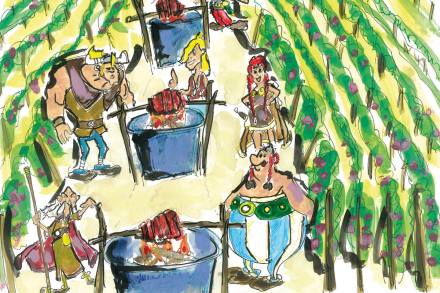
"Comment trouvez-vous le sanglier?" Guillaume parent/hunter/head rôtisseur, asked me last spring, in the tiny village of Monthélie, next to Meursault, where my family lives and where I now live. We were there to enjoy a wild boar banquet. Guillaume, who was dressed as Obélix, Astérix’s sidekick, known for his voracious appetite (especially for wild boar), had roasted three sanglier shoulders on spits over coals from old wine vines. Many of the other villagers had also dressed as famous characters from the comic book series, which often depicts les Gaulois feasting on sanglier after defeating the Romans. Never mind that they are subsequently themselves defeated by the Romans at Alise-Sainte-Reine, an hour north in the Auxois region.

boar

The delight of reading the New York Times Cooking comments

The cardinal rule of the internet may be “never read the comments,” but in at least one corner of the web, the rule should be never to skip them. I’m talking about the New York Times Cooking blog and app, the most-used resource in my kitchen. NYT has more than 20,000 recipes in its database. Many of them sport hundreds of “community notes” left by passionate home cooks. In my years using the app, I’ve noticed a few trends in the comments. The most famous NYT Cooking comment annotates the classic recipe for Katharine Hepburn’s brownies. The commenter gushes about the recipe before veering into a story about sharing her brownies with a German acquaintance. The note ends with a twist: “Eventually, she moved to the US and stole my husband!

comments

The possibilities of gluten and dairy-free cooking

My sister recently gave up gluten and dairy on doctor’s orders. In a show of support, my whole family has been exploring ways to make shared meals more tolerable for the poor woman, suddenly deprived of the two best food groups. We’re revisiting family recipes for breakfasts, sides and desserts: my grandmother’s strata, with its layers of cheese-soaked bread, is out altogether, while mashed potatoes go without butter and pie goes without crust. It’s easy to make your first GF/DF meal. The first time my sister came over for dinner after starting her new lifestyle, we smoked a pork shoulder and ate it with mayo-based coleslaw and baked beans: a classic BBQ! Meat and potatoes are GF/DF, as are stir-fried veggies and rice, and bacon and eggs.

gluten

Cooking for busy people

What do I cook when I don't feel like cooking? Scrambled eggs. Beans on toast. Canned soup. But Caro Chambers, recipe developer, Substack author and mom of three little boys, might instead go for Jerk Chicken with Coconut Rice and Strawberry Salsa, or Lamb Pita with Dilly Minty Yogurt Sauce, or some other recipe with prepositions in the title, from her popular Substack “What To Cook When You Don’t Feel Like Cooking.” Once a week, she releases a new recipe to her 112,000 subscribers, who pay $5 per month for fifty-two new recipes per year plus access to the archives. “If you want something done, ask a busy person,” said either Benjamin Franklin or Lucille Ball. This could be Chambers’s slogan.

cooking

A one-pan, one-pot Thanksgiving

Our first Thanksgiving together, my now-husband, then-medical-resident-boyfriend worked a shift during the family feast. I made it up to him with Melissa Clark’s one-pan, one-pot Thanksgiving for two. The recipe went off flawlessly and made the constraints of my tiny apartment kitchen feel more like a game-show challenge than a life-or-death struggle. Clark’s 2022 cookbook Dinner in One makes the same promise about 100 different meals. The game-show, can-it-be-done? energy made the Thanksgiving method fun, but could feel tedious on a Tuesday night. Is “one-pot” a theme or a gimmick? Does this constraint serve the cook and the recipe, or is it arbitrary, artificial and unnecessarily limiting?

thanksgiving

Who would be a farmer’s wife?

From our UK edition

On the opening page of The Farmer’s Wife, Helen Rebanks quotes George Eliot’s famous passage from Middlemarch. Dorothea adds to ‘the growing good of the world’ through her ‘unhistoric acts’ and by having ‘lived faithfully a hidden life’. With this enchanting, funny, fearless book, Rebanks brings her own ‘unhistoric’ life unequivocally out of hiding. The blood, mud, slog, exhaustion, bureaucracy and financial angst of farming are ever-present She lives with her husband James (a bestselling writer) and their four children in the Lake District on their farm shared with six sheepdogs, two ponies, 20 chickens, 500 sheep and 50 cattle.

Fish and chips: the fast food that made me

From our UK edition

The last meal my parents had before I graced the world with my presence was fish and chips, so I like to think it forms part of my origin story. Growing up on the coast, fish and chips featured in all its forms: bags of chips clutched on windy beach walks; takeaway fish suppers brought home by Dad, steam escaping from cardboard boxes; and the ultimate luxury, a sit-in experience at Colmans, the South Shields king of fish and chip restaurants, accompanied by a slice of bread and butter and a cup of tea. I was built on fish and chips; salt and vinegar course through my blood. Battered fried fish was brought over to London by Jewish immigrants coming from Spain and Portugal, via the Netherlands, as long ago as the 16th century.

If the choux fits: the secrets of perfect profiteroles

From our UK edition

Choux pastry can inspire fear in even the most confident of cooks. There's a good reason for it: it’s difficult to give a very precise recipe for choux pastry, as the amount of egg needed to create the correct texture depends on the flour you’ve used, how long the choux has rested, and how fast and how thoroughly you have cooked the choux mixture out. It’s the water content in the egg that primarily causes the choux to rise and puff in the oven into those distinctive domes or elegant eclairs: not enough and they will fall flat, but too much and the pastry will be too sloppy to pipe properly. It’s the Goldilocks of pastry recipes. I am not unfamiliar with choux-dread.