Recipe

The secret to making great oysters Rockefeller

From our UK edition

There’s nothing more intriguing than a closely guarded secret recipe. Coca-Cola and KFC are two famous examples, with the precise ingredients for the soda syrup and special coating kept in guarded vaults: the story is that those who hold the information aren’t allowed to travel on the same plane in case of disaster. Lea & Perrins, Angostura Bitters and Chartreuse all keep their products’ make-up secret. Making sure the butter is the brightest of greens is as important as any of the individual components Nobody knows the recipe for oysters Rockefeller – or at least nobody knows the original recipe. It was created in 1889 at Antoine’s restaurant in New Orleans, which still stands today, serving the same classically French food it did back in the 19th century.

Culling cookbooks

How do you choose ten cookbooks out of more than a hundred collected over sixty years? With difficulty. After my beloved husband Richard died, I decided that the only place I would want to live without him was in Meursault, France. The most difficult part was having to leave behind my cookbook collection. For a food writer, it was a daunting challenge. Here is what made the cut. I obviously couldn’t get rid of my father Bob Jones’s The Outdoor Picture Cookbook, published in 1954 and launched to Americans over their morning coffee on NBC’s Today show. He demonstrated how to cook his famous grilled chuck steak as Arlene Francis and Dave Garroway looked on with a bevy of buckets at the ready in case of fire.

cookbook
mojito

Shaking up the mojito

Barmen despise making mojitos. The descendant of various Caribbean rum-based cocktails, they only became truly popular in the early 2000s. It’s not that they’re that difficult or require too many ingredients — and they’re nothing compared to hellish drinks like the Ramos gin fizz — but the mojito has several qualities that, combined, make it intensely frustrating. Namely, the mojito is very refreshing, can be drunk quickly and looks pretty, and therefore one order will spark a rush of others.

Baked Alaska has become more accessible than ever

This doesn’t feel right. I am wrapping plastic around a freshly baked cake, preparatory to putting it in the freezer for thirty minutes. Then, I’m supposed to take it out and gingerly unmold a bowl of ice cream on top of it. Back into the freezer after that for another hour or so. The bowl of ice cream is lined with plastic wrap and filled with layers of raspberry sorbet, mango sorbet and chocolate ice cream. The ice cream was pressed flat to fill up all the gaps, and it went into the deep freeze two hours ago. Will it be firm enough to hold a beautiful dome shape as it unmolds onto the cake? Or will it slither and slide everywhere? I’m making Baked Alaska — or what seems to be a modern twist on it.

Baked Alaska

Margarita magnificence: a consummately customizable cocktail

Despite being one of the most popular cocktails in the world, most margaritas are made poorly — intentionally. Nobody buys a margarita in a plastic cup for its complex flavor and balanced profile. They’re for long days out on the beach, to cool you down and kick things up — and they’re mostly made quickly and sweetly, like slushies with crushed ice. Frozen margaritas are the invention of Dallas restaurateur Mariano Martinez, who started serving them in 1971 from a converted soft-serve ice-cream machine, but the exact origin of the classic margarita was at some unknown far earlier date. Margaritas were introduced to Americans in the 1950s, with the arrival of Sauza and Cuervo tequilas, and by the 1960s, had secured their place as one of the nation’s most popular cocktails.

margaritas

Letters: the joy of a male book club

From our UK edition

The state of our defence Sir: Your article on the etiolated state of European, including Britain’s, defence, is spot on (‘The price of peace’, 27 April). Rishi Sunak’s belated conversion to increasing defence expenditure is welcome but is, frankly, too little, too late. What it most definitively does not do is place the UK on a ‘war-footing’. By contrast, Russia is already in that state. It spends between 6 and 8 per cent of its GDP on defence. It has established strategic alliances with China, Iran and North Korea, and now much of West Africa too. We need a severe dose of realism. To begin, we must stop pretending that Ukraine has any hope of pushing Russia back to the 2014 borders.

How to make the most of asparagus

From our UK edition

It is hard to think of a vegetable which is as eagerly anticipated as that of home-grown asparagus. Partly it is because the season is so short: St George’s Day traditionally marks the start of the season which typically lasts for just eight weeks. Absence makes the heart grow fonder and, so long as we resist the temptations of year-round flown-in asparagus from foreign climes, the arrival of the first spears of this vegetable grown on home soil is as exciting a moment as any in the culinary calendar. There are occasional disruptions to nature’s rhythm: last year frosts ruined large parts of the British crop forcing supermarkets to stock asparagus from abroad.

The espresso martini is the best cocktail template

Try making up your own cocktail. It's hard. Really hard. Cocktails are balanced chemical concoctions, delicious flavors and fun textures that result from a trick of various dancing ingredients, and usually, when you come up with a cocktail idea and try to make it — even if you’ve read great theory books — it is either too sweet or too nothing, too flat. The best way to come up with one, then, is to play on existing templates. It’s not difficult to make your own sour or spritz, but the best of the best, perhaps the most fun cocktail ever, is the espresso martini. And no cocktail is easier to play with. Many of today’s classic cocktails trace their heritage to the Prohibition Era, but the espresso martini comes from the swinging nightlife of 1980s London.

espresso

How to turn your pineapple into a showstopper

From our UK edition

You can’t please me: the grass is always greener. I spend the summer months longing for a time when crumbles and stew, cardigans and the big duvet, are not only welcome but required. Then as soon as we hit the autumn and the weather changes, I’m trying to hold onto the last vestiges of sunshine. This, I suppose, is as close as I can get to a compromise, a middle ground: pineapple, peeled but whole, still sporting its Sideshow Bob haircut, roasted until cooked all the way through, and caramelised on the outside. Served hot with ice cream, or boozy cream, and drizzled with the spicy, dark glaze that drips off during cooking, it captures all the flavours of summer and yet still delivers warmth.

Greek salad: the ultimate heatwave dish

From our UK edition

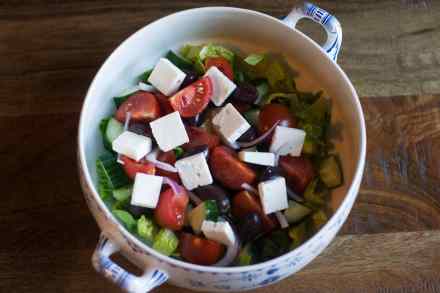
Good lord, it’s hot. I mean, really, really hot. Right now, the heat is so overwhelming as to feel like it is tangible, as if you could reach out and touch it. All we’re capable of talking about is the heat; any other polite conversation is too much for our fried brains. Normally, when our annual heatwave hits, I proffer some halfway house of a recipe: a dish that only needs the hob, not the oven, or is sufficiently refreshing or brightening that it justifies the added kitchen heat. But, this year, even that compromise seems unmanageable.

Lemon drizzle cake: how to bring out the zing

From our UK edition

Call it nominative determinism, but a lemon drizzle cake is perfect for disappointing, drizzly weather. It’s cheering: brightly flavoured, and packed with zest, but still comforting, filling your home with a warm citrus scent as it bakes. It’s also a more enjoyable food-based activity than picnics or barbecues when winds are high. A lemon drizzle cake is really just a pound cake – equal quantities of butter, sugar, eggs and flour – that’s then spritzed up with zest and juice. But it’s a pretty glorious one, managing to be both zingy and sweet, light and sticky.

The trick to making good focaccia

From our UK edition

Focaccia is one of my favourite breads: glossy and golden on top thanks to the olive oil, but firm and crisp, with a chewy, aerated, oil-soaked crumb with a real spring. You should be able to squish a good focaccia with your hand and watch it slowly rise back up to its former glory. Focaccia’s a brilliant bread to make if you’re a little nervous of yeast and dough: the ‘shaping’ of focaccia is far easier than that of a traditional loaf, or even a ciabatta or baguette. To make focaccia, you spread your dough out in a tin – an imprecise art – and then paddle it with your fingers, creating divots and dimples.

How to master homemade strawberry sorbet

From our UK edition

There’s no better time of year to tuck into one of the seasons finest ingredients, the strawberry. The crowning jewel of June's harvest, its arrival signals the beginning of summertime - at long last. This strawberry sorbet is a winner. It’s deceptively easy to make, packed full of flavour and makes for the ultimate treat when served with a dash of Champagne. We love to serve this after a long al fresco lunch in the garden. It’s fresh and light and always goes down a treat. Rustle up some little shortbread fingers to accompany it and it's the perfect pudding. Task the children with that whilst you crack on with the sorbet!

What are the true ingredients of a Bakewell tart?

From our UK edition

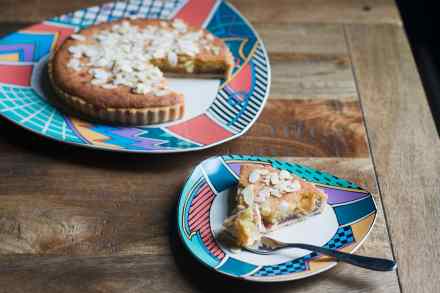
Northerners take their puddings seriously: Eccles cakes from Manchester, sticky toffee pudding from Cartmel, and Bakewell tart from Derbyshire. These hyper local puddings have been adopted by sweet tooths all over the country, but woe betide anyone who tries to mess with their traditions. In this, Bakewell tart provides its own challenges: the locals call it a pudding, and many will argue that it should have a puff pastry base rather than the shortcrust that it tends to have elsewhere, and even feature custard rather than frangipane. And we also have to contend with another variety – those made famous by Mr Kipling, which use a cherry jam, and decorate with a thick layer of fondant icing and a glace cherry.

Why your summer pudding needs a splash of elderflower

From our UK edition

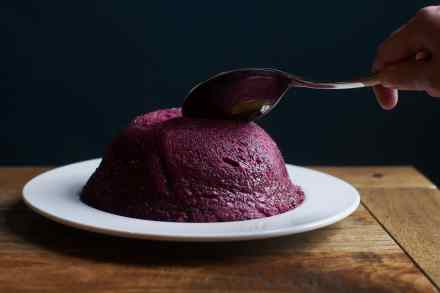
Is there a sight more pleasing, more cheering, than the vermillion dome of a summer pudding? Its vibrant colour cannot fail to raise a smile, even on dreary June days, suggestive as it is of all that is best about the British summer when it plays ball: gluts of sweet, juicy fruit, that sweet-sour tightrope that our summer crops walk so deftly, long lunches in the garden, and sticky fingers. Each time I make a summer pudding, I am convinced it won’t hold. That, after a day of soaking, the flimsy bread frame will give way, spilling forth its berry contents all over the plate. Each time I turn out the pudding, I am freshly delighted and surprised; triumphant, as if it is my structural skill rather than berry juices that is to be congratulated.

The secret to making sumptuous scones

From our UK edition

I love scones. I would go so far as to say they are my favourite morsel of all in the traditional afternoon tea spread. Yes the finger sandwiches are nice, and the mini tarts, eclairs and macarons often an impressive display of the pâtisser’s skill and finesse. But if the afternoon tea doesn’t have a scone, in my book it is not an afternoon tea at all. The appeal of the scone is partly in its simplicity. I can find the opera cake with multiple different types of ganache and the various mini tartlets that feature in hotel afternoon teas sometimes all a bit much.

Tarte au citron: serve up a slice of sunshine

From our UK edition

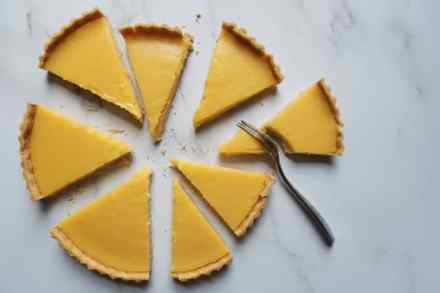
There is something inherently uplifting about a lemon. Even in literal or figurative dark times, lemons shine bright – little bumpy orbs of joy that cry out from the fruit bowl or the greengrocers to be turned into something mouth-puckering or, once paired with enough sugar, that perfect balance of sweet-sour. Perhaps I am overly sentimental, but lemons always strike me as cheering, and full of promise. Lemon curd was one of the first things I learnt to make when I began cooking, but I’ve held off turning it into a tart for a while, unable to work out how to create the exact pudding I wanted to eat. For a long time, I have wanted to make this perfect lemon tart, but have been thwarted in my attempts.

The sheer delight of Cherries Jubilee

From our UK edition

Cherries Jubilee is a dish with real heritage. Perhaps unsurprisingly, given its name, it was created to celebrate a jubilee: it is thought to have been created by Escoffier for Queen Victoria’s golden jubilee celebration in 1897. It consists of cherries cooked in flaming brandy, and then served warm over vanilla ice cream, although in the original dish it was even more pared down, lacking the ice cream element. The dish is flambéd, which means that the alcohol from the kirsch is ignited with an open flame, and cooked off quickly.

The secret ingredient that transforms banoffee pie

From our UK edition

I have been labouring under a misapprehension for some time, perhaps my whole life. I thought that the ‘offe’ in ‘banoffee pie’ was a reference to the thick, gooey toffee layer that sits between the biscuit base and the cream. But no, the ‘offe’ has nothing to do with what is, in any event, really a caramel, but the coffee flavour that should be folded through the cream topping. I’m not sure I’ve ever had a banoffee pie that features the sort-of-eponymous coffee, and I am relieved to discover that wide swathes of the internet (including the fallible wikipedia) has made the same mistake.

Why I’m wild about Waldorf salad

From our UK edition

You don’t see Waldorf salad so much nowadays. It’s a simple dish: raw celery, apple, grapes and walnuts, tossed in a mayonnaise-based dressing. Although you might still find it packaged in the bigger supermarkets, it’s fallen off dinner tables and restaurant menus alike. We wrinkle our noses at the prospect of combining fresh fruit and mayonnaise: the combination always makes me mentally place the Waldorf salad in the 70s, alongside big platters of dressed salmon, covered in wafer-thin cucumber scales, and a host of other mayonnaise-coated, tricky-to-identify bowls purporting to be salads, possibly involving tinned mandarin oranges.