Racism

Beyond the pale | 17 August 2017

Setting off to spend a year teaching English in Zhejiang province in south-eastern China, I expected plenty of surprises. But what struck me most was something they tend not to tell you about in the guidebooks: the racism. It started when I went around the classroom, asking pupils which city they were from. When I got to a slightly darker-skinned boy, his classmates thought it was hilarious to shout ‘Africa!’ It’s a theme. A girl with a similar complexion was taunted with monkey sounds; her peers refused to sit next to her, saying she smelt bad. I apparently erred when, teaching the word for wife, I showed my students a picture of Michelle Obama. The image of the then First Lady was greeted with exaggerated sounds of repulsion: ‘So ugly!’ they said.

High life | 13 July 2017

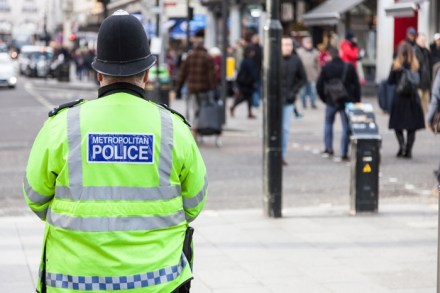
I was going through my paces in Hyde Park, sweating out the booze, raising the heartbeat with short wind sprints, keeping my mind off the weekend’s debauchery and the ensuing Karamazovian hangover. I sat down on a bench, took off my sweaty polo shirt, opened the Daily Telegraph, and took in some rays. A police officer approached me — but with a smile. ‘Are you by any chance Taki?’ he said. ‘Guilty as charged, constable, but this time I’m clean.’ He smiled broadly and asked if he might sit down. Well, Constable Hackworth turned out to be straight out of The Blue Lamp. A Spectator reader, he somehow recognised my 80-year-old countenance and complimented me on my training.

A vicious reaction to a very bad word

Having a nigger in the woodpile and a skeleton in the closet are closely related problems, although subtly different. In the first case it is a problem which is lurking, hitherto unseen, but which may pop up very soon to cause mayhem and mischief. In the second case it is a problem which has been hidden from public gaze quite deliberately but which may yet emerge, clanking and rattling, to ruin one’s life. Both terms are capable of giving grave offence. The first because it probably dates from the time at which some white people enslaved some black people (about 150 years, give or take), as opposed to the time when black people enslaved black people (about 2,000 years, give or take). It has that very bad word in it, a pejorative word, which can cause hurt and anguish.

The trouble with diversity training

Is diversity training snake oil? According to its proponents, women and minorities are not competing with white men on a level playing field when it comes to career advancement because of the ‘unconscious bias’ of their white male colleagues. The solution, if you’re the CEO of a large company, is to pay a ‘diversity consultant’ to train your managers to recognise and eliminate this bias. In America, it’s an $8-billion-a-year industry, yet a recent study in Australia suggests that, whatever is holding back women and minorities, it isn’t unconscious bias.

A policeman’s lot

Described by the publisher as a ‘moving and personal account of what it is to be a police officer today’, John Sutherland’s memoir is most to be admired for its frank depiction of mental breakdown. Sutherland has spent more than 20 years in the Met and this memoir, presented in a sequence of short, staccato episodes told in the present tense (which feel like expanded blog entries), covers his entire career to date, including a number of high-profile cases that readers will be familiar with. Andrew O’Hagan talks about his new book The Secret Life – a funny, alarming and disturbing picture of what happens when digital fantasy meets analogue reality.

Letters | 11 May 2017

It’s a Unionist revival Sir: Contrary to Alex Massie’s claims, there is no rebirth of Scottish Conservatism in Scotland (‘Queen of Scots’, 6 May). Rather, there is a strident Unionist vote from 2014 that has found its home in the Scottish Conservative and Unionist party — the latter part being the key. Mr Massie makes the error of confusing support for Unionism with support for Conservatism. It is widely acknowledged that Ruth Davidson and the Scottish Conservatives have no discernible policies or philosophy other than opposing a second independence referendum.

Flee or die

Every nation has the right to control its borders, but we in the West are getting a bit too comfortable dehumanising other humans for failing to fill out forms in triplicate before fleeing the carpet-bombing of their cities. In recent months, Theresa May has rejected Calais’s child refugees; Donald Trump has seemingly tried (unsuccessfully, twice) to ban Muslims; and Australia has gone full ‘Dickensian judge’ and chucked its refugees on a prison island.

A choice of first novels | 20 April 2017

If you go down to the woods today… That is the starting point for Idaho by Emily Ruskovich, who grew up on Hoodoo mountain in the Idaho panhandle. A family — mother Jenny, father Wade, daughters May and June — leave their little house in the big woods and drive a pick-up truck to a clearing where they chop birch wood, squabble and drink lemonade that attracts the flies. You want them to find something wonderful there. A teddy bears’ picnic. A magic faraway tree. A Piglet. But this is Idaho, not our friendly day-tripping woods. Nature is vast and hostile. In winter the house is cut off for months at a time, the paths too steep for a snowplough. In summer you sweat and sweat and tempers frazzle. Leave the windows open and the beetles get in.

The mad, bad war on ‘cultural appropriation’

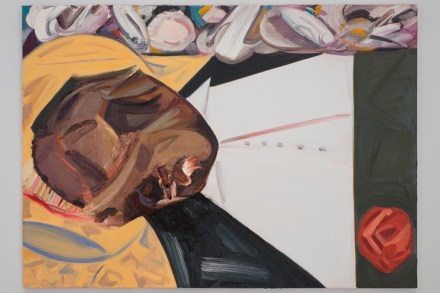
It’s usually best to ignore the indignant fury of the 21st-century young. We’re used to them now, these snowflakes, posing as victims (though they’re mostly middle-class), demanding ‘safe spaces’, banning books and speakers. Best to rise above them, deadhead the camellias. Attention, especially from the press, acts on entitled millennials like water on gremlins — they start proliferating and develop a taste for blood. But then sometimes they go too far. Ten days ago, the Whitney museum, on the New York bank of the Hudson, opened its biennial exhibition of contemporary American art. It’s an exciting show, full of vim and diversity.

Our dangerous impulse to make sense of murder

‘On Friday noon, July the 20th, 1714,’ begins the small, perfect 20th-century novel The Bridge of San Luis Rey, ‘the finest bridge in all Peru broke and precipitated five travellers into the gulf below.’ In the coincidence of crossing the bridge at the same time, explains the writer, Thornton Wilder, these five seemed to have been assembled by pure chance. Or had they? He entitles this first chapter ‘Perhaps An Accident’. He spends the rest of his book tracing the lives of each until the moment when, in a twang of rope, fate hurled all together into the abyss. Thus is the reader’s interest engaged for the human histories that unfold. But Wilder, an American Christian humanist, falters in his rationalism.

Major to minor

Ghost in the Shell is the Hollywood live-action remake of the 1995 Japanese anime of the same name and it’s set at a time in the future when, it would appear, the world is populated by blandly one-dimensional characters. Evil is perpetrated by our old friend, Corporate Evil Man — yes, still — and everyone communicates via dialogue so stilted and ham-fisted it makes you die inside a little. That said, at the media screening I attended we were all given a free bag of high-end crisps, so it wasn’t two hours totally wasted. (I do really like crisps, high-end or otherwise.) The film stars Scarlett Johansson, who looked liked being an interesting actress for a while but these days? Not so much.

Olden but golden | 23 February 2017

This weekend Brian Matthew will present his last-ever Sounds of the 60s show on Radio 2. Now 88, he’s been in charge at breakfast time on Saturdays since 1990, his gravelly voice deepening and getting hoarser with the years. You could tell he was well past his clubbing prime, or for that matter being able to dance along to Bryan Ferry. Yet this has never mattered. Matthew’s band of devoted listeners have cherished his weekly two hours on air precisely because of his age. It has meant he was there when those classic Sixties’ records were made. He met the Beatles in their prime, and Dusty Springfield, Steve Winwood, Alan Price, Sandie Shaw.

Camilla Long’s 3* review of Moonlight doesn’t make her a racist

I have a bone to pick with Camilla Long – a colleague of mine at the Sunday Times, where she is the film reviewer. She gave five stars to a stop-motion animation film called Anomalisa a year or so back and I went to see it on her journalistic recommendation. Oh, and also cos it had Jennifer Jason Leigh voicing one part, the most underrated actress of the last thirty years. It was godawful; pretentious, badly scripted, shallow and dull. I thought about suing Camilla for liking a film I had not liked and thus making me endure two hours of misery. Or maybe outing her as a racist. Why? Oh, no reason. You don’t need a reason these days. She’s been outed as a racist by the idiotic leftie website The Canary.

Orange alert | 26 January 2017

That the US should have elected as president someone like Donald Trump came as a shock. But the US is a strange country, given to periodic outbursts of political madness — though perhaps never quite as mad as this. That the Dutch, often caricatured as pragmatic, bourgeois, phlegmatic, business-minded, tolerant and perhaps a little boring, might in March pick a party led by a vulgar rabble-rouser with dyed blond hair to be the biggest in the land is more surprising. But the rise of Geert Wilders, leader (and only official member) of the Freedom party, shows how populism is sweeping across the Netherlands too. Wilders was one of the main attractions at the recent far-right jamboree in Koblenz, where he hailed Brexit, Donald Trump and what he called the Patriotic Spring in Europe.

An emperor’s inauguration

Given that Donald Trump is not the most popular president the USA has ever seen, even among his own party, it is salutary to be reminded what induction ceremonies can be like for those who devised imaginative routes to power. Pertinax, who started life as a schoolmaster, was a governor of Britain and a highly respected consul before succeeding the ghastly Commodus as emperor on 30 December AD 192. But the military did not appreciate his immediate attempts to restore discipline and financial stability, and he was assassinated three months later.

Flight into Israel

I’ve always lived in London. I grew up near Baker Street and went to school in Camden. Even when I was at college in Kent, I lived in Islington and commuted. Five years ago I moved to Belsize Park and I’ve been here, the nicest place I’ve lived, ever since. I didn’t mean to stay — I was going to see the world, but my father died and my mother said she needed me to be close. She said it with a tremor in her voice, so I stayed. London is in my heart and in my blood, but the wind has changed, like it did for Mary Poppins, and I think it’s going to blow me out of the city, all the way to Tel Aviv. The referendum result didn’t make me decide to leave, but it was a penny on the scales. This no longer feels like home.

Stupidity takes hold of another students’ union

I had never heard the acronym Soas before I started work at the BBC, almost 30 years ago. But as a very young producer at the corporation I was asked to fix up a story about something appalling happening in Africa — I can’t remember exactly what. Famine or cannibalism maybe. Or perhaps one mitigated by the other. The senior producer told me to get someone from Soas to explain it all. What’s Soas, I asked? ‘The School of Oriental and African Studies,’ I was informed. ‘It’s in London. It’s basically a place where we try to work out what on earth the natives are up to now.’ It was a different BBC back then. I was based in the old Broadcasting House, at the top of Regent Street.

Barometer | 12 January 2017

Black background A Morris dancing troupe with blacked-up faces had to abandon its performance in a Birmingham shopping centre after being heckled and accused of racism. — There are several explanations for the tradition of Border Morris groups blackening their faces, but it was certainly established by 1509, when a Shrovetide banquet for ambassadors featured torch-bearers with blackened faces. — Some believe it to have derived from Spain and Portugal, where dancers blacked up as Moors. Others believe that it derives from the practice of poachers blackening up to conceal themselves in darkness. — Blacking up is punished more mildly now than in the 18th century: a 1723 anti-poaching law made it a capital offence to be caught in a forest with a blackened face.

A radical mistake

In the early 1990s, after the shock of the 1989 fatwa against Salman Rushdie, I began to do some research among those who condemned him, and learned that a strange thing was happening among young British Muslim men and women. I first wrote about this strange thing in my novel The Black Album, which concerns a young man who comes to London from the provinces to study and finds himself caught between the sex-and-ecstasy-stimulated hedonism of the late 1980s and the nascent fundamentalist movement. At the end of the novel the Asian kids — as they were called then — burn The Satanic Verses and attack a bookshop. I followed this up with a story published in the New Yorker, ‘My Son The Fanatic’.

Unforgiven

Now that almost six months have passed since the EU referendum, might it be time for old enemies to find common ground? Matthew Parris and Matt Ridley, two of the most eloquent voices on either side of the campaign, meet in the offices of The Spectator to find out.   MATTHEW PARRIS: Catastrophe has not engulfed us yet, it’s true. But I feel worse since the result, rather than better. I thought that, as in all hard-fought campaigns, you get terribly wound up and depressed when you lose. Then you pick yourself up, dust yourself down and start all over again. But my animosities — not just towards the Brexit argument, but towards a lot of the people who advanced it — haven’t softened, I’m afraid.   MATT RIDLEY: I noticed that.