Public sector

Union bosses: Thanks for the concessions, but the strike’s still on

The TUC have just released a statement responding to the tweaked public sector pensions package that I blogged about earlier. It is, in part, fairly conciliatory; saying that the group welcomes "this movement in the government’s position". But it does end with a warning: "unless and until further real progress is made and acceptable offers are made within those negotiations, unions remain firmly committed to continuing their preparations for the planned day of action on November 30.

The pensions battle rages on

An "enhanced offer" is how Treasury types are describing the revised pensions package that will be put before union bosses today — and so it is. As far as we can tell, concessions have been made in three areas: i) the changes to public sector pensions will be spread across seven years, rather than five; ii) the accrual rate, which determines how much of a workers' salary is notionally set aside for their pension each year, will be made more generous; and iii) the "cost ceiling," which sets a cap on long-term taxpayer contributions, will be raised for various schemes. There could be more on offer, too. But all that, sadly, is unlikely to cool the quickening flames of industrial action.

Explaining Cameron’s debt u-turn

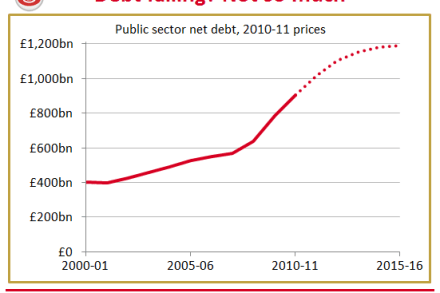
“Millionaire David Cameron wants you to pay off your credit card – are you going to obey the Prime Minister?” asked one local BBC radio station phone-in this morning. This is not what No. 10 had in mind when releasing selective quotes from his speech last night. “The only way out of a debt crisis is to deal with your debts. That means households - all of us - paying off the credit card and store card bills.” This line in his speech is now being rapidly rewritten – and for good reason. Because the Prime Minister was in danger of making a major mistake.   The premise of the now-never-to-be-delivered quote is incorrect. The British public actually are paying down their debts, while the British government is vastly increasing its borrowing.

The colour purple | 23 September 2011

A group of Labour figures have contributed to The Purple Book, which some modernisers hope will deter the apparent move to the left and dilute New Labour's twin obsessions with the City and the public sector. There'll be more on the book at the forthcoming Labour conference, but here is a discussion about it on today's Daily Politics.

Miliband versus the Brothers

Ed Miliband is the Brothers’ man, or so the popular myth relates. Miliband has been trying to shake that perception ever since his election was secured by the union vote. He will make his most visible show of defiance yet in a speech to the TUC conference today. Miliband will refuse to countenance the proposed general strike over public sector pensions and instead urge the unions to change their ways. The Guardian reports that he will say: ‘The challenge for unions is this: to recognise that Britain needs to raise its game if we are to meet the challenges of the future and to get private sector employers in the new economy to recognise that you are relevant to that future.

Alexander’s balancing act

Remember that merry dance between the government and the unions over public sector pensions, a few weeks ago? Expect a minor reprise today, and much more over the summer. The government today announces how much extra public sector workers will have to pay to maintain their pension levels, and already the Telegraph has the numbers. When it comes to the 40,000 best-paid public sectorees — all on considerably over £100,000 — their contributions will rise by around £3,000 a year. And then it's a sliding scale all the way down to the 750,000 least well-paid workers, who will face no increase at all. The unions, who will rejoin the government in talks soon, are unlikely to respond kindly.

What didn’t make it into today’s reform paper?

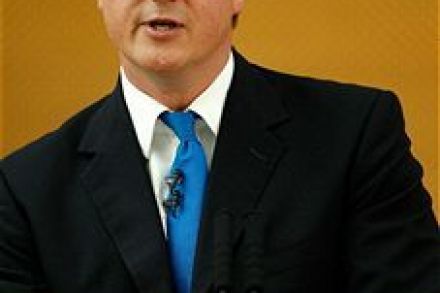
"It's like Blair and Brown — but without the acrimony." So sayeth one Cabinet Office source, describing the prolonged build-up to today's public services White Paper to me a couple of months ago. His point was that, although the yellow and blue halves of the Downing Street operation are genuinely chummy with one another, their differences can still put a block on reform. In his story, the Tories are like Blair, striving to go further, faster, stronger. Whereas the Lib Dems can occasionally stand in the way. So what has been blocked from the White Paper? Listening to David Cameron today, you wouldn't guess that anything has been. "Let me assure you of this," he said in his speech this afternoon, "we are as committed to modernising our public services as we have ever been.

Schooling the judges

The judges are judging the judges, or at least judging by the cover of this morning's Times (£) they are. "Radical reform of the selection of judges," some leading figures tell the paper, "is needed to break the stranglehold of white Oxbridge males at the top of the judiciary." The story continues inside the paper, with a tranche of statistics on just how white, Oxbridge and male the judiciary actually is (i.e. very). It all reminded me of a table we put together for Coffee House some months ago, and which I thought I'd excavate this morning. Here it is, with judges sitting firmly at the bottom: Of course, some caveats apply to those figures: the state sector isn't just made up of comprehensives; this refers to the schools system of some decades ago; and so on.

Breaking strikes

Shortly before Michael Gove organised a strike for journalists in Dundee, I crossed a school picket line with my mum, a teacher at my local school (Nairn Academy). She was a member of a teaching union, the PAT, that didn't believe in strikes, so when the school closed the two of us went in. It was a perfectly friendly affair: my teachers (and her colleagues) were at the gate, with no one else around. One of her colleagues handed her a leaflet and we went on inside. We never discussed politics at home, and I still have no idea what my mum thought about Thatcher (it was 1985). But then, she and thousands of teachers like her took the basic view that kids should not be dragged into disputes between adults.

The unions dip their toe into the water

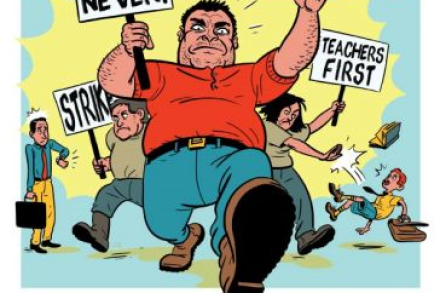
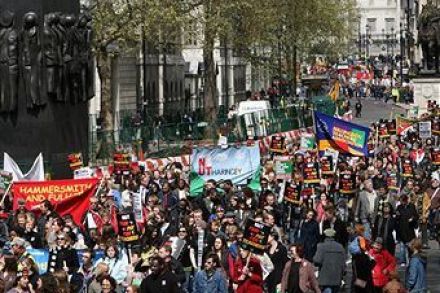
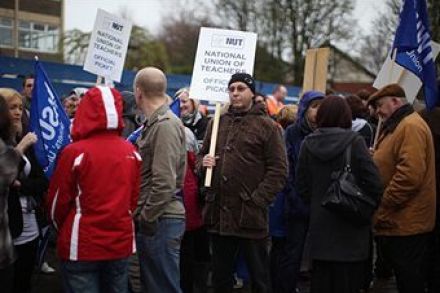
It's strange to think of the biggest, national walkout for years as a prelude to something even larger — but that's how some of the union bosses would have it today. Schools are shutting, civil servants are downing their keyboards, UK Border Agency staff are pausing their vigilant watch over our shores, and all the while the talk is of more to come. Christine Blower, the head of the NUT, tells the Times (£) that today is the "first phase" of a "coordinated campaign". Mark Serwotka — who appeared opposite Francis Maude on the Today Progamme earlier — warned yesterday that these are just the "opening skirmishes," and that, "If you won’t talk to us we will ensure the next national strike has three to four million of us.

Miliband keen to relieve the squeezed middle from Thursday’s strikes

Ed Miliband is learning. He has written a blog on Thursday’s strikes and it is plain that he has learnt from the errors he made during the March against the Cuts by associating himself with militancy. First, he places himself firmly on the side of parents who will be inconvenienced by Thursday’s strikes: “The Labour Party I lead will always be the party of the parent trying to get their children to school, the mother and father who know the value of a day’s education.” Miliband gives the unions and their members pretty short-shrift to be honest. He writes: “I understand why teachers are so angry with the government.

Strike Thursday nears

After the failure of today’s meeting between union leaders and Francis Maude and Danny Alexander, Thursday’s strike now seems certain to go ahead. It’ll be the biggest test so far of the coalition’s ability to withstand industrial action. The coalition has constantly emphasised that it has contingency plans in place to deal with strikes. This Thursday will show us how good these plans are. Certainly, the more schools that are kept open, the less powerful the bargaining position of the unions will be. I understand that David Cameron will use his speech to the Local Government Association tomorrow to emphasise that the deal that the government is proposing on public sector pensions is reasonable and fair.

How will the government respond to Thursday’s strikes?

Activity in Whitehall becomes more fevered as the day itself approaches. Michael Gove wants to see off the NUT with as little bloodshed as possible, honouring David Cameron’s decree that ministers tread softly. To that end, he has already written to headmasters urging them to keep calm and carry on. And this morning, news emerges that Gove is asking parents and retired teachers who have passed CRB checks to fill in on Thursday to ensure that children have a constructive day at school. The Department of Education has not yet approached former members of the flagship Teach First scheme to return to school for a day; it’s probably too late to do so on this occasion, but doubtless there will be others.

Ancient hatreds mask Stormont’s current challenge

Ignore the antediluvian hatreds for a moment. As Anne Dawson says, the recent violence in East Belfast was largely inspired by current economic distress. Northern Ireland’s economy is a serious cause for concern. Central expenditure per head is 25 per cent higher in Ulster than the UK norm and 70 per cent of Northern Ireland’s economy lies in the public sector according to parliamentary one estimate. Although the province has much to commend itself to business – competitive operating costs and excellent transport links serviced by substantial capital investment – private enterprise remains depressed. A report by PriceWaterhouseCoopers in March found that growth was negligible and that unemployment is running at 6.

Danny’s maths

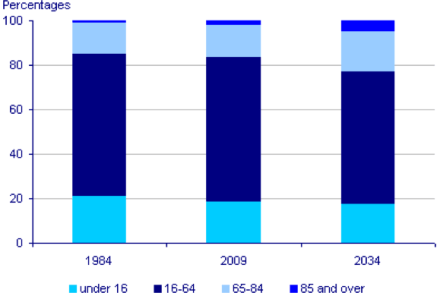
And so Danny Alexander has further angered unions by making it clear that "painful decisions" are needed to reform public-sector pensions, including raising the retirement age. But his proposals should no come as a surprise. Rapid demographic transitions caused by rising life expectancy and declining fertility mean that the proportion of old to young is growing rapidly. But when the Lib Dem minister says that "people are living much longer now," he is in fact underplaying how dramatic the change has been in the last decade. According to the Office of National Statistics, the proportion of people in Britain aged 65-and-over increased from 15 per cent in 1984 to 16 per cent in 2009, an increase of 1.7 million people.

Alexander’s not for turning

After the vacillations of recent days, the government could do with a show of hardheadedness — and Danny Alexander is delivering just that today. He is announcing the government's plans for public sector pension reform later, and they're exactly the sort of plans that will set the union bosses frothing: an increase in the public sector retirement age to 66, an increase in contributions, that sort of thing. But the Chief Secretary to the Treasury is unapolgetic. In an article for the Telegraph, he effectively says that this is a take-it-or-leave-it offer for the public sector. "It may be that those who oppose change think they can force the Government to change its mind," he writes, with his pen pointed accusingly at the unions planning strikes for next month.

Bring on the strikes

An old boss of mine once said to me: when you start a new assignment, seek out a fight — and win it. The same advice should be given to incoming Prime Ministers. U-turns, as Mrs Thatcher knew, just create demand for more U-turns. If the government is willing to revise its NHS plans, then why not reopen the Defence Review, or alter the pledge to spend 0.7 of our national income on overseas aid (or at least abandon the questionable idea of legislating for it)? But seeking out and winning battles, while avoiding too many retreats, is not enough. To be great, a Prime Minister needs good enemies. Mrs Thatcher had great enemies in Michael Foot and Neil Kinnock. Tony Blair did too.

Cable tries to keep everyone happy – apart from the unions

When the GMB union invited Vince Cable to address their conference today, I doubt they wanted this: a warning that the government could legislate if the brothers decide to militate. The Business Secretary does add that "the case for changing strike law is not compelling," so long as industrial action remains limited. But, on the surface, this is still the firmest coalition attack on the unions since David Cameron and Boris wrote that angry article for the Sun in January. And it comes from the side of the coalition, the Lib Dems, who were thought to be opposed to taking on the unions in the first place. Perhaps Cable really is more ruthless on this than his reputation would suggest. The question, though, is of how the rhetoric will translate to reality.

Moving towards more efficient public sector pay

Data issued yesterday by the Incomes Data Services indicated that average pay settlements over the first quarter of 2011 in the public sector were close to 0 per cent. However, pay settlements in the private sector were closer to 3 per cent. Does this mean that Policy Exchange were wrong in a recent report to conclude that public sector workers are overpaid compared to their private sector counterparts? The basic answer is no. We highlighted that on a range of measures, workers in the public sector were overpaid compared to their comparators in the private sector. Even on our most conservative measure, which accounted for compositional differences in terms of age, location, hours, gender and qualifications, this gap was around 9 per cent.

Britain’s other, bigger debt problem

And what about the other sort of debt? We spend so much time harrumphing about the national debt that an important point is obscured: personal debt, the amount owed by individuals, is even higher. I wrote an article on the subject for a recent issue of The Spectator, as well as the Thunderer column (£) for last Saturday's Times. But, really, a piece in the latest Spectator (subscribers here) by Helen Wood — the former prostitute who transacted with Wayne Rooney, as well as with a "married actor" who has slapped her with a superinjunction — puts voice to the problem in blunter fashion. "My mistake," she writes, "was to get into debt": "I borrowed £800 to go on holiday, followed by £500 to pay the rent — both from loan sharks.