Private schools

Drinking at school with Plato

Rugby and Ampleforth schools have decided to give their charges experience of sensible drinking by introducing a little alcohol, under close staff supervision, at dinner. But, as Plato realised, what they actually need is experience of senseless drinking. Plato’s last work, Laws (c. 350 bc), depicts a new utopia, quite unlike that of the Republic with its philosopher-kings. Called Magnesia, it lays down a detailed code of laws which its inhabitants must obey without question because the code will inculcate moral goodness. A key feature of that is self-control, which the speaker (‘the Athenian’) proposes to achieve by means of symposia, or drinking parties.

State secrets

So much of the divide between state and private schools is a matter of mere perception — the perceptions of the teachers, the parents and the children. When, years ago, I announced that I would be sending my children to state schools, my colleagues (journalists on a national newspaper) turned on me as a pack of hounds, baying their disgust at what they called my willingness to ‘experiment’ on my own children. Move over Mengele, here comes Waugh. There are of course differences between the two types of education — but how many of them really matter? For my (yes, state-educated) children, many of the differences they saw between their various friends were nothing to do with education at all.

Customs of the country

There are some things that will always be in competition. The Capulets and the Montagues; William Brown and Hubert Lane; the NHS and Bupa. They thrive on the tension, and there is always a story to be told. Such is the case with schooling in this country. The education system, and the battle between private and state education, receives vast amounts of media attention. We often hear about why the state system is ‘failing’ — or conversely, more recently, triumphing. Then there’s the perennial university conundrum: last year the Department for Education predicted that privately educated applicants would be five times more likely to gain admission to Oxbridge than students from state schools. Add to that our social attitudes. We in Britain obsess over schooling.

A lesson in bias on private schools

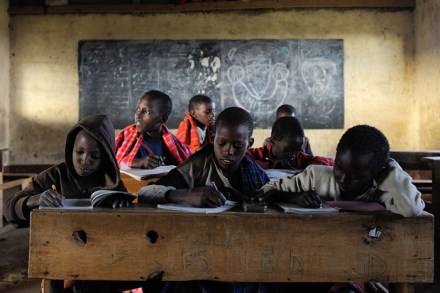
What’s wrong with low-cost education in poor countries? Quite a lot, you might think, if you read a new report from the Department for International Development. Low-cost private schools serve around 70 per cent of children in poor urban areas and nearly a third of rural children too. But the issue raises controversy among academics and experts, not least because it goes against 65 years of development dogma that the only way to help the poor is through government education, with big dollops of aid thrown in. Every aid agency and government has gone along with that. The only fly in the ointment is that poor parents disagree, which is why low-cost private schools are burgeoning wherever you look.

Now more than ever the ‘I’ in IGCSE is for ‘independent’

I always thought that rugby was invented so that there was no chance of public schoolboys having to meet grotty kids from football-playing state schools on the playing fields. But until recently all children, whether in the state or independent sector, did at least take the same exams. Until, that is, there emerged a great divide between GCSE and IGCSE. In January, Education Secretary Nicky Morgan confirmed that international GCSEs, or IGCSEs, will no longer be counted in school performance tables once the first reformed GCSEs start to be taken in 2017. The new courses, like IGCSEs, will be examined at the end of the course, not in modular instalments.

Tribal uniforms explained

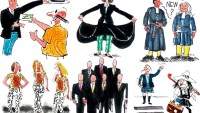
There’s no better way to improve character and cure self-consciousness than to insist your child dress like a fool during their formative years. Distinct fashion tribes exist at some of Britain’s top schools and a boring old blazer simply won’t do. You can never be overdressed or overeducated, suggested Oscar Wilde. But why not at least aim for both by using this guide to school style? The Boaters Harrow insists their students wear boaters at all times while outdoors. Flouting this is cause for punishment. Entrepreneurial types make a quick bob by flogging their hats to Chinese tourists, before buying new ones at a cheaper rate from the school shop. The Witches Girls at Marlborough and Downe House wear long black skirts in the sixth form.

Diamond schools: the best of both worlds

Imagine a school that you could send your son and daughter to. A single school that fitted your ideal for both single-sex and co-ed education, operating from nursery to sixth form, covering all bases. One school — not three or four. A school that, for the final two years, allowed young adults of both genders to share lessons and facilities. But imagine no more, for these schools exist, and they’re called diamond schools. (So-called because of the shape of the structure: genders together at the beginning and end, but apart in the middle.) There are just 13 of them in the country. Blending single-sex and co-ed teaching in the same institution makes them stand out as shining beacons in a fairly conservative landscape.

Seb Payne’s schooldays

The 17th of December 1999, nothing more than an ordinary school day close to the Christmas break. But to my family, it was a devastating moment. That morning a letter dropped on to the doormat informing us that I would not be attending Emmanuel College for my secondary education. Places at Emmanuel, one of the original city technology colleges, were the most coveted in Gateshead. It’s easy to see why: a school with no fees offering a top-notch education. It was such a successful venture that it inspired Andrew Adonis to start the academies programme during his time as schools minister. Five years later, the Paynes were waiting for another communiqué on the future of my education. This time it was from a small private school across the river in Newcastle-upon-Tyne.

Female bishops are very, very old news

Female bishops The Reverend Libby Lane was ordained as Bishop of Stockport, the Church of England’s first female bishop. — By the time the first 32 female C of E vicars were ordained in 1994, the Episcopal Diocese of Massachusetts had had a female bishop, Barbara Harris, for five years. — Yet the first Anglican woman priest was ordained half a century earlier. Florence Li Tim-Oi had been deacon at Macao Protestant Chapel in the early 1940s. When the war prevented a priest travelling from Japanese-occupied territory to administer communion, Li Tim-Oi was ordained by the Bishop of Victoria on 25 January 1944. Cash or card?

Maybe it’s a problem when all artists are like James Blunt. But it’s worse when Labour MPs are like Chris Bryant

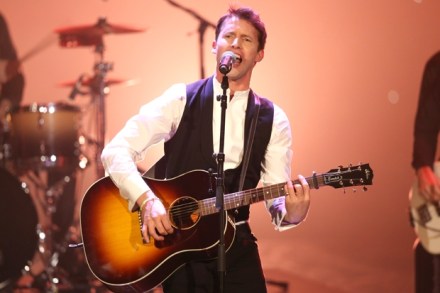
What should we do with James Blunt? This is what I have been asking myself. And I am not looking for comedy answers here, such as ‘Lock him in a shipping container and force him to listen to songs by James Blunt’ or ‘Allow him to become a properly recognised bit of Cockney rhyming slang’. No. It’s a genuine question. I refer, of course, to the enjoyable spat conducted this week via open letters to the Guardian, between the singer (private school and Bristol University), and the shadow culture secretary, Chris Bryant (private school and Oxford), over whether people in the arts are too posh. I don’t know why, even now, it is only people who went to private school and fancy universities who get to write open letters to the Guardian.