Prison

Cuddly Ken comes out snarling, and sneering

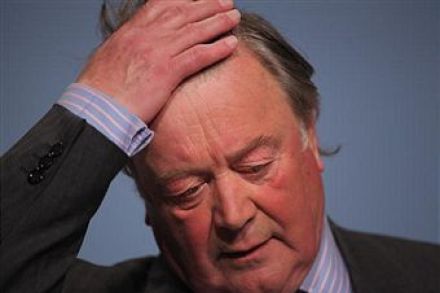
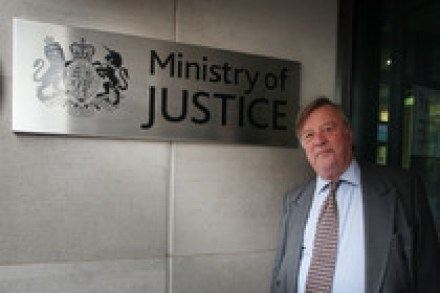
Another Saturday, another interview with Ken Clarke. This time, the bruised bruiser has been talking to the FT and the remarkable thing is that he has managed to say nothing. Not a sausage. Colleagues were not insulted, Middle England escaped unscathed and the European Court of Human Rights wasn’t even mentioned.  But Clarke conveys his determination to fight. He defends his prison reforms and community sentences, to which the right has now applied the grave term ‘misconceived’. Clarke retorts: ‘We are trying to take 23 per cent out of the budget. I don’t recall any government that’s ever tried to make any spending reductions on law and order – let alone 23 per cent.

The Commons rejects prisoner voting rights

The Davis Straw motion on keeping the ban on prisoner votes has just passed by 234 votes to 22. It is a crushing victory on what was a very good turnout given that both front benches were not voting. The 22 against the motion were a bunch of Liberal Democrats plus the Ulster MP Lady Hermon, the Plaid MPs Jonathan Edwards, Elfyn Llwyd and Hywel Williams, the Green Caroline Lucas,   Labour MPs Barry Gardiner, Kate Green, Glenda Jackson, Andy Love, Kerry McCarthy, John McDonnell, Yasmin Quereshi  and  one Tory Peter Bottomely, David Cameron now finds himself between a rock and a hard place. His MPs hate the idea of giving prisoners the vote and if he tries to force them to do it, he’ll end up in a very messy fight.

Conservatives and Prisons: A Study in Contradiction?

Grover Norquist, president of Americans for Tax Reform, asks a good question: When it comes to education, pensions, health care, Social Security, and hundreds of other government functions, conservatives are a beacon for fiscal responsibility, accountability, and limited government — the very principles that have made this country great. However, when it comes to criminal-justice spending, the “lock ’em up and throw away the key” mentality forces conservatives to ignore these fundamental principles. With nearly every state budget strained by the economic crisis, it is critical that conservatives begin to stand up for criminal-justice policies that ensure the public’s safety in a cost-effective manner.

In their own words…

Parliament will debate a prisoner’s right to vote tonight, to satisfy the ECHR’s now infamous judgement. Jack Straw and David Davis, the progenitors of tonight’s discussion, have taken time to explain why they believe the ECHR does not have the right to dictate to sovereign states on such matters. Writing for Con Home, Davis has constructed an impassioned polemic, decrying the British government’s ‘pusillanimous culture of concession’. Essentially, Jack Straw is making the same argument, albeit with precise procedural insight. He writes (£): ‘But is there some contradiction between my support for the HRA and my criticism of the Strasbourg court’s judgment in this case? Not at all.

Parliament is expected to deny prisoners the right to vote

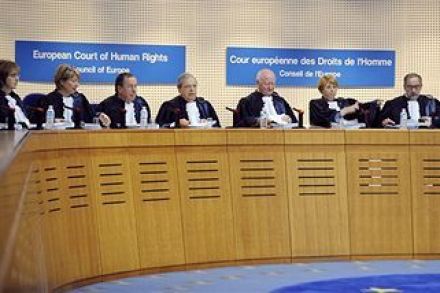
These are hard times for the government and there is no respite. Today, parliament will debate a prisoner’s right to vote, in accordance with the wishes of the resented European Court of Human Rights. The Guardian’s Patrick Wintour writes what many suspect: on the back of a free vote, the House will deny prisoners the right to vote in all cases and outlaw compensation claims. Such a result would seem a set-back for the government, which was thought to favour a limited franchise on prisoner voting. If it became law, then the government would apparently be at odds with the ECHR - precipitating an ignominious procession of grasping lags, searching for compensation at Strasbourg.

Bringing rights back home

Thursday’s debate on the backbench motion on prisoner voting tabled by Jack Straw and David Davis is set to be a real parliamentary event – a rare occasion where the will of the elected legislature might just make a big difference.  The real news will not be how many endorse the ban, but which MPs – aside from those abstaining Government Ministers and Denis MacShane – choose to bow to Strasbourg.   MPs preparing to speak out against Strasbourg are now armed with a powerful academic case.  A new Policy Exchange report authored by the political scientist Michael Pinto-Duschinsky – Bringing Rights Back Home – outlines how the UK can address the growing problem of conflicts between judges and politicians in human rights cases.

Act 3 in the prisoner voting farce

An ingenious man, John Hirst. First he achieved the considerable feat of committing manslaughter with an axe; and he has since proceeded to cause governments no end of trouble. The prisoner voting saga is nearing its end and a fug of ignominy is descending on the government. The BBC reports that the coalition is to dilute its policy of enfranchising prisoners serving less than four years. Now ministers will be seeking to enfranchise only those serving a year or less. This u-turn is the result of the alliance between Jack Straw and David Davis and the slew of assorted backbench dissent. Tim Montgomerie argues that this is yet another example of Downing Street’s inability to communicate with the parliamentary Tory party.

Illsley’s untenable position

After David Chaytor's conviction last week, the dominoes just keep on tumbling. Today, it was Eric Illsley's turn to confess to his expenses-related sins – and he did so by pleading guilty to three "false accounting" charges in Southwark Crown Court. Given that he's still MP for Barnsley Central – although now as an independent, rather than the Labour MP he was elected as – that makes him the first sitting parliamentarian to face sentencing as a receipt offender. A dubious accolade, to be sure. In terms of day-to-day politics, the next question is whether Illsley will be able to hang on to his seat. He could, theoretically, remain in place if his sentence is under a year's jail time.

Chaytor in chokey

Log it in your diaries, CoffeeHousers: on this day – Friday, 7th January, 2011 – a former MP was sent to jail for abusing the parliamentary expenses system. Yes, David Chaytor has been sentenced to eighteen months for, ahem, "false accounting" his way to £18,000 of taxpayers' cash. He's the first former parliamentarian to be sent down since Jeffrey Archer in 2001. As fallout from the expenses scandal goes, it's probably the most searing example yet. But the question now is whether there will be any fallout from the fallout, so to speak.

A preview of the rebellions to come

Today’s papers are full of the Tory right asserting itself. In the Mail On Sunday, Mark Pritchard—secretary of the 1922 committee—demands that the Prime Minister and his allies come clean about any plans to create a long-term political alliance between the Tories and the Lib Dems. In The Sunday Telegraph, there’s a report that Tory rebels will vote with Labour to try and defeat the coalition’s European Union Bill. I suspect that these stories presage one of the major themes of the year, an increasingly assertive right of the Tory parliamentary party. For too long, Cameron has neglected his own MPs both politically and personally. The result is a willingness to cause trouble for the government.

The anti-Clarke campaign is gaining momentum

After months of whispered asides, Theresa May cut loose yesterday and expressed what may on the Tory right (not to mention Labour’s authoritarian elements) feel: Ken Clarke’s prison proposals are potentially disastrous. Prison works. Tension has built to its combustion point, but there is no apparent reason why May chose this moment. Perhaps she was inspired by the persistent rumours of Cameron’s displeasure with Clarke? Or maybe the cause was Michael Howard’s smirking syntax as he denounced Clarke’s ‘flawed ideology’ in yesterday’s Times? Either way, the campaign to move Clarke sideways in a Christmas reshuffle is gaining momentum.

Miliband’s jibes throw Cameron off course

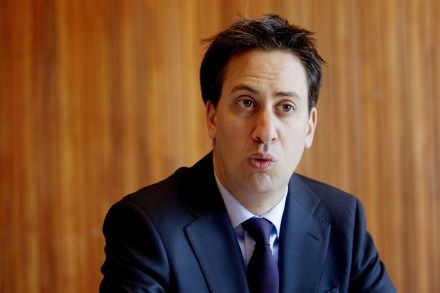
After last week’s PMQs, Ed Miliband needed a clear win today—and he got one. Cameron, who had admittedly just flown back from Afghanistan, didn’t seem on top of the whole tuition fees debate and kept using lines that invited Labour to ridicule the Lib Dems. When Cameron tried to put Miliband down with the line, ‘he sounds like a student politician—and that’s all he’ll ever be’, Miliband shot back that “I was a student politician but I wasn't hanging around with people who were throwing bread rolls and wrecking restaurants." It was a good line and threw Cameron off for the final exchange.   The rest of the session was not a cracker.

The Sun gives Clarke a kicking

It may not be The Sun wot won or lost the last election, but its readers did swing heavily from Labour to the Tories and, even, to the Lib Dems. Which is why No.10 will not be untroubled by the paper's cover today. "Get out of jail free," it blasts, marking what Tim Montgomerie calls the "beginning [of] a campaign against Ken Clarke's prisons policy." And it doesn't get any kinder inside. Their editorial on the issue ends, "Mr Clarke and Mr Cameron owe Britain an explanation." It captures a strange split in the government's approach to crime. When it comes to catching crooks, the coalition is putting forward policies – such as elected police commissioners – that will go some way to ensuring the public get what they want.

Some framework for the prisons debate

I thought that CoffeeHousers might appreciate a few graphs to steer them around the prisons debate. It's by no means a complete overview of the issue, but just three of the trends that hover over Ken Clarke's proposals: 1. Rising prison population, falling crime Well, that's striking enough. Expect, as any fule know, correlation doesn't necessarily imply causation – which is to say, the fall in crime could be due to something other than the rise in prisoners. Some put it down to improving economic conditions. Others mention deterrents such as CCTV. But those correlations can barely be hardened into a cause, either. So, all rather inconclusive.

Now the Tories have an issue to get stuck into…

While Nick Clegg battles on the tuition fee front, another internal conflict breaks out for the coalition today: prisons. And rather than yellow-on-yellow, this one is strictly blue-on-blue. On one side, you've got Ken Clarke, who is controversially proposing a raft of measures for reducing the prison population. On the other, Tory figures like Michael Howard who insist that prison works – and that there should be more of it. Philip Davies, the Tory MP for Shipley, even told Radio 4 this morning that millions of Conservative voters would be disappointed by the coalition's plans.

What were the CPS and the courts thinking? 

A mother jailed for retracting allegations of rape by her husband, (allegations she now says were truthful) has been freed. A few days ago, appeal judges overturned the eight-month sentence of which she had served seventeen days, ordering her immediate release.  A triumph for common sense and compassion, but why was she jailed in the first place? Yes, the CPS thought she’d lied under oath and invented a rape claim - and that’s serious – but, as it turns out, her husband intimidated her into retracting the claim. In any event, an eight-month sentence is excessive.

Cameron the optimist

Is David Cameron just too nice? There are worse accusations to levy at a politician, but it's one I have heard suggested quite a lot recently - and I have written about it in my News of the World column today. He seems to have adopted the politics of wishful thinking. There is a "zip-a-dee-do-dah strategy" and precious little contingency if things go wrong. He makes defence cuts, because he doesn't intend to go on a massive deployment (neither did Woodrow Wilson). He will make prison cuts, because he thinks - bless him - that it won't increase crime. He signs a deal with French for military co-operation, thinking they will dump the habit of 500-years and actually agree with Britain on the next major foreign policy dispute.

Toughening up on Home Affairs

An intriguing argument from the Economist’s Bagehot this week: the government’s liberal prisons policy will force Coalition 2.0 to tack to the right on Home Affairs. ‘If the Lib Dems’ sway on these issues was foreseeable, so are its political dangers. One is Tory anger. Even some of the Conservative MPs who agree with the Lib Dems on control orders worry about their liberal line on crime. Behind the scenes, figures from both parties are coming together to plan “coalition 2.0”—a policy programme for the second half of the parliament. Among the rumoured Tory representatives are confirmed hawks such as Michael Gove, the education secretary, Owen Paterson, the Northern Ireland secretary, and Tim Montgomerie, a well-known blogger.

Hardly vintage stuff from Ed and Dave

Neither Ed Miliband nor David Cameron had a good PMQs. Cameron let his irritation at questions about the appointment of his campaign photographer to a civil service post show. It was also a bit rich for him to criticise a Labour MP for asking a question scripted by the whips when Tory MPs ask patsy questions with monotonous regularity, I counted at least four in this session alone. But the regular shouts of ‘cheese, cheese’ from the Labour benches were clearly riling the Prime Minister. But it wasn’t a good session for Ed Miliband either. His delivery was rather halting and he stumbled on his words far more than he usually does. His jokes didn’t quite come off either.

Prisoner voting rights are undemocratic

It was unlikely that the Coalition could have played for any more time before lifting the ban on prisoner voting.  That was the tactic played by the previous Government, but now it seems the will of Strasbourg will prevail.  But the policy is wildly out of step with public opinion, hard to justify and difficult to administer – it is also another example of how our own Parliament and domestic courts have been undermined.     The public are opposed – usually on principle – to granting additional privileges to serving prisoners, especially when they have done little or nothing to earn it.  They are against voting rights in particular on the grounds that it is one of the rights that lawbreakers give up by virtue of their crime.