Poverty

A love letter to Philadelphia

In the run up to the Super Bowl, writers were tripping over themselves trying to capture the essence of the Philadelphia Eagles Fan™. Most of these observations focused on the degenerate behavior of a few diehards after key games, or the nonsensical yet diverse array of superstitious traditions (looking at you, guy who runs into the underground pillars on the Broad Street Line on purpose). Some dug up the old chestnut about Santa Claus getting pelted by snowballs at an Eagles game — ignoring that many of the fans responsible for that misadventure died without ever seeing the Birds win a ring.

What Hawaii taught me about American homelessness

"What stands out for visitors?” I asked our guide during a tour of Honolulu’s Chinatown with my out-of-town guests. “Always the same,” he replied, “the homeless.” You can’t miss his point. During our brief walk through Chinatown’s markets, we saw a disturbed man dressed only in his underwear touching himself, several streetworn people begging and a fire department respond to a prone vagrant. When someone in our party needed the restroom, the shopkeeper apologized for having to keep it locked to prevent misuse. Many places had signs saying “no public toilet.” Despite some great-tasting food, it was hard to keep up a holiday spirit. Same for when we passed the tent cities and parks overtaken by the homeless along a drive on the Windward side.

homelessness

The cops are impotent in lawless New York

From our UK edition

New York   Things are heating up, in both London and Nueva York, as this place should correctly be called. Two flunkeys writing in the New York Times announced that Boris is committing gaffes and could, like Trump, be a dead man walking. This is wishful thinking and the premature celebration confirms that the media can no longer be trusted, certainly not here in the land of the depraved. (The flunkeys sought quotes from obscure British left-wing academics, and loftily present them as ‘the people’. Their detachment from the workaday world is hilarious.) In the meantime, here in the Bagel an alleged drug pusher looking at nearly 100 years behind bars is photographed walking free and saluting Governor Cuomo for his bail-reform law.

Poverty is a major issue in the midterms

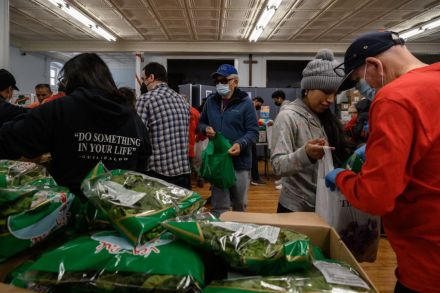
My friend here in rural Pennsylvania is the director of our local anti-hunger program. It’s orchestrated through the YMCA and has been ongoing for years, mostly providing supplemental food for rural children. But the program started running at full throttle when Covid hit in March 2020, and now, more than two years later, my friend tells me they’re doing about 25 food distributions a month — more than they were doing at the height of Covid. What’s more, he’s seeing twice the number of people lining up for free food, and 85 percent of those people have jobs. “When people think of hunger, they think of poverty,” my friend says.

The deathly malaise that’s crippling Russia

From our UK edition

Now is a difficult time to empathise with Russians – which is why we need Maxim Osipov. We need him to bring alive to us what it means to live in Putin’s Russia – how the system finds ways to crush all but a very few. Even more, we need him to remind us of the kaleidoscope of qualities that a country like Russia inevitably contains – the humanity and generosity as well as the stupidity and cruelty. An author of great subtlety, Osipov would no doubt wince at such grandiose claims for his writing. Yet when the world is deciding how to deal with the aftermath of Putin’s (eventual, but surely inevitable) defeat, I hope Kilometer 101 will be admitted in the Russian people’s defence.

Liz Truss should increase Universal Credit

From our UK edition

Liz Truss’s plans for a two-year energy bill freeze, estimated to cost £100 billion, underscore three points. One, the incoming Prime Minister expects the energy crisis to be with us for more than one winter. Two, she grasps how lethal it will be to the Tories’ hopes of re-election if the Treasury doesn’t intervene in a big way. Three, she is prepared to run up government debt even further in order to mitigate a crisis that threatens people’s quality of life. This third point is the crucial one. When a neo-Thatcherite like Truss concedes the merits of transformative interventions funded by borrowing, it opens up a broader conversation.

Modern capitalism has failed my son

From our UK edition

A light was on in the caravan site office so I went over to try and buy a gas canister. Come Easter the little Cornish seaside resort will be heaving. Now a stiff north wind blew in off the sea and it felt like the dregs of winter still. The site office was shut but a woman came out and said she was expecting a delivery tomorrow but she didn’t know yet how much a canister would cost. Nor did she know of anywhere open where we could get something to eat. She thought there might be a place down by the beach. Nobody had managed to get any seasonal staff yet and everything was a bit uncertain, she said. So me, my son and my two grandsons went down to the parade of seaside shops with our chins in our collars. There were no lights on or any people about.

Souvlaki with graffiti

I’m drawn to sketchiness but even by my sketchy-drawn standards, the state of Athens is deflating. The cradle of Western civilization now appears to be the graffiti capital of the Western world. The luridly colored scrawls are everywhere; Greek grannies air their carpets over balconies marred by multicolored tags and swirls. The Parthenon temple still looks mighty grand atop the ancient Acropolis citadel, but down in the modern city a lot of people look hard-up and downtrodden: lined faces, permanent frowns, hastened aging, disheveled clothes. Wandering through central Athens, I passed two shuttered shops set back from the street. About twenty homeless people lounged in the alcove, amicably passing round substances to smoke and ingest.

Athens

Don’t renew the child tax credit

The Covid-19 pandemic has affected every part of society, and the country’s economic wellbeing has been no exception. The time since March 2020 has provided a sort of natural experiment as to how various untested policy ideas play out in real life. Initially, most politicians on both sides of the ideological spectrum agreed on the need for a robust federal response to the virus. These actions took many forms: universal relief checks, enhanced unemployment benefits, and historic funding of vaccine research and distribution — just to name a few. For well over a year, the federal government was a source of seemingly unlimited spending. Although many of those policies have since fallen by the wayside or are at least becoming less relevant, some remain part of a fierce public discussion.

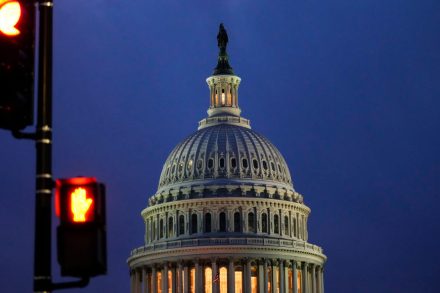
A view of the U.S. Capitol (Photo by Drew Angerer/Getty Images)

How elites hijacked the conversation on race

Americans in 2021 spent more time watching TV than on any other leisure activity (outside of sleeping). Presumably those numbers increase during the holidays, especially given a hot NFL playoff race and endless bowl games (are you ready for Duke's Mayo Bowl?). Yet for me what stands out are not the touchdowns or halftime shows, but the commercials. Practically every commercial over the course of a three-hour football game features more people of color — blacks, Asians, Latinos — than whites. Many in the media and advertising are celebrating this for increasing diversity and inclusion, while others claim it undermines meritocracy.

Why I don’t stick to football

From our UK edition

In football, you are always stronger in numbers. With a shared focus, people from different cultures, nationalities, races, sexual orientations, political affiliations and religions can unite to achieve incredible things. When you pull on that national team shirt, rivalry subsides and is replaced with a shared desire to win. When fans step into that stadium, for 90 minutes they feel a part of something, a collective, able to leave any worries outside those turnstiles. To many it is a religion. To me, it’s still a dream. You grow up idolising figures in this game who turn out to be just like you and me. Human beings with human emotions and who, more than likely, have overcome some level of adversity in their career.

Boris’s levelling up risks leaving behind London

From our UK edition

Boris Johnson’s plan to ‘level up’ Britain sounds long overdue. It implies the creation of a less geographically unequal United Kingdom. What's not to like? The motivating theory behind ‘levelling up’ seems to go like this: London, the beating heart of this relatively affluent corner of our nation, has had plenty of investment in recent years. It is now time to listen to the needs of the newly-Conservative ‘Red Wall’ and Leave-voting ‘left behind’ communities in the north of England. These areas have been ignored for decades, and recently voiced their displeasure at the ballot box. But the reality is rather more complicated – and there is a danger that, yet again, London’s poorest get left behind.

Westminster and the truth about the class ceiling

From our UK edition

I come from the Lancastrian town of Ormskirk, which, though pretty, provided little in the way of opportunity or aspiration. No one in our family had been to university. I qualified for free school meals. Expectations for my future were low. But I was lucky. I had great mentors and ended up in Downing Street. I also worked for a Prime Minister who believes in social mobility and put ‘levelling up’ at the very centre of his premiership. This was the reason I came into politics too. Boris Johnson understands that the need for social mobility is now more urgent than ever, as we emerge from lockdown. While the food poverty debate raged last summer, and the government found itself losing a PR war with the footballer Marcus Rashford, I attended a cabinet meeting.

Nicola Sturgeon reinvents herself as a social democrat. Again

From our UK edition

It’s the surest sign there’s an election on in Scotland: Nicola Sturgeon has become a social democrat again. Addressing her party’s spring conference today, the SNP leader vowed to double the Scottish child payment to £10 per week for under-16s in low-income families if the Nationalists are returned to government after 6 May. She explained:  ‘I want to make ending child poverty a driving mission for the next parliament. It is time to end the scandal of child poverty, and this will help us do it. And it is a down payment of what will be possible when we have the full powers over tax and social security that only independence can deliver.’ Ending child poverty is a noble aim.

The real reasons children are going hungry

From our UK edition

‘We’re idiots, babe, it’s a wonder we can even feed ourselves.’ I listened to The Food Programme on Radio 4 this week, because the channel finder on my car radio wasn’t working and so I was stuck with it. It was, as it almost always is, four left-wing ratbags moaning to one another. As I’ve mentioned before, this is the template for almost the entirety of the station’s output: miserable women carping endlessly about everything. It is almost impossible to know what particular programme you’re listening to. You have to keep your ears tuned for key phrases which might give you an indication. If it’s a woman teacher moaning about having to do a spot of teaching, it’s probably World At One.

Trade not aid: spending more doesn’t mean we care more

From our UK edition

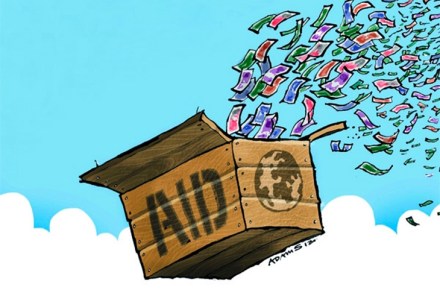
Outside the Catholic mission I walked through rows of women in traditional hide skirts, squatting or sitting with legs astride, palms upturned in supplication. Many suffered from scabies and cradled emaciated babies, and all looked 20 years older than their true age. These are my memories of the Uganda famine in 1980 and these were the survivors. Africa is a different place today and so are the methods used to combat famine. But this was where I learnt about the contradictions of overseas aid. Aid is pernicious, and injudicious aid can destroy all before it. Take food aid. It is wonderful for saving those in extreme peril, but once the extreme event has passed, it destroys farmers and local markets, and inevitably leads to corruption.

Racism, poverty and the ‘controversy paradox’

From our UK edition

It might seem puzzling that we have seen such a furore about racism and racial discrimination at this particular time in our history when all possible measures of racism indicate that there is less of it in Britain than at any time in the past 70 years. A decade ago, 41 per cent of us ‘-strongly agreed’ that we would be content for our children to marry someone of a different race. That has now risen to 70 per cent. In 2006, 55 per cent ‘strongly disagreed’ that you had to be white to be ‘truly British’. That has risen to 84 per cent.

Lives vs lives – the global cost of lockdown

From our UK edition

‘There have been as many plagues in history as there have been wars,’ wrote Albert Camus in The Plague, ‘yet always plagues and wars take people equally by surprise.’ So it was this time. The arrival of a new coronavirus blindsided governments of most advanced nations as they reached for a tool that few had ever really considered before: lockdown. It all happened too fast for a proper discussion about the implications. The biggest question — the extent to which lockdown will claim lives as well as save them — is one you can ask at a global level. We know the national costs. In the United States, there is joblessness on a scale not seen since the Great Depression, with more than 33 million unemployed.

Who can still make a Sunday joint last a week?

From our UK edition

Sunday lunch was always roast beef and, in the traditional way, the Yorkshire pudding was served first with gravy, supposedly because if you were full of cooked batter you wanted less meat. Monday saw cold meat, jacket potatoes and pickles, while the beef bone went into the pot with lentils, pearl barley, carrots and onions and bubbled on the hob for days, the basis of every dinner until Friday’s fish and Saturday’s sausages and mash, before Sunday came round again. That is what everybody had and, like all housewives, my mother made the most of every morsel. Throughout and after the war, waste was a crime. I hate cooking and am bad at it for all I learned, by watching, about roasting the potatoes in the hot fat round the meat, and I always helped beat the batter.

There’s nothing equal about this virus

From our UK edition

Filthy germ-laden townsfolk were out and about on the footpaths near my home on Easter Sunday, dragging with them their awful, mewling children. I got the dog to harass them and occasionally shouted out: ‘These are local paths for local people. Clear off.’ One youngish father — lightly bearded, self-satisfied smirk, probably a sticker on his car window saying ‘-Refugees welcome here’ — even had the nerve to ask me for directions to the nearest train station so that he might return to his squalid Remainer tenement. I directed him and his family through a field which was fecund with manure and full of restive bullocks. The child — four or five years old and already gobby and full of itself — was wearing a bright red T-shirt.