Poverty

Real life | 7 April 2016

From our UK edition

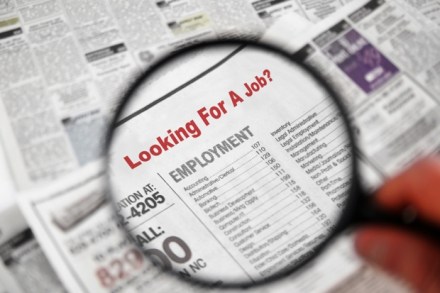
My adventures in penury land me with two job applications on my screen, one for MI6, one for Sainsbury’s. Do I become a spy, or stack shelves in a supermarket? The vacancies are on a recruitment site called Indeed, one after the other: Counter Assistant, Sainsbury’s. Intelligence Officer, London. Just like that. I began googling jobs in a panic because embarrassing things started to happen. For example, a friend who runs a tack shop gave me a broken bag of feed for the horses, saying, ‘Please, take it, I can’t sell it. Really, you’d be doing me a favour.

What Oxfam won’t tell you about capitalism and poverty

From our UK edition

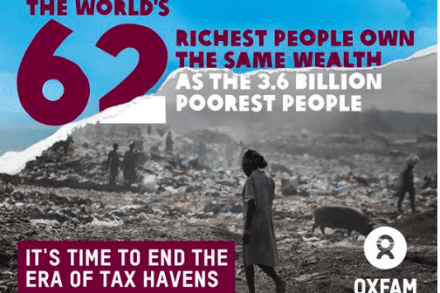
Your average milkman has more wealth than the world's poorest 100 million people. Doesn’t that show how unfair the world is? Or given that the poorest 100 million will have negative assets, doesn’t it just show how easily statistics can be manipulated for Oxfam press releases? They’re at it again today: the same story, every January. “Almost half of the world's wealth is owned by just 1% of the world's population” it said in 2014. It has done variants on that theme ever year, each time selling it as a new "big" story. All peddling the impression that inequality is getting worse, that the rich are engorging themselves at the expense of the poorest. This narrative (which is discredited as it is old) suits Oxfam’s fundraisers.

Around the world, poverty is collapsing. Why is that so hard to believe?

From our UK edition

In 2012 and 2013, The Spectator opened its Christmas special issue with a leading article counting the ways in which the world had never been a better place, and was set to get better still. We didn’t do so this year, as the list would have been a bit too similar to previous versions – but others did pick up the theme, including Dan Hannan on ConHome. This was taken up by Matthew d’Ancona in the Guardian making an excellent follow-up point: if things are so good, why don’t people feel it? He traces this argument to Matt Ridley’s 2010 book, the Rational Optimist, and to Stephen Pinker’s 2011 book about declining violence. I agree with him that Ridley’s book is a landmark in the debate: if you haven’t read it, go buy it now.

Artist gets £15,000 of public funds to live in Glasgow and eat chips

From our UK edition

The Glasgow Effect is a term given by epidemiologists and sociologists to describe the disproportionate levels of ill health and early death in Scotland’s second city. Disproportionate, because even when the usual factors of poverty are accounted for, Glasgow exceeds expectation. People in Glasgow have the lowest life expectancy in Scotland but even the wretched figures given for the city as a whole mask appalling local discrepancies. In 2008, a study for the Centre for Social Justice found that a white male in the Calton area of the city could expect to live until the age of 54, some twenty seven years less than his Bearsden counterpart.

The real victims of climate change

From our UK edition

[audioplayer src="http://rss.acast.com/viewfrom22/thegreendelusion/media.mp3" title="Matt Ridley and Michael Jacobs debate the point of the Paris climate change conference" startat=31] Listen [/audioplayer]The next generation is watching, Barack Obama told the Paris climate conference: ‘Our grandchildren, when they look back and see what we did in Paris, they can take pride in what we did.’ And that, surely, is the trouble with the entire climate change agenda: putting the interests of rich people’s grandchildren ahead of those of poor people today. Unfair? Not really, when you look at the policies enacted in the name of mitigating climate change.

Does George Osborne really want to make himself the scourge of the strivers?

From our UK edition

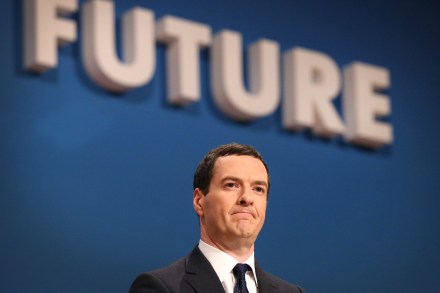
Without George Osborne, we’d probably be living under Prime Minister Ed Miliband right now. His value to the government goes far beyond his brief as Chancellor; he is across most departments most of the time. But as Chancellor, he is judged by the success (or otherwise) of his Budgets – which is why he is now in a moment of great danger. His love of complexity has come to threaten not just his own reputation, but that of the Conservative Party too. Sometimes, Osborne is so clever that he can be downright stupid: This is one of these times. In my Telegraph column today, I say that Osborne is currently planning to soften – but not abandon – his tax credit cuts programme.

Hot air summit

From our UK edition

The delegates who will gather for the star-studded Paris climate summit include celebrities, presidents and perhaps even the Pope. Among other things, they will be asked to consider the formation of an ‘International Tribunal of Climate Justice’, which developed countries would be hauled before for breaching agreed limits on greenhouse gas emissions. That the proposed body will seek to be ‘non-punitive, non-adversarial and non-judicial’ does not reassure. A tribunal, if it is worthy of the name, ought to be all those things. Does the threat of climate change really justify such a system? It is disturbing to think how many world leaders and policymakers might casually answer ‘yes’.

The Australian example

From our UK edition

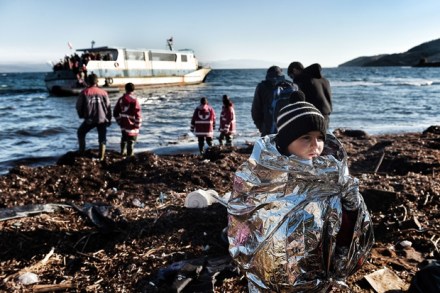
For many years, Australia has been turning away boats filled with migrants. From a remove, this looks cold--hearted — a nation built by immigrants showing no compassion for others who want a better life. But it is precisely because Australia is an immigrant nation that it understands the situation: if you let the boats land, more people come. People traffickers will be encouraged, migrants will be swindled, and their bodies will wash up on your shores. Any country serious about immigration needs a more effective and robust approach. Tony Abbott, the former Prime Minister of Australia, made that point clearly this week on a trip to London.

Dear Mary | 24 September 2015

From our UK edition

Q. I am an impoverished artist living in a famously cheap European city, largely for reasons of economy. I love it when friends and family relieve the monotony of lonely days in my garret by coming to stay, but every time anyone does they want to go to all the museums and galleries, which represents a serious outlay of money for me. Not to mention the restaurants. Given that I’ve been to all of these places umpteen times, how can I tactfully suggest that my guests go alone? —Name and address withheld A. Why not invent the existence of an art and restaurants club which allows residents of the city a certain number of discounted visits per month? When visitors suggest a visit to a museum or restaurant, explain that you have already used up your discounts for that month.

The right answer

From our UK edition

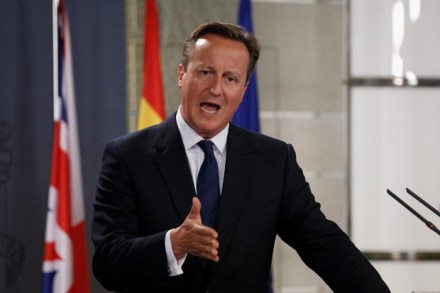
David Cameron might not be remembered as the best prime minister in modern British history but he will probably be remembered as the luckiest. Jeremy Corbyn’s election as leader of the Labour party is proving worse — or, for the Tories, better — than anyone could have imagined. His wrecking ball is busy destroying everything that was built by Labour’s modernisers. He does not lack authenticity, belief and passion — but his beliefs are ones which would be more at home in a 1920s plenary meeting of the Moscow Soviet than in contemporary British living rooms. The Chancellor sees Corbyn’s leadership as a chance to further blacken Labour’s name.

Monster of misrule

From our UK edition

Mao Zedong, once the Helmsman, Great Teacher and Red Red Sun in Our Hearts, and still the Chairman, died in 1976. Even today his giant portrait gazes down over Tiananmen Square, where in 1989 his successors massacred hundreds of students and workers. After so many years and books and articles, can anything new be said about him? Although Andrew Walder, a Stanford sociologist and leading China scholar, writes that his comprehensive and deadly analysis is primarily for non-specialists, he has made me think. President Xi Jinping, who will make a state visit to London in October, speaks highly of Mao. Such praise, concludes Walder, requires ‘highly selective historical memory and a great deal of forgetting’.

It’s time to measure child poverty properly

From our UK edition

David Cameron's decision to bin the disastrous measure of child poverty  is an important step towards improving young people’s life chances. Its very existence has led policymakers to use tax credits to manipulate this metric, rather than turn lives around. Child poverty refers to parents, not children: the parents whose income is below 60pc of the national average. This was set up by left-wing academics in the 1960s and then adopted by Eurostat. This means, for example, that ‘poverty’ can fall during a recession (as it did after the financial crisis), or rise if the state pension goes up. Children can go to bed in poverty and wake up out of it without experiencing any change in their lives whatsoever.

The poverty of the UK poverty measure

From our UK edition

It's sad to see so many genuinely well-meaning people judge the fight against poverty by the publication of a massive spreadsheet, but that's the trap the UK government has been caught in for years. The Child Poverty Act is about income redistribution, and success is judged by how many people are seen to be below an arbitrary threshold: 60 per cent of average income. The figures came out today, and show that the number in poverty has barely shifted - which will surprise those who thought government cuts would push poverty figures higher. But is this really much cause to celebrate? There are still 2.3 million (17 per cent) of children in households deemed to be 'in poverty' - but, more importantly, this measure is pretty appalling.

Should politicians leave the wealthy alone?

From our UK edition

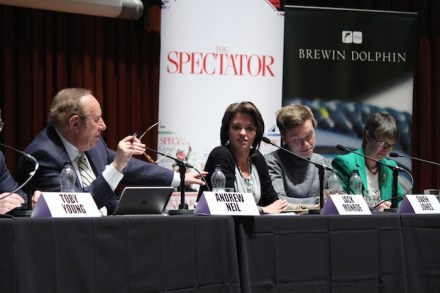
Bashing the rich has become trendy. Last night, the Spectator hosted a debate at the Guildhall School of Drama on whether the rich have contributed their fair share to society, or if we should ramp up wealth taxes. It’s a very emotive topic and each of the speakers made a solid case for and against the motion: politicians should leave the wealthy alone — they already contribute more than their fair share. Proposing the motion, Spectator editor Fraser Nelson described how London is a city ‘shaped by the super rich,’ pointing out the number of places that serve a £20 vodka martini. But Fraser argued that society needs these wealthy people and taxing them more isn’t the best way to get money out of them.

The Trussell Trust’s misleading figures on food bank usage help no one

From our UK edition

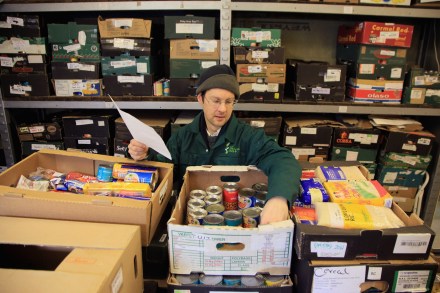
A day after the BBC admitted to misquoting David Cameron on foxhunting, the broadcaster made another admission of error last night over the numbers of people using food banks. A Newsnight package on welfare initially declared that ‘numbers using food banks will hit a million this week’, but this figure was clarified with a short correction at the end of the programme: ‘In our welfare discussion we said there were a million people estimated to use food banks. There were actually a million uses by a smaller number of people than that.

Justin Forsyth has far more to apologise for than Tony Blair’s Save the Children award

From our UK edition

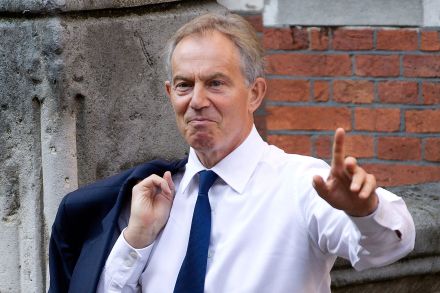
You almost have to admire Justin Forsyth’s brass neck. He is a former Gordon Brown spin chief earning a Prime Ministerial £138,000 for running Save the Children. Or, rather, transforming it into Save the Labour Party with various attack ads claiming that kids need to be rescued from wicked Conservative austerity. Here's an example of its handiwork: https://www.youtube.com/watch?v=3eKJ972iZ-U You’d think that Forsyth would be rather embarrassed about abusing the charity’s resources in such a way, but last year Save the Children went one further and gave an award to Tony Blair. That really was too going far.

Property crime is not a victimless crime

From our UK edition

While researching Taking its Toll, a report written with Policy Exchange on the regressive impact of property crime, some troubling facts became clear. In the year to March 2014 there were an estimated 6.85 million victims of theft in England and Wales, representing 1 in 10 of the population. Yet a significant proportion of property crime is not reported to police: a third of burglaries and 90 per cent of shoplifting incidents go unreported. In a climate of heightened threats to our national security, the police are struggling to keep up. Last year around 19,000 bicycles were reported stolen to the Metropolitan Police yet only 666 (3.5 per cent) of these thefts were solved. Estimates show that only five per cent of burglaries end up with an alleged offender in court.

Under Oxfam’s dodgy maths, someone with 50p to his name is “richer” than bottom 2bn

From our UK edition

Global capitalism has eradicated poverty and generated prosperity in the developing world at an unprecedented rate. You might imagine that a global anti-poverty charity, such as ‘Oxfam’, would celebrate this fact. But no – today Oxfam is making the headlines instead because it is worried about global wealth inequality. In particular, that ‘the wealthiest 1 per cent will soon own more than the rest of the world population combined’. Oxfam has been pushing this sort of meme for a while. Last year, it made the startling claim that ‘the world’s 85 richest people own the same wealth as the bottom 3.5 billion combined’. It was shown at the time, not least by Reuter’s Felix Salmon, that this statistic was bogus.

Archbishop John Sentamu on why politicians are like men arguing at a urinal

From our UK edition

‘I shoot further than you, I am the biggest of the men!’ says John Sentamu, Archbishop of York. He is talking about the way politicians conduct themselves in the immigration debate. ‘We have got to be more grown up about it and not be like people who are screaming at each other across banks of a river,’ he says. ‘They mustn’t do what some people call male diplomacy which is always around the urinal… that kind of argument, it doesn’t work!’ Sentamu prefers a still small voice of calm from politicians, even if his own voice is booming and indomitable. His is never more than a few words away from a chuckle or a joke. This week sees the publication of a collection of essays called On Rock or Sand?

Why are there so many fat people in pictures of food banks?

From our UK edition

Were you aware that the famous actor Andy Garcia was born with a foetus growing out of his left shoulder? It was removed from him when he was a toddler. I had not known this and I am unhappy that some sort of conspiracy, some wall of silence, was constructed to keep this news from the paying public. I watched The Untouchables in blissful ignorance of the fact; had I known I would have picketed the cinema. Come clean about the dead foetus, Garcia! I am aware of the foetus business now only because I stumbled across an excellent website entitled ‘25 Celebrities With Hideous Physical Deformities’, and Garcia was there at number six.