Populism

The rebellion against data centers is growing

From our US edition

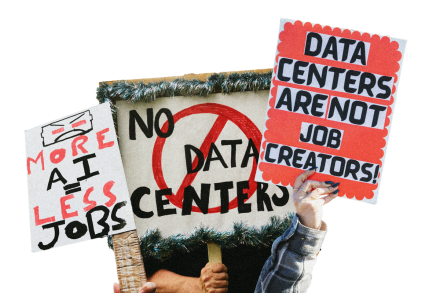
There’s an old saw in politics that says, “If you are explaining, you’re losing.” Over the past few months, Big Tech and its allies in the legacy media have been doing a lot of explaining about data centers, including why they are needed and why more communities should welcome the projects. But Big Tech’s public relations challenge got a lot harder last month, when country music legend Willie Nelson declared people need to “fight against data centers invading our land.” Nelson, who owns a house and farm in his hometown of Abbott, Texas, also said, “The last thing we need is a loud, water-thieving, light-polluting data center anywhere near our town (or any others for that matter).
data centers

The benevolence trap

From our US edition

On May 12, the Canadian evolutionary psychologist Gad Saad published a book called Suicidal Empathy: Dying to be Kind. It’s a smart book, immensely pertinent to a time, like ours, that is awash with this diseased form of self-infatuated fellow feeling. Dr. Saad is correct: “Suicidal empathy is a civilization malady that has entered every nook and cranny of our lives.” One of the peculiarities of the malady that Dr. Saad diagnoses is its persistence. Socialism – which is the generic name of this intoxicating and addictive drug – has failed everywhere it has been tried. No matter. The world manufactures new versions of Greta Thunberg, AOC and Bernie Sanders faster than they can be repudiated. Democrats, Dr. Saad observes, are the party of empathy.

benevolence
liberal caesar

The rise of the liberal Caesars

From our US edition

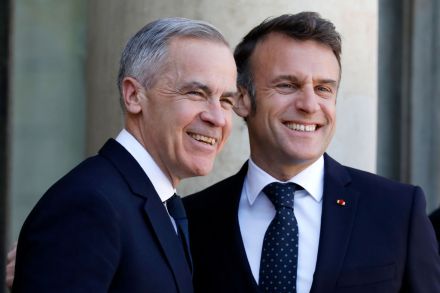
The triumph of Mark Carney in the Canadian election has turned what seemed like a series of local flukes into a global trend. The political mainstream has begun to despair of its own leaders, and now feels compelled to parachute in stately ex-mandarins of a slick, personalist style – figures who seem to stand above the factions. Call them "liberal Caesars." Carney is only the latest example.

Populism curve: what is the supply side of Britain and Europe’s decline?

From our US edition

In his new book Why Populists Are Winning: and How to Beat Them, British MP Liam Byrne argues that it’s time to go after the “supply side” of populism – time, that is, to curb freedom of the press and the right of individuals to spend money on causes they believe in. For a decade, you see, the European and British establishments have focused on quashing the demand side of populism. They have employed police, prison, censorship and shame to stop people from voicing anti-establishment opinions, demanding populist policies or voting for populist parties. They have formed preposterously broad coalitions to exclude populist parties from power.

decline britain british

Does British politics have a problem with the ‘omnicause’?

51 min listen

It is undoubtable that – under the leadership of Zack Polanski – the Green Party have soared to new heights. Having won their first parliamentary by-election in February, polls consistently show them as a force to be reckoned with on the left of British politics. Much of their success has come at the detriment of Labour, with disgruntled further-left progressive voices opting to vote Green. This, though, is a brand of eco-populism that comes at the expense of the Green Party's roots, or so argues Angus Colwell in the Spectator's cover article this week. Have the Greens ceded the issue of the environment?

Does British politics have a problem with the 'omnicause'?

To win, the Tories should be the party of motorists

The path to electoral success at the next election is straightforward. Just follow what I call the Channel 5 strategy. Channel 5 is a rare success story in the world of free-to-air broadcasting, a feat attained by following a simple playbook: making programmes the public likes to watch, but which people working in television are mostly too precious to make. Channel 4 got there first. By broadcasting American football, it found a sport which was far more popular with the public than most ‘people in television’ realised. Every NFL game played in London since 2007 saw sold-out crowds at Twickenham or Wembley; when the Pittsburgh Steelers made an appearance in Regent Street, more than 250,000 people turned up.

How the right learned to love the state

From our US edition

These are dark days for free-market conservatives. A socialist, Zohran Mamdani, leads most polls in the race to become the next mayor of New York. The Republican President, meanwhile, is not only a “tariff man,” he’s lately been directing the federal government to take a stake in ownership of companies such as US Steel and Intel. Even before the rise of Donald Trump, the Republicans were increasingly becoming the preferred party of America’s working class. But before Trump, the free-market right could imagine the GOP’s blue-collar voters were only interested in social conservatism and wouldn’t demand a change in the party’s economic orientation. Now, things look very different.

Right

Poland’s Nawrocki heralds a more mature populism

From our US edition

Yesterday, September 3, President Trump welcomed Karol Nawrocki, the newly inaugurated president of Poland to the White House. It was a stirring occasion, replete with a surprise military fly-over of F-16 and F-35 fighter jets flying in “missing man” formation to honor  Major Maciej “Slab” Krakowian, the Polish pilot who died in a crash in Radom, Poland, last Thursday.  Nawrocki, who narrowly won the presidency in June, is often described as “the Polish Trump.” It’s an accurate epithet. Nawrocki is as much a “Poland First” president as Trump is an “America First” president. The 42-year-old historian (Nawrocki holds a PhD in history) supports a list of policy initiatives that could have come right out of the MAGA playbook.

Nawrocki Trump

Trumpism rules the world

From our US edition

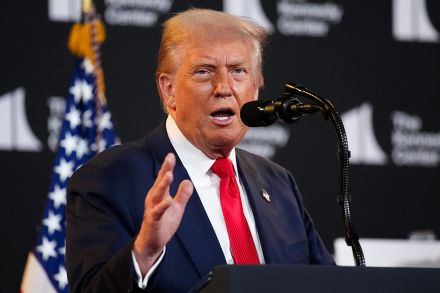
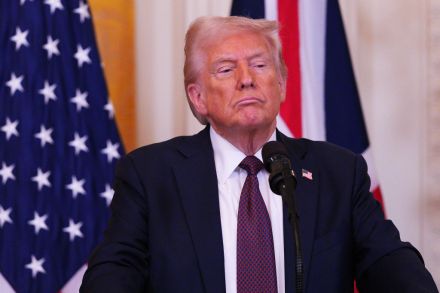
Whatever loopiness there is in Donald Trump’s personality is a loopiness born of isolation. For ten years the history of the world has revolved around him, not he around it. The events of last November have left Trump as, for all intents and purposes, the only remaining historical actor – especially after Xi Jinping’s retreat into obscurantism since the pandemic.

Trump Starmer

MAGA is America’s third party

From our US edition

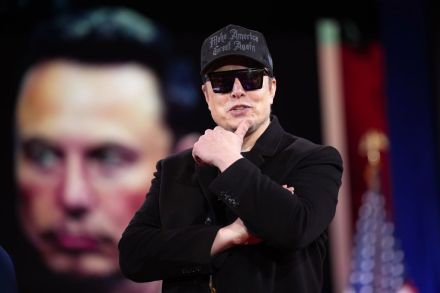
Gearing up to launch his new "America Party," Elon Musk now speaks of a GOP-Democratic duopoly that has the country in its grip. But this system died ten years ago at the hands of Donald Trump: America's first third party president.  With a small band of misfit toys drawn from the world of Manhattan real estate Mr. Trump invaded an old and established party, replacing it with his own ideas and – in true cuckoo fashion – his own children. There is almost no intellectual continuity between the faction he now leads and the pre-2015 Republicans beyond a generic commitment to free markets and to law and order.

Third party

Architecture has hit a nadir at the Venice Biennale

Much of Venice’s Giardini this year was as boarded up as a British high street. The Israeli pavilion was empty, apparently awaiting refurbishment. (At the 2024 art biennale, the curators had closed it in the face of pro-Palestinian protests, prompting the latter to demand it should be opened, presumably so they could protest its closure.) The Russian pavilion has been shut, by order of the Biennale, because of the Ukraine war. The Venezuelan pavilion was closed (‘Go look at nature instead,’ said the workman when I approached it.) The Czechoslovakian was shut, the turns taken by the two independent nations faltering during Covid.

Landlord Trump, the tenants’ best bet

From our US edition

Donald Trump is the world’s largest landlord — not in his own capacity, perhaps, but in his role as leader of the most powerful nation on earth. He’s the CEO of America, and his development corporation owns the Western hemisphere. It also owns property in Europe, where the tenants are troublesome and are always behind on their rent. There are just a few other landlords on the planet, notably Vladimir Putin, who isn’t a rival, and Xi Jinping, who is. This might sound like a perspective on world politics for someone who rose to prominence in the cutthroat environs of New York real estate. Yet the truth is that government is always about who’s the landlord and who’s the tenant.

landlord

What’s behind the vicious attacks on Elon Musk?

From our US edition

Why are Democrats mounting such a ferocious assault on Elon Musk? Why are mainstream media outlets so eager to go along? The simplest answers are the best. Musk is the most prominent member of the new administration aside from the president himself. He is Donald Trump’s point man for exposing malfeasance in federal bureaucracies, determining where the money is going and cutting the engorged payroll. The more Musk and Trump succeed, the worse for Democrats. They created those agencies; their supporters staff them; and those supporters funnel lots of public money to specially favored institutions and projects. When Musk attacks this partisan nexus, he is attacking a major source of Democratic power and influence. That is what’s really at stake here, beyond cutting the budget.

Welcome to Kamala’s Word Salad City

From our US edition

Welcome to Thunderdome, or as David Axelrod calls it, Word Salad City. Kamala Harris’s closing argument played out in a CNN town hall last night, and it wasn’t much of an argument at all. On question after question, Harris reverted to talking points that often had little or nothing to do with the query posed to her. On the border? No answer on why the administration took so long to act. On taxpayer-funded benefits for illegal migrants? I was a prosecutor. On a border wall? It’s a dumb idea that I now say is a good idea. On taxes? It’s a very complicated situation. On food inflation? Greedy price gouging grocers. On her weaknesses? They’re actually strengths. On any mistakes she’s made?

Populism will win the 2024 election

From our US edition

The election is less than two weeks away and early voting has begun, but we already know the winner. It’s populism. Unlike every other presidential election this century, in 2024 we’re watching a campaign in which both parties’ nominees are running on explicitly populist platforms. As a result, no matter who wins, they’ll form a government with an agenda and mandate different from the one Washington’s status quo corporatist, globalists and lobbyists prefer. Donald Trump’s surprise victory over Hillary Clinton in 2016 was largely attributed, after the fact, to a rise in populist sentiment.

populism

The fight ahead in 2024

From our US edition

Are you desperate for a deal? Usually the start of a new year provides the patient ones among us the chance to snag a bargain in the January sales. Good things come to those who wait, the old adage goes. Yet 2024 seems set to offer us more of the same. The usual stalls are at the market — all of them trying to hawk shoddy wares to Americans. Take the primary process for our presidential elections, which kicks off in Iowa and New Hampshire this month. If the prognosticators are to be trusted, we are set for a rematch between President Biden and former President Trump. Biden’s approval rating doesn’t seem to be improving and the cries for him to drop out and let a younger candidate step in are still sounding — and they come from more and more prominent people every day.

2024
Milei

The meaning of Javier Milei

From our US edition

Libertarian economist Javier Milei’s smashing landslide victory is the most radical thing to happen to Argentina in decades. But his win portends more than just a free-market revolution on the pampas. It’s just the latest example of a trend we’ve been seeing for decades: the triumph of blue-collar conservative fusionist populism. Milei is routinely portrayed in the western press as an Argentine Trump with crazy economic policies. There’s some truth to that. His rallies sometimes involve pyrotechnics and he brandishes sputtering chainsaws to symbolically deliver the message that he will take apart the system that impoverishes Argentines.

Geert Wilders’s win shouldn’t surprise us

From our US edition

Dutch populist leader Geert Wilders win has shocked Europe’s elites. At this point, one has to wonder why they continue to be surprised when voters absolutely frustrated with bickering and incompetence turn to someone who has never held political power. Wilders’s win is much less of an endorsement of his views than it is yet another rejection of the elites’ business as usual. Voters in the Netherlands have been signaling they want change for many years now. Wilders’s Party for Freedom (PVV in Dutch) led polls until the last days before the 2017 election. It faded when Prime Minister Mark Rutte told Holland’s mostly Muslim immigrants to “act normal or go away”.

Geert Wilders

What does Javier Milei’s win in Argentina mean to America?

From our US edition

Javier Milei, a messy-haired bombastic libertarian economist, won Argentina’s presidential elections against socialist minister of economics Sergio Massa this Sunday. With the backdrop of inflation that the International Monetary Fund projects will trail only that of Zimbabwe and Venezuela by the end of the year, Milei triumphed with over 55 percent of votes in the runoff with more than 94 percent of votes counted, according to data from the country’s National Electoral Chamber. In a brief speech before the results were announced, Massa, who came first in the October 22 election that led to the run-off, said, “Milei is the president elected for the next four years,” adding that he had called Milei to personally congratulate him on his victory.

javier milei

Why we’re all populists now

From our US edition

Fifteen years ago, populist politicians and parties were seen as a reactionary blip which would soon fade. They are instead not only still present but rapidly gaining strength and power across the developed world. It’s well past time to wonder if populist sentiments will fade. It’s rather time to consider the heretofore unthinkable: perhaps populism will be to the twenty-first century what labor union-backed social democracy was to the twentieth. All of us grew up in the world that social democracy created, so it’s hard to grasp that it has not always been with us. But that’s not so. As late as the 1890s, social democratic parties were either weak or non-existent in most of the (admittedly small) democratic world. That changed quickly as industrialization gained steam.

populists