Populism

The rise of the popcons

From our US edition

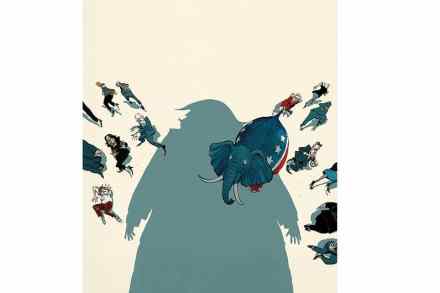
The Republican Party has to come to grips with populism. Donald Trump’s commanding lead in the race for the 2024 presidential nomination makes that clear, as does the fact that the next-most popular candidate, Ron DeSantis, also has a populist streak. In fact, the GOP’s base has subscribed to one flavor of populism or another since at least as far back as the start of the Cold War. In the 1950s, Senator Joseph McCarthy’s red-hunting had a pronounced class dimension — elite officials in “striped pants” were a frequent target. By the end of the 1960s, Richard Nixon was appealing to the “silent majority” against a radical campus counterculture. The Moral Majority and other religious right groups of the 1980s and 1990s exhibited a form of Christian populism.
populism
gop

A GOP of Trump’s choosing?

From our US edition

With the collapse of Liz Cheney's political career in Wyoming, Donald Trump's supporters are fully ensconced in the vast majority of critical candidacies headed into November. He and his supporters have remade the GOP, at least for the moment, into a party devoted to the Trumpian America First agenda and running on that set of priorities — at least when it comes to the lip service they give to border concerns, trade, anti-globalism and culture war issues. But will this be a Republican Party that actually delivers on these priorities should they receive voters' endorsement in November? That’s a more questionable proposition. The core problem that many traditional GOP forces have with a Trumpian agenda is one of prioritization, not of positioning.

Why America needs regime change

No sensible reader of the news could look at America and think it is flourishing. Massive economic inequality and the breakdown of family formation have eroded the very foundations of society.  Once-beautiful cities and towns around the nation have succumbed to an ugly blight. Cratering rates of childbirth, rising numbers of ‘deaths of despair,’ widespread addictions to pharmaceuticals and electronic distractions testify to the prevalence of a dull ennui and psychic despair. The older generation has betrayed the younger by saddling it with unconscionable levels of debt. Warnings about both oligarchy and mob rule appear daily on the front pages of newspapers throughout country, as well as throughout the West.

american nationalism

Towards an American nationalism

From our US edition

America is unraveling into an unhappy confederation of hostile tribes. Extremists on the right are murdering Jews in synagogues and African Americans in churches. The woke left is bullying us into a neo-segregation in which we’re judged by the color of our skin. We’re too obsessed with economic growth to recognize that the rising tide has swallowed entire regions. We’re too proud of our tradition of immigration to admit the failures of assimilation.At a time of such angry division, what can bind up our wounds and bring us together as a nation?A renewed patriotism would be a step in the right direction, but it’s not enough. Patriotism asks us to love our country. But what we need now is more than love of country. We must love our fellow citizens.

The United States of paranoia

From our US edition

Half a decade ago, with America’s elites trying to make sense of the rise of Donald Trump, an essay from the Sixties made a surprising comeback. Richard Hofstadter’s “The Paranoid Style in American Politics” became part of the conversation over fifty years after it was first published in Harper’s. It was less something concerned citizens actually read, more something they mentioned at dinner parties to sound smart. Writing with Barry Goldwater’s 1964 presidential bid in the background, Hofstadter described in pseudo-psychological terms what he saw as the right’s tendency towards the paranoid style, a phrasing he chose “simply because no other word adequately evokes the sense of heated exaggeration, suspiciousness and conspiratorial fantasy that I have in mind.

cults

The liberal-conservative tug of war for the GOP

From our US edition

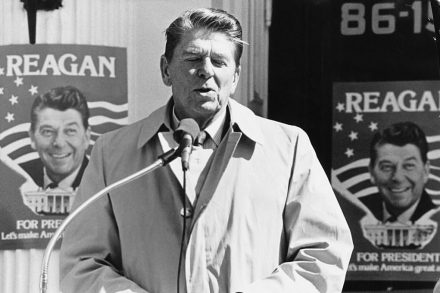
For the last thirty years, the Republican Party has been a battleground between two competing ideologies. One of these is fundamentally liberal, although it is packaged and sold under a variety of brand names: “compassionate conservatism,” neoconservatism, classical liberalism, and — most misleadingly — Reagan conservatism. The other ideology is a rejection of modern liberalism and the post-Cold War elite consensus in American politics. It is skeptical of free trade, large-scale immigration and US involvement in foreign conflicts. Pat Buchanan and Donald Trump are the primary representatives of this view, which is often called populist or nationalist. The two sides are not evenly matched.

liberal-conservative

The electoral mediocrity of Donald Trump

From our US edition

If you live in the world inhabited by Donald Trump’s strongest supporters, you’ve seen the man perform all sorts of difficult tasks: getting elected over all the odds, overcoming every media onslaught. You’ve seen him do it all — except lose. In any objective sense, Trump is a middling electoral performer who has only ever cleared exceedingly low bars. Yes, he overcame steep odds in the 2016 election, but that election should have been a cakewalk for Republicans against an historically unpopular Democratic nominee running to extend her party’s rule for a third term. While he oversaw deep losses in the 2018 midterms, but no less a political athlete than Barack Obama had also sustained an even worse defeat in 2010.

Trump

Giorgia Meloni and the reactionary axis that wasn’t

From our US edition

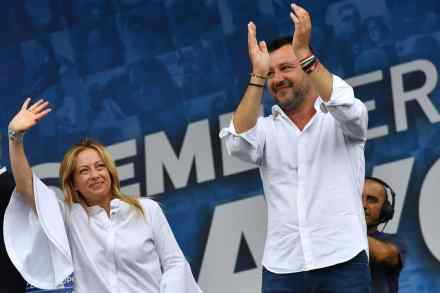
One is a blonde, photogenic woman who grew out of a youthful infatuation with Benito Mussolini to become the first female prime minister of Italy. The other is anything but photogenic, a grizzled veteran of more than three decades of political combat, who began his career as a student activist and became a respectable center-right statesman, only to reinvent himself as a populist firebrand. But if you were to judge Giorgia Meloni and Hungarian Prime Minister Viktor Orbán by the frequency with which they appear together in media coverage, usually with adjectives like “far-right” and “extreme” attached, you might assume that the two conservative heads-of-state are basically indistinguishable. The European Union and its assorted sympathizers certainly seem to think so.

giorgia meloni

Giorgia Meloni should inspire American conservatives

From our US edition

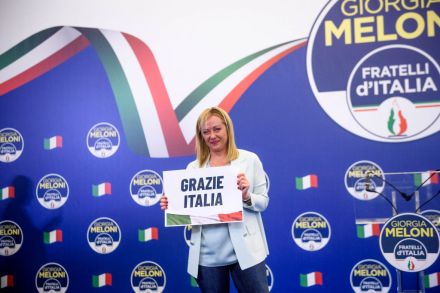
Giorgia Meloni and her Brothers of Italy party were swept into power in elections this weekend, a development that the media complex in America greeted with all the subtlety of a bird smacking into a sliding door. The New York Times managed to call her a “fascist” 28 times in a single article. Meloni stands to become Italy’s first female prime minister — but I suppose it’s only good for women to break glass ceilings if they’re the correct kind of women.

DeSantis is a Republican establishment win-win

From our US edition

What’s left of the Bush-Cheney wing of the Republican Party doesn’t like Ron DeSantis. But it’s eager to see him run for president anyway. For if DeSantis challenges Trump for the 2024 GOP nomination, the old establishment stands to gain no matter who ultimately gets the nod. The Florida governor certainly seems to be ideologically closer to Trump-style populism than to the neoconservatism that prevailed among elite Republicans from the end of the Reagan era to the defeat of Mitt Romney in 2012. Why, then, would those who pine for the likes of Bush and Romney want to see a choice between Trump and DeSantis, both right-wing populists, two years from now?

DeSantis

Republicans want populism but how much?

From our US edition

With last night's primary elections, the story of the Republicans' risky approach to the 2024 election is clear: GOP voters want a party that is populist, but they are at odds over what kind of populist that needs to be. The media's framing of the 2024 narrative has been clear from the outset, and as per usual it's the framing preferred by the Democratic Party. The entire lens of definition is Donald Trump. His endorsements supposedly reign supreme over a beholden GOP electorate, and this is leading them to nominate extreme, flawed, "election-denying" candidates who put their chances of taking the Senate and key battleground governorships at risk, even in what more honest pundits allow will be a wave year for Republicans in the House.

The Ohio Senate race becomes a clown show

From our US edition

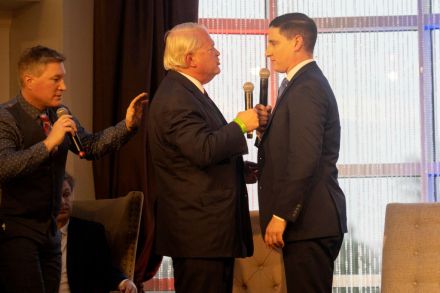
Two men stare down as they prepare to brawl in a made-for-TV spectacle. The cameras spotlight their faceoff as the referee restrains them from coming to blows prematurely. No, this wasn’t a promotional for the UFC heavyweight world championship live on HBO at the MGM Las Vegas. This was the GOP Ohio Senate Forum hosted by FreedomWorks. The Buckeye State has produced some of America’s greatest statesmen. It’s given us eight presidents and giants of the Senate from Robert A. Taft to the retiring Rob Portman. Now it's given us a car full of clowns. A few months ago, I wrote about how the Republican primary contest for Ohio's Senate seat was descending into madness. It’s now entered the realm of complete absurdity.

Reports of the demise of Italian populism are greatly exaggerated

Britain’s newspapers have called the results of the local elections in Italy the death of populism. The Times, for example, grandly proclaims that the Italian elections this week ‘appear to have brought down the curtain on an experiment in anti-establishment politics that inspired populist movements around the world.’ The Guardian, meanwhile, wonders joyfully if what has occurred signals ‘a renaissance’ for the left. I am sorry to have to ruin the party but yet again the mainstream media have got it wrong. The fact that the Italian left, whose main component is the post-communist Partito Democratico (PD), retained Milan plus Bologna and Naples, where the left has governed for donkey’s years, is neither here nor there.

The straitened situation of conservatism

From our US edition

For the past seven and a half decades Western politicians have been exhorting voters to ‘believe’ or ‘have faith’ in democracy. They should have been addressing themselves instead. The unpleasant truth is that 20th- and 21st-century politicians on the right have never believed that constitutional democracy based roughly on the American model could ever satisfy the masses by giving them the material loot and freedom they expect, while those on the left have always thought it does not go far enough in granting themselves the power and authority they require.

conservatism

The future of populist conservatism

From our US edition

Laramie, Wyoming William Kristol, a Grand Poobah of neoconservatism, is leaving the Republican party to join the donkeys of the Democratic one. As Dorothy Parker remarked on being told that Calvin Coolidge had died, ‘How could they tell?’ Mr Kristol, of course, was never a Republican to begin with, only a conservative Democrat. Still, it is true that with Donald Trump’s election and ascendance to the Oval Office, the Republican party has changed considerably, at least for now. So has American conservatism. Whether or not the GOP remains the party of Trump after he steps down from the White House or is dragged out of it by his gilded forelock, conservatism in this country will continue to be Trumpist, and probably for a very long time.

populist

Populist Trump can win

From our US edition

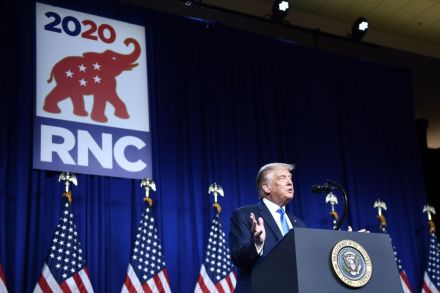
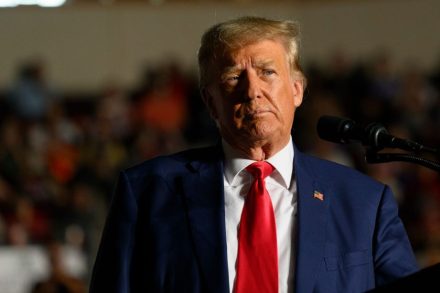
The Republican National Convention kicks off Monday in the hope of offering voters an alternative to the unfocused, self-serving Democratic counterpart that took place last week. President Trump's best chance of accomplishing this lies in following the blueprint of a speech he gave in Pennsylvania this past Thursday. The Democratic party's convention attempted to appeal to everyone and thus appealed to no one, stacking excessively woke and anti-American screeds in the daytime with establishment figures giving vapid, hyperbolic anti-Trump speeches during the primetime national broadcast. Missing was an expression of a cohesive policy platform, which would seem key in a year where a division between the moderates and progressive left defined the primary.

rnc

Frightened people love their leaders

From our US edition

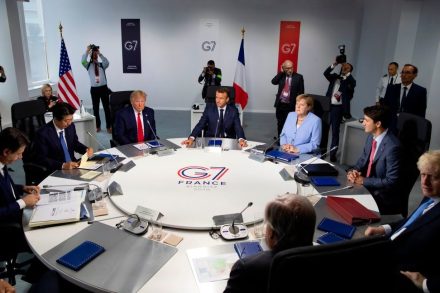
‘The Trump presidency is over’, said Peter Wehner, in the Atlantic. The great wizards of liberal punditry stroked their beards and agreed. These are suddenly serious times and the president is a joke. He cannot survive, surely.‘The coronavirus is quite likely to be the Trump presidency’s inflection point,' wrote Wehner, 'when everything changed, when the bluster and ignorance and shallowness of America’s 45th president became undeniable, an empirical reality, as indisputable as the laws of science or a mathematical equation.’Run that paragraph back through the journalistic ego-filter and it translates as: ‘I told you so! Why didn’t everyone listen to me?’The trouble is, Peter, the public still won’t listen.

g7 leaders

The death of populism has been greatly exaggerated

Have we reached peak populism? This is the question being asked after a recent regional election in Italy delivered a setback to Matteo Salvini, the de facto head of Europe’s populist family. In the affluent and historically left-wing region of Emilia Romagna, Salvini’s right-wing alliance finished more than seven points behind the Left. It wasn’t even close. It is not a surprise that some have breathed a sigh of relief. For much of the past three years, Salvini has seemed unstoppable. While the 46-year-old has miscalculated – like last summer when he tried but failed to bring down the government – he has transformed his 'Lega' movement from a small northern separatist party into a serious national force. He has swept south and into first place in the polls.

The invisible man | 11 July 2019

The Brink is Alison Klayman’s documentary portrait of Steve Bannon, Donald Trump’s former chief strategist (he shaped the ‘America First’ campaign, proposed the Muslim travel ban, etc.) and former boss of Breitbart News, the place where unsuccessful white men go to whine. The film follows him for 15 months from the autumn of 2017 as he attempts to organise far-right European parties into a ‘populist nationalist’ movement, and you may wish to look away when Nigel Farage smarms all over him as it’s not a pretty sight. (I’m a delicate flower, so could only watch from behind my hands.) But it is not insightful and, alas, utterly fails to capture the man behind the persona, if there is one. (He seems to have no personal life but did once try golf.

Ross Perot was the populist who betrayed populism

From our US edition

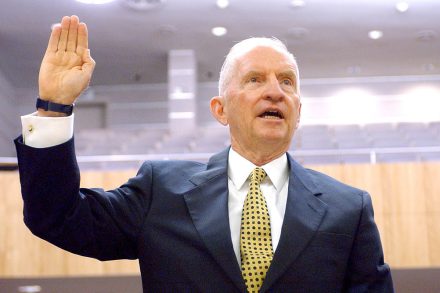
Ross Perot, who has just died at age 89, is wrongly remembered as the man who cost George H.W. Bush his re-election in 1992. He should be remembered as the man who cost his own populist ideas their chance to remake American politics 20 years before the election of Donald Trump. Perot showed the promise of populism — then betrayed it, bottling it up for the next two decades. As far as Perot was concerned, if populism could win without him, it shouldn’t win at all. And so he made it as difficult as possible for anyone else — Jesse Ventura, Pat Buchanan, and yes, even Donald Trump — to build on what Perot achieved in 1992. And maybe Perot did cost Bush I his re-election, just not in the way most people think.

ross perot