Pop

Incredibly his new songs were the best songs: Lindsey Buckingham, at the London Palladium, reviewed

From our UK edition

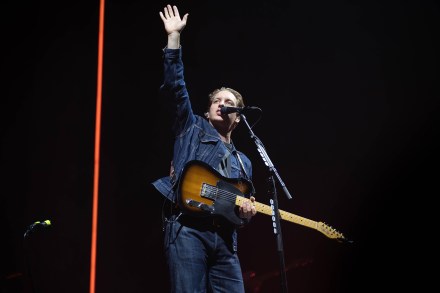
Lindsey Buckingham, at 72, still has cheekbones that cast shadows. He has the upright shock of hair, too, though now it makes him look less like the kohl-eyed pop god of 1980 and more like Malcolm Gladwell’s cooler, angrier brother. He still has fire, too. A couple of solo renditions of Fleetwood Mac songs won the crowd over, but it was the following run of three numbers from his newest album, played with his three-piece band, that put the spark to the show. It proved he’s not yet a heritage act. He had no choice, really, but to forge ahead. In 2018, he was booted out of Fleetwood Mac, for various reasons, chief among them appearing to be that Stevie Nicks couldn’t stand the sight of him any longer, and it was her or him.

Simple songs; voice like the grand canyon: George Ezra, at OVO Hydra, reviewed

From our UK edition

It would be easy to be a little dismissive of George Ezra. A wholesome late twentysomething hailing from the rock and roll badlands of Hertfordshire, Ezra is the kind of pop star you could happily take home to meet your grandparents. A graduate of the British and Irish Modern Music Institute, good-looking in that long, toothy Prince William way, he seems to be laboratory designed not to offend or challenge even the most prickly sensibilities. His music is harder to pin down. With its repeated calls and refrains, it blends folk, pop, soul, blues and calypso styles into an uncomplicated feelgood mix that is both old-fashioned and summer-fresh. The melodies are bright crayon drawings; immediate and insistent.

Holds out huge promise for future seasons: If Opera’s La Rondine reviewed

From our UK edition

One swallow might not make a summer, but it certainly helps rounds the season off. ‘Perhaps, like the swallow, you will migrate towards a bright land, towards love,’ sings the poet Prunier to Magda, the heroine of La Rondine, but love itself is the real bird of passage in Puccini’s gorgeous Viennese operetta-manqué. Magda trades in her old lover for a younger, cuter model and after a summer of happiness leaves him too, without undue regret. That’s basically it. No death leaps from battlements, no ritual disembowelling; none of that stuff that we’re meant to find so regressive and problematic in an opera house, and so visceral and cool in an HBO drama. Just a simple, plausible romance, played out to glowing waltz melodies.

Confounding and fantastic: 100 Gecs, at O2 Forum Kentish Town, reviewed

From our UK edition

Let me introduce you to the two poles in pop and rock. One is marked by authenticity, musicianship, a certain traditionalism. This is the pole that in critics’ discourse is called ‘rockism’ – the assumption that rock (or, at least, real people playing real instruments) is the normative state of music. The other is artificiality, brashness, a disdain for heritage – a celebration of everything that is inauthentic, where a good idea is worth 100 guitar lessons. And that pole is known as ‘poptimism’. Poptimism is why you end up with learned essays in the New Yorker analysing the singer Ariana Grande nicking a doughnut from a shop with reference to the work of John Ruskin. (Yes, that really happened.

The new master of the American Whine: Ezra Furman, at Edinburgh Festival, reviewed

From our UK edition

The American Whine is one of the key vocal registers in rock and roll. You can trace that thin disaffected quaver through the decades from the Shangri-Las to Lou Reed, from Jonathan Richman to Neil Young. Inveigling, needy, smart-assed, it’s as vital a part of the DNA of the medium as a black leather jacket and a souped-up Chevrolet. Ezra Furman, I’m pleased to report, is in possession of a vintage whine. Furman is a Jewish transgender woman who composes with compassion, wit, empathy and anger from those particular personal viewpoints. She wrote the soundtrack to Netflix blockbuster Sex Education and has just released an eloquent sixth solo album, All Of Us Flames.

Full of unexpected delights: Green Man Festival reviewed

From our UK edition

One learns the strangest things at festivals. That, for instance, this summer has been a bit of a blackcurrant disaster in the UK because the extreme heat caused all the different varieties to ripen at the same time and fall from the bushes before they could be properly harvested. That fact came from a retired Kentish farmer called Ian, next to whom we were sitting at a £65-a-head dinner at this year’s Green Man, just outside Crickhowell in Wales. That alone should spell the difference between Green Man and the scene depicted in the Netflix series Trainwreck: Woodstock ’99. No one here was getting mouth ulcers because the drinking water was running with sewage, or rioting, or burning the catering tents down (what a waste of slow-cooked Welsh lamb that would have been).

Sensational: Herbie Hancock, at the Edinburgh Festival, reviewed

From our UK edition

‘Human beings are in trouble these days,’ says Herbie Hancock, chatting to us between songs. ‘And do you know who can fix it?’ ‘Herbie!’ comes the instant reply, shouted from somewhere in the stalls. Hancock might be a jazz legend, but he’s not quite the Saviour. Kicking off this year’s excellent contemporary music programme at the Edinburgh International Festival, he’s a hit from the moment he strolls into view. In his long black frockcoat, Hancock has come tonight as the High Priest of Cool. When he straps on a keytar, he’s a funky gunslinger. When one of his outstanding trio takes a particularly inventive solo, he cracks up with undisguised glee at the sheer showdown-slaying audacity of their playing.

A magnificent farewell: Stornoway, at Womad Festival, reviewed

From our UK edition

The greatest pleasure of writing about pop music – even more than the free tickets and records, nice as they are – is seeing some tiny, as yet unnoticed act and being dazzled by them, then taking every chance you can to wang on about them until other people start to feel the same. Music writers tend not to have many opportunities to do something good – alas, Nick Kent did not expose the thalidomide scandal; it wasn’t Greil Marcus and Lester Bangs who got to the bottom of Watergate – but it’s truly gratifying when a band you have championed rises from the toilet circuit, even if they never make it to the stadiums. I first saw Stornoway, a folk-pop group from Oxford, bottom of the bill in a pub basement in 2009.

She’s pop’s Damien Hirst: Beyoncé’s Renaissance reviewed

From our UK edition

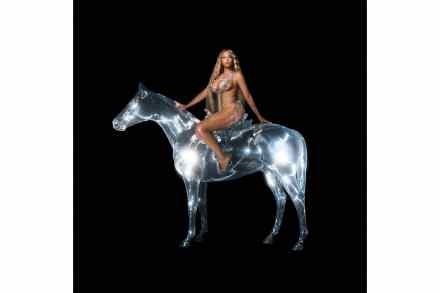
You feel a little sorry for Renaissance, the first solo album by Beyoncé in more than six years. It just wants to dance, but will anybody let it? Such are the claims made for the singer as a cultural figure – superwoman, warrior queen, saviour of Black America – that everything she does carries a weight of expectation which would crush granite, let alone a pop record. The songs on her last album, Lemonade, released in 2016, spun out from the infidelity of her husband, Jay-Z, linking a personal breach of trust to fissures in her family history and racial divides in the United States, past and present. It was impressive but stern.

In defence of country-pop

From our UK edition

I am aware that the music I enjoy is widely considered to be the worst ever produced in human history. Worse than a roomful of children with recorders, cymbals and malice; worse than a poultry abattoir. Every so often, someone will ask me what I listen to, and I’m forced to tell them the truth. ‘These days,’ I’ll say, ‘it’s mostly country.’ Their nose will wrinkle, as if I’ve just let out a stealthy fart in their direction. ‘But old country, right?’ they’ll say, almost pleading. ‘Classic country?’ No, not classic country.

As good, and inventive, as modern rock music gets: Black Midi’s Hellfire reviewed

From our UK edition

Grade: A+ The difficult question with Black Midi was always: are you listening to them in order to admire them, or because you actually enjoy the music they make? By which I mean when you’ve finished listening to them is it a sense of admiration which lingers in the mind, or are you captivated by one or another of their songs? Previously it has tended to be the former – and there is an awful lot to admire. If you add superlative musicianship to a certain witty and anarchic imagination, you end up with this rather deranged, occasionally irritating, millennial mash-up of styles, where jazz fusion meets post-punk, James Brown, Beefheart, clever prog and pretty much anything else which, however briefly, flits through the consciousness of their auteur, Geordie Greep.

Only traces of their eerie early spirit remain: Kings of Leon, at OVO Hydro, reviewed

From our UK edition

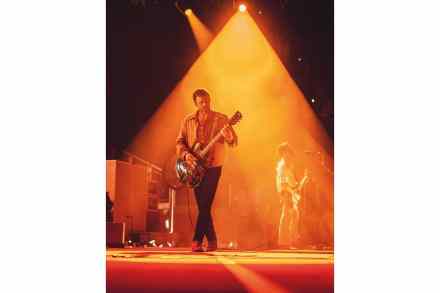
A few years ago, I spoke to Mick Jagger and asked him which of the (relatively) new crop of rock groups he rated. It was a short list, I recall, and not hugely inspiring, but Kings of Leon made the cut. ‘They have a kind of Texas weirdness that you don’t find in a lot of modern rock bands,’ he reckoned. ‘I like their quirkiness, and the fact that you can hear the countryish and blues thing behind them, but it’s not that obvious.’ Aside from the fact that they are from Tennessee, not Texas, it felt like a reasonably astute summation of Kings of Leon’s appeal when they first broke through in the mid-2000s.

The subtleties of her songbook were lost in this enormodome: Diana Ross at the O2 reviewed

From our UK edition

When Motown first packaged up a roster of artists and songs that could be embraced by a non-black audience, no new act – not Smokey Robinson or Marvin Gaye or Little Stevie Wonder or Martha and the Vandellas or the Temptations – crossed over into the bosom of Middle America as easefully as the Supremes. Or Diana Ross and the Supremes, as with many internal ructions they were later rebranded, Ross being the one with shimmering star quality who stood in the middle and sang the lead. They were signed to Motown 60 years ago and given songs by Holland-Dozier-Holland to sell in floor-length gowns. Those songs have seeped into the marrow of us all and, while the world marvels at the longevity of Sirs Paul, Mick, Rod and Elton, it’s time to hear it for the girls.

Glastonbury has become a singalong event for OAPs

From our UK edition

‘Well, it’s just not Glastonbury, is it?’ said my daughter aggressively, when told that our yurt featured an actual bed, wardrobe with hangers and electric points, and hot showers just around the corner. Our excuse was this was my and my partner’s first Glastonbury and we had a combined age of 125. ‘Anyway, why are you there?’ she said. ‘These are not your people, these are my people.’ Not from what I could see. With headliners such as Diana Ross, the Pet Shop Boys and Sir Paul McCartney, Glastonbury today is more a singalong event for people born in the 1950s (my husband) or 1960s (me) than anyone within shouting distance of GCSEs.

The power of cultural reclamation

From our UK edition

‘Version’ is an old reggae term I’ve always loved. It refers to a stripped-down, rhythm-heavy instrumental mix of a song, traditionally dubbed onto the B-side of a single. On paper the concept sounds throwaway, and often it was. Over time, however, using reverb and a fair degree of ingrained madness, pioneering Jamaican producers such as Lee ‘Scratch’ Perry, King Tubby and U-Roy twisted ‘versions’ into mind-bending shapes. Time-stretched DJs toasted new rhymes over the top, and dub was born, an art form built from borrowed parts and hair-brained ingenuity. The notion that popular music is now obsessed with recycling old content is not necessarily fanciful, but it can be reductive.

They have the weakest catalogue of any major act: Abba: Voyage reviewed

From our UK edition

One of the biggest talking points in pop these past couple of years has been how successful old musicians have become at making money. Swathes of stars have simply auctioned off their past: rather than collecting the royalties on their publishing and their recordings year by year, they have just sold the whole lot. Last year Bruce Springsteen collected half a billion dollars for selling the rights to his recordings and publishing to Sony. Bob Dylan got a similar amount for selling his recorded catalogue to Sony and his publishing to Universal. Abba have been in on the act, too. But not selling: a company founded by Bjorn Ulvaeus of Abba has been buying up other artists’ catalogues.

Harry Styles has entered his imperial phase – but his music still has no distinct identity

From our UK edition

At the turn of this century, looking back on the late 1980s when the Pet Shop Boys could do no wrong and everything they touched turned to platinum, Neil Tennant coined the concept of a musician’s ‘imperial phase’. You can be hugely popular at other times in your career – you can sell just as many records – but the imperial phase is something different. The imperial phase is when an artist isn’t just selling records; it’s when approval of them has reached such a pitch that they can do no wrong. It’s when every magazine and newspaper uses any excuse to run photos of them, when their peers garland them with approval, and they seem to have a golden key that unlocks every day.

I’m not sure they ever reached a fourth chord: Spiritualized, at the Roundhouse, reviewed

From our UK edition

Every so often, Jason Pierce drifts into focus. It happened at the end of the 1980s, when his then group Spacemen 3 (motto: ‘Taking drugs to make music to take drugs to’) suddenly and briefly went from being those weirdos from Rugby to one of the defining groups of English alternative rock thanks to their album Sound of Confusion (there’s a whole strain of American psychedelia that is explicitly indebted to their two-chord drone). It happened again a decade or so later, when Spiritualized’s album Ladies and Gentlemen We Are Floating in Space became a big hit, and a staple of Greatest Albums lists. He’s in one of his partial-focus phases at the moment: he’s not going to be popping up on The One Show, but people are taking notice.

A joy – mostly: Nick Mason’s Saucerful of Secrets, at Usher Hall, reviewed

From our UK edition

Drummers are patient chaps, in the main. Think of Ringo in Peter Jackson’s recent Beatles docuseries, Get Back. Lolling around peaceably for days on end as Lennon and McCartney bash about, looking for clues. Drummers twiddle their thumbs behind their kit while the musos fret over chords and key changes, waiting for the moment when they will be called upon to hit skins with sticks and make a song worth hearing. In 2018, admirably urbane Pink Floyd drummer Nick Mason finally lost patience. The band has effectively been finished since 1994, and following the death of keyboardist Rick Wright in 2008, Mason was caught between Roger Waters and David Gilmour, the two rutting stags of the group’s legacy.

The perfect pop star: Dua Lipa at the O2 Arena reviewed

From our UK edition

Dua Lipa’s second album, Future Nostalgia, was released at the least promising moment possible: 27 March 2020, the day after the first lockdown came into force in the UK. Just as a pandemic swept the world, she was releasing a maximalist pop album that, surely, was designed for the communal experiences no one was having. But something about it connected: Future Nostalgia was a worldwide hit, the first British album released in 2020 to go platinum, the tenth bestselling record in the world that year. It turned out to be the right album for a wretched year. No wonder her show at the O2 was centred on it – every track was heard, which would normally be overegging the promotional pudding, but, given its consistent excellence, was entirely justifiable.