Pop

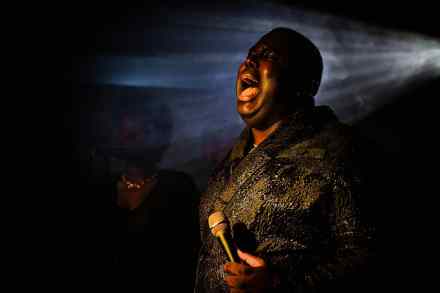
One of many soul acts looking back 50 years and doing very good business: Black Pumas, at the Roundhouse, reviewed

From our UK edition

No musician ever went bust overestimating the public desire to hear classic soul. Slapping on a Motown backbeat has revived many a career and made many a star. At the simplest level, what wedding band are you going to hire: the one playing note-for-note recreations of acid-rock wig-outs from 1968, or the one playing note-for-note recreations of the Motown, Stax and Atlantic catalogues from the same year? It’s hardly evidence of the appalling taste of the music-buying public. If we’re going to play that silly ‘What pop era was best?

Decent dream pop: Beach House’s Once Twice Melody reviewed

From our UK edition

Grade: B+ Everything these days devolves to prog — and not always very good prog. Where once synths were vastly expensive, difficult to master and hell to maintain they are now in a place beyond ubiquity; every sound you want conjured by the press of a key, your song suddenly washed over with sonics that make it sound more important than it really is. It almost makes you yearn for Yes and ELP — at least they knew they were pretentious dullards using electronic wizardry to elevate the slightest of compositions. Dream pop and its self-harming kid sister shoe-gazing — both genres dating from the mid-1980s and the likes of the Cocteau Twins — were always going to lend themselves to prog’s grandiosity.

Taylor Swift tells it all too well on her ‘Red’ re-release

Taylor Swift's album Red, her fourth, originally dropped my first semester at college. It was Swift's first full foray into pop and she matched the change in genre with a new signature appearance; bright red lips and glossy, straight hair with bangs to replace her sweeping curly blonde 'do. Red's exploration of deep love and subsequent heartbreak, plus Taylor's personal reinvention, felt like a comfort during my own transition into adulthood. Swift announced last week that she would be dropping the "Taylor's Version" of Red earlier than expected. The re-release is part of a project Swift has undertaken to re-record all of her masters after her former label sold them out from under her to Scooter Braun.

red taylor Swift attends the 2020 Sundance Film Festival (Getty Images)

The sound of a hunch coming good

From our UK edition

Joan Wasser is New York loud. Her resting register is CAPS LOCK, rising to flashing neon when roused to laughter or, occasionally, indignation. ‘I was born a very expressive person,’ says the singer. ‘I was always talking to people in the street that I didn’t know. I’m not super afraid of expressing how I feel, and I take chances very quickly.’ Bold spontaneity has served her well. The Solution is Restless, Wasser’s latest album as her artistic alter ego, Joan As Policewoman, is the sound of a hunch coming good. The record stems from a single day spent extemporising with her friend David Okumu and the late and legendary Afrobeat drummer Tony Allen.

Oh dear, Abba’s new album is a bit of a dog: Voyage reviewed

From our UK edition

I assume that somewhere on the guided ‘Piers and Queers’ walking tour of Brighton, the participants are enjoined to regard, in awe, the Dome — the venue at which Abba, on 6 April 1974, won the Eurovision Song Contest, thus both launching themselves as a wildly successful band and establishing the town (as it was then) as a mecca (probably the wrong choice of word there) for the UK’s swiftly growing gay community. Hitherto it had been a rather frowsy, Tory-voting seaside resort, best known for dirty weekends and petty villains. The Swedes won with ‘Waterloo’, of course, which may have provided our nation with some much-needed succour. A remembrance of good things past.

Joyous perfection from a band that’s sure to go far: Gabriels at The Social reviewed

From our UK edition

The bigger the next big thing, the smaller the room you want them playing in. You want the people who got inside to be thankful they made it in (not least because the more exclusive the show, the more hysterical the tweets afterwards: ‘You plebs couldn’t get a ticket, but I saw the very future of the planet!’). You want the air so thick with heat and chatter before the band comes on that there is a sense of event before a note has been played. You want everyone there — band and audience alike — to feel they are at the only place that matters, regardless of it being a nondescript Thursday evening.

The death of the live album

From our UK edition

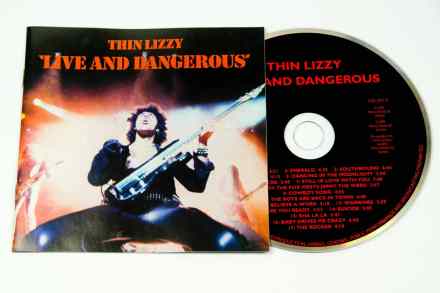
Next week The The release The Comeback Special, a 24-track live album documenting the band’s concert at the Royal Albert Hall in June 2018. Meanwhile, Steely Dan’s last man standing, Donald Fagen, has just released two live albums recorded in 2019. Their musical qualities notwithstanding, these releases feel like relics from a lost world. Much like the fondue set, the live album is much reduced from its 1970s and 1980s heyday, when a pretty blonde sideman-turned-solo artist called Peter Frampton could somehow shift eight million copies of the anodyne Frampton Comes Alive! The stand-alone contemporary live album is now an endangered species; MTV’s Unplugged series in the 1990s offered a final down-home twist on the format.

A terrible joke gone wonderfully right: Rick Astley and Blossoms Perform the Smiths reviewed

From our UK edition

Many of us who grew up loving the Smiths have rather shelved that affection in recent years. Many of us, being lily-livered liberals, have rather taken against Morrissey’s politics and his public support for the far-right For Britain party. Even those inclined to agree with him might have tired of his unrelenting self-pity and his inability to say anything nice about anyone, ever. Yes, we’ve still got lovely Johnny Marr playing the songs in his solo shows, but with the greatest goodwill in the world — and Marr gets granted the greatest goodwill in the world by being such an obviously decent fella — he’s no one’s idea of a great singer.

The Sting paradox

As a fitfully employed, freelance hack, there are few jobs I consider beneath me. I’ve peered anxiously over the boundary wall of Eric Clapton’s English estate to the approaching noise of guard dogs to see if Clapton might care to supply an impromptu quote or two in lieu of the formal interview his management had aggressively denied me. I’ve been informed by a source close to Roman Polanski that he considered me a ‘nosy fellow’ — enough, perhaps, to give pause to anyone who happens to recall the director using that same phrase to Jack Nicholson immediately prior to inserting his flick-knife in Nicholson’s left nostril in a scene from Chinatown.

sting

Banal and profound, bent and beautiful: Nick Cave & Warren Ellis at Edinburgh Playhouse reviewed

From our UK edition

Nick Cave has always been drawn to parable and fable, but more than ever these days he is engaged in the necessary work of mining magic from the base metal of day-to-day existence. The key lines in this show came early, during ‘Bright Horses’: ‘We’re all so sick and tired of seeing things as they are,’ Cave sang in that hollow, sorrowful baritone. ‘This world is plain to see/ It don’t mean we can’t believe in something.’ Cave’s recent songs have a terrible and powerful context: the death of his teenage son, Arthur, in 2015. As an artist he has confronted this personal tragedy side on, acknowledging its profound impact without letting it overwhelm his writing.

Teenage Fanclub are not a dramatic group, but they are lovely

From our UK edition

They may no longer get many teenagers at their shows spending all their money on merchandise, then throwing up on the way home, though that certainly happened at the end of the 1980s, when they began, but people do love Teenage Fanclub. Their teenage fans are now middle-aged, and have spent the intervening years growing up with the band. They’ve listened as the group started singing about parenthood, long-term relationships, ageing, and they’ve stayed with a group who reflected their own lives back at them. The music, too, has changed. Where the early Fanclub records were sparky, messy alt-rock, they have spent the decades refining themselves so their songs are now polished miniatures, undramatic at first sight, but filigreed and burnished like tiny masterpieces.

Cast a spell, clear and sharp as frost: The Unthanks reviewed

From our UK edition

As August unwound, the EIF settled into the cavernous gazebo that is Edinburgh Park, and things began to loosen up. First there was an outbreak of vigorous clog dancing — more on which later. This escalated within 48 hours to a polite mini stampede from our designated seats towards the front of the stage at the start of Damon Albarn’s show, instigated at the artist’s request. ‘I’ve checked and we’re allowed,’ said Albarn sensibly. In 2021 we must take rebellion as we find it. When he lit a cigarette near the end it felt like civilisation was teetering on the very brink. As it transpired, this wasn’t really music designed for rushing the stage.

Good noisy fun: black midi, at the Edinburgh International Festival, reviewed

From our UK edition

This year we must love Edinburgh for her soul rather than her looks. The EIF should be commended for making the best of a tricky hand, but the lodgings for its music programme bring to mind a fallen society beauty forced from her New Town villa into a rented bedsit. Edinburgh Park is a cathedral-sized tent in a business park, wedged between the city bypass and a shopping mall. The wooden floor planks buck and roll like a galleon deck. There is a roof but no sides and the Covid-quelling ventilation is, shall we say, robust. So yes, forget the optics. In 2021, content is everything. As it transpires, it proved a fitting spot in which to experience three artists engaged in similar quests to remould the traditional and familiar.

What a genuine delight to be among people: Gorillaz, at the O2, reviewed

From our UK edition

The new music economy relies on cross-promotion and artists reaching out to different scenes. And the rise of streaming means everyone can hop between audiences with ease, hence those singles apparently by one person but with a cricket team’s worth of other names credited. As the Beach Boys once sang, ‘you need a mess of help to stand alone’. Alongside the featured artist sausage factory there are musical patrons. Take Damon Albarn, who has spent much of the past 20 years elevating the work of other artists, using the strength of his own name — made, of course, as the frontman of Blur — to promote music that might otherwise slip past his core audience.

Hugely unmemorable: Billie Eilish’s Happier Than Ever reviewed

From our UK edition

Grade: C+ Time to get the razor out again — Billie’s back. The slurred and affected can’t-be-arsed-to-get-out-of-bed vocals. The relentless, catatonic introspection, self-pity and boilerplate psychological insights. The queen of sadgurls has a new album — and yes, of course, the title is the closest Billie has ever come to making a joke. Of course she’s not happy — that would be her schtick sold down the river. If Billie ever professed herself really happy her fans would quickly go elsewhere to slake their misery jones. Eilish has talent, along with the over-weening narcissism that comes with affording your every feeling a sense of great, dramatic import. But it is spread very thin here.

When musical collaborations go right – and when they go horribly wrong

From our UK edition

Big Red Machine release their second album later this month. It’s a fine name for ten tonnes of agricultural apparatus but perhaps not quite so persuasive for a pop group, particularly one with a considerably lower profile than most of its members. A collective formed by the National’s Aaron Dessner and Bon Iver’s Justin Vernon, Big Red Machine has corralled the likes of Robin Pecknold (Fleet Foxes), Sharon Van Etten and Taylor Swift into making a collaborative record called How Long Do You Think It’s Gonna Last?. It sounds intriguing on paper, but the quality of musical collaborations is notoriously hard to gauge from the cast list.

Is there anyone more irritating and stupid than Bobby Gillespie?

From our UK edition

Grade: B– Is there anyone in rock music more irritating and stupid than Bobby Gillespie? The rawk’n’roll leather-jacketed self-mythologiser. The affected drawl. The shameless pillaging of every hard rock album made between 1969 and 1972, but especially the Faces and the Rolling Stones. The moronic lyrics. The hard-left radical chic posturing and condemnations of Israel from a man with all the geopolitical understanding of a nipple-clamp. The desperate, pathetic, yearning to be cool. Trawl back through those Primal Scream albums and show me a moment of true originality. There isn’t one, is there? Which isn’t to say that — annoyingly — they’re devoid of fun and the occasional good tune.

Whiny, polite and beautiful: Kings of Convenience’s Peace or Love reviewed

From our UK edition

Grade: A– The problem with Norwegians is that they are so relentlessly, mind-numbingly pleasant. Well, OK, not Knut Hamsun or Vidkun Quisling. And probably not the deranged fascist murderer Anders Breivik either. But then maybe that’s what unrestrained, suffocating niceness does to a certain kind of person: they end up strapping on a machine gun, or yearning for Hitler. Or both. Kings of Convenience are two earnest and very pleasant youngish men who often wear nice jumpers. They come from Bergen, which is as pristine and congenial a city as you could wish for: sharp, clear northern air and wooden-framed houses filled with agreeably plain furniture. Oh, and fish everywhere.

The joys of musical comfort food

From our UK edition

I’ve given up comfort food. I’m trying to shift lockdown pounds that have left me with the physique of the kind of ageing second-string wrestler you used to see on World of Sport early on a Saturday afternoon in the 1980s. It’s all eschewing oils and measuring portions round these parts, and so I have been seeking my comforts in music. Enough with your Lithuanian drone and your polyrhythmic technical metal from Indonesia! Bring me verses and choruses and melodies and vocal harmonies! Katy J. Pearson — a young woman from the West Country who perhaps wishes she were, instead, from the American west coast — was true comfort food. The whole thing also felt unnervingly like a real gig, the kind one used to go to Before All This.