Pop

Intoxicating: Bruce Springsteen, at BST Hyde Park, reviewed

From our UK edition

Seven years ago, I asked Bruce Springsteen what he meant when he talked of the covenant between himself and his audience. It was a long, thoughtful and thorough answer, and when I transcribed it, I realised he would have won Just a Minute, so clear was his reply. Part of what he said was this: ‘I have built up the skills to be able to provide, under the right conditions, a certain transcendent evening, hopefully an evening you’ll remember when you go home. Not that you’ll just remember it was a good concert, but you’ll remember the possibilities the evening laid out in front of you, as far as where you could take your life, or how you’re thinking about your friends, or your wife, or your girlfriend, or your best pal, or your job, your work, what you want to do with your life.

Why aren’t Spoon filling stadiums?

From our UK edition

Here’s a mystery for you. Why were Spoon, one of the most dynamic, sharpest rock bands in the world, playing a single night in a north London town hall (capacity 890) while Arctic Monkeys were playing three nights at Arsenal’s ground (capacity 59,000) as part of a UK tour that encompassed eight other stadiums in the UK, plus one arena, one park and Glastonbury? It’s not that Arctic Monkeys aren’t good – no one gets that kind of critical unanimity without being good. It’s just that Spoon are better, and better than almost everyone else. Onstage in London, aided by a genius sound engineer, Spoon were perfection So why aren’t Spoon filling stadiums? First, they rarely come to the UK.

Time to take your meds, Kanye

From our UK edition

No one does agonising quite like Mobeen Azhar. In several BBC documentaries now, he’s set his face to pensive, gone off on an earnest quest to investigate a touchy subject and reached his conclusions only after the most extravagant of brow-furrowing. There is, however, a perhaps unexpected twist: the resulting programmes are rather good, creating the impression – or even reflecting the reality – of a man determined to get to the often dark heart of the matter. For a while, it did look as if the programme’s main appeal might be as a comedy of liberal discomfiture In the past, Azhar has applied his methods to such issues as the long-standing effect of the Satanic Verses controversy and why British Muslims joined Isis.

Brilliantly unhinged: Grace Jones, at Hampton Court Palace, reviewed

From our UK edition

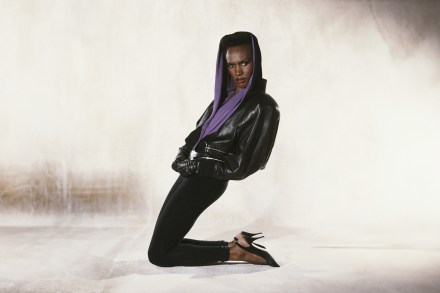
Some artists need flash bombs to make an impression on stage. Some need giant screens. Some need to run around like hyperactive toddlers. All Grace Jones needed was a hula hoop – not the delicious potato snack, but the plastic ring. For the ten minutes or so of ‘Slave to the Rhythm’ that ended her set on a balmy evening in the courtyard of Hampton Court Palace, she languidly rotated the ring around her hips, all while she strode across the stage, then climbed a set of stairs. Not a single revolution was missed. I realise that you don’t come to these pages for reviews of hula hooping, but by God, it was astonishing. I like to think it was what Henry VIII would have wanted. It was a fitting end to a brilliantly unhinged show.

Let’s hear it for the lesser-spotted nepo daddy

From our UK edition

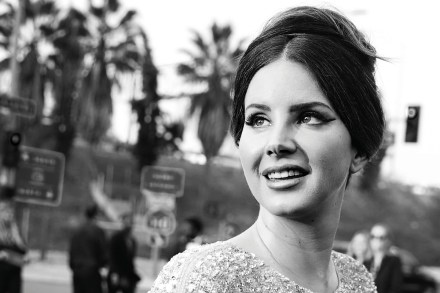
Rob Grant releases his debut album, Lost at Sea, this week. A 69-year-old millionaire and former ad man, furniture exec and domain developer, Grant has made a record of ambient, ocean-themed piano doodles glorying in titles such as ‘In the Dying Light of Day: Requiem for Mother Earth’, ‘A Delicate Mist Surrounds Me’ and ‘The Mermaids’ Lullaby’. Not incidentally, he is also the father of one of the world’s biggest (and best) alt-pop stars, Lana Del Rey. The title track features his daughter’s unmistakeable contralto, while her name is emblazoned on the front cover. Father’s Day is just around the corner, and Ms Del Rey has delivered a pearl of a present for Pappy: his very own album.

One of the most tuneless, vapid, dismaying things I’ve ever seen: Mötley Crüe, at Bramall Lane, reviewed

From our UK edition

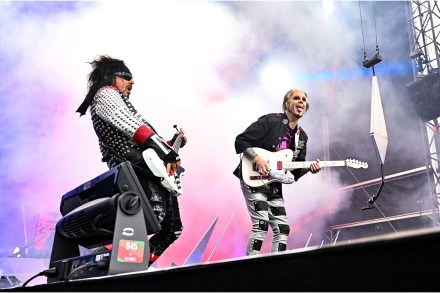
I’m not sure I’ve ever seen anything worse than Mötley Crüe in Sheffield. Nothing more tuneless, empty, vapid and dismaying. The Los Angeles glam-metal band became superstars in the 1980s, largely by wearing lots of make-up and doing terrible things, but I’ve never understood why. Even those who weren’t repulsed by the band members’ behaviour and personalities surely couldn’t have detected any actual tunes in there. At Bramall Lane, with a viciously loud PA, the few melodies that were there were largely undetectable. And the band – now in their sixties – still gloried in their obnoxious infantilism.

Dazzling – if you ignore the music: Beyoncé, at Murrayfield Stadium, reviewed

From our UK edition

Scheduling open-air concerts in mid-May in northern Europe is a triumph of hope over experience. I last spent time with Beyoncé – I’m sure she remembers it fondly and well – in 2016, in a football stadium in Sunderland on a damp, drizzly, early-summer English evening of the type that even strutting soul divas struggle to enliven. I don’t think it was merely the weather which left me underwhelmed by her brutalist attack, the sheer choreographed drill of the show, the lack of engagement, of spontaneity, of joy. By then, Beyoncé was no longer seeking to be regarded as a mere pop star. She had recently taken on the unearthly qualities of an alien presence, entirely unrelatable, tilting for something far more culturally significant than a spot in the charts.

In praise of goths – the most enduring of pop subcultures

From our UK edition

More than 40 years on, every town still has them, wandering the streets with pale skin, more make-up than you can find in Superdrug, swathed in acres of black fabric. Goths, rather unexpectedly, have turned out to be the great survivors among pop subcultures. Others have risen and faded, but the goths – laughed at, ignored, dismissed – have endured, seeing their style and their musical tastes slowly incorporated by everyone else (there’s even a goth version of hip-hop, known as ‘horrorcore’). Goth was a fitting name for the music: overbearing and foreboding; delivering ecstasy through the building and releasing of tension rather than through major chords and primary colours; drawing on punk, Bowie, the Doors and the Stooges.

The new Pogues: The Mary Wallopers, at O2 Forum Kentish Town, reviewed

From our UK edition

I was listening the other week to a solo album by an ageing rock guitarist, once terrifically famous. It was really very good, but I couldn’t bring myself to care about it because it clearly didn’t matter: this man’s career is static and it is likely to remain so. The album will make no impact on the wider world and, despite liking it, I felt no need to listen again. Had it been the debut by a band of 21-year-olds, on the other hand, I would have been all over it. Rock and pop musicians are most interesting in the transitions; that is, on the way up or on the way down. The journey up always – but always – accounts for the most interesting bit of any musician’s memoir, because they’re remembering when life was exciting.

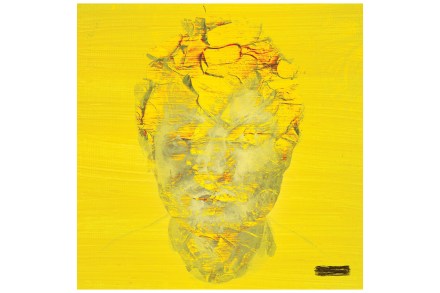
Heartfelt but bland: Ed Sheeran’s – (Subtract) reviewed

From our UK edition

Whether by accident or design, the mathematical theme of Ed Sheeran’s previous album titles (+, ×, ÷ and = respectively) resolves rather neatly with – (Subtract). I interviewed Sheeran around the time of × and found him likeable enough but a bit out of reach. Multiplication did indeed seem to be foremost on his mind. Perched on the edge of a bed in a room above RAK studios in central London, he came across as a man obsessed with sales figures and chart placings, a coolly pragmatic mix of talent and ambition. (You don’t think Sheeran is talented? I watched him entertain 60,000 people in a football stadium for two hours with just a guitar, loop pedals and a lot of chutzpah. He’s got talent, all right.

Lana Del Rey’s new record: samey, stale, sterile

The title song of Lana Del Rey’s ninth studio album, Did You Know That There’s a Tunnel Under Ocean Blvd, opens in a style now typical of the thirty-seven-year-old singer-songwriter. Amid the swelling string accompaniment and slow beat, the artist sings “fuck me to death, love me until I love myself.” So far, so in keeping with the musician who made her name with the dark, sensuous songs of 2012’s Born to Die (“my old man is a bad man, but I can’t deny the way he holds my hand”) and 2019’s Norman Fucking Rockwell! (“Goddamn man-child, you fucked me so good I almost said ‘I love you’”).

del rey

& Juliet and Titanique: two newly minted cult classics

Fears that the new pop-parody musical & Juliet would be a vehicle for steamrolling Shakespeare are understandable but unfounded. It’s true that, on Broadway as in the rest of the arts, holding dead white males up for flagellation is now almost a cherished ritual — a recent example being last season’s Six, a glitzy feminist paean danced on the grave of Henry VIII. There’s a healthy dose of girl power in & Juliet, too, and I don’t doubt that a few heedless theatergoers came with tomatoes in hand, hoping to find the Bard pilloried. Let me tell you a secret: the theater world still adores Shakespeare, even in 2023. To renounce him is to swear off your mother’s milk.

Juliet

Shakira, Miley Cyrus and the unwelcome return of the diss track

Over the weekend, singing sensations Miley Cyrus and Shakira brought the "diss track" — a song whose primary purpose is to disparage someone else — back into the mainstream. Both artists chose to target their ex-husbands. Shakira’s new song, which was released last week, racked up 63 million views in the first twenty-four hours following its release. It has since been viewed more than 142 million times, making it the most watched new Latin song in YouTube’s history. https://www.youtube.com/watch?v=CocEMWdc7Ck Last year the Colombian singer split from former soccer player Gerard Piqué, her husband of more than a decade.

miley cyrus shakira diss track

What’s the latest on the Madonna biopic?

"I’ve had an extraordinary life, I must make an extraordinary film," Madonna told Variety in July, as she described her decision to helm her own biopic as a "preemptive strike" against the men who wanted to tell her story. That was last summer, when there were reports of a months-long "Madonna bootcamp" led by casting director Carmen Cuba, which included eleven-hour choreography sessions, where everyone from Florence Pugh, Alexa Demie, Bebe Rexha, Odessa Young and Sky Ferreira auditioned to play the "Material Girl." Madonna said she wanted the role to go to someone who could "convey the incredible journey that life has taken me on as an artist, a musician, a dancer...the focus of this film will always be music.

The Whitney Houston biopic is a big, gay masterpiece

Half an hour or so into the new Whitney Houston biopic, I Wanna Dance with Somebody, two bros sitting next to me asked, “Why is gay Whitney in Black Panther?” They were in the wrong movie, but based on the other audience members screaming at the screen, the lone straight men weren’t alone in finding director Kasi Lemmons’s new film shocking. Sony promoted I Wanna Dance with Somebody as the feel-good biopic of the year. The trailer starts with the hook of the titular song and goes on to show Houston (Naomi Ackie) dancing to “How Will I Know” and singing her iconic rendition of the “Star-Spangled Banner” at the Super Bowl. Houston rarely speaks, but when she does, she talks about music: “My dream,” she purrs, “sing how I want to sing.

whitney houston

Tenderness and menace: Bob Dylan, at the London Palladium, reviewed

From our UK edition

Bob Dylan has always toyed with audiences. He plays what he wants, how he wants, letting his mood dictate tempo and often key (sometimes switching songs to the minor). On Dylan’s return to London for the first time in five years, he summed it up early. ‘I ain’t no false prophet/ I just know what I know,’ he gruffly sang. Dylan spent the night at the Palladium doing what he knows best, singing songs of love, loss and immortality. Covid temporarily ended his ‘Never-Ending Tour’, which had seen Dylan play more than 3,000 shows since 1988. Now it’s billed as ‘The Rough and Rowdy Ways Tour’, with the strapline: ‘Things aren’t what they were’.

Compellingly personal arena experience: Bon Iver, at Ovo Hydro, reviewed

From our UK edition

A reliable metric for measuring pop success is hard to find these days, as Michael Hann noted in these pages recently. Massaged figures for sales and streams are so opaque as to be almost meaningless. The charts are old news; social media reach wildly distorting. Bon Iver have won Grammys and released platinum-selling albums, but that was a decade ago. Such accolades feel oddly old--fashioned now. Perhaps the most assured barometer is the traditional one of bums on seats – by which gauge Bon Iver appear to be doing just fine. Yes, they are a band lacking any semblance of a song your postman could whistle. And yes, they are fronted by Justin Vernon, a doggedly unstarry fortysomething in a rumpled T-shirt and headband.

We should take Robbie Williams more seriously

From our UK edition

Oh, nostalgia – so much better than it used to be! You’d never have guessed pop music was once the preserve of teenagers had you been visiting the Greenwich peninsula last week – not from the crowds, or from the artists. Here were Roxy Music, whose four core members boast a combined age of 295, playing what might be their last ever show. Here were the Tops and the Temps, bands each with just one original member left – 86-year-old Duke Fakir of the Tops, 80-year-old Otis Williams of the Temps. And here was the absolute youngster of the lot, Robbie Williams, a stripling of 48, but 32 years into his pop career. Blimey, I know we keep being told retirement at 65 is a thing of the past, but this was ridiculous.

The death of the pop star

From our UK edition

The definition of ‘pop star’ in the Collins English Dictionary is unambiguous: ‘A famous singer or musician who performs pop music.’ Well, that seems fairly self-explanatory, doesn’t it? It also seems way wide of the mark, because being a pop star (or a rock star, its longer-haired cousin) encompasses a great deal more than being famous for singing pop songs. As Nik Cohn wrote, describing the first flush of idols of the rock’n’roll age, they were ‘maniacs, wild men with pianos and guitars who would have been laughing stocks in any earlier generation… They were energetic, basic, outrageous. They were huge personalities and they used music like a battering ram.