Pop

How Trojan Records conquered the world

From our UK edition

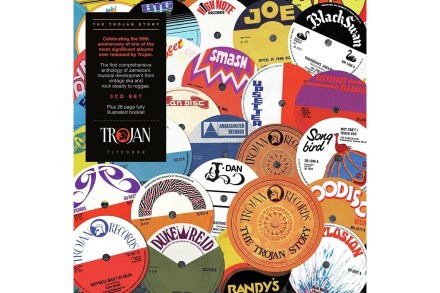
When Trojan Records attempted to break into the United States music market in the early 1970s, it hit an insurmountable barrier: the company shared its name with America’s most popular brand of condom. ‘It was a case of commercial coitus interruptus,’ says Rob Bell, at the time the label’s production manager. In America, Trojan signified rubber, not vinyl. The label proved to have greater staying power in the UK, where it was at the forefront of popularising Jamaican music.

Annoying but good: Black Midi’s Cavalcade reviewed

From our UK edition

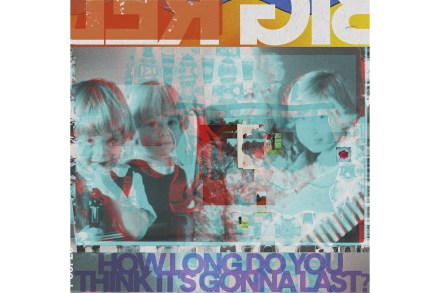
Grade: A– Imagine a really disgusting and immoral scientific experiment in which the members of Weather Report, the Mahavishnu Orchestra, King Crimson and Wire were somehow fused together into a giant caterpillar or something. This album is the kind of racket the forlorn creature might make. It sits in that usually arid zone where prog meets jazz fusion, with frequent bursts of staccato slash-and-burn brass and more ludicrous time signatures than you could shake a stick at. Or imagine Captain Beefheart speeded up, given a little focus and stripped of even the vaguest semblance of a sense of humour. That’s Black Midi. It works, even if singer Geordie Greep’s croon begins to grate even more than the shrieking mayhem behind him.

Wispy, gauzy beauty: This Is The Kit, Barbican, reviewed

From our UK edition

On the way home from This Is The Kit’s show at a socially distanced Barbican, I listened to Avalon by Roxy Music, which had been brought to mind by the previous 90 minutes or so of music. It’s perhaps worth saying that This Is The Kit — the nom de chanson of Kate Stables, backed by a three-piece band and three horn players — have absolutely nothing in common with Avalon by Roxy Music, visually or musically. Stables, hair piled on top of her head, and dressed for comfort, not speed, did not look as though she intended to boost the Colombian export trade after the show; perhaps, instead, she would be offering forthright opinions about agribusiness over a lentil bake.

‘Germans thought we couldn’t play’: Irmin Schmidt, of musical pioneers Can, interviewed

From our UK edition

‘The records are only half of the picture,’ says Irmin Schmidt, founder member of the great German experimental collective Can. ‘Live [performance] is the side of ours which actually has still to be discovered. For many of the people who came to our concerts, it was much more important in building up the legend than the records, because it was something extraordinary.’ Rock music is neck deep in retrospection these days, but the release of a ‘new’ Can album, Live in Stuttgart 1975, can’t be dismissed as just one more trawl through the floor sweepings. Instead, as Schmidt suggests, it reshapes what we know about one of the most influential bands of the 20th century.

A perfect welcome back to live music: Sarathy Korwar at Kings Place reviewed

From our UK edition

There is a reason music writers tend to stick with music writing rather than transferring their manifold talents to the business side of things. Our dirty secret is that, for all our exquisite taste, most of us — with a few exceptions — have no conception of what the rest of the world actually wants from their music. The first piece I ever wrote was a student newspaper review of a gig in a Leeds pub, in which I gushed about the headliners but noted, with a sneer, the fact that the support didn’t appear to have any actual tunes. We would be hearing no more from them, I cautioned. The headliners were a long-forgotten band called Tad. I forget what happened to the other band; their name was Nirvana.

‘My voice is a curse’: Gary Numan interviewed

From our UK edition

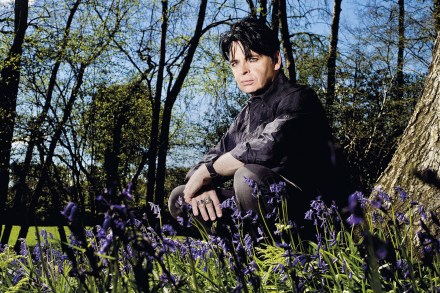
Reading the opening chapter of Gary Numan’s recent autobiography, (R)evolution, I start to get the odd feeling that I could just as well be reading about my own early life. Like Numan, I grew up near Heathrow and found the aircraft that flew over our house beautiful and magical. My parents were working class and worked hard and supported me all the way. Like Numan, I wanted to be a pilot, and a rock star. And like him, I never quite fitted in. Perhaps I could have formed a seminal band, become a pilot in my spare time and moved to LA. But then I don’t have that voice, or that talent. Never mind. I am chatting to him by Zoom. He’s in his LA home and eagerly awaiting the release of his 18th solo studio album, Intruder.

The Byrds without the drugs: Teenage Fanclub’s Endless Arcade reviewed

From our UK edition

Grade: B– Advancing age has smoothed the edges of Bellshill’s finest lads, once — back in the early 1990s — arguably Britain’s best band. This is like being embalmed for ever in suffocating pleasantness. You doze off during ‘Warm Embrace’ and wake, perhaps hours later, to the same gentle, winsome, minor-key harmonies chugging by at a medium pace, the guitars strummed with deadening accuracy. Is it the same song? Have I died? The Fannies have been heading this way for a while and the departure of one of their better songwriters, Gerard Love (who jacked it in two years ago), has hastened their hitherto gentle descent towards the earnestly soporific, the slightly cloying.

The sermons poked out of the songs like busted bed springs: Van Morrison livestream reviewed

From our UK edition

Over the decades, Van Morrison’s role within the tower of song has shifted from chief visionary officer to head of complaints. It’s not a promotion. The title track of his new album, Latest Record Project, Volume 1, is a rebuke to those who insist on living in an artist’s past rather than his present. A laudable sentiment, perhaps, but one less easy to put into practice when Morrison’s present consists of 28 tracks which hone an already ornery world view to a paranoic peak. When he isn’t griping about his divorce he’s peddling half-baked conspiracy theories, sneering at internet users and ‘media junk’, and bitching about modern music, crooked politicians and false prophets.

‘I’m not interested in moral purity’: St Vincent interviewed

From our UK edition

St Vincent — Annie Clark, a 38-year-old singer-guitarist of prodigious gifts — spends a lot of time confounding people. She confounds them with stage shows that are less gig than theatre, ostentatiously choreographed and fabulously provocative (though not in any crude sense). She confounds them with an image that morphs from album to album (for her sixth, Daddy’s Home, she has adopted the dissolute Cassavetes-heroine look). She confounds them by, in a puritan age, placing sex squarely within her work, though usually in a plausibly deniable way (the title Daddy’s Home refers to her father’s release in 2019 from prison after serving nine years for his part in a stock-manipulation scheme. She says of the title: ‘It’s pervy’).

Tom Jones is as nuanced a vocalist as Ian Paisley

From our UK edition

Grade: C Revisionism has been extraordinarily kind to Tom Jones, ever since he barked his way through Prince’s ‘Kiss’ with the kind of subtlety you might expect from someone who is about to nut you in the mouth. That enormous fruity bellow is one part threat, one part music hall. He was repackaged as someone whose roots supposedly lay in R&B, but I don’t remember Sam Cooke singing ‘It’s Not Unusual’ or ‘What’s New, Pussycat?’. What Tom does, with everything, is belt it out, with bombast and bravado and the faint whiff of faggots and peas. He is as nuanced a vocalist as the late Revd Ian Paisley.

Watch kids go giddy in Niamey: Mdou Moctar live in Niger reviewed

From our UK edition

The other week someone posted on Twitter a link to a YouTube clip titled ‘Family Lotus and D.J. Cookin’ at the Golden Inn, July 4 1981’. It showed a bunch of long-haired people on a makeshift stage in the New Mexico desert and a handful of people dancing around in the dust to the music, which was a weird, trippy, hyper-freaky form of electrified banjo music: ‘psychedelic bluegrass’, apparently. Watching the stream of the Tuareg guitarist Mdou Moctar was an unnervingly similar experience: he and his three-piece backing band were set up in the dust outside a friend’s house, watched by whoever came along. And Moctar’s guitar playing — blurrily deft repeating patterns — was deeply reminiscent of the banjo playing in the YouTube clip.

A redemption song, conventionally sung: Sky’s Tina reviewed

From our UK edition

It has never been easy for women in the music industry. Once upon a time the evidence was largely anecdotal. Now it’s being recorded for posterity, frame by frame. Recent documentaries about Britney Spears and Demi Lovato exposed the trauma inflicted on post-millennial pop stars. Two new portraits of Anna Mae Bullock and Marianne Elliott-Said, better known as Tina Turner and Poly Styrene from punk group X-Ray Spex, ponder the price paid by their forebears. Turner’s story feels archetypal, a tale extracted from deep within the DNA of showbusiness. An abandoned child — ‘my mother didn’t like me’ — from a poor Tennessee background, the opportunity to fulfil her gifts came with the classic caveat: subjugation by an older, controlling man.

Moments of pure wonder: Folk Weekend Oxford reviewed

From our UK edition

Has any musical moment extended its tendrils in so many unexpected directions as the English folk revival of the mid-1960s? In its beginnings, it was a source of pilgrimage for Bob Dylan and Paul Simon, who pinched his arrangement of ‘Scarborough Fair’ from Martin Carthy way back in the dim and distant past when the Beatles walked the earth. It spread into progressive rock and heavy metal (the black metal musician Fenriz, of the Norwegian band Darkthrone, told me recently that he considered Steeleye Span to be an important band in promoting pagan traditions).

Demi Lovato makes Taylor Swift resemble Dostoevsky

From our UK edition

Grade: Z If you wish to experience the full hideousness of Now, of our current age, condensed into one awful hour, then you should invest in this bucket of infected expectorant streaked with blood. It’s all there. The depthless self-absorption and introspection, the me me me. The self-aggrandising, the wallowing in victimhood, the complete lack of personal responsibility for her very bad decisions in life, the lack of discernible talent, the mawkishness, the stupidity, the facile political ‘awareness’. This is Demi Lovato, recent subject of an emetic four-part documentary on ‘her life’. Of course she is bulimic and bi-polar. Of course she nearly died of a skag (fentanyl) overdose and was a cokehead for years — none of it her fault.

The decadence of Taylor Swift’s re-recorded record

As a Taylor Swift fan, I’ve greeted the past year’s cornucopia of fresh content with joy and gratitude. Every day, I wake up and wonder: will there be a new Taylor Swift album today? With astounding frequency, there is! The latest entry into the T. Swift COVID-era canon, following folklore and evermore, is the re-recording of her 2008 smash-hit album Fearless, now available as a 27-track pop-country marathon known as Taylor’s Version. Of course, the original Fearless was also, strictly speaking, ‘Taylor’s Version’. But the master recordings of that album, which can be monetized through lucrative avenues like sampling and commercials, belonged to the label she signed with as a teenager, who refused to sell them back to her.

taylor swift

The songs are still as fresh and appetising as a hot loaf: The Lightning Seeds livestream reviewed

From our UK edition

One thing about a streamed festival is that the toilets are better than at the real thing. The other thing, though, is that it’s not really a festival. That’s not to knock the North Will Rise Again (TNWRA), which took place over Saturday and Sunday nights a few weeks back, the first featuring Liverpudlian bands and filmed in that city, the second coming from Manchester, with Mancunian groups. The simple fact is, you can’t replicate a festival online: what the best festivals offer is chance, when one stumbles across something wholly unexpectedly on some outlying stage at an unpromising time of day. Simple economics make that impossible for an event charging a tenner: unless you were to get Woodstock levels of attendance, there would be no way to pay the bands.

Riveting and heartbreaking: Sound of Metal reviewed

From our UK edition

The multi-Oscar-nominated Sound of Metal stars Riz Ahmed as a heavy-metal drummer whose life is in freefall after losing his hearing. Ahmed learned to play drums for the part. And he learned American Sign Language. And he learned to perform with white noise in his ears. However, he did not have to learn how to be riveting because, if you’ve followed his career, you’ll know he’s been that since day one, and he is magnificently, powerfully, heartbreakingly riveting here. If he doesn’t win the Oscar I’ll be furious. That counts for nothing, I know. But it had to be said. It is directed by Darius Marder, who co-wrote the screenplay with his brother, Abraham Marder. At the outset Ruben (Ahmed) plays in a band with his girlfriend, Lou (Olivia Cooke).

Reminiscent of Roxy Music’s cocktail sound: The Weather Station reviewed

From our UK edition

One of the unforeseen consequences of the rise of streaming was a change in the very structure of the pop song. Listeners who needed only to click a button to explore an unfathomable amount of music rapidly lost patience. They were less willing to listen to long songs; they were less willing to wait for songs to develop, even over the course of three minutes; they liked songs that sounded the same as other songs they were familiar with. And so, over the past decade or so, pop has adopted a formula: songs now tend to open with a huge hook, then throw more hooks on top of that, and then — because a small cadre of songwriters and producers are viewed as safe hands — they get remade in barely different forms again and again.

The mystery and romance of the cassette tape

From our UK edition

May the gods of Hiss and Compression bless Lou Ottens. As head of new product development at Phillips, the Dutch engineer invented the compact cassette in 1963 and changed music for ever. Ottens died last week at 94. A good age, and a good number. You could get a full album on each side. For many of us born in the 1970s, who came of age musically in the 1980s and 1990s, the blank cassette has an unkillable romance. We measured our lives in spools of magnetic tape: C60, C90, the occasional C46. Inside those hard plastic shells we surfed the thin end of the aural wedge, composing scrappy love letters in the medium’s notoriously tinny register — no bass, all treble. Tapes were desirable not for their audio quality, which was sub-prime, or aesthetic appeal.

The triumph of bedroom pop

From our UK edition

I must have been about 16 when I got my first Portastudio. The compact home recording unit had first been introduced by Japanese electronics firm Teac in 1979, offering unprecedented multitrack dubbing to the bed-bound amateur musician. For a little less than $1,000, you could record four separate tracks of instrumentation — as much as the Beatles had when making Sgt. Pepper — on an ordinary cassette tape. By the time I got my teenage hands on a four-track machine of my own, that price had come down by an order of magnitude. It was a chunky little unit in pigeon blue with just two microphone sockets and a small handful of mixing dials for volume control and stereo panning.