Pop

Moments of pure wonder: Folk Weekend Oxford reviewed

From our UK edition

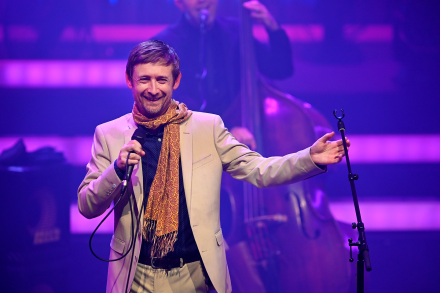
Has any musical moment extended its tendrils in so many unexpected directions as the English folk revival of the mid-1960s? In its beginnings, it was a source of pilgrimage for Bob Dylan and Paul Simon, who pinched his arrangement of ‘Scarborough Fair’ from Martin Carthy way back in the dim and distant past when the Beatles walked the earth. It spread into progressive rock and heavy metal (the black metal musician Fenriz, of the Norwegian band Darkthrone, told me recently that he considered Steeleye Span to be an important band in promoting pagan traditions).
Demi Lovato makes Taylor Swift resemble Dostoevsky

From our UK edition

Grade: Z If you wish to experience the full hideousness of Now, of our current age, condensed into one awful hour, then you should invest in this bucket of infected expectorant streaked with blood. It’s all there. The depthless self-absorption and introspection, the me me me. The self-aggrandising, the wallowing in victimhood, the complete lack of personal responsibility for her very bad decisions in life, the lack of discernible talent, the mawkishness, the stupidity, the facile political ‘awareness’. This is Demi Lovato, recent subject of an emetic four-part documentary on ‘her life’. Of course she is bulimic and bi-polar. Of course she nearly died of a skag (fentanyl) overdose and was a cokehead for years — none of it her fault.

The decadence of Taylor Swift’s re-recorded record

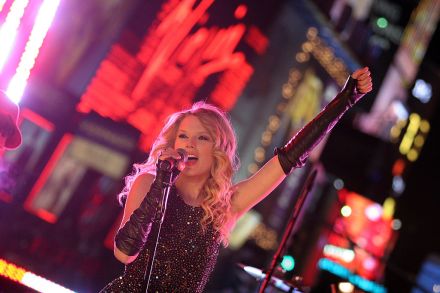
As a Taylor Swift fan, I’ve greeted the past year’s cornucopia of fresh content with joy and gratitude. Every day, I wake up and wonder: will there be a new Taylor Swift album today? With astounding frequency, there is! The latest entry into the T. Swift COVID-era canon, following folklore and evermore, is the re-recording of her 2008 smash-hit album Fearless, now available as a 27-track pop-country marathon known as Taylor’s Version. Of course, the original Fearless was also, strictly speaking, ‘Taylor’s Version’. But the master recordings of that album, which can be monetized through lucrative avenues like sampling and commercials, belonged to the label she signed with as a teenager, who refused to sell them back to her.

taylor swift

The songs are still as fresh and appetising as a hot loaf: The Lightning Seeds livestream reviewed

From our UK edition

One thing about a streamed festival is that the toilets are better than at the real thing. The other thing, though, is that it’s not really a festival. That’s not to knock the North Will Rise Again (TNWRA), which took place over Saturday and Sunday nights a few weeks back, the first featuring Liverpudlian bands and filmed in that city, the second coming from Manchester, with Mancunian groups. The simple fact is, you can’t replicate a festival online: what the best festivals offer is chance, when one stumbles across something wholly unexpectedly on some outlying stage at an unpromising time of day. Simple economics make that impossible for an event charging a tenner: unless you were to get Woodstock levels of attendance, there would be no way to pay the bands.

Riveting and heartbreaking: Sound of Metal reviewed

From our UK edition

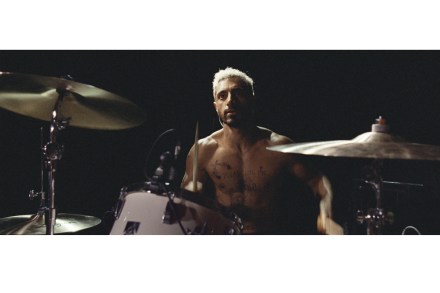
The multi-Oscar-nominated Sound of Metal stars Riz Ahmed as a heavy-metal drummer whose life is in freefall after losing his hearing. Ahmed learned to play drums for the part. And he learned American Sign Language. And he learned to perform with white noise in his ears. However, he did not have to learn how to be riveting because, if you’ve followed his career, you’ll know he’s been that since day one, and he is magnificently, powerfully, heartbreakingly riveting here. If he doesn’t win the Oscar I’ll be furious. That counts for nothing, I know. But it had to be said. It is directed by Darius Marder, who co-wrote the screenplay with his brother, Abraham Marder. At the outset Ruben (Ahmed) plays in a band with his girlfriend, Lou (Olivia Cooke).

Reminiscent of Roxy Music’s cocktail sound: The Weather Station reviewed

From our UK edition

One of the unforeseen consequences of the rise of streaming was a change in the very structure of the pop song. Listeners who needed only to click a button to explore an unfathomable amount of music rapidly lost patience. They were less willing to listen to long songs; they were less willing to wait for songs to develop, even over the course of three minutes; they liked songs that sounded the same as other songs they were familiar with. And so, over the past decade or so, pop has adopted a formula: songs now tend to open with a huge hook, then throw more hooks on top of that, and then — because a small cadre of songwriters and producers are viewed as safe hands — they get remade in barely different forms again and again.

The mystery and romance of the cassette tape

From our UK edition

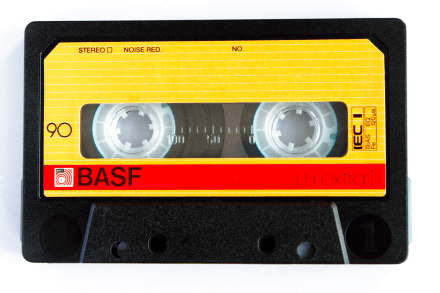
May the gods of Hiss and Compression bless Lou Ottens. As head of new product development at Phillips, the Dutch engineer invented the compact cassette in 1963 and changed music for ever. Ottens died last week at 94. A good age, and a good number. You could get a full album on each side. For many of us born in the 1970s, who came of age musically in the 1980s and 1990s, the blank cassette has an unkillable romance. We measured our lives in spools of magnetic tape: C60, C90, the occasional C46. Inside those hard plastic shells we surfed the thin end of the aural wedge, composing scrappy love letters in the medium’s notoriously tinny register — no bass, all treble. Tapes were desirable not for their audio quality, which was sub-prime, or aesthetic appeal.

The triumph of bedroom pop

From our UK edition

I must have been about 16 when I got my first Portastudio. The compact home recording unit had first been introduced by Japanese electronics firm Teac in 1979, offering unprecedented multitrack dubbing to the bed-bound amateur musician. For a little less than $1,000, you could record four separate tracks of instrumentation — as much as the Beatles had when making Sgt. Pepper — on an ordinary cassette tape. By the time I got my teenage hands on a four-track machine of my own, that price had come down by an order of magnitude. It was a chunky little unit in pigeon blue with just two microphone sockets and a small handful of mixing dials for volume control and stereo panning.

‘I like upsetting people’: Steven Wilson interviewed

From our UK edition

Steven Wilson is going about becoming a pop musician entirely the wrong way. For one thing, he’s into his fifties, not typically the point in life at which budding chart-botherers launch their assault on hearts and minds. For another, in an age in which pop stardom and identity politics have become entwined — in cultural discourse, at least, even if not necessarily in your teenager’s listening habits — he has everything going against him. ‘I come from a very well-adjusted family. I’m heterosexual. I’m white.’ Of course, Wilson doesn’t really expect to be competing against Stormzy and Dua Lipa and Cardi B.

Epic prog rock without the widdly-woo solos: Mogwai at the Tramway reviewed

From our UK edition

You very possibly know the music of the Glaswegian band Mogwai, even if you don’t think you do. You might well have not listened to a note of their ten studio albums, their three live albums, or their four compilations. You may never have seen one of their pulverisingly loud live shows, or heard them on BBC 6 Music, their natural home. But you may well have heard them on TV, either as background music, or on one of their commissioned soundtracks — seven of them now, including the current Sky Atlantic mob series ZeroZeroZero.

Makes me nostalgic for an era when music was more than a click away: Teenage Superstars reviewed

From our UK edition

In Teenage Superstars, a long and slightly exhausting documentary about the Scottish indie scene of the 1980s and ’90s, there was a moment when a man revelling in the name of Stephen Pastel — his real name is Stephen McRobbie, and he must be pushing 60 now — was described as ‘the mayor of the Scottish underground’. Such a position — even one, as this, necessarily unelected — would be all but impossible to occupy today. With the internet and democratisation of music — its creation, its distribution, its consumption — has come the fallowing of what were once its most fertile fields: the local scenes created and inhabited by small numbers of interconnected people and encouraged by confident tastemakers — such as Pastel.

A criminally underrated songwriter: Matthew Sweet’s Catspaw reviewed

From our UK edition

Grade: A– The early 1990s were a lovely time for rock music: Beck, Sparklehorse, Sugar, Green on Red and Royal Trux. I wish I’d savoured it all more at the time, not realising that Damon and Noel would come along decked in Union Jacks and suffocate us with the precious (Damon) and the oafish (Noel). There was Matthew Sweet’s first album, too — Girlfriend; the missing link between Big Star and Neil Young. He is a criminally underrated songwriter, but then power pop has never found much traction over here since the fab four called it a day. Sweet is an engaging soul with a self-deprecation that occasionally teeters into self-loathing. Like Paul Westerberg, there is intelligence, humour and subtlety in his lyrics and always, always good tunes.

Proudly ridiculous and wholly glorious: KLF’s Solid State Logik reviewed

From our UK edition

Grade: A What a miracle the KLF were: an elaborate practical joke at the expense of the music industry, seemingly both wholly cynical and completely sincere, who for a short period at the start of the 1990s bestrode the singles charts like a novelty colossus. A reissue of their greatest hits album wouldn’t seem cause for celebration — doesn’t the world have quite enough singles collections? — but the nature of the KLF’s disappearance (they burned a million quid and deleted their entire back catalogue) makes this unexpected reappearance a bit of an event. These are hit singles that fizz with silliness in a uniquely British way.

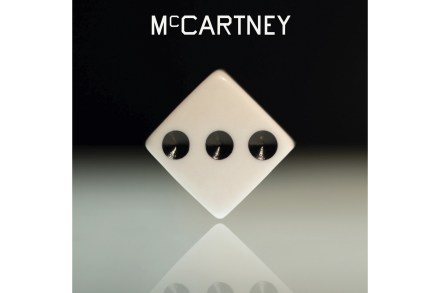
As pretty as anything he’s written in four decades: McCartney III reviewed

From our UK edition

Grade: A- The greatest songwriter of the 20th century, or just one of the top two or three? Who else would you have up there? Kern, Gershwin, Ray Charles, maybe. Dylan for the words along with the music. But not, I think, John Lennon. It’s McCartney’s melodic imagination that captivates and sometimes staggers — ‘Here, There and Everywhere’, ‘Maybe I’m Amazed’. The Beatle it was not OK to like, and yet who, today, would prefer to hear the overwrought ‘Strawberry Fields’ to the easy, loping chime of ‘Penny Lane’? Yes, Wings were the naffest band imaginable. But even then I would take their worst album (Red Rose Speedway) over Lennon’s solo best (Some Time in New York City).

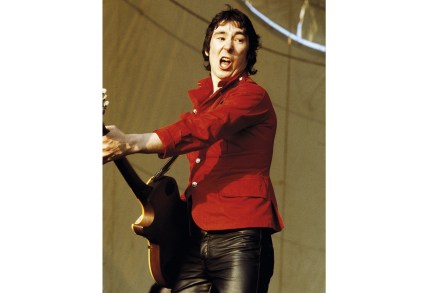
‘We knew there was greatness in these songs’: Steve Diggle of the Buzzcocks interviewed

From our UK edition

Steve Diggle hasn’t spent this long away from a stage in 40-odd years. For the Buzzcocks guitarist, like everyone else, 2020 was a year of thwarted plans. Instead of touring Britain and America, Diggle spent the year in ‘self-analysis’ and writing a new album. What else for an ageing punk to do? Except, of course, curate your legacy, grapple with the past. When Diggle joined Buzzcocks in 1976, originally as the bass player, he didn’t imagine he would still be flying the flag 45 years later. It’s both a blessing and a curse. Though his band remains a going concern, the songs that shift tickets were written half a lifetime ago. ‘Ever Fallen In Love (With Someone You Shouldn’t’ve)’, ‘What Do I Get?

Meet the front man of ‘the most revolting band in the world’

From our UK edition

Corey Taylor, the singer of Slipknot, laughs when I observe that he is disappointingly well adjusted. He had just been explaining that he does his own cleaning at home, that he ‘hates seeing privilege and entitlement’, that he can get from place to place without needing his hand held (you might scoff, but many musicians get infantilised by a life of indulging and being indulged). ‘I have a very healthy ego,’ he says. ‘But I also know to keep it in check as much as I can, because I don’t want to be that dude.’ Which is not to say Slipknot’s career has been free of incident. Far from it. Though they have released only six studio albums over the past 21 years — the last three all US No.

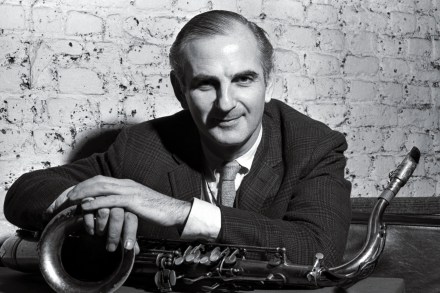
Like much jazz, it might have benefited from being less solemn: BBC4’s Ronnie’s reviewed

From our UK edition

Ronnie’s: Ronnie Scott and His World-Famous Jazz Club was like the TV equivalent of an authorised biography: impressively thorough, often illuminating, certainly long — and perhaps a bit too reverent for its own good. The programme began with some of today’s jazz musicians testifying to just how great the club is. From there, we cut to the story of Scott himself, with his Jewish East End background and his early love of the saxophone. By 16, he was accomplished enough to cross the frontier from East End to West, and played in various swing bands. But then he and his fellow 1940s hipsters discovered bebop, a reaction against commercialised swing that preferred its audiences to listen earnestly rather than merely dance.

I’ve heard worse things — the death rattle of a close relative, for example: Kylie’s Disco reviewed

From our UK edition

Grade: B– Uh-oh. Might have to be careful here, pull my punches a little bit. The editor is a big fan of the caterwauling Aussie. We have enormous editorial freedom at The Spectator, but one needs to exercise a little discretion. Last time I reviewed a Kylie album he was very kind about my writing, but I could see a deep sadness in his eyes. He also adores Mariah Carey. Conservatives are weird about music. Luckily — luckily, luckily, luckily — this is a lot better than her previous effort, Golden, which had been an attempt at a country album. She was about as believable a country singer as, I dunno, Sir Patrick Vallance or Fiona Bruce. This is back to the music she grew up with, as you might have guessed from the title.

One of the few genuine British visionaries at work today: Richard Dawson at the Barbican reviewed

From our UK edition

How hard must it be to make music that sounds like no one else? And how unrewarding, often, as well? Music consumption has been refined by streaming services to encourage listeners towards songs that sound like ones you already like; pop songwriters, driven by those same algorithms, strive to write songs whose entire purpose is to deliver something familiar within the first 30 seconds. Richard Dawson, a partially sighted and portly Geordie with lank, greying hair, who walked on to the Barbican’s stage wearing a vintage Newcastle United tracksuit top and blinking as if he’d expected the room to be empty, makes music that sounds like no one else, even with the sparsest of accompaniment.

There’s a magic to hearing music in such small audiences: Divine Comedy reviewed

From our UK edition

Three shows in a week! Why, it was just like the first week of March. There was, however, little of that last-days-of-Weimar giddiness about these. How could there be, when there were 300-odd people dotted around Barbican Hall’s 2,000 seats, and 50 or so of us at Oslo — normally a packed, standing-only club — sat on stools, unable even to waggle a hip? One felt sad for Working Men’s Club, a young quartet from Yorkshire whose first album — released earlier this month — had critics cheering. They should have been swanning around the country, heading off to Europe, maybe popping across the Atlantic, to play in New York and LA at least. Instead, their tour was three half-hour shows in one evening in a single London club.