We need Sabrina Carpenter
She’s the nation’s court jester
It is impossible not to be swept up in the giddy exuberance of it all
Did You Know That There’s a Tunnel Under Ocean Blvd could have been better
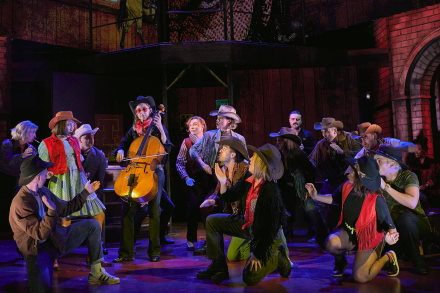
Let me tell you a secret: the theater world still adores Shakespeare, even in 2023
It’s for dancing and working out, not making some great artistic statement
Quiet dignity is dead
What we know so far about the ‘nightmare’ production
When Hollywood gets representation right
Heartbreak, drama and damn good songwriting
Just because he detected the modern tendency to confuse celebrity with profundity doesn’t mean he necessarily avoided it
Shouldn’t my tastes have evolved in the past 13 years?
How will we remember the great musicians of the past?
In June, a 20-year-old man called Jahseh Onfroy was murdered after leaving a motorcycle dealership in Deerfield Beach, Florida. Onfroy was a rapper, who recorded under the name XXXTentacion, and he had become extraordinarily successful — his two albums had reached No. 2 and No. 1 in the US, despite moderate sales, because of the amount of online plays they had received. The day after he died, my social-media timelines were full of music writers discussing his death, and the tenor — from those with kids, at least — was clear. Post after post noted that XXXTentacion was a nasty piece of work, and few should mourn him, yet the
Early in 1987, a middle-aged woman approached me on the record counter of the Slough branch of Boots. ‘What do you have by Ladysmith Black Mambazo?’ she demanded. Nothing. Boots in Slough wasn’t big on South African isicathamiya choral music. ‘Well,’ she suggested, ‘you really ought to get their records in. They’re going to be huge.’ She was wrong, but I knew why she was so sure. Ladysmith Black Mambazo had been among the standout guests on Paul Simon’s Graceland, released a few months before. Graceland made Simon, by my reckoning, the first pop star who had emerged from the rock’n’roll era to make a major cultural impact across three
‘I like your shirt today,’ Sir Ray Davies says to the waiter who brings his glass of water to the table outside a café in Highgate. ‘How’s your girlfriend?’ It turns out the girlfriend is no longer the girlfriend. ‘You broke up? You know, that happens. It’ll be OK. You’ll meet somebody else.’ He pauses and then says something that runs through my head for days after our interview. ‘She’ll meet somebody else.’ It’s true, of course; she will. And it’s a human thing to say: both parties to the relationship will move on. But it’s also delivered with a hint of claws. Who wants to be told, fresh from
Kanye West is more than halfway in to the Rock’n’Roll Hall of Fame — if his politics don’t block the way. This extraordinary rapper-producer first won over a worldwide audience with the 2004 anthem ‘Jesus Walks’, disrupted hip-hop’s bling-bling materialism with the us-vs-them challenge of his Jay-Z collaboration Watch the Throne, and then released the confounding My Beautiful Dark Twisted Fantasy, which rightly became the most highly acclaimed hip-hop album this century. He went on to make controversial public art with his ‘New Slaves’ video, which was projected in 66 locations around the world (called Orwellian by admirers and dumbfounded detractors). With news-making political statements occasionally interspersing that résumé, West