Political correctness

The Spectator Podcast: Tech vs Trump

From our UK edition

On this week’s episode, we discuss Trump versus technology, the ‘new normal’ with Calamity May, and whether jargon is polluting the English language. First up, in this week’s magazine cover piece, Niall Ferguson writes on the battle between networks and hierarchies for supremacy in a digital world. The biggest fight is between the American President and the social networks, like Facebook and Twitter, who still exist in the unregulated frontier of the Wild Wild World Wide Web. Niall joined Freddy Gray, host of the Spectator’s Americano podcast, to discuss. As Niall writes: "It may be too big a stretch to claim that Russian Facebook ads swung the election in Trump’s favour.

Language barrier

From our UK edition

Since the EU referendum result last June our nation has been divided: not only by the vote but also by language. If 62 per cent of Britons (many of whom undoubtedly voted for Brexit) now say Britain ‘sometimes feels like a foreign country’, it’s not anti-foreigner prejudice so much as a feeling that people in authority are speaking at them in a foreign language. Not Polish or Punjabi but PC-speak, that opaque code that connotes whether you are ‘on message’ and one of ‘our kind of people’ or one of those racist lizard-brained Leaver oiks. Look at the new language of diversity that is now being prescribed in much of the public sector.

The dwarves of death who control your TV

From our UK edition

My own fault, I suppose, for turning on the television. Not an action I undertake very regularly these days, because I am trying to be a nicer person. Some time ago, Charles Moore wrote in his Spectator diary about a hitherto ghastly, bitter old woman who had suddenly become much more pleasant to everybody. What had effected this change? ‘I have stopped reading the Daily Mail,’ she explained. So it is with me and the idiot box. I become so enraged at being clubbed over the head by the politically correct dwarves of death who inhabit that poxed machine in the corner that I stamp around and make everybody miserable with my ranting. Not just the news programmes, either, although they’re the worst.

High life | 24 August 2017

From our UK edition

When the Germans smuggled arguably the world’s most evil man into Russia 100 years ago, they did not imagine the harm they were unleashing on the human race. Once Lenin had prevailed, he decided to forge a new consciousness, New Soviet Man, as the Bolshies called it, someone who would overcome ‘the antinomies of subjective and objective, body and spirit, family and party’. Leave it to a horror like Lenin to design a new human being (although a certain Austrian tried to emulate him less than 20 years later) and you get Yakov Sverdlov, who ordered the murder of the Tsar and his family, and the hanging of their dogs. We hear a lot about the Nazis nowadays, and very little about monsters such as Lenin and Sverdlov, and their enablers.

Don’t like our diversity agenda? You’re fired

From our UK edition

Earlier this week, a technology website published an internal memo written by a Google employee called James Damore criticising the company’s efforts to diversify its workforce. This is ‘where angels fear to tread’ territory. The American technology sector has come under fire for years for failing to hire and promote enough women and Google is being investigated by the US Department of Labor for allegedly underpaying its female employees. What makes this memo particularly controversial is that Damore takes Google to task for discriminating in favour of women. He begins by saying that he is pro-diversity and accepts that sexism is one of the reasons women don’t constitute 50 per cent of the workforce in the tech industry.

It’s dangerous and wrong to tell all children they’re ‘gender fluid’ | 23 July 2017

From our UK edition

Once upon a time, ‘binary’ was a mathematical term. Now it is an insult on a par with ‘racist’, ‘sexist’ or ‘homophobic’, to be deployed as a weapon in our culture wars. The enemy on this particular battleground is anyone who maintains that there are men and there are women, and that the difference between them is fundamental. This ‘binary’ distinction is accepted as a given by the vast majority of the human race. No matter. It is now being categorised as a form of bigotry. Utterly bizarre? Scoff at your peril. It’s fast becoming an enforceable orthodoxy, with children and young people particularly in the frame for attitude reassignment.

High life | 1 June 2017

From our UK edition

I feel like an obituary writer, what with Nick Scott, Roger Moore, Alistair Horne — all great buddies — and now my oldest and closest friend, Aleko Goulandris, dead at 90. Mind you, they all had very good lives: plenty of women, lots of fun, accomplishments galore, and many children and grandchildren. And they all reached a certain age — what else can you ask of this ludicrous life of ours? Well, I won’t be writing about the high life this week, but scum life instead. And I’ll tell you why: those innocent young children slaughtered by that Islamist scumbag in Manchester, that’s why.

National Army Museum

From our UK edition

I used to love the National Army Museum in Royal Hospital Road, Chelsea, which was crammed with the memorabilia of four centuries of the British Army. I even visited it on the morning of my wedding. It taught you about the history of the British Army in a completely non-political way, allowing the objects — which were carefully factually annotated — to speak for themselves. It was housed in a hideous 1971 building, but the artefacts inside were superb.

The mad, bad war on ‘cultural appropriation’

From our UK edition

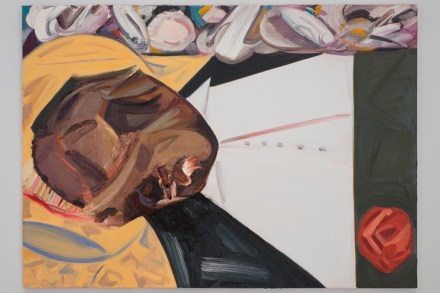
It’s usually best to ignore the indignant fury of the 21st-century young. We’re used to them now, these snowflakes, posing as victims (though they’re mostly middle-class), demanding ‘safe spaces’, banning books and speakers. Best to rise above them, deadhead the camellias. Attention, especially from the press, acts on entitled millennials like water on gremlins — they start proliferating and develop a taste for blood. But then sometimes they go too far. Ten days ago, the Whitney museum, on the New York bank of the Hudson, opened its biennial exhibition of contemporary American art. It’s an exciting show, full of vim and diversity.

For a real Oxbridge education, go to Durham

From our UK edition

‘Should I just have done with it and tell them they’re a bunch of tossers?’ I was on my way to speak at the Durham Union. The motion was ‘This House believes the NHS is out of date’. And, as usual, I was on the ‘wrong’ side of the debate — so why should I even bother? You know beforehand which way the vote is going to go at any university debate these days: the one which enables the snowflakes most easily to signal their virtue. But, on the spur of the moment, I decided to give Durham the benefit of the doubt. ‘I was going to be incredibly rude to you,’ I began. ‘Which you totally deserve for being a bunch of snowflakes who are going to vote against the motion because hashtag “I heart the NHS”.

A Berlin Wall moment for political correctness

From our UK edition

Because we’re all so obsessed with what it was that made the Nazis tick, we tend to overlook the bigger mystery of how hundreds of millions of people, for a period considerably longer than the lifespan of Hitler’s Germany, remained under the spell of communism. This is a question that Czeslaw Milosz set out to answer in his 1953 classic The Captive Mind. Milosz was a Polish poet, prominent in the underground during the Nazi occupation, who served as a cultural attaché with Poland’s post-war communist regime before quitting in disgust and fleeing to the US, where he taught at Berkeley and achieved eminence as a Nobel-prize-winning dissident exile.

Stupidity takes hold of another students’ union

From our UK edition

I had never heard the acronym Soas before I started work at the BBC, almost 30 years ago. But as a very young producer at the corporation I was asked to fix up a story about something appalling happening in Africa — I can’t remember exactly what. Famine or cannibalism maybe. Or perhaps one mitigated by the other. The senior producer told me to get someone from Soas to explain it all. What’s Soas, I asked? ‘The School of Oriental and African Studies,’ I was informed. ‘It’s in London. It’s basically a place where we try to work out what on earth the natives are up to now.’ It was a different BBC back then. I was based in the old Broadcasting House, at the top of Regent Street.

High life | 5 January 2017

From our UK edition

Gstaad  New Year’s Eve was a Rhapsody in Blue, with a clarinet glissando that promised joys to come, and the Gershwin downbeat not registering until 6 a.m. The hangover was, of course, Karamazovian, but who the hell cares. I am finally solid again, and even the flu I caught on the trip over is on its last legs, lingering and as annoying as EU regulations, but no longer to be taken seriously. I had lots of close friends for dinner, but the new chalet was packed by the time I began slurring. Mind you, it’s during dreamlike moments such as those between midnight and dawn that wisdom strikes: there is something very wrong with people’s values around these parts.

You can be against the ‘elite’ and still be rich and privileged

From our UK edition

Many people have remarked that the image of Donald Trump and Nigel Farage posing by the former's golden elevator doors epitomises the hypocrisy over populists attacking the 'elites'. Likewise the Guildhall dinner in which Theresa May told an audience dressed in dinner jackets about globalisation and its discontents. These are the 'anti-elitists' who now stand up for the people, they sneer. This is to confuse money with status. As any nouveau riche parvenu has learned, wealth and status are not the same thing, something which has been the subject of some of the most famous novels in the English language. Membership of the 'elite', and many will argue about the definition, is not just about income but a number of markers; chief among these is belief.

Diary – 25 August 2016

From our UK edition

To Edinburgh for the book festival, where I am to explain Fools, Frauds and Firebrands to respectable middle-class Scots, who have an endearing way of suggesting to me that I, like them, am a thing of the past. They queue to buy the book, which is nice of them; however, the publisher has failed to deliver any copies, so the need to part with a few quid for politeness’ sake slips painlessly over the horizon. Only the students in the queue awaken me from my complacency. Where do we turn for comfort, they ask, when our reading lists are gibberish about which we can understand only that it is all left-wing? Is there no network, no secret society, no alternative reading list to get us through the next three years?

Dear Mary | 28 July 2016

From our UK edition

Q. Every summer, just when England is at its loveliest, we have to pack everything up and make a stressy journey to go and stay with someone who has a house abroad. I can understand people wanting to repay hospitality, but we really don’t care about cutlet for cutlet. More to the point, we have our own lovely garden and pool. Yet when someone invites you six or seven months ahead, how can you say no without hurting their feelings? — Name and address withheld A. Bare-faced honesty has done the trick for one popular but plain-speaking society figure who replies to such invitations: ‘Obviously we like you very much or we wouldn’t see so much of you.

The alt-right isn’t all wrong

From our UK edition

I got told off this week by a presenter on BBC radio for using a four-letter word live on air. In my defence, I was merely quoting a tweet from a black Hollywood comedy star called Leslie Jones which said: ‘Lord have mercy… white people shit.’ And the only reason I did so was that I thought it important that someone, somewhere, spoke out against the double standards which seem to exist on social media right now: one rule for progressives and accepted victim groups; quite another for everyone else. A good example is the ban recently imposed by Twitter on my friend and colleague Milo Yiannopoulos. Milo had got into a public spat with Jones when he goaded her over the awfulness of her new movie, an all-female remake of Ghostbusters.

Baby with the bathwater

From our UK edition

Bustle, an online newspaper ‘for and by women’, has published ‘six common phrases you didn’t know were sexist (that you’ll now want to ban from your vocabulary)’. One of them is ‘Don’t throw the baby out with the bathwater’. By chance this phrase was used by Sir Ernest Gowers, the enemy of officialese and cliché, in his book H.W. Fowler: The Man and his Teaching. ‘We can,’ Sir Ernest wrote, ‘rid ourselves of those grammarians’ fetishes which make it more difficult to be intelligible without throwing the baby away with the bath-water’. That would annoy someone called Julie Sprankles, a writer for Bustle.

Mind games

From our UK edition

Blue/Orange by Joe Penhall enjoys the dubious status of a modern classic. A black mental-health patient, Christopher, is about to be freed from a clinic but his cautious young shrink, Bruce, wants to keep him under observation. His senior colleague, Robert, thinks a dose of the big bad world will help to cure the nervy, delusional Christopher, who claims Idi Amin as his father and insists that all oranges are blue. He’s clearly unstable and though he’s highly irascible he hasn’t yet threatened himself, or anyone else, so he deserves his freedom. It’s the kind of knife-edge conundrum faced by clinicians every day. Then, a twist. Robert professes support for R.D.

Counting on sheep

From our UK edition

Going Forward (BBC4, Thursdays) is a BBC comedy about the continuing adventures of Kim Wilde, the fat, cynical but lovable nurse character played by former nurse Jo Brand. Now she has quit the NHS and is working in the private sector for a company called Buccaneer 2000 — which is, of course, exactly what a healthcare company would call itself in order to allay potential criticisms that it was backward-looking, heartless and rapacious. This is one of the series’ big problems. It wants to be naturalistic, almost fly-on-the-wall, observational comedy, with the dog wandering casually in and out, and parents and kids saying just the kind of things we all do in real life.