Political biography

At the beginning of the second world war, Winston Churchill seemed a most unlikely hero

Removed from banknotes, his statue sprayed with graffiti, blamed for Gaza, the Bengal famine, the deaths of millions, Churchill no longer sits comfortably aloft his ‘pinnacle of deathless glory’, as he wrote of Alfred the Great. In the parlance of the late Martin Amis, it’s as if our national hero’s trusted barber at Truefitt & Hill has given him a brutal rug-redo. A further clipping to his reputation is Simon Matthews’s study of his ‘poor record’ at the Admiralty between September 1939 and May 1940 – i.e. just before he becomes ‘Peak Churchill’. Viscount Stuart famously overheard Churchill reply to a questioner pressing for awkward details ‘Only history can relate the full story’, adding after the right pause: ‘And I shall write the history.
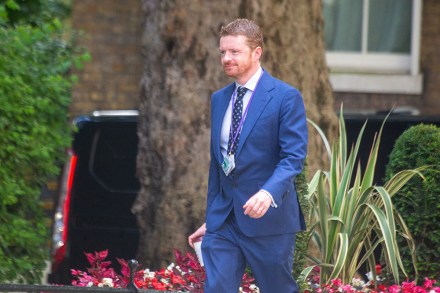
Is Keir Starmer really Morgan McSweeney’s puppet?

Every government has its éminence grise.  The quiet, ruthless man (or occasional woman) operates in the shadows, only to be eventually outed when the boys and girls in the backroom fall out among themselves or when someone pens a memoir. Think Peter Mandelson, Nick Timothy, Fiona Hill and Dominic Cummings. The authors of Get In, both lobby journalists, have produced a detailed insider account of the rise of Keir Starmer, as seen through the eyes of those inhabitants of the political underworld whose names rarely surface in the public prints. In this case, the focus is on one alleged strategic genius, a man in his late forties with the memorable name of Morgan McSweeney, referred to throughout by the somewhat sinister moniker of ‘the Irishman’.

The party’s finally over for Nigel Farage

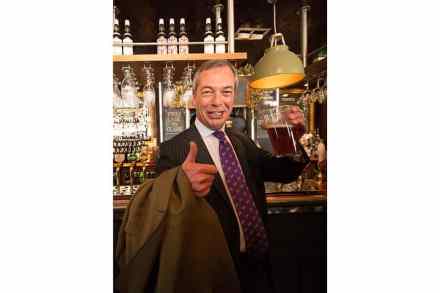
Nigel Farage was never even an MP, but Michael Crick argues convincingly that he is one of the top five most significant politicians of the past half century. Without him we might still be in the EU. All political careers supposedly end in failure, but maybe his didn’t. As with Boris Johnson (whom he resembles in many ways), Farage’s bluff, bonhomous public image is misleading. He is far more ruthless than he appears. Many of those close to him believe that his air crash on polling day in 2010 changed his personality. He was in a two-seater plane towing a banner saying ‘Vote Ukip’ when the banner wrapped itself round the rudder and the plane nose-dived to the ground.

R.B. Haldane: a great public servant, much maligned

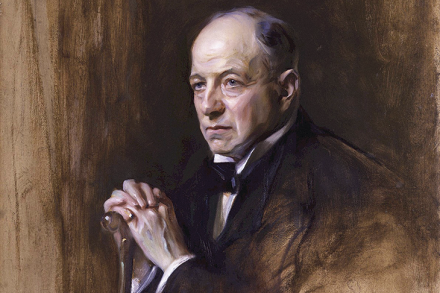
This is a strange but valuable book. The author is a private equity magnate, whose fascination for Richard Burdon Haldane dates back to his childhood. In his acknowledgments he admits he lacked the expertise to write a proper book about his hero, and so enlisted the help of a young scholar, Richard McLauchlan, credited on the title page (but not on the front cover) as having written the book in collaboration with him. The research has been done superlatively. The bibliographies for each chapter are extensive, and some interesting archival material is deployed, such as the diary of Haldane’s sister, to whom he was devoted.

It was Bevin, not Bevan, who was the real national treasure

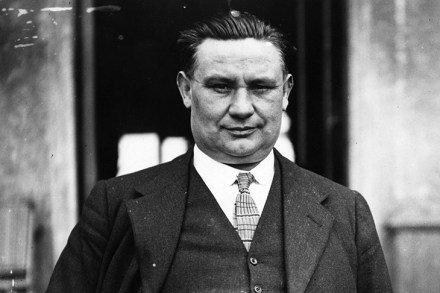
On a family holiday almost 40 years ago I visited Winsford, the village on the edge of Exmoor where Ernest Bevin was born (and Boris Johnson was raised). Having read the first book in Alan Bullock’s scholarly three-volume biography, I’d become a convinced Bevinite (not to be confused with the followers of Nye Bevan, his near namesake and bête noire). As it was the centenary of Bevin’s birth I expected to find some kind of commemoration, but there was nothing apart from a faded plaque on the cottage he was born in. I asked the woman serving in the Post Office opposite if I’d missed anything, but she’d never heard of the great man.