Parsifal

The arts in Britain are now joyless vestiges of their former selves

Conquest’s Third Law (as proposed by the historian Robert Conquest) states: ‘The behaviour of any bureaucratic organisation can best be understood by assuming that it is controlled by a secret cabal of its enemies.’ In no other area is this better demonstrated today than the arts. And if you don’t think of the arts as a bureaucratic organisation, you haven’t been paying attention. Alexandra Wilson’s Culture Vultures is a diatribe against the attempt to turn the arts into mediocre, unappealing, deplorable shadows of themselves.
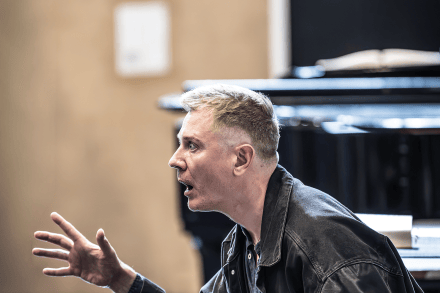
Meet the man behind Royal Opera’s new Parsifal

Evgeny Titov has landed at the Royal Opera, and he has good news for Britain’s beleaguered opera scene. ‘It’s the best place to work,’ he declares, leaning forward with enthusiasm; and already he’s thrown the interview off course. Usually with overseas artists there are courtesies, and then a tactful acknowledgment that British companies work under unavoidable pressures of time and money. But this actor-turned-opera director, whose career has taken him from St Petersburg to the Salzburg Festival, has seen a few things, and he means what he says. He likes it here. ‘Everybody told me before I came, “You will love it,”’ he says. ‘“Oh, is that so?

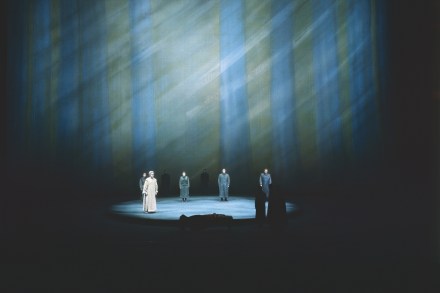
Sincere, serious and beautiful: Glyndebourne’s Parsifal reviewed

‘Here time becomes space,’ says Gurnemanz in Act One of Parsifal, and true enough, the end of the new Glyndebourne Parsifal is in its beginning. We don’t know that, at first: the sickbed image that’s glimpsed during the prelude doesn’t resolve itself until the opera’s closing scenes. In between, characters appear on stage in multiple forms, at different ages – past and future selves attendant on the present, whatever ‘present’ means in Monsalvat. Wagner, after all, makes it clear enough that time in the Grail Domain moves in mysterious ways, and his whole musical strategy reinforces that truth.

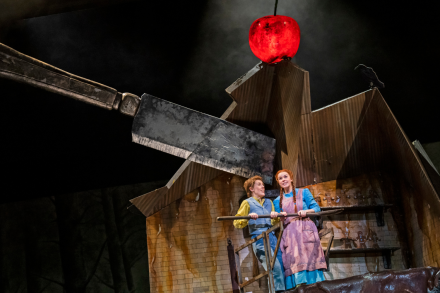
Irresistible: Hansel and Gretel, at the Royal Opera House, reviewed

Fun fact: Engelbert Humperdinck composed part of Wagner’s Parsifal. Shortly before the première, it was discovered that Wagner’s score didn’t allow time for a crucial scene change. The 27-year-old Humperdinck, then working as Wagner’s assistant, composed a few temporary bars to cover the gap and, rather to his own surprise, found that they met with the Master’s full approval: ‘Why not? It should work!’ It’s worth knowing partly because of the light it throws on the practical, collegial working methods of music’s favourite cartoon supervillain, and partly because it reaffirms the originality of Humperdinck’s own best-known opera, Hansel and Gretel. How many artists could have flown that close to Wagner’s magic fire, and still emerged with their individuality unsinged?

Michael Tanner remembers the greatest musical experience of his life

No surprise: the greatest musical experience of my life was Parsifal at Bayreuth in 1962. I thought at the time that I would never again be so moved by a performance of anything. I have kept an open mind ever since, and still it takes me no time or effort to answer the question. Obviously I can’t discuss here why I regard Parsifal as a supreme work, but even if I thought that Wagner had written greater ones, or that some other master composer had — in fact, I do think there are several works by four composers that are as great as Parsifal, though at that altitude rankings and comparisons become absurd — what I experienced in Bayreuth that year was unique and unpredictable.