Paris

The sad fate of Edna St Vincent Millay – America’s once celebrated poet

From our UK edition

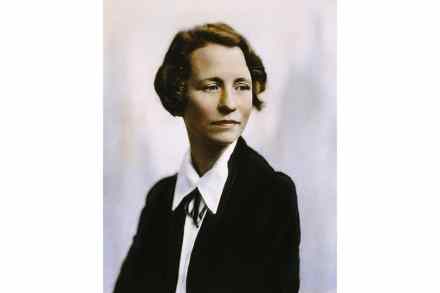
In June 1957, Robert Lowell attended a poetry reading by E.E. Cummings. Sitting dutifully and deferentially alongside him were Allen Tate, W.S. Merwin and his wife Dido and the classical scholar William Alfred, ‘while Cummings read outrageous and sentimental poems, good and bad of both kinds’. They were not alone: ‘About eight thousand people listened.’ But you can tell from Lowell’s adjectives – ‘outrageous and sentimental’ – that Cummings’s reputation is already on the slide. Edna St Vincent Millay’s diaries record a reading in Waco on 10 January 1930: ‘In spite of icy streets, really dangerous & cold weather, abt. 1500 people present.

Disregarded for decades, Jean Rhys stayed true to her vision of life

From our UK edition

Jean Rhys, who died at the age of 88 in 1979, lived to be forgotten and rediscovered. Like many readers, I first came across her through her novel Wide Sargasso Sea, which imagines the pre-history of Jane Eyre’s ‘madwoman in the attic’, the Creole heiress married off to Mr Rochester and then incarcerated by him at Thornfield Hall. When it came out to great acclaim in 1966, it marked the rebirth of a writer who hadn’t published a book for more than a quarter of a century and who had even been presumed dead.

Unhurried and accomplished whodunit: ITV’s Holding reviewed

From our UK edition

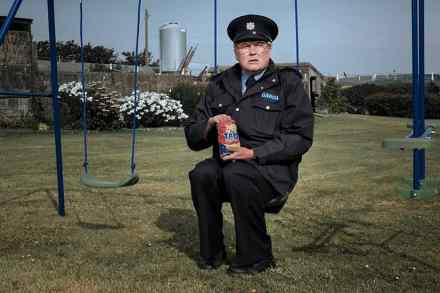
A couple of years ago, I happened to read Graham Norton’s third novel Home Stretch. Rather patronisingly, perhaps, I was surprised by how accomplished it was, especially in its sympathetic but melancholy portrait of life in a West Cork village. Yet, judging from ITV’s new adaptation of his first novel Holding, this was something he’d pulled off before – because, here again, it’s pretty clear both why Norton would want to write kindly about the kind of place he grew up in, and why he would have wanted to leave it. Monday’s first episode efficiently established the rural-Irish setting with shots of fields, cows and wind turbines. We then saw the village policeman P.J.

Imagining Rimbaud

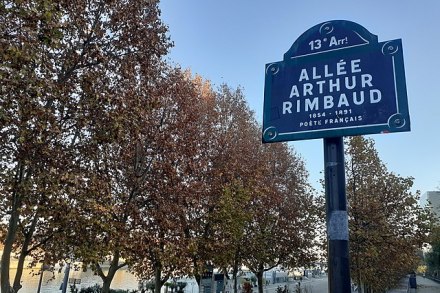
The life of poète maudit and gunrunner Arthur Rimbaud is a puzzle to nearly everyone who knows it. A precocious student who won a regional concours académique for a poem in Latin, Rimbaud left school at fifteen, shortly after the start of the Franco-German War. After two attempts to escape home for Paris, he finally moved in with the poet Paul Verlaine in the fall of 1871, where he succeeded in insulting all the literary lights of Paris in three months. The two men began an affair, which ruined what was left of Verlaine’s marriage to Mathilde Mauté (whom Verlaine regularly beat). They made two debauched trips to London and eventually fell out in Belgium, where Verlaine shot Rimbaud in the wrist.

rimbaud noguez

Fall and decline

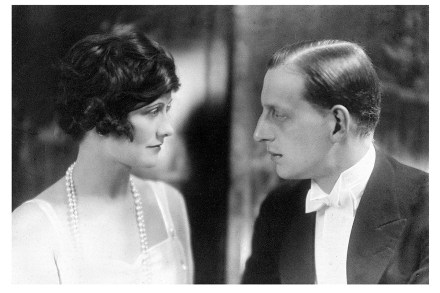
In December 1921, a twenty-two-year-old Ernest Hemingway, then the European correspondent for the Toronto Star, came across the oddest group of immigrants in history — the White Russians who had fled the Bolshevik Revolution. “Paris is full of Russians,” Hemingway told his readers. “They are drifting along in Paris in a childish sort of hopefulness that things will somehow be all right, which is quite charming when you first encounter it and rather maddening after a few months. No one knows just how they live, except by selling off jewels and gold ornaments and family heirlooms that they brought with them to France.” Hemingway neatly summarized the meat of this gripping latest book by Helen Rappaport, the author of The Romanov Sisters and Caught in the Revolution.

russian

Style and substance

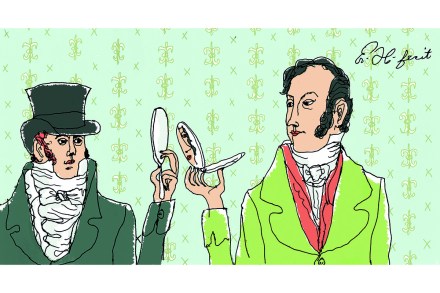
In Ravelstein, Saul Bellow’s thinly disguised account of the final years of the University of Chicago professor Allan Bloom, the narrator Chick and his close friend Abe Ravelstein go on a shopping spree in Paris sometime in the 1990s. For all their highfalutin philosophical talk about Athens versus Jerusalem and the like, Bellow makes it clear that there is a Dionysian as well as Apollonian cast to the bond between Chick and Abe. After departing the Hôtel de Crillon, their first stop is Lanvin. There, Abe is smitten by a beautiful flannel jacket retailing for $4,500. He buys it.

de mans

Kamala in Paris

Ah, the French. Is there any other people Americans so love to antagonize? Recall that after France (rightly) decided to abstain from the Iraq war in 2003, we didn't just express our discontent; we introduced the term "cheese-eating surrender monkeys" into the Kissingerian lexicon. We then canceled French fries, which are Belgian. Call it a sibling rivalry between children of the Enlightenment; call it a clash between social democracy and rugged individualism. Whatever you call it, just don't go canceling a submarine agreement at the last minute for the love of God. That's what Joe Biden did last month when Australia suddenly nixed a plan to purchase subs from the French in favor of American and British vessels. And stop the presses! A conspiracy of the Anglophones was afoot!

Anne Hidalgo’s socialist reign of error in Paris

From our UK edition

A photograph, taken in June 2014, has become emblematic of Anne Hidalgo’s Socialist rule of Paris. In the picture stands Queen Elizabeth II, then 88, in Paris to unveil a plaque at the Marché aux Fleurs, near Notre Dame. The Queen, in addition to her usual black handbag, carries her own plastic umbrella. Next to her, the newly-elected mayor, dressed in a cream outfit, has her hands free while a city official holds a large umbrella above her perfect blow-dry. The Spanish-born Hidalgo, 62, now about to announce her candidacy for the 2022 presidential election, is a woman untouched by self-doubt.

Welcome to the Impasse Ronsin – the artists’ colony to beat them all

From our UK edition

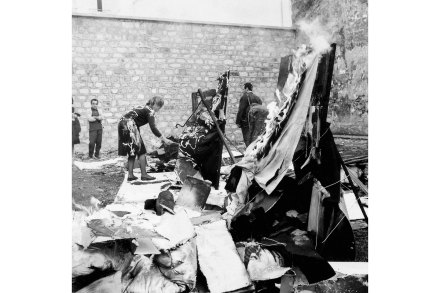
Of all creatives, visual artists are perhaps the least likely to work in isolation; the atomised life of garret-installed solitude is not for them. Artists have always bounced off one another, whether in colonies, studios, collectives or co-operatives. The YBAs would not have been a thing, let alone a now-unfashionable acronym, had a significant group of them not chosen to hang out together. There are outliers, of course, but for the most part artists seem to like rubbing along together, perhaps in the belief that the fumes of oil from one studio can inspire brushwork in the one next door. The Impasse Ronsin, a tiny cul de sac in the 15th arrondissement of Paris, was the artists’ colony to beat them all. It had everything: fame, obscurity, money, poverty, radicalism, outrage.

Two hours of kitsch tomfoolery: Amélie at the Criterion reviewed

From our UK edition

The latest movie to turn into a musical is Amélie, from 2001, about a Parisian do-gooder or ‘godmother of the unloved’. Some rate Amélie as the worst film ever made in France. Some consider it the worst film ever made. Our heroine is a 20-year-old waitress, a sort of proto-Greta, who plays truant from her restaurant job and wanders around Paris doing nice things to random strangers. Her inspiration is a box hidden by a child in her apartment 40 years earlier which she wants to restore to its original owner. Or, as the clunky narrator puts it, ‘Why is she holding that box like her future is inside it?’ Amélie’s odyssey brings her into contact with all kinds of misfits, pests and layabouts who belong in a magic realist novel.

From family home to mausoleum: the Musée Nissim Camondo

From our UK edition

The potter and author Edmund de Waal revisits familiar terrain at an angle in his third book, Letters to Camondo. Ten years after the publication of his debut memoir, The Hare with Amber Eyes, he is once again in Paris, lurking about the rue de Monceau, ruminating on dust, trying to make the dead speak. He’s particularly keen to elicit a word from Count Moïse de Camondo (1860-1935), the last patriarch of a clan of absurdly rich French Jewish bankers with roots in Constantinople. The count was a friend and neighbour of de Waal’s cousin, the art historian Charles Ephrussi, whose collection of Japanese netsuke played such a large role in The Hare with Amber Eyes. The wary reader may ask: hasn’t de Waal had quite enough of the rue de Monceau?

France wakes up to Woke

One crisis can conceal another. While France has been distracted by COVID, a new menace is lurking. The specter haunting the republic is le Wokisme, the mutating ideology of race and identity that has found unexpectedly fertile ground here. French elites are unsettled. Those who assumed the French possessed herd immunity against such barbaric American ideas are having their complacency tested. Superficially a modern country, with iPhones, Amazon and electric cars, France is still often introspective and late to understand what’s happening in the wider — especially Anglophone — world, which is how wokeness has somewhat taken it by surprise. Woke had been happening in America for many years before the French noticed.

woke

Nights – and wines – to remember in Paris

From our UK edition

Some friends claim to be making marks on the wall to count the days until liberation. Ah, the forgotten delights of restaurants and foreign travel. In one long nostalgic phone call, we kept present discontents at bay by discussing Paris. Although I have partaken of three-rosette meals in the capital of gastronomy and was never disappointed, a different experience came to mind. This restaurant has never received Michelin’s highest accolade, not that it would care. It believes itself entitled to at least four rosettes. Its name is Chez l’Ami Louis, in the Troisième, not far from the Marais. I was introduced to it by Rémy and Mathilde, a couple who knew their Paris. The husband could explain every nuance in Proust and the wife was not far behind.

Gabriel Matzneff: the paedophile who hid in plain sight

From our UK edition

Until this book was published, Gabriel Matzneff was a respectable man. The French author may have written about his affairs with young girls and his travels to the Philippines in search of pre-pubescent boys — insert Gallic shrug here — but he still won literary prizes and enjoyed a state stipend. He was celebrated by the chattering classes, who said little when he brought different adolescent girls as his plus one to interviews. Little V, or V sometimes, was one of those girls. She had slipped in and out of his autofiction for decades. In Consent, her memoir, Vanessa Springora returns the favour and refers to him by his initial. She first met G. at a dinner party in 1986. She was 13, dragged along by her single mother who worked in publishing. He was the guest of honour.

In search of Noëlle: Invisible Ink, by Patrick Modiano, reviewed

From our UK edition

At some point in his twilit, enigmatic novels of vanished lives and buried memories, Patrick Modiano likes to jolt his reader with a glimpse of the all-too-real horrors that underpin his work. In Invisible Ink such a moment comes when the narrator recalls images from a postwar trial, where ‘behind the accused were about 30 suitcases — the only remaining traces of persons who had gone missing’. You might say that Modiano has spent a literary lifetime opening those suitcases to find out whose lives they contained. Born in Paris in 1945 to a Belgian actress mother and a Jewish father who had survived the Occupation by weaving through an underworld of shady deals, he grew up in a family microclimate of evasion and oblivion.

Culture and anarchy

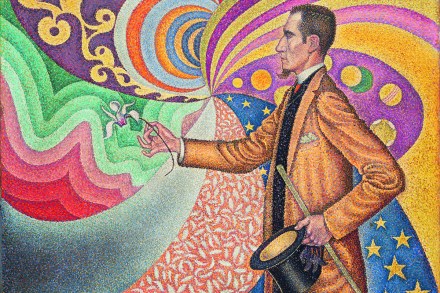
Paul Signac’s portrait of Félix Fénéon is a striking and historically important painting. But is it a good one? Its subject didn’t think so. Signac profiles Fénéon against a swirl of complementary colors and kaleidoscopic shapes, as if anticipating an acid-trip scene from a Roger Corman movie. This radioactively abstract background was bold stuff for Paris in 1890, when the picture was made, but contemporary critics disapproved, one finding the work ‘cold and dry’, another calling it ‘neither decorative nor comprehensible in terms of feeling’. Fénéon himself was similarly vexed by the final result, though he held onto the portrait throughout his life out of loyalty to his painter friend.

Féneon anarchy

Our lady of hope

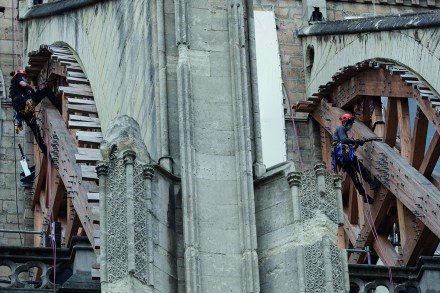
From the kitchen of her apartment on the Quai de la Tournelle in Paris, the journalist and broadcaster Agnès Poirier could see the bright yellow plumes of smoke rising into the sky. Notre-Dame de Paris was on fire, and suddenly, in that tourist-crowded, hyper-expensive ‘cradle of France’, nothing was certain — ‘democracy, peace and fraternity’ — anymore. The following morning, children living on or near the Île de la Cité took to school little plastic bags filled with blackened bits of roof picked up from balconies and pavements (as well as probably quite a lot of lead dust) which ‘dated back to the Crusades’.

notre-dame poirier

Beauty and the beast: Jane Birkin’s love affair with Serge Gainsbourg

From our UK edition

I met Jane Birkin’s parents, who flit across these pages. Her mother, Judy Campbell, was an actress in Noël Coward plays and a cabaret singer who’d worked with Charles Hawtrey, and when I invited her to a party once she drove her Mini up the steps and into the hotel lobby. Jane’s father, David, had a good war, his boat picking up pilots and spies hidden by the Resistance on the Breton coast. He told me ’Allo ’Allo wasn’t a comedy, it was documentary realism. He endured many operations on his optic nerve. A piece of hip bone was grafted to his eye socket. His lungs, as Jane says, were weakened by ‘too many anaesthetics’. The Birkin fortune came from Nottingham lace. There were aristocrats (the Russells) in the background.

Paris’s banlieues are burning once again

From our UK edition

One of the persistent misconceptions of the riots that swept through France in the autumn of 2005 is that they were solely the result of the deaths of two youths as they ran from the police. The deaths of the teenagers on October 27 in Clichy-Montfermeil provoked unrest in the north-eastern Parisian suburb but it was what happened three days later that led to three weeks of nationwide riots and the declaration of a state of emergency by the then president of France, Jacques Chirac. According to Gilles Kepel in his 2015 book, Terror in France: genesis of the French Jihad, it was a stray tear gas grenade fired by police that landed close to the entrance of a mosque that lit the touch paper.

The cult of Sappho in interwar Paris

From our UK edition

I like a book that can put its point in four outrageous words and use it as its title. Diana Souhami might be right. Without the women her book is devoted to, literary modernism would have looked very different. A consciously new approach to writing met a body of women who were being heard for the first time; the results were compelling. At the beginning of a novel by one of them, Gertrude Stein’s The Making of Americans, the terror of masculine traditions is concisely stated: Once an angry man dragged his father along the ground through his own orchard. ‘Stop!’, cried the groaning old man at last, ‘Stop! I did not drag my father beyond this tree.