Painting

Finally, a proper, grown-up retrospective from the Tate

From our UK edition

A month ago in Hampstead, a work of art stopped me in my tracks. The piece was a vast rectangular painting on board, 7ft tall and 5ft wide, almost entirely covered in a thick layer of black acrylic save for three rectangular apertures cut through the board: windows onto something yet darker. At the composition’s fringes, where black faded to grey, it was just possible to make out the collaged vestiges of the images lying below: monochrome grids of old passport photos and shots of grand plantation mansions. Below the anger lies a depth of artistic soul-searching What looked like a long metal soap rack protruded from the surface, its bars encasing an image of a sculpture of a headless female figure.

Should we take Beryl Cook more seriously?

From our UK edition

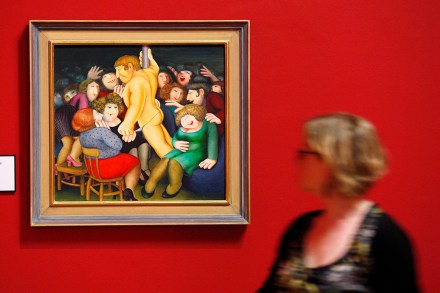
The late Victoria Wood described Beryl Cook as ‘Rubens with jokes’. This was flattering for an artist whose fat, eye-shadowed ladies were more at home in the bingo hall than the boudoir. Fleshy, but utterly unsexy, Cook’s buxom babes have long been objects of veneration as well as ridicule. The question being posed in this, the centenary year of her birth, is whether they ought to be taken more seriously.  Listening to the documentary on Radio 4 this week, I was inclined to think this a fatuous question, over which Cook, had she still been alive, would have rasped. An untrained painter, who worked out of the ironing room of the B&B that she ran in Plymouth, she seems to have set out simply to please – herself as much as others.

The truth about modelling for a great artist

From our UK edition

Artists’ models seldom get a chance to tell their side of the story. Yet one model, Anthony Rudolf, believes they deserve to be ‘remembered for their work and their devotion’. His dazzling new book, Office Hours in the Studio of Paula Rego, celebrates one of the most remarkable artists of our time from this unique perspective. Rudolf is a poet, literary translator and the founder of the Menard Press. He and Rego were partners for the last 26 years of her life (though she preferred the less business-like French terms compagnon and compagne). About three months in, he ‘realised you could never get near Paula during office hours, which she worked strictly. I tentatively asked if I could become a model and she flung her arms around me, saying “I never dared ask you!

Renoir was a master – let no one tell you otherwise

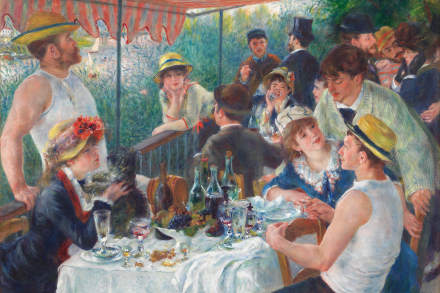
It was summer 1874 at Claude Monet’s house in Argenteuil on the Seine just outside Paris. Édouard Manet arrived from his house at Gennevilliers, on the opposite bank, and began painting Monet’s wife and infant son in the garden. Auguste Renoir turned up and started to paint the same scene alongside Manet. The little masterpiece he created is in the forthcoming exhibition Renoir and Love at the National Gallery. In 1924, Monet recalled that day half a century earlier: Manet, seduced by the colour and the light, decided to paint a picture en plein air of people under the trees… Renoir arrived… He asked me for my palette, a brush and a canvas, and there he was, painting away beside Manet.

Artists vs the Odyssey

From our UK edition

It’s a noble story of one man struggling against monstrous odds, valiantly captaining his crew while trying to avoid being skewered and striving to reclaim his crown. Welcome to the chronicles of Christopher Nolan and his hubristic film adaptation of the Odyssey. Will Nolan’s Odyssey make us feel – as Keats did when reading George Chapman’s translation of Homer – like some watcher of the skies when a new planet swims into our ken? Or will it be a thundering, 172-minute disappointment? Being a cinematic endeavour, the film should be judged more on its visuals than its script. And on that front, Nolan is pitting himself against a 2,700-year history of artworks depicting Homer’s epic.

The cult of Kahlo

From our UK edition

A Max Beerbohm cartoon famously reduced Arthur Wing Pinero (author of that interesting play, The Second Mrs Tanqueray) to a single eyebrow and a fur coat. Frida Kahlo’s fame rests upon little more: not so much anything she painted but her eyebrows – or should that be eyebrow? – and her moustache. If you get the impression that her output contains an awful lot of images of her face, you would be right. She painted 55 self-portraits – more than a third of her output. Hers is a strange cult, but a cult it is, and Making of an Icon is what the Tate exhibition subtitle says, not ‘Making of an Artist’. The show is drawing the pilgrims in record numbers.

The problem with ‘queer art’

In 1911, Duncan Grant’s “Bathing” went on display as part of a design scheme for the dining room of the Borough Polytechnic in Southwark. This large painting depicts a group of strongly muscled male bathers diving, swimming and hauling themselves into a boat. Only one of them is wearing a bathing slip, and while this kind of spectacle might have been familiar to anyone educated at a public school at this period, the art critic of the Times complained that it could well have “a degenerative influence on the children of the working class.” The picture now hangs in Tate Britain, and is used on the gallery’s website to direct people to an account of “Queer Life and Art.

art

‘I think I’ve found a real paradise’: David Hockney interviewed

From our UK edition

David Hockney has died, aged 88. During lockdown in 2020, Martin Gayford, the author of ‘Conversations With Hockney’, spoke to him for the magazine. Spring has not been cancelled. Neither have the arts ceased to function. David Hockney’s marvellous exhibition at the National Portrait Gallery may be sadly shut, but the artist himself is firing on all cylinders. ‘I was just drawing on this thing I’m talking to you on,’ he announced when I spoke to him via FaceTime the other day. He was sitting in the sunshine outside his half-timbered farmhouse in Normandy. ‘We’re very busy here,’ Hockney explained, ‘because all the blossom is just coming out, and there’s a lot more to come. The big cherry tree looks glorious right now.

The art of resurrecting forgotten artists

A retired priest in North Wales once told me that after the war he had been asked by Billy Butlin to buy 19th-century paintings for the holiday-camp chapels, because they were going cheap. One he bought, for 49 guineas in 1947, was William Dyce’s 1835 “Lamentation of the Dead Christ.” In 1983, after the Butlin’s chapels had closed, it made a handy £125,000 at auction, when it was bought by Aberdeen Art Gallery. As late as 1962, Lord Leighton’s great “Flaming June” (1895) was sold for £50. Today? Millions. Talk about “the bubble reputation.” The pattern of artistic fame followed by subsequent obscurity has been repeated through the centuries.

This Lucian Freud belongs on the compost

From our UK edition

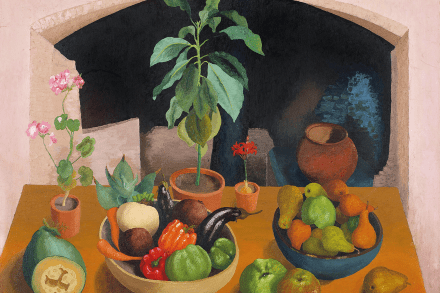
From 1940, at Benton End, near Hadleigh in Suffolk, the artist Cedric Morris brought his eye to breeding irises. Eliminating hated shades of ‘salmon or knicker’, he was, according to his biographer Hugh St Clair, ‘unstinting in his efforts to produce a pure, delicate pink’. Forty years of dedication brought a wild abundance to the garden, which was packed with cultivars, including ‘Benton Baggage’ (pale rose with a blue blaze), ‘Benton Persephone’ (very large white flowers) and ‘Benton Mocha’ (coffee-coloured, with a bright orange beard). A living flower painting.

The art of resurrecting forgotten artists

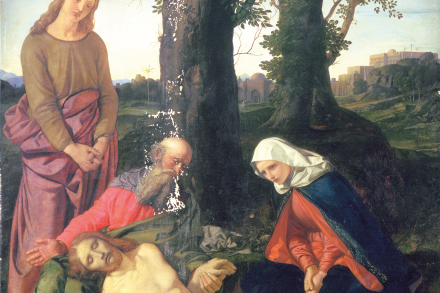
A retired priest in North Wales told me that after the war he had been asked by Billy Butlin to buy 19th-century paintings for the holiday-camp chapels, because they were going cheap. One he bought, for 49 guineas in 1947, was William Dyce’s 1835 ‘Lamentation of the Dead Christ’. In 1983, after the Butlin’s chapels had closed, it made a handy £125,000 at auction, when it was bought by Aberdeen Art Gallery. As late as 1962, Lord Leighton’s great ‘Flaming June’ (1895) was sold for £50. Today? Millions. Talk about ‘the bubble reputation’. The pattern of artistic fame followed by subsequent obscurity has been repeated through the centuries.

How Winston Churchill painted himself out of the darkness

From our UK edition

At Chartwell, Sir Winston Churchill’s home of 42 years, now owned by the National Trust, lies his painting studio. Reached by a path through the green-gold gardens, it is a standalone building with a little doorway and a soaring ceiling, clearly a place of refuge, and recreation, but also of serious commitment. The walls display a hundred or so paintings, lit by a big window that gives on to the garden and the purple horizon of the Weald of Kent; his armchair is set at the easel, near his twisted paint-tubes, housed in a former cigar humidor. His bespoke painting overcoat is flung over the armchair, his drink of ‘mouthwash’ (a splash of whisky and a lot of soda) set ready. It was here that Xavier Bray, director of the Wallace Collection, had his revelation.

The genius of Zurbaran – and why he vanished

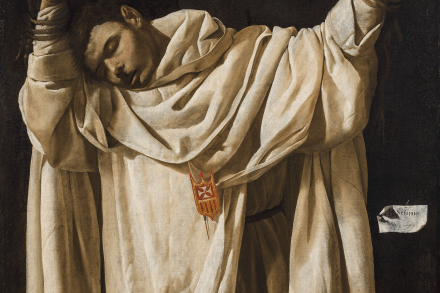
A pious Caravaggio JASPREET SINGH BOPARAI The Spanish painter Francisco de Zurbaran is sometimes thought of as a pious equivalent to Caravaggio – a Caravaggio without the bad temper, brutal vices or criminal record. But it seems difficult to argue that Caravaggio had any direct influence on his work. After all, he died when Zurbaran was 11 and a half years old. Since Zurbaran never left Spain, he could not have seen any of Caravaggio’s paintings with his own eyes. Indeed, he might never have even heard the artist’s name. Still, there are unavoidable similarities between the two men’s work. Zurbaran shared Caravaggio’s sense of drama and his love of shadows broken up by patches of strong light.

Tracey Emin at her most operatic

From our UK edition

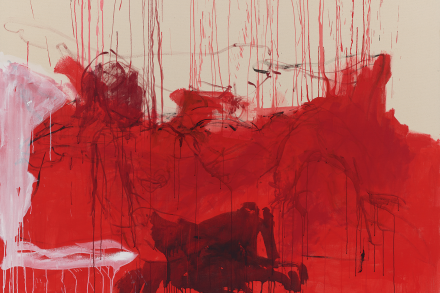
I feared this summing-up of Tracey Emin’s career might be self-congratulatory – biennale here, damehood there. But it’s Emin at her most operatic, facing mortality after surviving extensive surgery for bladder cancer in 2021. Blood and suffering are its subjects: the broken body, and the ascension of the spirit. The Young British Artists are getting on for 60, and Emin embraces it. Arranged in the centre of the exhibition is a ‘corridor to the afterlife’, inspired by an Egyptian tomb, dark and narrow. Along one side are sexy Polaroids she took of herself 26 years ago, along the other, gruesome hospital selfies. You might not want to look too closely at the latter, but the dialogue between the two is strong. ‘You thought you had problems?

A Tate show with dreamy, elusive power

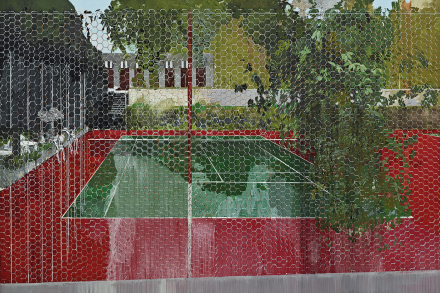
One of the miracles of art history is how painting, so often written off, keeps on coming back. Right now we are in the middle of just such a resurgence, and one sign of the current vitality of the medium is the emergence of painters such as Hurvin Anderson. Admittedly, Anderson – who was born in 1965 – has been emerging for a long time now. But, with the opening of a big retrospective at Tate Britain, his status as a major figure in modern British art is clear. Anderson is completely individual yet visibly connected to the tradition – indeed, to several traditions – and capable of creating huge, wall-filling canvases into which you can sink and float away, but which also make you think and feel.

The truth about artists’ optical aids

From our UK edition

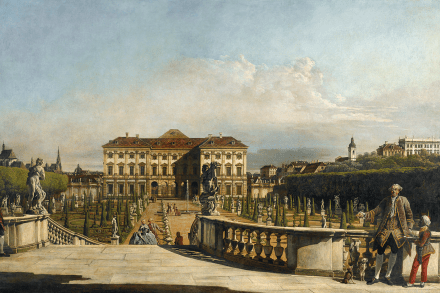
The first thing you see on entering this major new Viennese exhibition is not one of Canaletto and his nephew Bernardo Bellotto’s majestic paintings of London, Venice or Vienna, but a camera obscura. The magical art of both artists depended upon this simple but effective device, which exploits pin-hole projection – an optical phenomenon that had been known since antiquity.  The decision to open the show at the Kunsthistorisches Museum with a deceptively boring little wooden box amounts to a curatorial throwing down of the gauntlet. Because – although I find it hard to fathom – there are still art historians and critics out there who refuse to countenance the fact that great artists used optical aids.

Defiantly creative to the end: the transgressive Dorothea Tanning

From our UK edition

I received this book for review on the same day that Dorothea Tanning was making headlines in the auction world, breaking records with the sale at Christie’s of a tiny but key early work for more than £4 million. Her prices have risen an astonishing sevenfold in the past year, as collectors cotton on to her significance as a Surrealist; and while she may still be trailing on Leonora Carrington’s coat-tails, she looks to be steadily catching up.   Born in America to Swedish parents, Tanning was the very model of a fiercely independent artist, and her works are singular and disquieting like few others. She was largely self-taught as a painter and developed a virtuoso technique.

How sure are we that all the Michaelina Wautiers at the RA are by her?

From our UK edition

Roll up, there’s a new old master in town. Or a new old mistress, if you prefer. Michaelina Wautier (1614-89) is revealed here as a painter who excelled within the genres of her time: flower painting, portraiture, emblematic tronies, and, if the scholars are right, classical epic, too. The new Royal Academy show cracks open the received idea of what a Flemish woman operating in the decades immediately after Rubens and Van Dyck could achieve. Her c.1650 self-portrait at the easel is a confident statement. She is enthroned under a mantel of lusciously painted black velvet, which looks restrictive, but emerging from it comes her agile, three-dimensional painting hand. Her beauty is incidental, an aspect of her concentration and skill.

This Hockney show is disorientatingly enjoyable

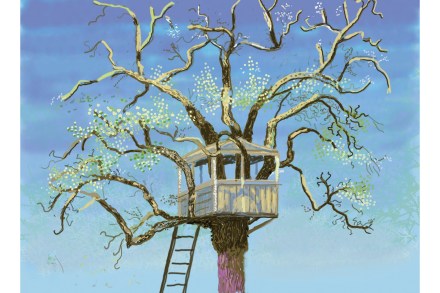
When so much contemporary art is riven with obscurity and angst, it is disorientating, at first, to encounter something as straightforwardly enjoyable as Hockney’s latest exhibition. Aged 88, the artist went out into his garden in Normandy with his iPad to make a visual diary of the year 2020. A hundred or so of the iPad sketches he made have been put together here, blended into a frieze, a walk-through panorama of the seasons rendered with Vivaldi-like virtuosity. As we move along the curve of this frieze, we see nature through Hockney’s bright yellow spectacles As we move along the curve of this 90-metre frieze, we see nature through Hockney’s bright yellow spectacles. He distils the garden to its dramatic essences.

Ovid puts today’s radicals to shame

It’s a crisp afternoon, and in a darkened room in central Amsterdam a woman is being smothered in snakes. Projected on to three walls is a massive video close-up of her face. She is young and beautiful  and remarkably composed: just a nose twitch here, an eyelid flutter there, as a python wriggles across her mouth or languidly caresses her cheekbone with its tail. In the room behind me, another woman stares fiercely back. Her shoulders are bunched with muscle, arms stiff at her sides, like a nightclub brawler about to nut someone. But it’s the bull’s horns sprouting from her forehead, and the mane of matted fur marching down her back, that make it hard to meet her gaze.