Openai

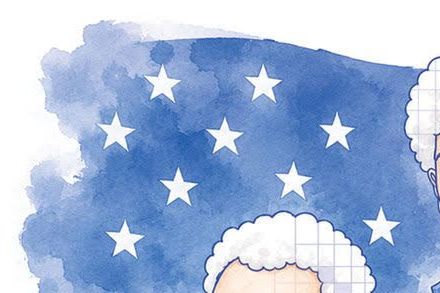
The Founding Fathers of AI

From our US edition

In the spring of 1722, a 16-year-old apprentice in a Boston print shop began slipping letters under the door at night, signed by a middle-aged widow named Silence Dogood, who did not exist. The apprentice was Benjamin Franklin. His brother James, who owned the paper, had no intention of printing his kid brother, so Franklin invented a woman and let her say the things he couldn’t. Readers wrote in guessing at the author. No one suspected the boy sweeping the floor. Franklin would go on to be a printer, a postmaster, a scientist famous across Europe for his electrical experiments and a founder of libraries, fire companies and, in time, of the United States itself.

Fighting technology is futile

From our US edition

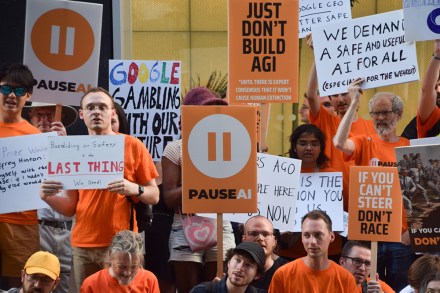
A 20-year-old from Spring, Texas, named Daniel Alejandro Moreno-Gama has been charged with attempted murder after he was accused of throwing a Molotov cocktail at the gate of Sam Altman’s San Francisco home on April 10. He then allegedly walked toward OpenAI’s Mission Bay headquarters and told employees he intended to burn the building down as well. He was reportedly carrying a manifesto – a “three-part series,” according to Fox News – that included a list of other AI executives and investors and their home addresses and documents discussing potential risks that AI poses to humanity, with a section titled: “Some more words on the matter of our impending extinction.

technology

I don’t trust AI’s built-in ‘safety systems’

From our US edition

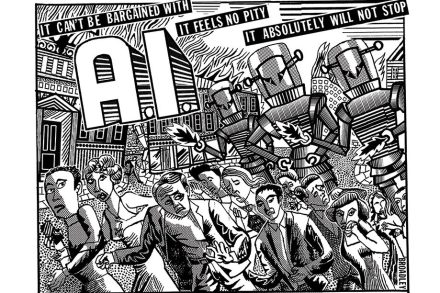
Cars ruined cities. Anyone can see that cities built before the invention of the automobile are incomparably more beautiful and serene than anything built after them. The contrast between Los Angeles and Prague is unmistakable. But people like things that move fast and make life easier, which means we’re stuck with the modern city hellscape whether we like it or not. And today, the same is true for AI. The contrast between the internet five years ago and today is unmistakable: content-slop, workslop, AI-generated comments, fake opinions and phony judgments, trite phrases, apocalyptic hysteria, the biggest intellectual-property heist in human history – all because of the invention of Large Language Models (LLMs).

ai

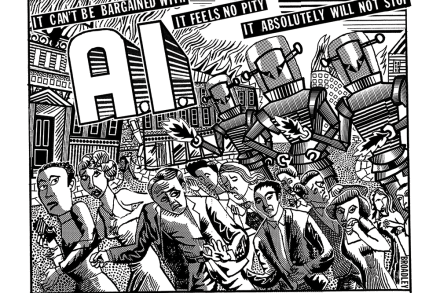
The end is nigh – or is it?

When most people start screaming that the sky is falling, they can safely be ignored. But Eliezer Yudkowsky is not most people. He was one of the first to take the idea of superintelligent AI – artificial intelligence that greatly surpasses humanity – seriously. He played a role in introducing the founders of Google DeepMind to their first funder; and Sam Altman, the CEO of OpenAI, credited Yudkowsky as a man who was ‘critical in the decision’ to start the organisation. His influence goes still further – he was a key thinker motivating the effective altruism movement and its founders, and the wider rationalist movement to which they belonged.

Copyright chaos grows deeper by the minute

The law doth punish man or woman That steals the goose from off the common But lets the greater felon loose Who steals the common from the goose The authors of a fascinating new look at the patchwork chaos called copyright begin their book with this epigraph from an ancient English protest song against fencing, and thereby privatising, common land. David Bellos, a comparative literature professor at Princeton University and winner of the first International Booker Prize in 2005 for his translations of Ismail Kadare, and Alexandre Montagu, a lawyer specialising in intellectual property and new media law, have written a timely history of a ‘relatively simple idea – that authors have rights in the works they create’.

Rishi Sunak can’t take the credit for falling inflation

Even the best-run companies have occasional leadership crises. But if you asked ChatGPT to come up with a blockbuster boardroom-bloodbath movie scenario, I doubt it would propose anything as extreme as this week’s events in its own San Francisco-based parent company, OpenAI. Chief executive and co-founder Sam Altman was fired last week for failing to be ‘consistently candid’ with OpenAI’s board, though no one was prepared to say what he had not been candid about. By Monday he had a new job leading AI research at Microsoft, OpenAI’s 49 per cent shareholder. One inside source claimed 743 of OpenAI’s 770 staff had signed a letter supporting him and many of them would follow him to Microsoft.