Oil

How Biden made the energy crisis worse

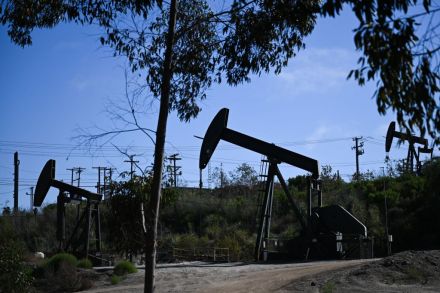
During the course of my daily media interviews, one of the most frequent questions I hear is, “when will things get better?” Being the bearer of bad news is frustrating, but unfortunately that’s all I see for the next few years. Following the basic laws of economics, energy prices can only come down based on two factors: increase the supply or decrease the demand. They may not like to admit it, but President Joe Biden and his team understand the need for a supply increase. It explains the president's trip to Saudi Arabia to ask their king to increase oil production. He has dispatched envoys to Venezuela and Iran for the same purpose. Unfathomably, his administration continues its relentless attacks on domestic oil production.

energy

Macron’s Russian oil plan is bound to fail

From our UK edition

It will drain Vladimir Putin of funds for his war machine. It will bring down inflation. And it might even be enough to stop the global economy from tipping into recession. As President Macron put forward his wheeze for solving the energy crisis this week, he no doubt had plenty of persuasive arguments. He appears to have brought the rest of the G7 on board for his plan for a global cap on the price of oil. There is just one problem. Like most price controls, it is not going to work. Indeed. It will only make the crisis worse. Of course, everyone can see where Macron is coming from. Ever since Russia invaded Ukraine, and embargos started to be placed on its energy, the price of oil has soared. From $74 a year ago it has risen to $117 a barrel and could go a lot higher still.

Biden’s energy hypocrisy

Joe Biden promised on the campaign trail in 2020 that he would "transition away from the oil industry,” convert to 100 percent "clean" energy by 2035, and "end fossil fuels.” Shortly after taking office, he started to make good on this pledge by suspending all new gas and oil leases on federal property and ending the Keystone XL pipeline. Now, faced with gas prices at a record high $5 per gallon and runaway inflation — aka the consequences of his own actions — Biden is looking for an off-ramp. Somehow, the Biden administration has decided it can still convince oil companies to ramp up domestic production in the short term while simultaneously promising to adhere to the president’s ambitious climate change goals in the long term.

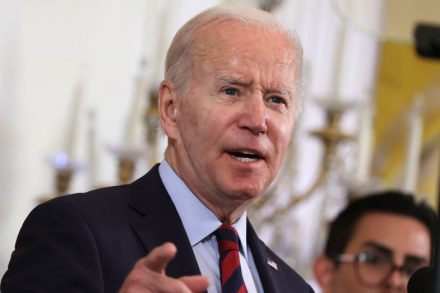
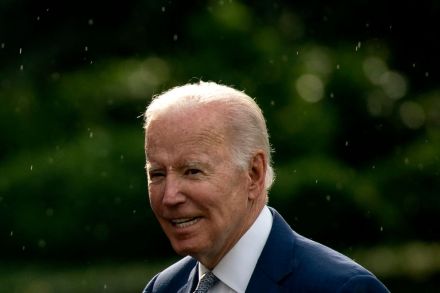
U.S. President Joe Biden (Getty Images)

How Michael O’Leary can stop the flying blame game

From our UK edition

Stock markets are tumbling, but given the tide of economic news, that’s hardly surprising. The S&P 500 index dived into bear market territory – 20 per cent down since January – after a rise in US inflation for May. Our own FTSE indices reacted badly to an unexpected 0.3 per cent drop in UK GDP for April. Interest rate rises predicted on both sides of the pond this week will make investors jumpier still. So expect further falls in markets that have been driven by weight of cheap money to stay unnaturally high despite an increasingly bleak backdrop. And wait for the turn. When might that be? When investors think they can see beyond the inflation spike and pick value among depressed stocks.

Biden of Arabia

When news broke that President Biden was planning a trip to Saudi Arabia to visit the crown prince Mohammed bin Salman (known as MbS), members of his party were horrified. Representative Adam Schiff, the chairman of the House Intelligence Committee, was especially disturbed and recommended the White House cancel it outright. "I wouldn't go. I wouldn't shake his hand,” Schiff told CBS on June 5. "This is someone who butchered an American resident, cut him up into pieces in the most terrible and pre-meditated way.” That resident was Jamal Khashoggi, a former Saudi royal family insider who used his perch as a columnist at the Washington Post to raise awareness about the crown prince’s ruthless ways.

arabia

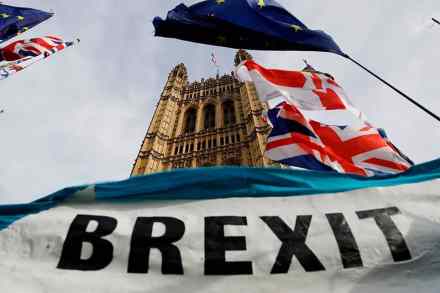
Who dares ask how far Brexit is to blame for UK inflation?

From our UK edition

After the Jubilee dream of a lovely lost Britain, back to reality with a face-slap: the reality of the £8 pint of beer, the £8-plus gallon of diesel and the death throes of a Downing Street regime that has no discernible answers to the cost-of-living crisis. All of which takes me back to some questions I’ve been pondering for a while: whether the UK faces higher inflation and a deeper downturn than the rest of the western world, if so why, and who we should blame. By way of caveat, let’s recall the shifting pattern of Covid statistics over time: just because the UK topped April’s G7 inflation table – at 9 per cent, ahead of 8.3 per cent in the US and 7.4 per cent in Germany – doesn’t mean we’ll still look worst when this is all over.

Lisa Murkowski doesn’t need the Republican Party

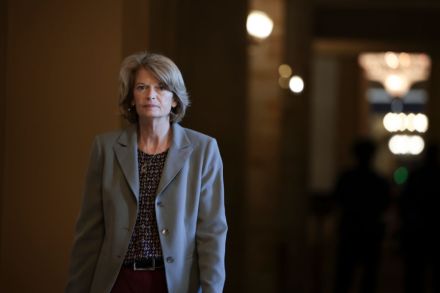
The Alaska Republican Party no longer wants Lisa Murkowski. That's just fine by her. In a traditional one-person-one-vote system, Murkowski would be sweating bullets right about now. The Alaskan Republican Party has censured her and endorsed Kelly Tshibaka, the former commissioner of the state's Department of Administration. President Trump has also thrown his weight behind Tshibaka. Murkowski has repeatedly voted against the Republican Party and Alaskan interests on key issues. In any other situation, she would be losing her seat — and for good reason. Fortunately for Murkowski, this year will be the test of Alaska’s ranked-choice voting (RCV) system. The ballot measure, which passed narrowly in 2020, established a nonpartisan top-four primary and RCV for the general election.

The EU’s oil ban is a damp squib

From our UK edition

When Putin’s tanks rolled into Ukraine on 24 February there was a conceit that this might be the first war which the West could fight – and win – by sanctions alone. The EU’s latest efforts to stop importing Russian oil show just what a folly this was. Donations of military equipment to Ukraine are certainly helping to keep Russian forces at bay, but economic sanctions? That is another story. Europe’s dependence on Russian oil and gas is the product of years of ill-conceived energy policy Sanctions may be helping to lower living standards among Russian citizens, but they are still a long, long way from cutting off the lifeblood of the Russian economy – its oil and gas exports.

Biden’s energy policy is sending us toward recession

With the travel-heavy Memorial Day weekend upon us, the fast-rising cost of gasoline is getting a lot of attention. Last week, gasoline rose above $4 a gallon in all fifty states. That’s the first time that has happened. Some are predicting gas could reach $6 a gallon this summer. If that comes to pass, the average American family could see a major impact on their budgets. (It might be noted as well, that the price of home heating oil has nearly doubled this year. If that continues, the economic impact next winter, especially in the northeast, where a high percentage of homes are heated by oil, will be considerable.) The threat of a recession is rising thanks to fuel shortages. Why has the price of gasoline risen so far so fast?

gas

No, BP’s profit hasn’t boosted Starmer’s windfall-tax call

From our UK edition

BP’s ‘underlying’ first-quarter profit of $6.2 billion, compared with $2.6 billion in the first quarter of 2021, was a direct reflection of the surge in global energy prices. Coming 48 hours before polling day, it also looked like a gift-wrapped on-time delivery for Sir Keir Starmer and his claim that a windfall tax on ‘excess’ profits of North Sea oil and gas extractors would knock £600 off the energy bills of ‘those who need it most’. Perhaps anticipating the BP announcement, Rishi Sunak last week seemed to trim his opposition to a windfall tax, telling Mumsnet ‘of course that’s something I would look at’ if energy companies fail to invest in the right sort of projects.

It’s time to clamp down on militant protesters

From our UK edition

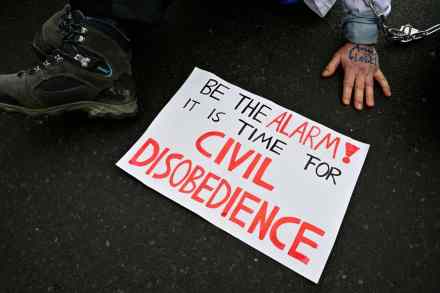
The right to protest against the policies of the government of the day, the system in general or even just to 'stick it to the man', as 1960s radicals used to put it, is fundamental to a free society. But when the freedom to protest is deliberately used by activists to take away the freedom of others to go about their normal lives then we reach an ethical crunch point. One man’s freedom has then become, as it were, another’s suppression and the law must adjudicate between the competing claims. So it is with the campaign tactics of various climate alarmist groups that have sprung up such as Extinction Rebellion, Insulate Britain and most recently Just Stop Oil.

Old man yells at gas prices

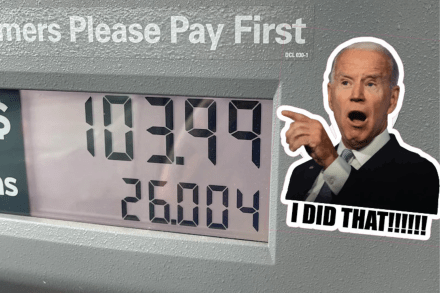
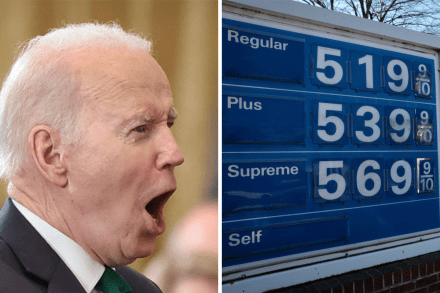
President Joe Biden has lashed out at fossil fuel companies, accusing them of using high gas prices to “pad their profits at the expense of hardworking Americans.” These are the same fossil fuel companies, by the way, that two years ago were charging a measly average of $1.84 a gallon. They’re also the same fossil fuel companies that in 2020 donated $1.6 million to Biden’s presidential campaign. But no matter. If nothing else, Biden’s inveighing against Big Oil takes me back to my more youthful days when progressives were less afraid to run hard against what they called “the polluters.” Back then, every oil derrick was a seething Deepwater Horizon just waiting to explode and blackface the local terns and herons.

yemen

What’s the difference between Yemen and Ukraine?

Millions of innocent civilians uprooted from their homes. Residential areas turned into dust, rubble and wire. Thousands of people killed in errant airstrikes. Store shelves emptied of basic staples. A humanitarian crisis dominating the everyday lives of a large swath of the population, who just want to escape the shelling and the fighting. This is the scene the world now equates with Ukraine, which has been subjected to a barbaric war of choice courtesy of Russian president Vladimir Putin. Yet for one poverty-stricken nation more than 2,400 miles to the south, this has been the grim reality for years.

Going out on a fossil fuel bender

Covid rates are abating just in time for surging gas prices to eclipse the pandemic as our crisis du jour, and people from both sides of the political aisle are crying out in unison: something must be done! The current energy crisis debate consists of a few camps: one group professes that they can’t abide fossil fuels being used at all, while another can’t imagine living without them. The third group makes up the middle of the Venn diagram, and though a paradoxical state of mind, it contains the most members. Choosing a winner from among the prevailing arguments is no simple task.

oil

How much is Europe (still) paying Putin for oil?

From our UK edition

When sanctions were imposed on Russia there was a big exception: Europe was still buying and paying for oil – leading to a bizarre situation. The West was doing everything it could to help Ukraine while still sending Putin hundreds of millions of dollars a day. But how much was that revenue worth to the Kremlin? As sanctions began to hit Russia, the price of Brent crude (the oil benchmark) soared to $130 a barrel, the highest since the 2008 financial crisis: an increase of over 90 per cent. It’s fallen since then but today it's still sitting between $107 and $115 dollars a barrel – well above where it had been weeks ago. But are these price rises making money for the Kremlin?

Boris is right to ask for Saudi oil

From our UK edition

War and virtue don’t mix well, especially when it comes to the dirty business of energy supplies. As soon as the Ukraine situation turned nasty the UK government quietly did a turn on winding down North Sea gas, and may possibly do the same on fracking. And, having sworn off Russian hydrocarbons, Boris is now looking for urgent supplies. In doing so he is talking to some pretty doubtful regimes. Yesterday he visited Saudi Arabia and Abu Dhabi; he has also put out feelers to Qatar. Opposition parties have made hay. In Scotland, opposition to North Sea gas and ‘extreme fossil fuel ideology’ has come from both Nicola Sturgeon and her delightfully titled ‘minister for zero carbon buildings, active travel and tenants’ rights’, Patrick Harvie.

Biden is right: the crypto world needs to be controlled

From our UK edition

President Biden’s executive order ‘Ensuring Responsible Development of Digital Assets’ won praise on all sides, an unfamiliar experience for one routinely dismissed these days as lacking the vigour or grip needed for presidential leadership. The order does little more than call for cross-government research into all things crypto. But in doing so it pleased bitcoin fanciers, NFT collectors and their ilk by acknowledging that their $3 trillion market is here to stay – while also giving comfort to sceptics who’d prefer to see crypto dealings brought under regulatory control like any other financial activity, rather than abandoned to the libertarian anarchy favoured by ardent cryptonauts.

The West has to bite its lip for Saudi oil

From our UK edition

It would be ridiculous to claim that Boris Johnson’s visit to Saudi Arabia is not morally problematic. He is going to a country which held a mass execution for 81 people this weekend – a record number – and to visit a man who US intelligence blames for the brutal murder of the journalist Jamal Khashoggi. Yet, if the West wishes to reduce Vladimir Putin’s leverage – and stabilise the oil market – then it needs Saudi Arabia to pump more; no country has more spare capacity than Saudi Arabia, which could produce another 1.5 to 2 million barrels a day if it wanted to.

Biden must decide the environment’s price tag

Boris Johnson is considering doing something that should be a duty for every leader. In the wake of sanctions poised to disrupt the 8 percent of domestic oil and 18 percent of diesel the UK imports from Russia, Johnson is reportedly toying with the idea of putting his country first and on the road to self-sufficiency by lifting the UK’s moratorium on fracking. The British government banned hydraulic fracturing, or “fracking,” in 2019. Fracking is a method of extracting oil and natural gas by drilling deep underground and fracturing shale rock with a fluid mixture (99 percent water and sand) that allows fossil fuels to flow out, be captured, processed and used to myriad ends (including gasoline).

Don’t buy Biden’s ‘Putin price hike’

The Putin price hike. That’s the line the Biden administration is using to absolve itself of blame for higher gas prices. “Russia is one of the three largest oil producers in the world,” White House spokeswoman Jen Psaki said in a social media video meant to deflect criticism from President Joe Biden. “And the fact that they started this conflict, invaded a foreign country, and they are such a big producer of oil in the world is the reason why the global oil markets are disturbed and why gas prices are going up.” The administration banned Russian oil imports this week, with the House of Representatives approving a similar ban on Thursday.