Oil

If Chris Packham is anti it, it’s probably a good idea

From our UK edition

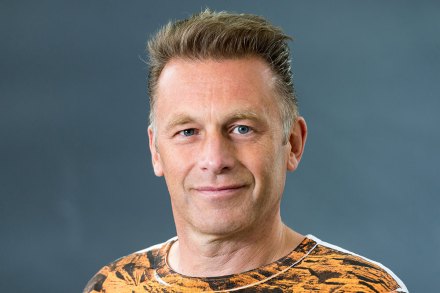
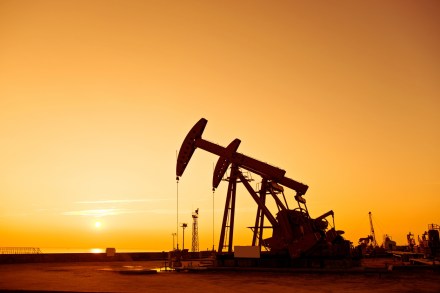
If the broadcaster and eco-warrior Chris Packham describes something as ‘an act of war against life on Earth’, sensible people might suspect that it’s probably, on balance, a good thing. Such is the case with the Rosebank field – the UK’s largest remaining undeveloped reserve of oil and gas, in deep waters west of Shetland, which was green-lighted by the government last week. Leading this £3 billion project will be the Norwegian energy giant Equinor. Rosebank’s 69,000 barrels of oil per day will be shipped to Norway or elsewhere to be refined and sold into world markets.

The forecast Andrew Bailey actually got right

From our UK edition

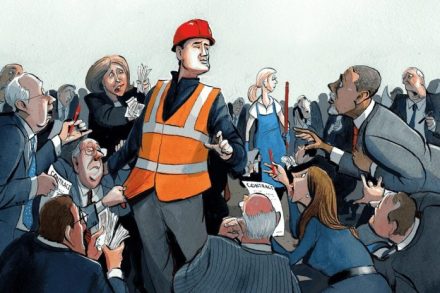
When inflation was at 5.5 per cent and rising in January 2022, the BBC’s Faisal Islam adopted a look of amazement when he asked the governor of the Bank of England, Andrew Bailey: ‘So you’re trying to get inside people’s heads and ask them not to ask for too high pay rises?’ ‘Broadly, yes,’ Bailey stepped into the trap, ‘It’s painful, but we need to see that in order to get through this problem more quickly.’ The governor was slated for insensitivity, critics making much of his own half-million package. That 38-second clip did more to make his out-of-touch reputation than any of his other stumbles. But he wasn’t wrong.

Why surging oil prices aren’t yet worth worrying about

From our UK edition

For once we are having an old-fashioned silly season, with no pandemic, no insurgency by the Taliban, no leadership election in the Tory party and no energy crisis – with the result that a few migrants moving onto a barge has become the main story of the week. Or at least we didn’t seem to have an oil crisis until Tuesday, when European wholesale gas prices suddenly surged by 40 per cent, from €30 per MWh to over €40 per MWh. It was a reaction, it seems, to a strike in Australia which has compromised the country’s exports of liquified natural gas (LNG).

ESG is a surprise boon for fossil fuel giants

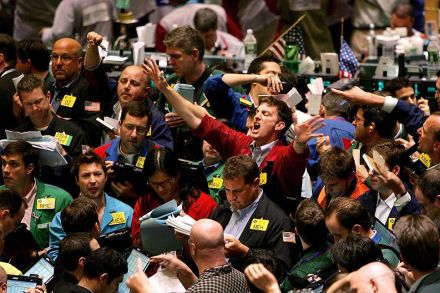
ESG, or environmental, social and corporate governance, has taken the financial world by storm. It first hit the scene in a 2004 United Nations report that argued the financial sector could rack up more profits if it focused on carbon dioxide reduction and UN-approved progressive causes and has ballooned into a big, green financial juggernaut. In 2021, ESG assets under management hit an estimated $35 trillion. Bloomberg projects that by 2025 $53 trillion will be invested in ESG vehicles — that’s over one third of global assets under management and over five times 2007’s total of $10 trillion of ESG assets.  The main thrust is to hasten the renewable energy transition to solve climate change by diverting capital from fossil projects to various green projects.

opec aramco esg

Is it possible to live without a bank account?

From our UK edition

Of no account  Nigel Farage claimed that his bank has told him it will be closing his accounts, without giving him a reason, although he suspects it is because of his political views. Is it possible to live without a bank account? – According to the Financial Conduct Authority, there are 1.3 million adults in Britain who are ‘unbanked’. – A third of them do not want to have a bank account, sometimes because they have got into trouble with debt in the past. – There are 7.45 million ‘basic’ bank accounts designed to offer essential functionality for handling payments, without offering credit and other services. Around the houses How is the volume of housing sales holding up across the UK?

Should crypto be regulated like shares – or more like a casino?

From our UK edition

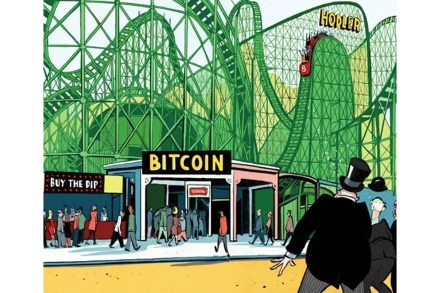
‘Crypto assets are commodities,’ said my neighbour at dinner. No they’re not, I replied, commodities are natural raw materials that have ultimate real-world uses. Crypto is merely a collection of blips in cyberspace to which adherents choose to attribute value. ‘Just like fiat currencies,’ my neighbour shot back. ‘What’s real about them? Aren’t they just an idea in the mind of central bankers?’ And off we went on a ding-dong debate.

If inheritance tax can’t be scrapped let’s change it for the better

From our UK edition

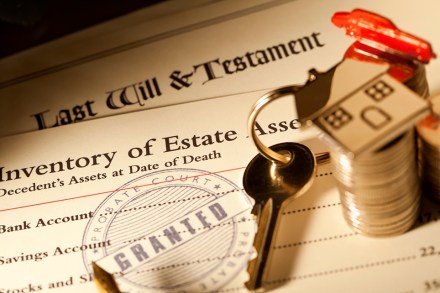
I’d happily jump on the Telegraph bandwagon for the abolition of inheritance tax, even in the company of Liz Truss and Nigel Farage. The urge to provide a cushion of capital for children and grandchildren is an honourable one. Recipients of already-taxed cash from deceased relatives are arguably less likely to be burdens on the state in their own later lives, just as the state is unlikely to spend the same money, if confiscated, in efficient ways for the greater good. And to argue against inheritance is to put socialist hostility to wealth ahead of the worthy aim of family betterment. Enough said. The trouble with this campaign, however, is that it’s also a call for a £7 billion tax cut for the better-off, which simply isn’t going to happen.

Venezuela’s anti-socialist opposition has faltered

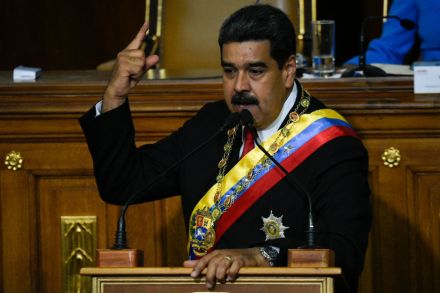
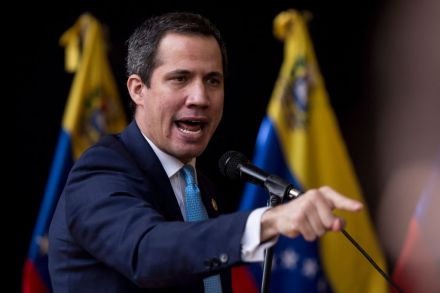
2019 was a banner year for Juan Guaidó, a relatively obscure Venezuelan lawmaker who announced to a crowd of thousands in the heart of Caracas that he, and he alone, was Venezuela’s new interim president. The United States and dozens of other countries in Europe and Latin America quickly followed up with official recognition for the fresh-faced head of the Venezuelan National Assembly. Nicolás Maduro, the man who took over the presidency after Hugo Chávez’s death, was for all intents and purposes relegated to the status of an isolated despot who had no legitimate claim to the Miraflores palace. 2022, however, has brought Guaidó and his international supporters back down to earth, with the opposition ditching his government in a 72-28 vote.

Juan Guaidó venezuela

The coming turbulent times in the oil market

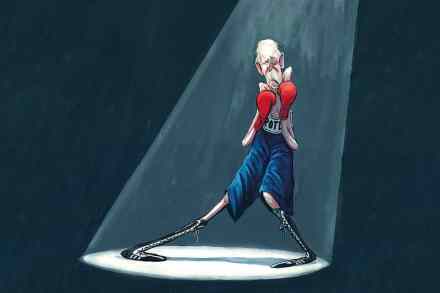
When the Wall Street Journal reported on November 21 that OPEC, the oil cartel dominated by Saudi Arabia, was planning to increase production by 500,000 barrels per day in December, the crude market immediately reacted. Oil prices plunged by 6 percent, bringing the Brent benchmark close to $80 a barrel. Saudi energy minister Prince Abdulaziz bin Salman, the older brother of king-in-waiting Mohammed bin Salman, immediately went to work disputing the report. No decisions at OPEC had been made, he said, and it was possible the cartel could even proceed with further production cuts if needed to maintain balance in the market (for the Saudis, "balance" is usually defined as padding the kingdom’s balance sheet). Abdulaziz’s intervention helped make up most of those earlier losses.

oil

A house-price crash won’t be the only effect of the Kwarteng calamity

From our UK edition

Where next for house prices? Clearly, they’re going down as mortgage rates go up – and my forecast in May that they would shed ‘recent froth’ and then stagnate rather than plunge, has been entirely overtaken by events, or at least by Kwasi Kwarteng’s calamitous ‘fiscal event’ last month. Reverberations from the Chancellor’s debut continue apace, with more emergency bond-buying by the Bank of England despite news that the OBR-assessed forecast missing from his September speech will now be unveiled on 31 October instead of on 23 November.

The tricky debate over fossil fuels on Native American land

The Biden administration has found itself between a rock and a hard seam of coal. A cohort of Native American tribes have realized just how sacred — and lucrative — their lands really are, and they’re not trusting the promises of an old white man this time. “When the administration says, ‘We're going to create all these millions of jobs if we just switched over [to renewable energy] today,’ they haven't shown us the fine print that says where those jobs are coming, which region, doing what,” Daniel Cardenas, chairman of the National Tribal Energy Association and member of the Pit River Tribe, told Fox News Digital in an interview. "When you start questioning them there, then they start getting defensive.

Opec will regret taking on the US

From our UK edition

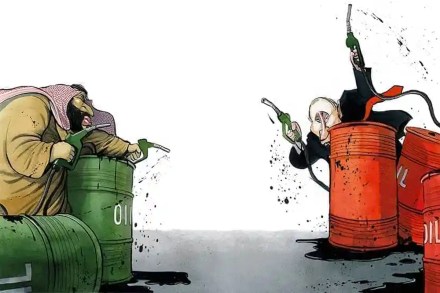
Production will be cut. Supplies to the rest of the world will be curbed. And inflation will rise just a little bit higher. No one ever expected the oil-cartel Opec(+), led by Saudi Arabia, to be friendly to the West, or to help out when it was needed. Even so, its decision this week to effectively side with Russia, and to make the energy crisis even worse, may quickly backfire. In reality, Opec was already in long-term decline. Picking a fight with the US will just make that worse. It was certainly the kind of news the energy markets didn’t need.

How the US failed to stop OPEC from cutting oil production

Near the top of President Biden’s to-do list for the past few months has been to keep gas prices down. On Wednesday, this was dealt a likely fatal blow by the Organization of Petroleum Exporting Countries, or OPEC, which, led by Saudi Arabia, agreed to cut its overall production by two million barrels per day. In actuality, the cut will mean a reduction of more like one million barrels per day if it's taken into account that OPEC has been underproducing compared to its previously stated production goals. Still, this is a significant cut, and the effects on oil markets are already being felt.

Is this really the moment to scrap bankers’ bonuses?

From our UK edition

Chancellor Kwasi Kwarteng – keen to sharpen the City’s competitive edge, we’re told – wants to remove the legislative cap, imported from Brussels in 2014, that limits bankers’ bonuses to 100 per cent of their base salary, or up to 200 per cent with shareholder approval. That raises interesting questions. Was the cap a good idea in the first place? If not, why wasn’t it binned as soon as we left the EU? Is now the ideal moment to do so? And are bankers still a breed of greedy bastards? The answer to the first question is certainly not. This column called the cap a ‘boneheaded’ measure that would merely provoke wily moneymen to find ways of gaming an unwelcome restraint on their wealth.

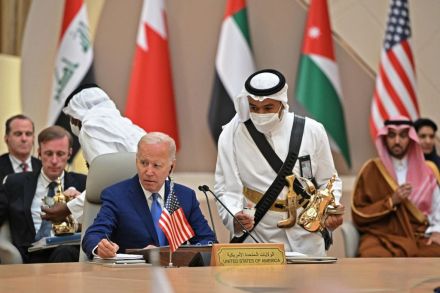
How the Saudis embarrassed Biden over oil prices

As Americans confront high inflation rates, tumbling prices at the gas pump are at least giving them a little relief. Brent Crude, the global benchmark for oil, has declined by 27 percent from its $127 peak six months ago. Gas prices in the United States, which were averaging just over $5 a gallon earlier in the summer, are now in the $3.72 range. That means Americans are saving $10 to $15 every time they fill up their tanks. Yet crude is a global commodity, and its price can fluctuate for any number of reasons — war, recession, and an economic slowdown in China to name but a few.

Will energy bills kill off working from home?

From our UK edition

‘The jury’s out’, was Liz Truss’s pert response to the question ‘Macron: friend or foe?’ at last week’s Norwich hustings. ‘I’ll judge him on deeds not words.’ In a video clip of the event you can see a bald bloke in the second row applauding wildly, as if she had just delivered from memory the whole of Henry V’s speech before Agincourt. Hard to know which is worse: whether as Foreign Secretary she thinks it’s shrewd diplomacy to cast doubt on the bona fides of our nearest ally and Europe’s only current statesman; or whether, even with victory in the bag, she’ll say anything to win the vote of every last backwoods xenophobe in the Tory party.

Blaming Saudi Arabia won’t make energy cheaper

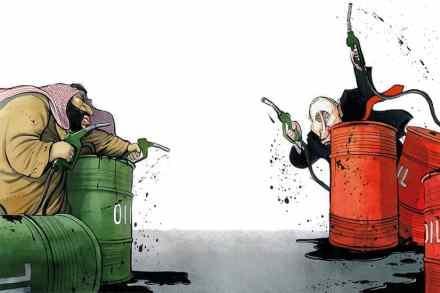
How outraged should we be that Saudi Aramco has reported a world-record quarterly profit of $48 billion, representing a giant bonus from the global oil price spike provoked by the war in Ukraine? Well, that’s how the cookie crumbles when you’re sitting on oil reserves so abundant and so easily accessible that your marginal cost of producing the next barrel is less than $10 when the market price has just doubled to $130 — as it did in March, before settling back to around $95 today. And you might think that this recent price retreat is likely to continue as oil demand begins to shrink with the onset of recession in developed economies – just as you worry that your own reserves will one day dwindle.

saudi arabia

Blaming Saudi won’t make energy cheaper

From our UK edition

How outraged should we be that Saudi Aramco has reported a world-record quarterly profit of $48 billion, representing a giant bonus from the global oil price spike provoked by the war in Ukraine? Well, that’s how the cookie crumbles when you’re sitting on oil reserves so abundant and so easily accessible that your marginal cost of producing the next barrel is less than $10 when the market price has just doubled to $130 – as it did in March, before settling back to around $95 today. And you might think that this recent price retreat is likely to continue as oil demand begins to shrink with the onset of recession in developed economies – just as you worry that your own reserves will one day dwindle.

Democrats pick a bad time to punish the energy industry

With its new Inflation Reduction Act (IRA), the government is pulling one of those infomercial tricks where they throw in a third bottle of OxiClean ABSOLUTELY FREE! Acting as if the cost of everything hasn’t already been calculated and passed onto the consumer. The IRA, you see, contains a “Methane Emissions Charge” that will impose a $900-a-ton tax on oil and gas producers that will increase to $1,500 after two years. The left is patting itself on the back for their valiant work to cut greenhouse gas emissions drastically by 2030. But here’s the thing: the energy industry is already working hard to cut emissions; it’s in their interest to do so. And when the government fines them for not capturing enough methane, guess who gets to foot the bill?

Iran and Russia: the new Axis of Evil?

Russian President Vladimir Putin’s visit to Tehran last week brought attention to a growing partnership between Russia and Iran. The Russian shook hands with Iranian Supreme Leader Ali Khamenei, a rare gesture since both men are notorious coronaphobes. The old cleric expressed support for the Russian invasion of Ukraine, while the old KGB man offered Iran supplies of grain. US intelligence even claims Iran will open its drone arsenals to Russia. This strange friendship has its limits, but its growth could spell trouble. History does not suggest this is a natural partnership. The list of grievances between Iran and Russia is long. Great powers are often rough with middle-power neighbors.