Nuclear weapon

The Mar-a-Lago raid’s Saudi connection

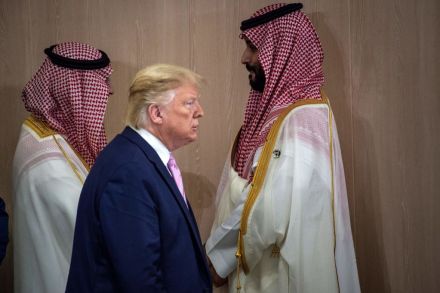
It appears that the FBI’s search of Donald Trump’s Florida residence was just the tip of the iceberg. Indeed, the Bureau's probe has been underway for months, and its decision to interview former White House lawyers suggests that law enforcement is not only interested in what was in the more than 700 pages of documents that Trump took, but also why he took them. The Washington Post recently alleged that some of those documents are related to nuclear weapons. This has shone a light on Trump’s prior attempts to share sensitive nuclear technology with Saudi Arabia, a country that has flirted with building nuclear weapons. Could Trump’s friends in Riyadh have been due for one of his infamous quid pro quos? History provides a guide. As early as 2016, Donald Trump Jr.
The myth that Hiroshima was necessary

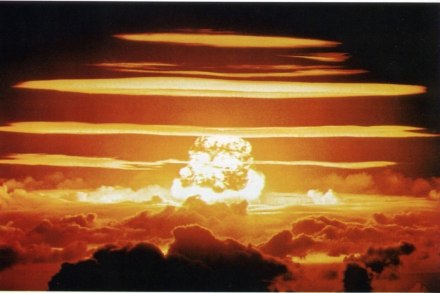
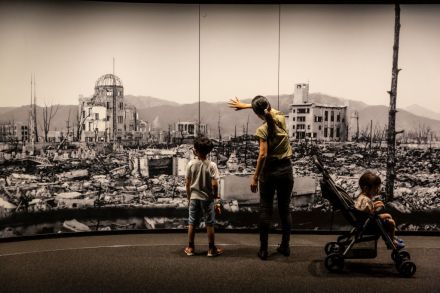
If you think the falsehoods spilling out of Ukraine about casualties and atrocities are shocking, meet the greatest lie of modern history. August 6 marks the seventy-seventh anniversary of the nuclear destruction of Hiroshima and death of some 140,000 non-combatants. Yet the only nation in history to employ a weapon of mass destruction on an epic scale, against an undefended civilian population, shrugs off the significance of an act of immorality. Beyond the destruction lies the myth of the atomic bombings, the post-war creation of a mass memory of things that did not happen. This myth has become the underpinning of American policy ever since, and carries forward the horrors of Hiroshima as generations pass.

Iran and Russia: the new Axis of Evil?

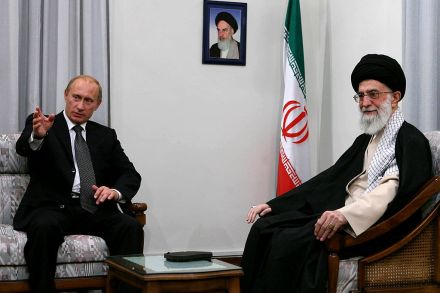
Russian President Vladimir Putin’s visit to Tehran last week brought attention to a growing partnership between Russia and Iran. The Russian shook hands with Iranian Supreme Leader Ali Khamenei, a rare gesture since both men are notorious coronaphobes. The old cleric expressed support for the Russian invasion of Ukraine, while the old KGB man offered Iran supplies of grain. US intelligence even claims Iran will open its drone arsenals to Russia. This strange friendship has its limits, but its growth could spell trouble. History does not suggest this is a natural partnership. The list of grievances between Iran and Russia is long. Great powers are often rough with middle-power neighbors.

How to avoid World War Three

The Russian assault on Ukraine has awakened the West to the fact that we may be back in a Cold War — or worse. After a few decades’ respite in which the United States did not find itself in conflict with any nuclear powers, presidents must consider a world in which nuclear-armed Russia and China actively oppose US interests and deliberately test American resolve. This reality will become even more complicated if a hostile Iran gets its hands nuclear weapons too. The return of Cold War-style geopolitics means the return of Cold War-style statecraft. Presidents will once again face the difficult task of calibrating their actions to advance US goals while avoiding escalation toward possible nuclear confrontation.

presidents

Why the Ukraine war might not end

One thing anyone who studies foreign policy for a living knows is that fairytale endings never happen in war. I suspect Ukraine will follow this sad trend. Why should we expect anything different? War never conforms to humanity’s desire for the good guys to defeat the bad guys. Indeed, great power politics grounded in realpolitik but shaped by mankind’s sense of morality is a mixture that yields tragic results. The demand for closure, clean endings to conflicts where the antagonists get punished, is rarely fulfilled. Wars only have happy endings in the movies. In fact, some wars never seem to end, as the combatants are left unfulfilled — or just haven't been weakened enough.

ukraine

Yes, Russia could use nuclear weapons

“Nuclear war is part of our strategic culture. Yes, we would start one if our homeland, our way of life, was threatened, absolutely. Why wouldn't we?” That’s what a retired Russian diplomat told me on the sidelines of a track-two dialogue between US, Russian and Chinese experts back in 2012. And to be honest, for several years, I didn’t believe him. I took his comments as bragging, atomic machismo, if you will. The context of the conversation was a response to a question to my Russian colleague on the subject of Moscow’s nuclear weapons doctrine and thinking. Russia for several years has believed in the concept of escalating nuclear tensions to deescalate tensions, or what defense scholars call “escalate to deescalate.

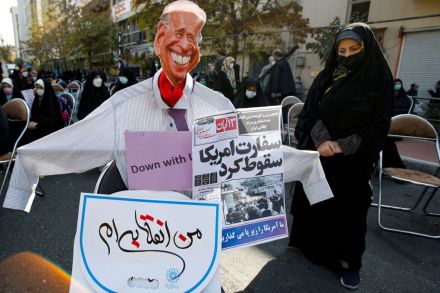
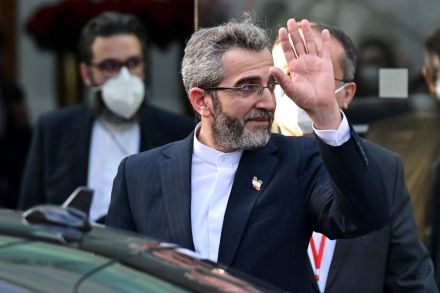
Biden finalizes terrible new Iran deal

Several sources in the negotiating team in Vienna tell Cockburn we can expect a "new Iran deal" between the Biden administration and the mullahs as early as Thursday morning. For the last few months, Iran has been behaving stubbornly in negotiations, refusing to back down from its “red lines,” including lifting sanctions on Supreme Leader Ali Khamenei and the Islamic Revolutionary Guard Corps. Instead, it's kept to the original timeline on the Iran deal, which would allow it to test ballistic missiles next year and remove all restrictions by 2030. Now, Iran’s resolve seems to have paid off. Sanctions: Cockburn's sources say the Biden team is set to waive virtually all sanctions on Iran.

iran

Why we keep getting North Korea wrong

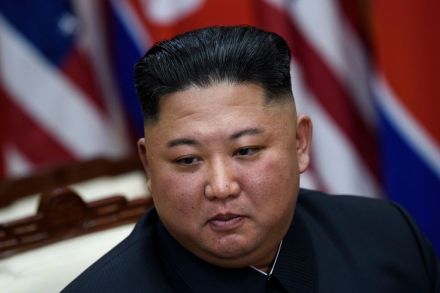
Kim Jong-un is focused first and foremost on managing his country’s lingering food crisis. But that doesn’t mean the thirty-seven-year-old dictator has any intention of siphoning off resources from North Korea’s weapons programs. He made that abundantly obvious this week, when Pyongyang conducted its second ballistic missile test using hypersonic technology in four months. According to North Korean media, the missile traveled 435 miles to the east, hitting the designated target. The response to the latest test was predictable. South Korea called an emergency meeting to discuss the launch. The US State Department quickly issued a statement to reporters reminding them that the tests are a violation of multiple UN Security Council Resolutions (as if North Korea cared).

north korea

Was it inevitable that Iran would go nuclear?

Was it inevitable that Iran would one day gain nuclear weapons? Identifying causality in human actions is a tricky exercise, especially when it comes to historical events, like the outbreak of World War Two. Was appeasement the cause? Or perhaps a war with Germany was unavoidable as long as Adolf Hitler was in power? It may also be fated that a nation of ninety million people, proud about its history and place in the world — Persia was already an advanced civilization when barbarian tribes roamed the British Isles — would become a nuclear military power. That nuclearization process actually commenced under Mohammad Reza Shah and continued because of concern that, thanks to French assistance, Iran’s adversary Iraq was on its way to developing a nuclear weapon.

iran nuclear

North Korea will be Biden’s real test

North Korea now possesses a nuclear weapons arsenal that could kill millions of people in minutes. Our media, rushing to create the simple but misleading narrative that President Joe Biden has ended America’s supposed longest war, forget that Washington technically has been at war with North Korea for 71 years. It's Pyongyang, not Kabul, that will be the real test of Biden's foreign policy — and the real opportunity. A few months back, the Biden administration named that conflict its top national security priority. Yet Team Biden has done little to work towards ending what can only be described as the ultimate forever war. And, just like clockwork, Pyongyang seems to always remind us that its deadly atomic arsenal is growing by the day.

kim jong-un north korea

Biden brings a nuke to a gun fight

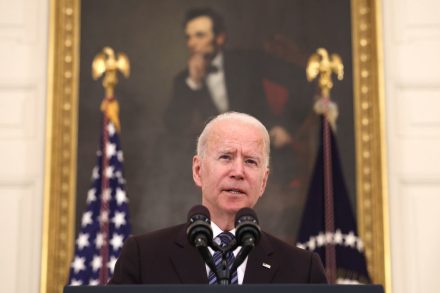
Joe Biden has released a new statement on gun control and it’s about as concise and coherent as you would expect. Here’s an excerpt per a White House transcript: ‘Those who say the blood of lib- — “the blood of patriots,” you know, and all the stuff about how we’re going to have to move against the government. Well, the tree of liberty is not watered with the blood of patriots. What’s happened is that there have never been — if you wanted or if you think you need to have weapons to take on the government, you need F-15s and maybe some nuclear weapons.’ There’s the silver-tongued devil we all know and love.

muscle memory

How I learned to start worrying and fear the bomb

‘This is not the Cold War redux; it is even worse than the Cold War.’ That’s how Nicolas Roche, of the French Ministry of Foreign Affairs, described the current climate around nuclear weapons. Roche spoke at the Carnegie International Nuclear Policy Conference, a veritable Woodstock for the nuclear policy community (organizers insisted on referring to the shindig as ‘#NUKEFEST’), which convened for two days in Washington, DC. Despite the party-like atmosphere at ‘Nuke Fest’, despondency pervaded the gathering. North Korea received substantial attention at the conference, while Iran and South Asia were relatively neglected. The dominant topic of conversation, and predominant reason for despair, was the US-Russia relationship.

nuke fest