Nuclear weapon

The logic of Trump resuming nuclear weapons testing

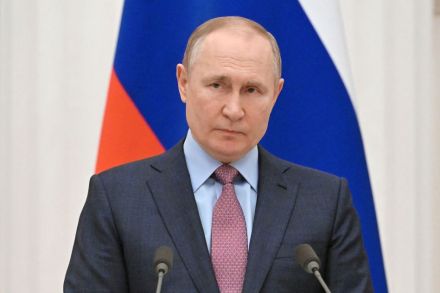
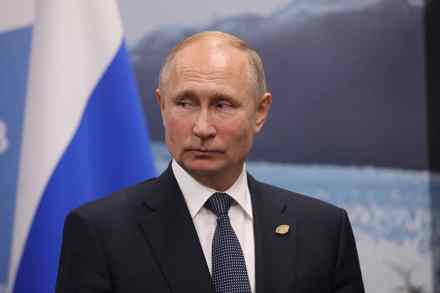
Donald Trump has exercised the nuclear option, sort of. Sitting somewhere in South Korea, the President launched a Truth Social post on the topic of nukes: “Because of other countries testing programs, I have instructed the Department of War to start testing our Nuclear Weapons on an equal basis. That process will begin immediately.” Then he thanked the world for its attention and sallied into a meeting with China’s President Xi Jinping. That timing isn’t coincidental. The Red Dragon has spent the last decade hoarding nuclear warheads – almost as if there were a second Cold War raging – and has been rather brazen about this fact. So too has Xi’s pouty neighbor to the north, Vladimir Putin.
Trump nuclear

Will we stop Saudi Arabia developing a nuclear weapon?

Though clearly resolved to declare victory over Iran’s nuclear program and move on, Donald Trump has been beset this summer by assertions that the Iranian effort has not been “obliterated” after all and that the mullahs will be back at work in no time cranking out the requisite materials for a bomb. Therefore, according to some, Trump should bomb some more – or at least unleash Israel to do so. Whether or not Trump is pushed into further strikes, the argument over Iranian nuclear weapons capabilities will not go away.

Saudi Arabia

Trump is putting ‘America First’ by ignoring the MAGA punditocracy

Political imbrioglios often take on the character of theological controversy. Back in the 6th century, the wise men of the Western Church, pondering the Trinity, decided to make an addition to the Nicene Creed. The Holy Spirit, they determined, proceeded not simply “ex Patre” (“from the Father”) but also “filioque,” “and from the son.” No big deal, right? Wrong. For reasons I shall refrain from dilating on now, the Eastern Church repudiated the addition. Controversy raged for centuries. Indeed, what became known as the “filioque controversy” culminated, in AD 1054, in the Great Schism between the Eastern Church and the West. For most of us mortals, the controversy now seems arcane, not to say bootless. But at the time it was a matter of life and death.

Trump

The problem with putting US nukes in Poland

Nuclear weapons are becoming a major issue for Poland. One way or another, both the Polish president and prime minister want their country to host tactical nuclear weapons as a deterrent against President Putin’s Russia. In the latest — but by no means the first — statement on this issue, President Andrzej Duda revealed that he recently discussed stationing American tactical nuclear weapons in Poland with Keith Kellogg, the US special envoy for Ukraine. In an interview with the Financial Times, Duda said: “I think it’s not only that the time has come, but that it would be safer if those weapons were already here.

Where conflict in the Middle East goes from here

Anything written on the Middle East at this moment in history is almost instantly out of date. As Lenin said: “There are decades where nothing happens; and there are weeks where decades happen.” The Arab-Israeli war in 1967, the Iranian revolution in 1979, the invasion of Iraq in 2003...the region may once again be at one of those forks in the road that dictate the fate of nations for years to come. Journalists’ predictions age like milk out of the fridge. Nevertheless, here are some: Israel attacks Iran. This isn’t a hard one. The question is what form that attack will take. The prime minister, Benjamin Netanyahu, has wanted to bomb Iran’s nuclear facilities before, only to be stopped by the US.

sanctions putin russia davos oligarch

Why Russia could use nuclear weapons in Ukraine

Here is one fact about the war in Ukraine you need to understand: the longer it goes on, the more advanced Western arms will flow to Kyiv. And that could mean that Russian president Vladimir Putin will feel he has no choice but to use tactical nuclear weapons to even the odds — no matter what happens as a result. You think that sounds crazy, right? Well, let me ask you this: did you ever imagine Putin would invade Ukraine? That action alone casts doubts on how rational an actor he really is. But let's take a step back for a moment. In order to understand why Putin may very well consider using tactical nukes, let's get a sense of where he thinks he stands in this war.

Alan Dershowitz: when Israel must consider the nuclear option

Professor Alan Dershowitz is one of Israel’s most prominent defenders outside the Jewish state. He has just written — in record time — a book about the events of October 7: War Against the Jews — How to End Hamas Barbarism. It will be published next month and will argue, among other things, that the Hamas attack “has required Israel to consider its nuclear option as a last resort to assure its survival.” I spoke to Professor Dershowitz and asked him first, about another of the book’s arguments, that there should be no absolute distinction between civilians and combatants in Gaza, but instead “a continuum of civilianality.” "It existed in Nazi Germany," he said.

dershowitz nuclear option

The atomic bomb saved Japanese lives, too

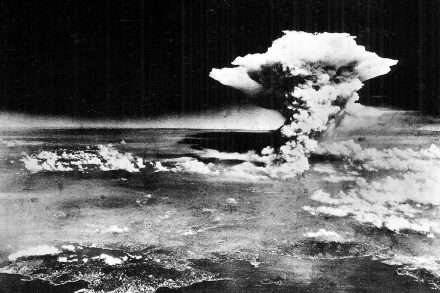
It’s August 6, which means that it is the anniversary of the atomic bombing of Hiroshima.   Every year at this time there are a spate of articles about that horrific event. Some of the articles are condemnatory; some hand-wringing; some are defiantly supportive.  This year, the recent release of Christopher Nolan’s new movie about J. Robert Oppenheimer and the making of the atomic bomb has given the controversy over the development and deployment of that awesome weapon a new urgency.   Something else that has contributed to the fraught atmosphere is the war in Ukraine. After all, one side in that conflict, Russia, controls the world’s largest arsenal of nuclear weapons, more than 6,000 warheads. My friend Roger L.

hiroshima atomic bomb japanese

Japan deserves to see Oppenheimer

As millions of people across the world rush into cinemas this week to see Christopher Nolan’s latest epic thriller Oppenheimer, one notable country will not be part of the film’s initial release window despite the relevant subject matter — Japan. For reasons that are still unclear, Universal Pictures has not announced a Japanese release date. Yet if any place deserves to see a film based on the life of the theoretical physicist who played an essential role in developing the atomic bombs which ended World War Two, it should be the country that was most affected by them. Hollywood films being delayed for release in Japan is a very common occurrence, and it rarely ever has anything to do with politics.

japan oppenheimer

Will Biden make the same mistakes as Obama on Iran?

The Biden administration seems to be bumbling on all diplomatic fronts these days. Not only is it trying to magic into existence a thaw in the US-China relationship, while Beijing is only throwing on the liquid nitrogen, but it's also trying to resurrect a version of the nuclear deal with Iran. Concrete details are scant, but reporting from both the New York Times and the Wall Street Journal gives a decent sketch of what the White House is contemplating. It’s not pretty. Under the outlines of the agreement, the US would “avoid tightening sanctions,” stop impounding Iranian ships and release billions in cash currently frozen by US sanctions for humanitarian applications.

Iran islamic republic

Jimmy Carter’s second act was better than his first

Jimmy Carter is commonly depicted as one of America’s worst presidents. His four-year tenure is said to be a mishmash of screw-ups, from high energy prices and even higher inflation to low economic growth and a very public, very embarrassing hostage rescue attempt in Iran. His signature achievement, the 1978 Camp David Accords, which codified peace and normalized diplomatic relations between Egypt and Israel, is treated as a small stretch of fresh pavement in an otherwise potholed road. Fair or not, that’s the perception.

jimmy carter

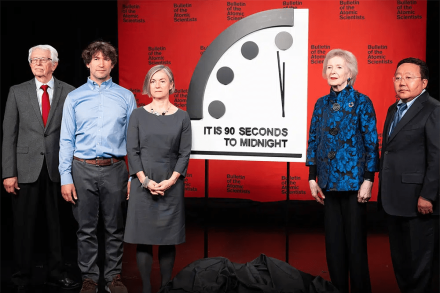
The Doomsday Clock has been corrupted by ideology

Ever since I can remember, I have always been aware of something called the “Doomsday Clock,” a symbolized calculation produced by a panel of prominent scientists of just how close humanity is to destroying itself. Published on the cover of every issue of the Bulletin of the Atomic Scientists, a journal founded in 1945 by Manhattan Project physicists, the clock’s hands would move toward or away from the dreaded midnight hour depending on how near Armageddon was believed to be. As a kid, the Doomsday Clock seemed an appropriate warning of how the conflict between the US and the Soviet Union might accidentally spin out of control.

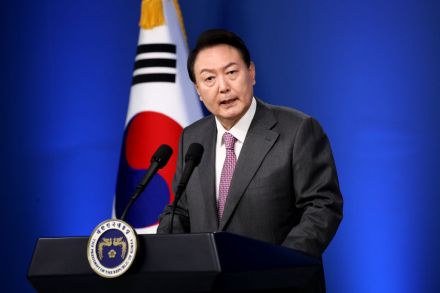
South Korea toys with developing nuclear weapons

Yoon Suk-yeol isn’t a household name in the United States, but his comments this week have put him in the international spotlight. Speaking at a press briefing on Wednesday, the South Korean president openly surmised that if North Korea’s nuclear weapons program continued unabated, Seoul may have to explore an option the United States wouldn’t like: producing nuclear weapons of its own. Referring to Pyongyang’s weapons programs, Yoon said, "It’s possible that the problem gets worse and our country will introduce tactical nuclear weapons or build them on our own. If that’s the case, we can have our own nuclear weapons pretty quickly, given our scientific and technological capabilities.” The remarks generated immediate pushback from nuclear security experts.

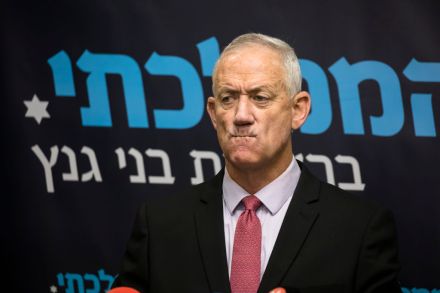
Israel’s wake-up call to America

Last month, then-Israeli defense minister Benny Gantz made headlines when he said that Israel may strike Iran’s nuclear infrastructure within two to three years. Gantz has made readying Jerusalem for this contingency a priority, and in November said that Israel had “achieved preparedness, we have [more] capabilities we are developing and we have long-term processes I don’t want to elaborate on.” But while Israel may have the capability to hit Iran, the US should not force it to risk such a strike.

Why Biden’s attempt to revive the Iran deal is faltering

Robert Malley may not technically be a diplomat, but he walks and talks like one. A specialist in the Middle East, Malley has extensive experience in government. He had an integral role in negotiating the Joint Comprehensive Plan of Action, or JCPOA, the deal that limited Iran's nuclear activities in exchange for sanctions relief. President Biden brought him into his administration as his special envoy to Iran in the hope he could find some way to bring both Washington and Tehran back into an agreement. Nineteen months later, Malley himself bluntly admitted that the talks were, if not dead, then frozen for the foreseeable future. Speaking at the Carnegie Endowment for International Peace, Malley said the Biden administration is no longer thinking much about the negotiations.

iran

Welcome to the age of nuclear blackmail

Vladimir Putin’s recent announcement that he was not bluffing about using nuclear weapons against the West in his war on Ukraine is one of the strongest indications yet of the risks the liberal world now faces in opposing authoritarian aggression. In the face of Russian aggression, or in committing the United States to defending Taiwan, as President Joe Biden did yet again recently, Washington and its partners face the possibility of direct confrontation with the world’s most powerful, nuclear-armed militaries. For the first time in a generation, Western powers risk being checked by adversaries willing to threaten massive conventional and nuclear warfare. The era of cost-free intervention to uphold the liberal world order is over.

nuclear
crimea

What price must the West pay for Crimea?

For centuries before Vladimir Putin arrived on the scene, Russian foreign policy has been shaped by the country’s need for warm-water ports. To be a great power in Europe and the Near East, Russia must have access to the Mediterranean. Commercial as well as military considerations dictate this. In the eighteenth century Russia conquered the khanate of Crimea and acquired a splendid location for a new Black Sea port — what is now the city of Sevastopol. The Crimean peninsula had been a gateway from Asia to the Mediterranean since the days of the ancient Greeks, who built some of their northernmost colonies there. Russia made Sevastopol the permanent home of its Black Sea Fleet.

How the British helped JFK navigate the Cuban Missile Crisis

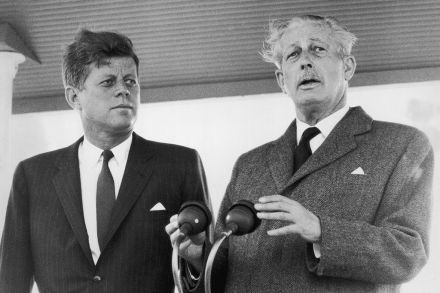
The Atlantic alliance hasn’t always been quite as special as politicians on both sides of the sea like to pretend. To take just the last sixty years: there were the differing views on Vietnam that led Lyndon Johnson to assess the British premier Harold Wilson as "a creep," while Richard Nixon privately considered Ted Heath "weak" and "as crooked as a corkscrew" (which was saying something coming from him). In October 1962, however, the principal Western leaders really did have something special. Between them, they probably helped save the world from nuclear annihilation. When on October 16, President John F.

Why is Biden giving up on nuclear deterrence?

What’s more alarming than President Trump trying to frighten Kim Jong-un with “fire and fury”? President Biden trying to frighten Americans with Putin. “I don’t think there’s any such thing as the ability to easily [use] a tactical nuclear weapon and not end up with Armageddon,” the president riffed at a New York fundraiser, while fretting to supporters about his need to find that elusive off-ramp for the Russians. Biden’s loose talk about Putin’s formidability contrasted with US handwringing fits a pattern. Pervasive throughout Putin’s war has been far too much focus on what the United States should do to help Putin find these mythical off-ramps, and on how to restrain Ukraine to prevent it from getting nuked.

Biden goes nuclear

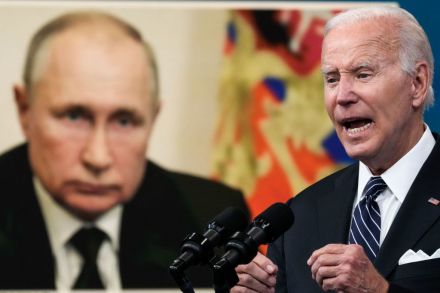
At a swanky fundraiser in Manhattan, President Joe Biden alluded to the prospect of “Armageddon.” The biblical reference was not intended to woo the Christian evangelicals who form part of the base of the Republican Party, but to alert bien-pensant liberal opinion that something a trifle more threatening than global warming looms large in world politics. For the “first time since the Cuban missile crisis, we have a direct threat of the use [of a] nuclear weapon if, in fact, things continue down the path they are going," Biden said. For anyone with lingering memories of the Cold War, his remarks about the prospect that Russian president Vladimir Putin might reach for the nuclear button was bound to stir alarm coupled with — dare I say it? — a smidgen of pleasure.