Novels

Inside Jim Harrison’s life of excess

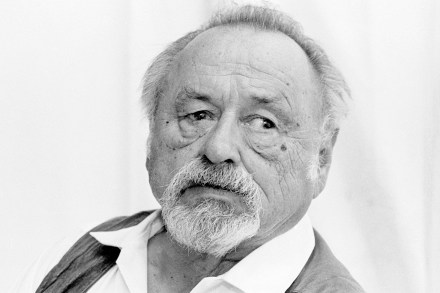
Todd Goddard opens his biography of Jim Harrison, the first since the poet’s death in 2016, with an account of a 37-course meal Harrison once consumed in France, over the course of 11 hours. Harrison composed a comic recital of the event, “A Really Big Lunch” for the New Yorker. He loved gourmet dining to the point of gout and revered alcohol as well, guzzling potent vintages in quantity. “Eat the world” was the phrase Harrison lived by, Goddard tells us, which alludes to an appetite for all existence. The cumulative effect of such global consumption is evident on the cover of Devouring Time: Jim Harrison, a Writer’s Life.

jim harrison

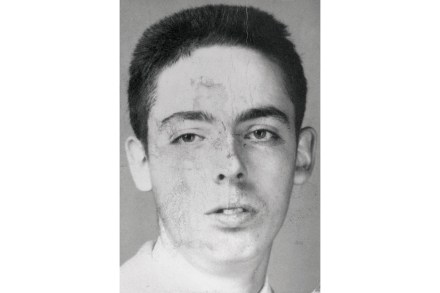
Thomas Pynchon’s Shadow Ticket is transcendent and exhausting

And just like that, after an excruciating 12-year hiatus, the literary world’s answer to Harry Houdini is back. Thomas Pynchon, that notorious recluse, has resurfaced with Shadow Ticket, a tricksy Prohibition-era detective caper that is by turns exhilarating, exasperating and inimitably Pynchonian. A new Pynchon novel is simultaneously a reviewer’s wet dream and feverish nightmare. There’s so much to unpack, you’re never going to do it full justice after a single reading. This is, after all, the writer famous for Byzantine, convoluted plots which zigzag their way across entire continents, ideologies and historical epochs, brimming with mysterious entities and delightfully nutty characters. Shadow Ticket is no different.

thomas pynchon shadow ticket
woody allen

Woody Allen’s first novel takes on cancel culture

Say what you like about the actor, director and writer Woody Allen – and people have undeniably been known to – but it takes a certain amount of gall to publish your first novel at the age of 89. Not that Allen doesn’t have form in this regard: he has brought out five collections of short stories, most recently 2022’s Zero Gravity and a 2020 memoir, Apropos of Nothing, which was greeted with horror by the publishing industry and literary critics alike. The New York Post described it as one of “the most tone-deaf, disgusting, bitter, self-pitying, horrifically un-put-downable memoirs since Mein Kampf.

Addie E. Citchen’s debut novel is unsettling and ambitious

More than ever, arguments about tradition and gender roles are flaring up across the States and beyond. It is timely, then, that Addie E. Citchens’s debut novel, Dominion, arrives in this climate of revivalist misogyny and debates about rigid patriarchy. It is a story of power cloaked in piety, and of the damage done when pride usurps justice. Citchens is obviously an author of steely intelligence who possesses a crisp and sharp eye for tiny vignettes of ordinary cruelty, and has unwavering compassion and love for her subjects. Nothing is obvious in her work, and nothing is contrived. Citchens sets her story within a claustrophobically tight-knit black Missionary Baptist community in Mississippi.

Citchens

A lack of national identity has killed off the Great American Novel

Is there hope for literature in America this century? The forecast looks grim. One walk through the literary fiction section at a bookstore is a testament to the art form’s cultural bankruptcy. Just about every other book on the new release table is a treatise on your racism masquerading as a tale of collective uplift. Fine, if you want to expiate your sins of privilege – but all in all, a snoozefest. Novels held a central place in America as a vital cultural force; novelists were worshipped as electrifying sages Same goes for most of the books on the New York Times list of the 100 best books of the century so far. The subjects of race, gender and oppression generally dominate.

Lockwood

Patricia Lockwood’s latest novel transcends genres

In the wake of her niece’s death, a writer travels with her family to Scotland, hoping the holiday will ease their pain. After tasting water from Skye’s natural Fairy Pools, the writer starts to feel not quite herself. It must be a fairy trick, she thinks, or perhaps her grief. She loses feeling in her legs and her grasp of language, but gains an odd new power: access to other creatures’ sensations. Watching her friend eat, she feels the food “slipping spoonful by spoonful inside her,” and picking a sunflower’s petals elicits a “tug in her own flesh.” Patricia Lockwood’s latest novel, Will There Ever Be Another You, charts the protagonist’s bizarre illness and recovery.

Ocean Vuong’s newest work is an affecting celebration of misfits

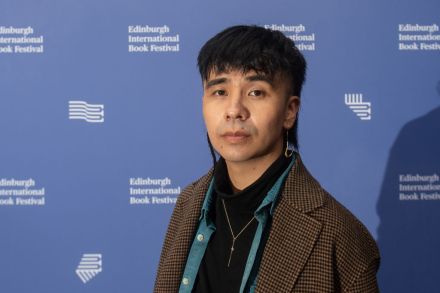
Ocean Vuong’s writing is heavily influenced by his own experiences. The protagonist of his first coming-of-age novel, On Earth We’re Briefly Gorgeous, is a carbon-copy of the author. Vuong was born in Vietnam in 1988. While serving with the US Navy, his American grandfather fell in love with “an illiterate girl from the rice paddies” who gave him three children. When one of them, Vuong’s mother, was identified as mixed-race by a policeman, the family was displaced to a refugee camp in the Philippines and finally made it to Hartford, Connecticut, where Vuong was raised by his mother, aunt and grandmother. His family story merits a book of its own.

Vuong

Evie Wyld’s latest novel is unsettling yet hopeful

Evie Wyld’s powerful fourth novel opens from the perspective of Max, a ghost who haunts the south London apartment where he lived with his girlfriend Hannah. A ghost story is new ground for Wyld, the multi-award-winning Anglo-Australian writer, but her signature traits are immediately evident — poetic observations of unusual details; a pervasive sense of grief and palpable trauma, leavened with a wry sense of humor (Max notes his "strong urge to file a complaint" about being a ghost); and an intricate plot that compels readers to delve into complex past events.

Wyld

The talented Evan S. Connell

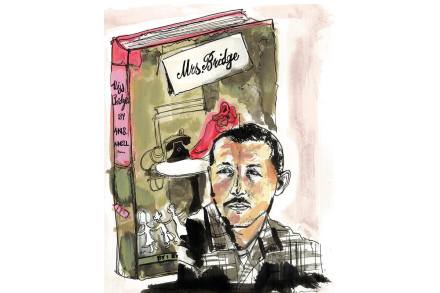
When the journalist Steve Paul began his biography of the writer Evan S. Connell, a young librarian was helping him access research material. She happened across a photograph, and remarked, “What a suave-looking dude.” Connell had movie-star good looks. Of his eight novels, two are now packaged as classics of American literature. This on top of a biography of Goya; a 2009 Man Booker International nomination for lifetime achievement; and a bestselling history of a battle in the Great Sioux War of 1876. Acolytes recommend his greatest book, Mrs. Bridge, with the confident smile that looks forward to welcoming another member to the exclusive band of Connellites.

Connell

Blood Meridian is Cormac McCarthy’s masterpiece

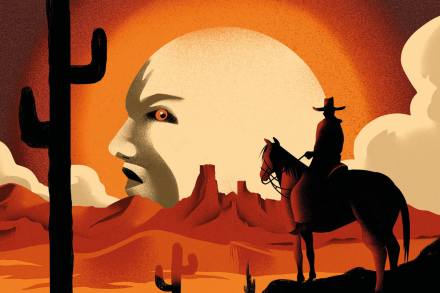
In June, Cormac McCarthy — our greatest living writer — slipped from this world to the next and joined his forebears Melville, Twain, Faulkner and Flannery O’Connor in the American literary pantheon. By noon the following day, Blood Meridian, or The Evening Redness in the West, his magnum opus, had reached number eight on Amazon’s Top 100 Books, assuring that, for the first time, it would hit the New York Times Paperback Bestseller List; a curious development for a novel that, when it was first published in 1985, failed to sell its initial print run of 1,500 and was quickly remaindered.

blood meridian

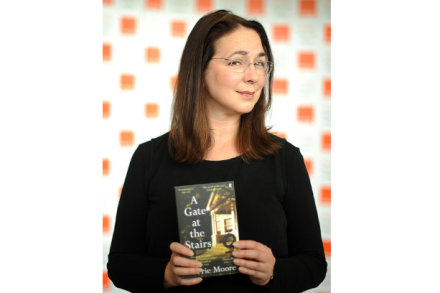
Lorrie Moore explores the thin veil between life and death

Very few of us could evade accusations of pretension if we quoted Faulkner in everyday conversation. The characters conjured up in Lorrie Moore’s fiction are granted an exception, though not always solely by virtue of their earnestness. In her novel I Am Homeless If This Is Not My Home, which traces a journey toward a final burial in the American South, allusion to As I Lay Dying is particularly apt. Moore has made a name for herself as one of America’s masters of the short story, with her inimitable style on display ever since her first work of fiction, “Raspberries,” was published in 1977. In this, her first novel for fourteen years, she once again wields her wordplay playfully and powerfully, striking a balance between levity and gravity.

Moore

What makes a novel funny?

What makes a novel funny? As well as being too enormous a question to tackle properly here, such an enterprise would, I suspect, require so clinical an approach to reading comic fiction as to remove entirely any possible joy or amusement. As the old saying goes, deconstructing a joke is like dissecting a frog: nobody laughs, and the frog dies. However, the question came to me again recently, as I reread John Kennedy Toole’s A Confederacy of Dunces. I howled with laughter from the initial farcical scene outside a department store, through Ignatius J.

funny novel
Winn memoriam

Forbidden love in the Great War

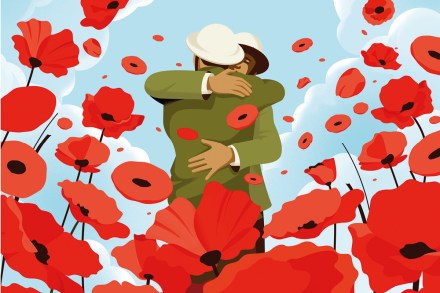
Alice Winn’s beautifully written and engrossing debut, In Memoriam, comes hot on the heels of Tom Crewe’s debut The New Life, which followed the tortured relationship between two men at the turn of the century, and was loosely based on the life of the scholar John Addington Symonds. Winn has turned her impressively attuned eye to World War One, and two young men who fall in love at their public school (old money, military and aristocratic connections, tailcoats and buggery), before heading off to the front; the flower of their generation, doomed to die as the mechanistic future tears apart chivalric ideals, and society starts to question its very nature.

Tom Crewe’s The New Life is sophisticated, intelligent and gripping

Tom Crewe’s highly accomplished debut novel, The New Life, concerns the suppression of sexual feelings, and how utopian visions can falter when they come up against cold hard reality. It begins with John Addington (closely, though not entirely, based on the nineteenth-century man of letters John Addington Symonds), fantasizing about a homosexual encounter in a London underground train. The carriage is crammed: a man is pressing his buttocks into John’s crotch; John’s excitement cannot be concealed; soon they are in the throes of passion, despite the crowds around them. It’s a claustrophobic, tense, almost nightmarish scene, executed with minute attention to detail.

new life

The Spectator’s 2022 Books of the Year

William Boyd Writing effective comedy is very difficult. True comic genius, the ability to create a unique tone of voice — deadpan, perfectly timed, self-deprecating, abjuring all whimsy (the British disease) and grandstanding — is extremely rare. One thinks of S.J. Perelman, Peter de Vries, the Grossmiths and P.G. Wodehouse amongst very few others. One name that can be added to this tiny and exclusive club is Theo Fennell who has published, this year, his memoir I Fear For This Boy: Some Chapters of Accidents (Bloomsbury, $35). It relates incidents in Fennell’s life where everything that could go wronnd Catholic Churches as he veered between them.

books

Evelyn Waugh’s sincerest form of flattery

T.S. Eliot once made the significant point, in an essay on Philip Massinger, that “Immature poets imitate; mature poets steal; bad poets deface what they take, and good poets make it into something better, or at least something different.” Eliot knew exactly what he was talking about (himself). However, change “poets” to “novelists” and the same pertinence applies. In fact, this wholesale, covert purloining may be true of all artists in all ages in all the seven arts. Let’s start with some backstory. Evelyn Waugh (1903-66), as they say, needs no introduction. William Gerhardie (1895-1977) is almost wholly forgotten today, but in the 1920s he was the luminous young wunderkind of English literature — a kind of Donna Tartt or Sally Rooney of his times.

gerhardie

Searching for the American summer novel

I am convinced that the sweet-smelling tycoons that run candle-making companies must have read too much Proust when they were younger. With scents like “Inspire,” “Bohemia,” and “Sunny Daydream,” they cannot be aiming for something as cheap and transitory as mere tawdry olfactory pleasure. They must have become all but obsessed by À la Recherche du Temps Perdu, and be aiming for something akin to his narrator’s nostalgic odyssey upon tasting a madeleine: “and at once the vicissitudes of life had become indifferent to me, its disasters innocuous, its brevity illusory.” Rather pretentious, oui — but what other excuse can there be for a candle that proclaims it can smell like a cool library at midnight, or the depths of some dreamy reverie?

Why don’t men read novels?

It’s hard to move on the literary internet — or that nest of inky vipers, literary Twitter — without coming across a piece that expresses one of two opinions: the first, that men don’t read literary fiction and that this limits their understanding and experience of the world; and the second, that the figure of the heterosexual white man has been crudely and cruelly excluded from the literary debate. “Bring back our Roth, our Amis, our Updike,” these commentators cry, as if they hadn’t received enough acclaim and attention in the past few decades, and if reading them had become illegal rather than just moderately unfashionable.

Is the white male novelist disappearing?

“Women Dominate Shortlist for International Booker Prize,” reads the headline of Alex Marshall’s Thursday article for the New York Times. He notes that five of the six books on the shortlist this year were written by women. The novels do look interesting — I haven’t read Tokarczuk’s The Books of Jacob or Jon Fosse’s latest in his New Name series and want to pick up both — but it’s hardly news that women “dominate” the International Booker. They have dominated every major literary prize in the last few years. Four of the last six winners of the International Booker have been women. While winners of the Booker (not the International Booker) over the last six years are split right down the middle, women outnumber men twenty-two to fourteen on the shortlist.

Turning the page on James Bond

The much-delayed 25th James Bond film, No Time To Die, is finally limping onto the big screen. There are gadget-packed car chases, scarred supervillains and revelations as to the loyalties of supposedly sympathetic characters, but there are also new, socially-conscious elements. Lashana Lynch plays a PoC 00-agent who is very much Bond’s equal at spycraft. Fleabag’s Phoebe Waller-Bridge has been parachuted in as a script doctor, to notify us that this is a post-#MeToo Bond. Without a simultaneous release on a streaming service, Daniel Craig’s swan song as Bond will stand or fall on its theatrical performance.

bond