Novel

Winter wonderland | 18 February 2012

From our UK edition

Jack and Mabel move to Alaska to try to separate themselves from a tragedy — the loss of their only baby — that has frozen the core of their relationship. They intend to establish a homestead in the wilderness, but it is 1920 and they are middle-aged, friendless and from ‘back east’ — unprepared and ill-equipped for the backbreaking work and unspeakable loneliness of pioneer life. By the middle of their second winter the climate, isolation and sorrow of their situation seem to have got the better of them; at the opening of The Snow Child we find them at the end of their wits and their resources. During a singular moment’s lightheartedness  after a snowfall the desperate couple builds a snow child beside their house and dresses it in hat and scarf.

Many parts of man

From our UK edition

In some ways, you’ve got to hand it to Craig Raine. Two years ago, after a distinguished career as a poet and all-round man of letters, he published his first novel — and received a series of reviews that, as Woody Allen once put it, read like a Tibetan Book of the Dead. According to virtually all of them, Heartbreak was fragmented, name-dropping, pretentious, and not really a novel anyway: more a loose collection of thoughts, revealing an alarming obsession with sexual organs. But with The Divine Comedy, Raine responds with almost heroic defiance. If you felt like that about the last book, it seems to shout, try this one for size. In Heartbreak, for instance, the fragments were comparatively chunky, even featuring some recognisably extended narrative.

Bookends: A network of kidney-nappers

From our UK edition

Raylan Givens, an ace detective in the Raymond Chandler mould, has encountered just about every shakedown artist and palooka in his native East Kentucky. His creator, Elmore Leonard, is a maestro of American noir; Raylan (Weidenfeld, £18.99), his latest thriller, presents a familiar impasto of choppy, street-savvy slang and hip-jive patter that verges on a kind of poetry. Typically, Raylan charts a murky underworld where criminals are in cahoots with politicians, and where murder is a consequence of this corruption. In his curl-toed cowboy boots, Federal Marshal Givens is summoned to investigate a case of trafficking in human body-parts. A man has been found moribund in a bathtub with his kidneys apparently removed by surgery.

Menace, mystery and decadence

From our UK edition

It is fitting that Charles Dickens’s bicentenary coincides with Lawrence Durrell’s centenary, for the two novelists have crucial resemblances: both of them are triumphant in the intensity and power of their writing, but capable of calamitous lapses of taste; both of them are riotous comedians who sometimes plunge into hopeless melodrama. It is true that Einstein’s theory of relativity, which Durrell foisted on the structure of The Alexandria Quartet (reprinted, with a new introduction by Jan Morris) has no more part in Martin Chuzzlewit than the ludicrous sexual obsessions derived from Sade and Henry Miller which sully Durrell’s plot. But Dickens in certain moods was, as Angus Wilson said of Durrell’s novels, ‘floridly vulgar’.

A choice of first novels | 4 February 2012

From our UK edition

Mountains of the Moon is narrated by a woman just released after spending ten years in jail. The reason for her sentence and the details of her previous life are pieced together through disjointed fragments, forming a complex jigsaw. Lulu had a shocking childhood, with a violent stepfather and negligent mother. Her only loving relatives were her grandfather, who fuelled her imagination by conjuring up the Masai Mara in her dreary south-England surroundings, and her two half brothers, from whom she was eventually separated. This account, related in an idiosyncratic patois, with the matter-of-fact innocence of an abused child for whom abnormality is the norm, is quite horrifying.

Chaos and the old order

From our UK edition

If Gregor von Rezzori is known to English language readers, it is likely to be through his tense, disturbing novel Memoirs of an Anti-Semite (partly written in English), and/or his ravishing memoir Snows of Yesteryear. Rezzori was born in 1914 in Czernowitz in Bukovina, when it belonged to the Austro-Hungarian Empire. After the first world war he became a citizen of Romania, from where, as a so-called ethnic German, he was ‘repatriated’ to Germany during the second world war. From the 1960s he lived in Italy, at Santa Maddalena, the home that he shared with his second wife near Florence, which she has since set up as a writers’ retreat. In the garden there is a porphyry pyramid, a monument to the deceased writer on which is inscribed ‘citizen of Czernopol’.

The phantom lover

From our UK edition

Driving past several long abandoned second- world-war airfields in East Anglia last year I was struck by how spooky they seemed, just like the decommissioned army base that used to exist near me. Places where people have not only lived and worked but which form the background of wartime drama, and from which men went to their deaths, are bound to be haunted, and in Helen Dunmore’s short novel, it is an airfield that once saw Lancaster Bombers fly out into the night that forms a ghostly scene. Isabel is newly married to a doctor, Philip, and the two have moved to Yorkshire where he is now a GP. It is the early 1950s, the country is still redolent of wartime hardships, ration books, nasty linoleum in rented flats and nosey landladies.

Lake Michigan days

From our UK edition

It is probably hard to enjoy this new big novel from America without some understanding of the shortstop’s position on the baseball field. But that is easily remedied, thanks to YouTube, where searching for ‘shortstop, fielding’ arouses multiple videos that compete for attention, with stars of the game in their infield position between second and third base, taking ground balls hit at, near, or even away from them, scooping them up, throwing to first base for the out: something the shortstop does six or more times in a game.

Rather a cold fish

From our UK edition

Published first novel (Salmon Fishing in the Yemen) at the age of 59, Richard and Judy choice, won Bollinger Everyman Wodehouse Prize for Comic Fiction; spent his whole career in industry; lives in Northumberland, wears tweed cap, likes fishing…These are the facts you read about Paul Torday time and again, and he must be getting tired of them.    That first book really was good: the kind of novel you wish you’d written yourself, all done in emails, extracts from diaries and letters, snatches of Hansard, articles in newspapers, transcripts of interrogation sessions. It was a charming satire, about politicians, entrepreneurs and fish. His late career-change and success gave hope to thousands of 59-year-olds.

Poison Ivy

From our UK edition

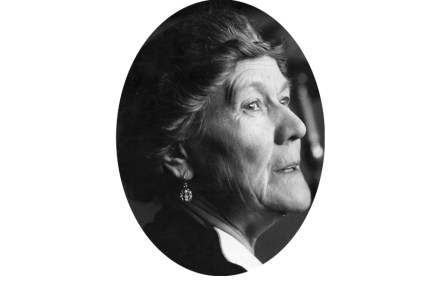
‘Who was she?’, a browser might ask on finding three re-issued novels by Ivy Compton-Burnett, and ‘Why should I read them?’ Dame Ivy Compton-Burnett (1884-1969) was one of 13 children of a Victorian physician. After his death, his widow wrapped herself in anger and subjected her children to cruel, neurotic tyranny. Their verbal laceration continued after her death in 1911, for Ivy took control of her siblings, and enforced a sadistic autocracy learnt from her mother. On Christmas Day 1917, the two youngest girls, ‘Topsy’ and 18-year-old ‘Baby’, for whom family life seethed with aggression, nerve storms and spite, locked themselves in a bedroom, and died in one another’s arms of overdoses of barbiturates.

Lifelong death wish

From our UK edition

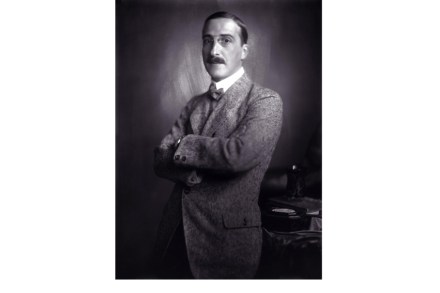
In February 2009, in a review in these pages of Stefan Zweig’s unfinished novel, The Post Office Girl, I wrote: ‘Here surely is what Joseph Conrad meant when he wrote that above all he wanted his readers “to see.’’  In The Post Office Girl Zweig explores the details of everyday life in language that pierces both brain and heart.’ Especially the details of loneliness, I should have added. Intimations of suicide darken this novel, and in 1942, with the manuscript incomplete, Zweig, age 60, and his much younger second wife, Lotte, poisoned themselves in a small Brazilian town and died in bed with her embracing him. It is telling that she did the embracing.

A literary curio

From our UK edition

Jean-Louis Lebris de Kerouac, better known as Jack Kerouac (1922-1969), the son of French-Canadians spiced with the blood of Mohawk and Caughnawaga Indians and subdued, no doubt, by migration from Quebec to Lowell, an old mill town in Massachusetts, eventually fulfilled his adolescent ambition to live the life of the eccentric ‘artist’ . . . a high form of aesthete who has nothing to do with this maddening world of Philistines. He hoped that ‘lingual spontaneity’ would enable him to achieve ‘Supreme Reality’. In fact, On the Road (1957) did indeed serve as a guide to all America for the Beat Generation of the Fifties and after.

Pea-soupers and opium dens

From our UK edition

So: does Moriarty exist, or not? Well no, not really, and not just in the literal sense of being a fictional character. He’s hardly even that. We have no evidence beyond Sherlock Holmes’s word, and if you look at Holmes’s behaviour in ‘The Final Problem’ you can see an almost classic case of paranoia — brought on, no doubt, by a heavy cocaine binge. Michael Dibdin, in his The Last Sherlock Holmes Story, therefore proposes that Holmes and Moriarty are the same person, which does redeem Holmes’s otherwise hasty and implausible dispatch by his creator over the Reichenbach Falls. Anyway, he appears here, in the same year (as far as I can tell) as the events described in The Final Problem; but the meeting is with Dr Watson, so we know it must be true.

The legacies of Jennifer Johnston

From our UK edition

Cross the soaring Foyle Bridge from the East and take the route to Donegal. Shortly before you cross the border — now completely imperceptible — you will find the grand, imposing gates to a country house. As you descend the drive, the hum of traffic subsides and the years, centuries, roll back. Had it been built a few miles to the west it might, like many others, have been consumed in the vengeful aftermath of 1916. Partition protected it from that, but half a century later its Georgian windows shook to bomb blasts from the city. That Jennifer Johnston has spent most of her writing career in this place is magnificently, eerily appropriate. She is a daughter of the Anglo-Irish Ascendancy. Yeats was a friend of the family.

Bird Brain by Guy Kennaway

From our UK edition

Basil Peyton-Crumbe is a multi-millionaire landowner. An embattled man known to all, even his dogs, as ‘Banger’, he claims to have despatched at least 41,000 pheasants with the cheap old 12-bore he’s had since childhood. Shooting pheasants, he believes, is ‘an exquisite accomplishment’, as complex as writing a sonata or designing a cathedral. On the first page of this bloodthirsty novel, Banger’s trusty old gun explodes in his hands and blows half his head off. No one seems particularly upset. Not his half-brother William, who succeeds to the estate, and certainly not his Springer Spaniel, Jam.

The ripple effect

From our UK edition

Penelope Lively’s new novel traces the consequences of a London street mugging. As the culprit sprints away with a handbag, the victim, Charlotte, a retired widow, falls and cracks her hip. Her daughter, Rose, personal assistant to the once-eminent historian Lord Peters, is meant to be in Manchester to help her employer give a talk on Walpole. When Rose bails out, Peters turns to his own daughter, Marion, an interior designer in hock to the bank. At the pre-talk lunch, she has the good fortune, so it seems, to meet a venture capitalist, who offers her a gig doing up luxury flats. Less fortunate is her married lover, Jeremy, whose wife kicks him out when she spots a text on his mobile from Marion, cancelling a tryst on account of having to head north.

The Marriage Plot by Jeffrey Eugenides

From our UK edition

Jonathan Franzen. David Foster Wallace. Jeffrey Eugenides. Giant, slow-moving, serious writers, notching up about a novel per decade, all with their sights set on The Big One, The Beast, The Great American Novel. Wallace pulled it off, undoubtedly, with Infinite Jest in 1996, before ending it all by suicide in 2008 — a tragic loss. Franzen laid claim to fame — and earned himself the cover of Time magazine — with The Corrections (2001) and Freedom (2010). And now Eugenides, after The Virgin Suicides (1993) and Middlesex (2002), makes another attempt at literary immortality with The Marriage Plot. And fair play to him, he throws absolutely everything at it.

Why Be Happy When You Could Be Normal? by Jeanette Winterson

From our UK edition

In the 26 years since the publication of her highly acclaimed first novel, Oranges are Not the Only Fruit, Jeanette Winterson has proved herself a writer of startling invention, originality and style. Her combination of the magical and the earthy, the rapturous and the matter-of-fact, is unique. It is a strange and felicitous gift, as if the best of Gabriel Garcia Marquez was combined with the best of Alan Bennett. At her finest, (in which category I’d put The Passion, Sexing the Cherry and Lighthousekeeping) there is no one to match her. The title of this memoir comes from the mouth of Mrs Winterson of Accrington, Lancs, the author’s adoptive mother. This is what she replied when her young daughter told her that she was in love with another girl, and happy.

The Golden Hour by William Nicholson

From our UK edition

He’s got a winning formula, this writer, and he’s sticking to it. Set the action over seven days, in and around the Sussex town of Lewes, with occasional day trips to London; write about what you know (Sussex, script-writing, being 54, long marriages, worrying about your post-university children as well as your aged parents with Alzheimer’s, career anxiety, dinner-party anxiety); keep the chapters short (never more than ten pages) and avoid slabs of prose, so the pages are broken up into highly readable short paragraphs and dialogue; write in the present tense; and, within each chapter, keep a strict observance of the Unity of Person, so that the reader steps inside the mind of one character and sees the world solely through his or her eyes.

The Thread by Victoria Hislop

From our UK edition

Oh what a tangled web she weaves! Victoria Hislop’s third novel, the appropriately titled The Thread, is pleasingly complex. The story traces several generations of a fictional Greek family called Komninos against the historical backdrop of the rise and fall of Greece’s second city, Thessaloniki, in the 20th century. To make things even knottier, most of the characters have some connection to the textile industry, and while for some this is booming, for others it remains a labour of love. The most fascinating element of the book develops out of the history of Thessaloniki itself. Historically, the city has an impressive heritage at stake.