Novel

Serpents in suburbia

From our UK edition

Barbara Pym was never just a cosy writer. She could be barbed and sour — and seriously, hilariously funny. Kate Saunders, in her introduction to Pym’s last novel, explains how ‘Rather to my surprise,’ Barbara Pym wrote to her friend Philip Larkin in 1971, ‘I have nearly finished the first draft of another novel about a provincial university told by the youngish wife of a lecturer. It was supposed to be a sort of Margaret Drabble effort, but of course it hasn’t turned out like that at all.’ The novel was An Academic Question — witty, sharp, light as a syllabub, nothing like anything by Margaret Drabble and with a cast of typically Pym-like English eccentrics.

A bit of slap and tickle

From our UK edition

Hard on the heels of the ecstatically received London revival of Michael Frayn’s Noises Off (currently playing at the Novello Theatre) comes this hilarious novel. It’s not easy to pull off farce on the printed page when so many of the laughs of the genre generally depend upon physical comedy. In Noises Off, for example, one character hops about the stage like a demented kangaroo, his shoelaces tied together. But just as a filthy joke is made funnier when told by an apparently po-faced academic, so a really silly plot is enlivened when composed by a highly clever author. Frayn is that man. In the hands of someone less accomplished, the events in Skios would be too improbable, its characterisation too thin, its reliance on that old trope, mistaken identity, just too plain daft.

A polished fragment

From our UK edition

One evening nearly 40 years ago the world’s press descended on Patrick White in Sydney: they rampaged outside his house, pounded its doors, shouted through windows, camped on the lawn. The reason for this hullabaloo was that White had beaten Saul Bellow in the race for the Nobel Prize for Literature of 1973. Yet in contrast to Bellow, there is scant recognition of White’s name nowadays. His books are seldom read. There is no bodyguard of loyal emulators, as Bellow has with Martin Amis. The publication — in the year of White’s centenary — of an austerely precise slice of his literary remains provides a moment to recall and appraise him. White had patrician Australian parents who sent him for an expensive education in England.

To thine own self be true

From our UK edition

Azazeel comes to Britain as the winner of the 2009 International Prize for Arabic Fiction, inevitably known as the ‘Arabic Booker’. It’s also been both a source of controversy and an unexpected popular hit in Youssef Ziedan’s homeland. According to the translator’s afterword, within months of publication, ‘piles of the novel appeared on the pavements of Cairo, alongside the self-help manuals, political memoirs and Teach Yourself English books that are the staple of the Egyptian popular book market.’   The action takes place — and this is the controversial bit — during the relatively brief period when Egypt was a Christian country.

Speeding along the highway

From our UK edition

Back in the Sixties, if you wanted a fruitful, freakout-free LSD experience, you might have called on Mrs Aldous Huxley in Los Angeles, where she lived as a beatifically attuned Buddhist adept until her death in 2007. Aldous Huxley, her husband, had emigrated to America 70 years earlier in search of spiritual solace and the ‘benediction’ offered by psychotropic drugs. Evelyn Waugh was not alone in thinking that the States had driven Huxley dotty. Jim Morrison, the psychedelic Frank Sinatra, named his California band The Doors after Huxley’s crackpot hymn to the mescaline experience, The Doors of Perception. Tim Lott’s sixth novel, Under the Same Stars, dilates entertainingly on British attitudes to America as a supermarket for far-out fads and Huxley-like cults.

What was it all for?

From our UK edition

What happens to a novelist who becomes the conscience of a nation? Nadine Gordimer, who is now 89 and whose writing career began in the 1940s, has represented the progressive white intelligentsia of South Africa through a large corpus of fiction and essays, exploring personal and political morality with passionate lucidity through the apartheid years and beyond. She has long been internationally admired, winning the Booker Prize with The Conservationist in 1974 and the Nobel Prize for Literature in 1991. This latest book, a study of the troubled state of her nation after apartheid, is outspoken and unflinching.

Picking up the pieces

From our UK edition

‘The World of Interiors’ might have been a better title for this novel. Its two chief protagonists, Catherine Gehrig and Henry Brandling, live a century and a half apart, but both are beset by circumstances that make them physically isolated and emotionally stunted. They rail in furious misery, and are sunk in interior communing. Commodities matter to them: they are materialists gift-wrapped as aesthetes. Gehrig muses on ‘the huge peace of metal things’, appreciates Clarice Cliff tea-cups, arrays with austere elegance the tools of her work, ‘pliers, cutters, piercing saw, files, hammer, anti-magnetic tweezers, brass and steel wire, taps and dies, pin vice.

Memory games

From our UK edition

I read this novel while convalescing from pneumonia. It proved admirably fit for purpose. A light diet, mildly entertaining and with enough twists and turns of plot to serve as a tonic. John O’Farrell is a man of many parts — comedy scriptwriter (Spitting Image, Alas Smith and Jones), political satirist (An Utterly Exasperating History of Modern Britain) and bestselling novelist. The Man Who Forgot his Wife is his fourth. The protaganist, Vaughan, hasn’t just forgotten his wife, he’s forgotten everything.

A choice of first novels | 24 March 2012

From our UK edition

Charlotte Rogan’s The Lifeboat (Virago, £12.99) comes garlanded with praise from the likes of J. M. Coetzee and Hilary Mantel. Rogan, who has only taken up writing after a career in architecture and engineering, tells the story of Grace Winter, a young woman on trial for murder as the novel opens. She and her husband Henry had been travelling on a transatlantic liner, the Empress Alexandra, in 1914. When the ship mysteriously sank, Grace managed to secure  a place on a crowded lifeboat, commanded by the enigmatic Hardie. But what happened to her husband? And why did the ship sink? Rogan does an excellent job of conveying the fear and claustrophobia of a lifeboat full of strangers, whose travails form a large part of the story.

Hero of his own drama

From our UK edition

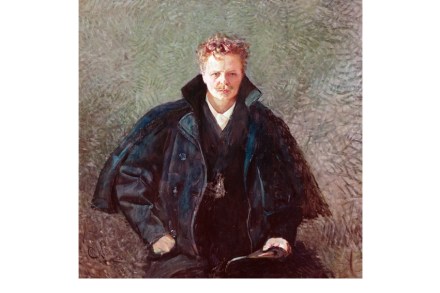
Sam Leith is enthralled by the larger-than-life genius, August Strindberg — playwright, horticulturalist, painter, alchemist and father of modern literature When I’m reading a book for review, it’s my habit to jot an exclamation mark in the margin alongside anything that strikes me as particularly unexpected, funny or alarming. I embarked on Strindberg: A Life with — I’m ashamed to confess — the expectation of a weary plod through 400-odd pages of lowering Scandinavian neurosis, auguring a low exclamation-mark count and a high number of triple zeds. But by the end, there was an exclamation mark beside almost every paragraph.

Deviation and double entendre

From our UK edition

If there’s anything full-time novelists hate more than a celebrity muscling in on their turf, it’s the celebrity doing such a good job that it seems as if anybody could write fiction. Happily for the pros, this isn’t a problem with Briefs Encountered. Not only is the book full of obvious flaws, but it also makes the whole business of novel-writing look unbelievably difficult. There is, it turns out, so much to do — what with plot, characters, dialogue and tone all to be created and, worse still, made coherent. And then there’s all those pesky sentences you have to string together… In fact, Clary’s set-up is quite promising.

Enigma variations

From our UK edition

This is a novel full of hints and mysteries.  Why does the Dutch woman rent a house in rural Wales, bringing with her a mattress, some bedding and a portrait of Emily Dickinson? What is the matter with her — at times she seems energetic, at others obscurely suffering. And what is she escaping from? In due course information filters through, in a series of deeper hints and teases, and the story switches back and forth between Wales and Amsterdam, where her husband and parents and a friendly policeman discuss the possible reasons for her flight — and speculate about her whereabouts, and how to trace her.

Joy to the world

From our UK edition

Patrick Gale’s new novel could be read as a companion work to his hugely successful Notes from an Exhibition, and in fact, in a satisfying twist, some characters and even objects slip from the latter into this novel. Notes from an Exhibition centred around the character of Rachel Kelly, whose mental instability and solipsistic devotion to her art left a painful mark on her family. The ‘perfectly good man’ of this title is a vicar, Barnaby Johnson, as kind, gentle and balanced as Rachel Kelly was not, yet with the same sense of vocation — in this case, selfless service to the church — that moulds and in its own way scars his family. ‘Ah,’ says his daughter Carrie to another child of a ‘very good man’, ‘you have my deepest sympathy.

Thirty years on

From our UK edition

One of the pleasures of Alan Judd’s books is their sheer variety. His work includes biographies of Ford Madox Ford and Sir Mansfield Cummings, the first head of what became MI6, as well as nine novels, many of which have little in common with each other apart from unflashy but elegant prose. The Devil’s Own Work, for example, is a brilliant novella, almost a fable, that explores the fatal temptation of a novelist and the relationship between art and success. Another, The Kaiser’s Last Kiss, shows us both the Third Reich and the elderly Kaiser Wilhelm in a wholly unexpected light. Three of Judd’s novels, however, have both a protagonist and certain themes in common.

A matter of life and death

From our UK edition

Hmm. Of the 30-plus characters in this novel, not one is both black and British. Odd, since it’s set in 2007-8, in south London. An early passage shows us a Polish builder listening to a ‘crowd of black kids’ on the Northern Line: ‘You never—’ ‘He never—’ ‘Batty man—’ And that’s it: six words in 650 pages. Capital, a metropolitan panorama that takes in the dawn of what we call ‘the current climate’, is wonderful — warm, funny, smart — but you do feel John Lanchester might be afraid to fall flat on his face with a fuddy-duddy faux pas. So no black Britons or (equally weirdly) teenagers of any colour, unless you count a Senegalese football star whose job stops him doing anything teenagey.

Apocalypse now

From our UK edition

The blurb on the front of Grace McCleen’s debut novel (from Room author Emma Donoghue) proclaims it to be ‘extraordinary’, and goes on to praise it as ‘brutally real’, commending its mixture of ‘social observation and crazy mysticism, held together by a tale of parent-child love’. Unusually for a blurb, this is all accurate. McCleen’s novel may not be perfect, but it has a compelling and, at times hideously tense narrative that makes it an arresting read. It is deservedly named as one of Waterstones’ most promising debut novels of 2012.

Tragedy of Antigone

From our UK edition

Sofka Zinovieff’s absorbing first novel has two narrative voices. Maud is the English widow of Nikitas, whose death in a mysterious accident leads her to contact Antigone, the mother-in-law she has never met. A former Communist freedom fighter, Antigone was forced to leave Greece for the Soviet Union following the Greek civil war. She gave birth to Nikitas, her only child, in prison, and handed him over to her family when he was three years old, severing all further contact. Maud was the third wife of the dominant, swaggering Nikitas. She remained passive throughout their marriage; now, liberated by his death, she starts asking the questions to which she ought always to have known the answers — answers which can be supplied only by Antigone.

The view from the top

From our UK edition

Halfway through this book, the veil lifted, and I thought: ‘I see! I see what he’s trying to do!’ Pickering gets his characters, and moves them along, and then, after 150 pages, he manages to convey a really powerful sensation of something; you might call it amorality, or nihilism, or the sense of the pointlessness of it all. For the first 12 chapters, you are walking uphill, and then you get the view. For the hero, there is horror, and a Graham Greene-like sense of things not being what they seem. Before this moment, it’s a strange set up. I suppose it’s meant to be. Malone, our Greene-ish hero, is an American airman in his late twenties. He’s in Afghanistan, but not with the military — he flies supplies around.

Our man in Vienna

From our UK edition

Just in case Private Eye smells a rat, let me put my cards on the table. Not once, but twice, I have sent the galley proofs of my novels to William Boyd and, not once, but twice, he has responded with generous ‘blurbs’, which my publishers have gratefully emblazoned on the covers. Believe me, in the exalted literary company Boyd keeps, that kind of generosity of spirit is as rare as hen’s teeth (try asking Sebastian or Salman for a jacket quote and see how far it gets you). So I’m not about to give Boyd a stinking review. Waiting for Sunrise could have been a sub-Da Vinci Code catastrophe, and I would still have felt obliged to describe it as ‘a compelling and heartbreaking masterpiece from one of the great storytellers of the age’.