Novel

A few good books

From our UK edition

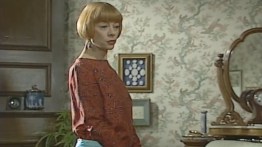
It is a truth universally acknowledged that whenever ITV or the BBC decides — the latter usually with charter renewal in the near or middle distance — that it needs to make some of that World-Class Drama it’s so proud of, its thoughts turn to regency frocks, scruffy urchins, pea-soupy London, agreeable country houses and the incessant clip-clop of hoof on cobble. Classy costume drama — invariably based, for extra classiness, on classy fiction of the sort you might find in Penguin Classics — is one of our major exports. But in the range of its source material they consider, its makers are as blinkered as the inevitable horse that draws Mr Darcy’s inevitable carriage in the inevitable tracking shot round Pemberley.

Into a cloud-scratched sky

From our UK edition

There have been a number of attempts to graft the style of the so-called new nature writing onto the novel: works such as Melissa Harrison’s Clay, for instance, or Amy Sackville’s Orkney. Tom Bullough’s Addlands is a very creditable contribution to this genre. The form does have an intrinsic problem: how does one dramatise seeing? The solution here is that the characters — the reserved Idris Hamer, his stoical wife, Etty, and their son Oliver, a principled bruiser — are farmers in the Welsh borders. Their livelihood depends on being attuned to changes in the environment. The novel has an elegant structural conceit.

Forget about Shakespeare. We should be celebrating Charlotte Brontë

From our UK edition

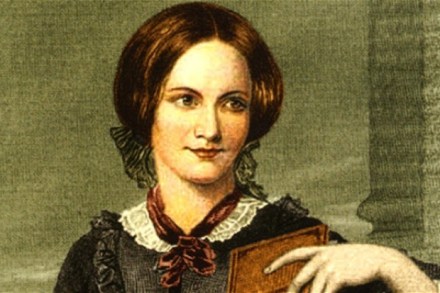
Major anniversary of her birth today, on 21 April. A ‘national treasure’, epitomising a certain kind of stoical, homely, female Britishness. Revered and adored by millions. Her family home a major tourist attraction. A life dedicated to self-sacrifice and the service of others. Plainly but elegantly dressed: not a follower of fashion. Rather severe-looking when not smiling. Yes, I’m thinking of Charlotte Brontë, and so should we all be, in this her 200th anniversary week. The third of six children of the Revd Patrick and Maria Brontë, all of whom died long before their father did, she wrote a revolutionary novel so grippingly, movingly brilliant that people still love it even if it was their set text. ‘There was no possibility of taking a walk that day.

Cry freedom

From our UK edition

Scenes From Early Life is a rather dull title for a deeply interesting book. It is a novel; this is stated on the jacket, as if anticipating the possibility that readers may question that definition. Set in Dacca (now Dhaka), it is about the emergence of Bangladesh as a state independent of Pakistan after the savage civil war of 1971. Philip Hensher has drawn on memory and history — family history and ‘real’ history. Historical characters, notably Sheik Mujib, the courageous and civilised Bangladeshi leader, mingle with semi- and wholly fictional ones. The joins are seamless. Finishing the book, I was startled to realise that Hensher, an Englishman, had written a novel without a single English character in it, and that I, at least, had been wholly convinced.

Nowhere to go but down

From our UK edition

I am just old enough to remember the terrific fuss that was made about the first Scots literary renaissance when it kicked into gear in the early 1980s. Inaugurated by Alasdair Gray’s Lanark (1981), whipped up into a movement by Gray, Agnes Owens and James Kelman’s Lean Tales (1985), and sent on a downward spiral by the latter’s Booker-winning How Late It Was How Late (1994), its distinguishing features were Glasgie patois, the conviction that everything was Mrs Thatcher’s fault, and a colossal amount of swearing. If you knew the meaning of the word ‘fuck’, a critic once wearily suggested, then about 10 per cent of Kelman’s work was already known to you.

Bookends: Tilling tales

From our UK edition

Several years ago, I listed as my literary heroes Herbert Pocket in Great Expectations and E. F. Benson’s Lucia. The latter was the more damaging admission. Lucia is an egotist of monstrous proportions, ruthlessly selfish and staggering in her snobbery. But she is also a life force and, in her flawed but thrusting glory, profoundly life-enhancing. Since her debut in 1920, Lucia has inspired her fair share of loathing — and a corresponding degree of ardour. That ardour stimulated Tom Holt’s two Lucia sequels in the mid-Eighties, and now the second of Guy Fraser-Sampson’s Lucia forays, Lucia on Holiday (Elliott & Thompson, £7.99).

Diary – 20 August 2015

From our UK edition

This is the Corbyn summer. From the perspective of a short holiday, my overwhelming feeling is one of despair at my own semi-trade — the political commentariat, the natterati, the salaried yacketting classes. Who among us, really, predicted that Jeremy Corbyn would be romping ahead like this? Where were the post-election columns pointing out that David Cameron’s victory would lead to a resurgent quasi-Marxist left? And that’s just the beginning: how many of the well-connected, sophisticated, numerate political writers expected Labour to be slaughtered in the general election? Not me, that’s for sure. Going further back, how many people in 1992 told us John Major was an election winner? That Parris, I vaguely recall, but anyone else?

History is the art of making things up. Why pretend otherwise?

From our UK edition

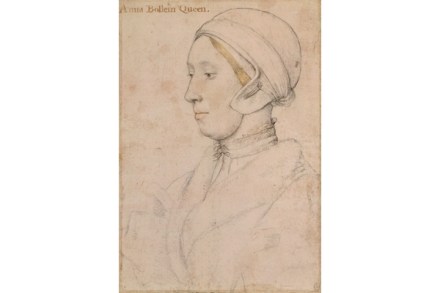
In a recent interview, the celebrity historian and Tudor expert David Starkey described Hilary Mantel’s Wolf Hall as a ‘deliberate perversion of fact’. The novel, he said, is ‘a magnificent, wonderful fiction’. listen to ‘David Starkey on Wolf Hall’ on audioBoom But if Oxford has taught me one thing, it’s that all the best history is. Starkey is a Cambridge man, and maybe they do things differently there. But any perceptive Oxford undergraduate will soon realise that a little bit of fiction is the surest way to a First. What the admissions material opaquely describes as ‘historical imagination’ turns out to be an irregular verb: I imagine, you pervert the facts.

The Long Shadow, by Mark Mills – a review

From our UK edition

Mark Mills is known for his historical and literary crime novels, including The Savage Garden, The Information Officer and House of the Hanged. The Long Shadow is written in a different mode. It is set in a highly recognisable present; it is a clever, teasing hybrid of genres (psychological thriller, dark comedy, Pardoner’s Tale and dystopia); and it is fraught with tensions about money, class and the super-rich. The protagonist, Ben, is a well-nigh washed up screenwriter in his early forties. His wife has fallen in love with a successful businessman; Ben has been forced out into a seedy flat in a demoralising part of London. He passes the time enumerating the opportunities he has squandered and worrying about his relationship with his teenage son.

The Costa Book Awards make history

From our UK edition

The Costa Book Awards has made its own history tonight by selecting, according to its press release, an all women shortlist* for the first time. Here are the category winners, each of whom bags £5,000: 1). Mary and Bryan Talbot win the Costa Biography Award for Dotter of Her Father’s Eyes, a book that examines two father-daughter relationships: James Joyce and his daughter Lucia, and Mary Talbot's relationship with her father, who was a James Joyce scholar. 2). Hilary Mantel takes the Costa Novel Award for Bring up the Bodies, the brilliant and demanding Booker winner about which quite enough has been written. 3). Francesca Segal’s The Innocents snaps up the Costa First Novel Award.

Back to the start – Train Dreams, by Denis Johnson

From our UK edition

Train Dreams, the Pulitzer nominated novella by playwright, poet and U.S National Book Award winning novelist Denis Johnson, is the life story of Robert Grainer, a man who ‘had one lover... one acre of property, two horses, and a wagon... [had] never been drunk... never purchased a firearm or spoken into a telephone.’ Born at the end of the nineteenth century and dead a year before the Summer of Love, Robert labours in the American West, cutting timber for railroad tracks and then, when he’s too old for that work, carting people’s possessions around the countryside. The book’s chronology is loose, or, rather, Grainer’s whole life comes at us at once.

Ian McEwan’s novel questions

From our UK edition

Brevity does not imply levity. That, at least, is the view of Ian McEwan. The national treasure was speaking at the Cheltenham Literary Festival over the weekend when he crowned the novella, which he defined as a book of roughly 25,000 words, as the ‘supreme literary form’. He challenged publishers and critics who believe the novella to be inherently inauthentic and frivolous, arguing that the compact form brings out the best in the greatest writers. 'Somehow . . . the prose is better, more condensed, more rigorous. Characters have to be established with a great deal of economy. All this makes demands on a writer that brings them to a better calibre of prose. They don’t relax, it’s much more focused.

Recent crime novels | 26 May 2012

From our UK edition

William Brodrick’s crime novels have the great (and unusual) merit of being unlike anyone else’s, not least because his series hero, Brother Anselm, is a Gray’s Inn barrister turned Suffolk monk. The plot of The Day of the Lie (Little, Brown, £12.99), Anselm’s fourth case,  is triggered by the discovery of files relating to Poland’s suppression of dissidents in Warsaw, mainly in the 1950s. Anselm’s oldest friend, now blind, was caught up in a linked later betrayal while working as a journalist in Poland. He wants Anselm to go there in his stead to examine the file that holds the name of the informant who betrayed both him and many others.

Method in her magic

From our UK edition

Bring Up the Bodies, as everybody knows, is the sequel to Wolf Hall, Hilary Mantel’s fictional re-imagining of the life and times of Henry VIII’s most effective servant, Thomas Cromwell. We have long been banging our spoons and forks for it. Speaking for myself, I finished the first with an almost unbearable curiosity to find out what was going to happen next — a strange result, when you think of it, because we all know perfectly well what is going to happen. Mantel is comprehensive with her sources. Every scene is secured, like a piano key to its hammer, to the corresponding page of the great 21-volume Calendar of State Papers of Henry’s reign.

Fatal entrapment

From our UK edition

I am no great fan of spy thrillers and positively allergic to conspiracy theories, but I found this book difficult to put down. In an earlier study, Edward Lucas examined Russia’s use of energy as a weapon against the EU and the Atlantic alliance. In this one, he dives below the surface into the murky waters of the country’s security apparatus and demonstrates that, while it has shed the old KGB image, it remains as pervasive and just as menacing. Before the fall of the Berlin Wall, the battlelines were clear cut and so was the role of the Soviet Union’s defenders. At home, they silenced any criticism of the system. Abroad, they carried on an ideological struggle for dominance with the United States and its allies.

The courage of their convictions

From our UK edition

HHhH is a prize-winning French novel about a writer writing a novel about the plot to kill the Gestapo boss Reinhard Heydrich. A lot of people reckon it’s a big deal — Martin Amis, Mario Vargas Llosa, me — so naturally there’s a backlash afoot. In a fit of territorial pissing disguised as an interview, Michael Burleigh revealed that Laurent Binet ‘does not even read German’ (which HHhH admits on page 28) and professed surprise that his research failed to take in a Heydrich biography published (as Burleigh didn’t say) almost two years after HHhH first came out. I suppose part of the problem is that Binet asks for trouble with clever-dick lines like this one: ‘This scene is not really useful, and on top of that I practically made it up.

The usual suspects | 3 May 2012

From our UK edition

It is disconcerting to discover that a novelist a generation older than oneself has been trying to write ‘a sort of Margaret Drabble effort’, even if the book ‘hadn’t turned out like that at all’. This is how Barbara Pym described her then unpublished campus novel An Academic Question in 1971 to her friend and admirer Philip Larkin. Naturally I was intrigued to know what she meant. Pym’s publishing history is well known: between 1950 and 1961 she published six  highly praised novels, and then ran up against a solid rock of refusals. Jonathan Cape dropped her, and she was told her work was out of fashion. Puzzled and down-hearted, she went on writing, somewhat hopelessly, because she couldn’t help it.

Putting the fun in fundamentalism

From our UK edition

Turnaround Books, the publishers of Timothy Mo’s remarkable Pure, are revealed to operate from Unit 3, Olympia Trading Estate, Coburg Road, London N22. From this we may deduce that the publishing history of the three times Booker-shortlisted Anglo-Chinese novelist continues on its maverick way. Imagine if Mo had approached a conventional publisher with a proposition: this is a novel about jihad in south-east Asia, as seen through the eyes of a Muslim ladyboy. Mo’s perversity and boldness apply in equal measure to his hero/heroine.

Family get together 

From our UK edition

Mark Haddon is in what must sometimes seem like the unenviable position of having written a first (adult) novel which was, and continues to be, a smash hit. Drawing in part on his own experiences of working with the autistic, The Curious Incident of the Dog in the Night Time has become one of those books that anyone who claims to be a reader must know. His second novel, A Spot of Bother, did not receive the same acclaim, perhaps partly because the subject was a man in mid-life crisis who convinces himself he is dying. It too was wonderful, though — funny, perceptive and moving. His latest book, The Red House, is in the same mode as the second.

The lady vanishes

From our UK edition

The spy thriller is not the easiest genre for an author to choose. In the first place, it is haunted by the shade of John le Carré, past and present. Secondly, the end of the Cold War destroyed the comfortable framework that has underpinned the majority of espionage fiction for the last 40 years. Undeterred, however, Charles Cumming has succeeded in making something of a speciality of it with intelligent, literate novels like Typhoon and The Trinity Six that approach their subjects from unexpected angles. A Foreign Country, his sixth, revolves around the disappearance of a senior MI6 officer, Amelia Levene, six weeks before she is due to take up her controversial appointment as head of the service. She vanishes while taking a short holiday in France.