Novel

Random questions

From our UK edition

British writers who set their first novels in America are apt to come horribly unstuck. One of the pleasures of Sam Leith’s debut novel is its sureness of tone. All the elements here are properly balanced. Nothing feels clumsy or over-egged. So what? you might think. Isn’t this what any halfway decent novelist does? Yes, but few attempt anything as ambitious, as exuberant, as downright weird as this. At the heart of Leith’s novel is an examination of the role of chance and the nature of coincidence. This, though, is only the half of it.

. . . or sensing impending doom

From our UK edition

‘What am I? A completely ordinary person from the so-called higher reaches of society. ‘What am I? A completely ordinary person from the so-called higher reaches of society. And what can I do? I can train a horse, carve a capon, and play games of chance.’ So reflects Botho von Rienäcke, the central character of Theodor Fontane’s novel of 1888, Irrungen, Wirrungen (newly translated as On Tangled Paths). His bitter self-examination is a consequence of his predicament. Like many a fellow officer, he has taken up with a working-class girl. He met her on a boating trip when he came to her rescue from an accident in the water.

Beastly behaviour

From our UK edition

If the production team of The Archers ever needs a scriptwriter at short notice, they need look no further than Miranda France. For her latest book, she’s gone back to her roots as the daughter of a farming family and created a novel that’s a cross between an omnibus edition of the radio soap and the gimlet-eyed prose of Stella Gibbons. Hill Farm is set in a nameless village somewhere on the borders of Sussex and Kent. Hayes loves the land, but not farming. His wife Isabel loves the idea of the country but not the reality of the falling-down farm to which she is shackled by duty rather than affection.

The world according to ants

From our UK edition

The South American rain forest is the perfect environment for a dank, uncomfortable thriller. It’s brutally competitive; life is thrillingly vulnerable; you can’t safely touch or taste anything, and, beyond a few yards, you can see nothing at all. Even Amerindians are anxious in this environment, and credit it with all manner of horrors. In my own experience, it is, in every sense, a spine-tingling environment. So novelist Edward Docx has chosen well in the setting for his dark tale. It’s not a complex plot but there’s the constant feeling that you’re not seeing the whole picture, and that nothing is quite as it seems. Docx is a master of disquiet, and brilliantly captures the bewildering effect of the forest.

An existential hero

From our UK edition

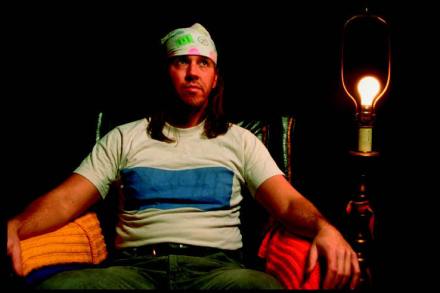
Sam Leith is enthralled by a masterpiece on monotony, but is devastated by its author’s death When David Foster Wallace took his own life two and a half years ago, we lost someone for whom I don’t think the word genius was an empty superlative. He was an overpowering stylist, and a dazzling comedian of ideas. He could be gasp-makingly funny, but had an agonising moral seriousness. There’s more on one page of Wallace than on ten of most of his contemporaries. His mind seemed to have more buzzing in it than the rest of us could imagine being able to cope with, and perhaps than he could. The Pale King, assembled from his notes and papers by his editor Michael Pietsch, is an unfinished novel of more than 500 pages about the American IRS.

Whatever next?

From our UK edition

Philip Hensher’s King of the Badgers is set in Hanmouth, a small English coastal town described so thickly that it is established from the outset as effectively a character in itself. Philip Hensher’s King of the Badgers is set in Hanmouth, a small English coastal town described so thickly that it is established from the outset as effectively a character in itself. Lovely to look at, the town is too small and insecure to be thought of as adult. In fact, it’s uncomfortably adolescent — a skittish concoction of class tension, shifting demographics and unwitting self-sabotage. The novel is full of unexpected turns. It’s also brilliant, sustained and weirdly captivating.

A choice of first novels

From our UK edition

Rocco LaGrassa was ‘stout around the middle . . . wee at the ankles, and girlish at his tiny feet, a man in the shape of a lightbulb’. In Salvatore Scibona’s first novel we join this lightbulb of a man on perhaps his darkest day: the day on which the police arrive at his door to tell him his son has just died of tuberculosis in a prisoner-of-war camp in North Korea. Rocco LaGrassa was ‘stout around the middle . . . wee at the ankles, and girlish at his tiny feet, a man in the shape of a lightbulb’. In Salvatore Scibona’s first novel we join this lightbulb of a man on perhaps his darkest day: the day on which the police arrive at his door to tell him his son has just died of tuberculosis in a prisoner-of-war camp in North Korea.

The passionate friend

From our UK edition

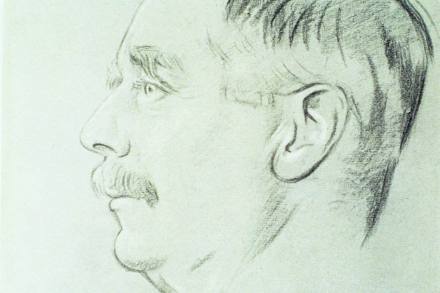
Sam Leith explores H. G. Wells’s addiction to free love, as revealed in David Lodge’s latest biographical novel In the history of seduction, there can have been few scenes quite like this one: ‘Am I dreaming?’, she said when she opened her eyes. ‘No,’ he said, and kissed her again. ‘But what about Jane?’ she said. ‘You love Jane.’ ‘Yes, I love Jane, and Jane loves me, but there are many kinds of love, Amber. You’ve read A Modern Utopia, you’ve read In the Days of the Comet, you know my views on free, healthy, life-enhancing sexual relationships. Jane shares them.’ They embraced and lay in eachother’s arms, exploring and gently stroking eachother’s bodies like blind people.

Triumph and disaster

From our UK edition

The title of this first novel refers to a version of childhood as a magical kingdom where evil can be overturned and heaven and earth remade at the whim of a power-crazed infant. In fact our narrator’s world has already been darkened by the time she is presented by her beloved elder brother with the rabbit she insists on calling God. She has been sexually abused by an elderly neighbour, a Jewish musician who fascinates her with tales of the concentration camp in which he was never interned. The brother discovers the betrayal, promises to keep it a secret and — this all happens in the first 30 pages — terrifies the elderly musician into suicide.

Bookends | 12 March 2011

From our UK edition

About 80 per cent of books sold in this country are said to be bought by women, none more eagerly than Joanna Trollope’s anatomies of English middle-class family life. Her 16th novel, Daughters-in-Law (Cape, £18.99), is sociologically and psychologically as observant as ever, showing how not to be a suffocatingly possessive mother-in-law. About 80 per cent of books sold in this country are said to be bought by women, none more eagerly than Joanna Trollope’s anatomies of English middle-class family life. Her 16th novel, Daughters-in-Law (Cape, £18.99), is sociologically and psychologically as observant as ever, showing how not to be a suffocatingly possessive mother-in-law.

The family plot

From our UK edition

Hisham Matar is a Libyan-American writer whose father, Jaballa — an opponent of Gaddafi — was kidnapped in Cairo in 1990. Hisham Matar is a Libyan-American writer whose father, Jaballa — an opponent of Gaddafi — was kidnapped in Cairo in 1990. He is believed to be in jail in Libya; Matar campaigns from London for his release. If you already knew this, it’s probably because of the attention that came Matar’s way when he published his first novel, In the Country of Men (2005). That book, set in Tripoli in 1979, is told from the point of view of a dissident’s young son. Although the details don’t match Jaballa’s case, many readers took it as lightly fictionalised memoir.

Death of the Author

From our UK edition

The death of the Polish-born British novelist Joseph Conrad is the central event of David Miller’s debut novel. The death of the Polish-born British novelist Joseph Conrad is the central event of David Miller’s debut novel. A reimagining of Conrad’s final days, Today explores the nature of bereavement. Within the novel’s confines, Conrad exists simply as a character — a dying man whose profession has been that of a writer and whose working life has necessitated the presence of a secretary, Lillian Hallowes, who, up to a point, offers the reader a commentary on the novel’s happenings. Miller attempts no assessment of Conrad’s work, his literary status or psychology.

Desk-bound, needing to get out more

From our UK edition

Great House is an ambitious novel, if it’s a novel at all. Great House is an ambitious novel, if it’s a novel at all. It’s an exploration of regret, longing, loss, and of how Jews attempt to cope with the destruction that characterises their history. The title refers to the Book of Kings: ‘All the houses of Jerusalem, even every great house, he burned with fire’. If, as one of Krauss’ spokesmen puts it, ‘every Jewish memory were put together, every last holy fragment joined up again as one’, would the Great House be built again? The book divides into two sets of linked sections, the halves mirroring each other like parallel series of drawers in a desk.

The call of the wild

From our UK edition

Annie Proulx (pronounced ‘Pru’) began her writing career — quite late, in her fifties — as E.A. Proulx, to baffle misogynist editors; then she was E. Annie Proulx, until she dropped the E and became simply Annie the Proulx. Annie Proulx (pronounced ‘Pru’) began her writing career — quite late, in her fifties — as E.A. Proulx, to baffle misogynist editors; then she was E. Annie Proulx, until she dropped the E and became simply Annie the Proulx. (Her father’s ancestors, who left Anjou for Canada in the 17th century, were called Prou or Preault; her mother’s arrived in New England soon after the Mayflower.) Her fiction tends to be about hard times in rural America, and though her new book is a memoir it runs true to form.

Beatrix Potter meets the Marquis de Sade

From our UK edition

Anthropomorphism and a weird, astringent sense of humour combined to make The Queue, the late Jonathan Barrow’s only novel, a work of genius in the opinion of his brother Andrew. Anthropomorphism and a weird, astringent sense of humour combined to make The Queue, the late Jonathan Barrow’s only novel, a work of genius in the opinion of his brother Andrew. The typescript he inherited, though ‘unedited, repetitious and often excessively scatological’, he writes, ‘appealed to me immediately . . . I found it screamingly funny.’ In this affectionate expression of sibling adulation, he describes Jonathan’s style as ‘part journalese, part satire, part Beatrix Potter, part Marquis de Sade’.

Bruising times

From our UK edition

In a market town in Kent at the time of Thatcher’s Britain, Charles Pemberton attends the town’s minor public school where his businessman father is a governor. In a market town in Kent at the time of Thatcher’s Britain, Charles Pemberton attends the town’s minor public school where his businessman father is a governor. Back in the 1930s, his grandfather Clarence had had ‘the right idea’, which was to build an eight-foot wall across a residential road in Oxford to separate his family home from newly built council houses. There is no such fortification available against the arrival at the school of Clark Rossiter, ‘a London chuck-out’ from a fringe estate, thanks to his sports scholarship, boxing being just one of his talents.

Morphine memories

From our UK edition

Chapman’s Odyssey became quite famous before it was published, largely because it nearly wasn’t. Chapman’s Odyssey became quite famous before it was published, largely because it nearly wasn’t. Paul Bailey’s long and distinguished career, complete with two appearances on the Booker shortlist, apparently counted for nothing last year when he was reduced to what he called the ‘sheer hell’ of touting the book unavailingly round town, while living off grants from the Royal Literary Fund. Yet, sad though this undoubtedly was, when Bloomsbury finally rode to his rescue, one heretical thought was hard to suppress.

And then there was one . . .

From our UK edition

The English fascination with spies is gloriously reflected in our literature, from Kim to A Question of Attribution, and while their Egyptian and Israeli counterparts remain untranslated, and the Americans unreadable, English spy novelists rule. Compromised, divided and alienated, the spy is a model modern hero, and the spy’s world, with its furtive and fetishistic arcana, is an admirable theatre of identity, of English attitudes to sex and class, hypocrisy and betrayal. (The best recent spy novel is John Banville’s The Untouchable, which tells the story of Anthony Blunt more freely than Alan Bennett’s play, nudging the facts into outrageous fiction — casting Graham Greene as the villain, for example.

Odd characters

From our UK edition

Cedilla picks up where Adam Mars-Jones’s previous novel Pilcrow (2008) left off. Cedilla picks up where Adam Mars-Jones’s previous novel Pilcrow (2008) left off. That book described the early life of John Cromer, a boy whose joints are fused by arthritis. Most of it saw him bed-bound, whether at home in Bucks, at hospital, or boarding at a school for the disabled, where, sizing up the bulges in his classmates’ trousers, he wowed his dormitory with an unrivalled ability to talk filth after dark. The new book gets out more.

The sweet smell of danger

From our UK edition

If this novel is ever published with a scratch-and-sniff cover — which incidentally, I think it might be successful enough to warrant — this is what it would smell of: cheap petrol, lust, the ripe, acidic scent of decaying corpse, cat litter, $2,000 suits, Cristal champagne, decaying encyclopaedia, corruption, fumes from the power plant, betrayal, sausage. If this novel is ever published with a scratch-and-sniff cover — which incidentally, I think it might be successful enough to warrant — this is what it would smell of: cheap petrol, lust, the ripe, acidic scent of decaying corpse, cat litter, $2,000 suits, Cristal champagne, decaying encyclopaedia, corruption, fumes from the power plant, betrayal, sausage.