Novel

The final act of Thomas Pynchon

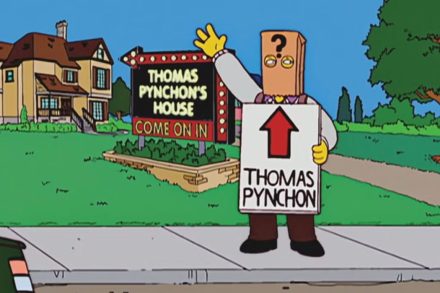
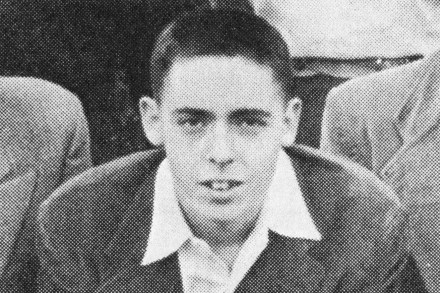
Whisper it, very quietly, but the now 87-year-old author Thomas Pynchon is having something of a moment in 2025. Not only has his 1990 novel Vineland supposedly served as the loose inspiration for the eagerly awaited new Paul Thomas Anderson-Leonardo DiCaprio collaboration One Battle After Another, but the near-impossible has been announced: Pynchon will publish a new novel, entitled Shadow Ticket, around the time of the movie’s release. It will be his first book in more than a decade, his ninth novel and his third consecutive noir-influenced story.

thomas pynchon

Evie Wyld’s latest novel is unsettling yet hopeful

Evie Wyld’s powerful fourth novel opens from the perspective of Max, a ghost who haunts the south London apartment where he lived with his girlfriend Hannah. A ghost story is new ground for Wyld, the multi-award-winning Anglo-Australian writer, but her signature traits are immediately evident — poetic observations of unusual details; a pervasive sense of grief and palpable trauma, leavened with a wry sense of humor (Max notes his "strong urge to file a complaint" about being a ghost); and an intricate plot that compels readers to delve into complex past events.

Wyld

Charles Baxter’s Blood Test is a necessary novel

The books that most vividly and expansively illustrate the human experience are not the ones that grapple with life’s most romantic or fantastical tribulations. Charles Baxter’s latest work is splendid proof of this abiding literary fact. Baxter, a Minnesotan who is author of a multitude of novels and short story collections, returns with Blood Test, a book that delves into some quotidian yet disconcerting aspects of modern American life. He is well-known for 2000’s The Feast of Love, which garnered a National Book Award nomination, and 2020’s The Sun Collective, among others; his new offering continues his tradition of blending the mundane with the extraordinary.

Blood Test

The chameleonic life of Claire Clairmont

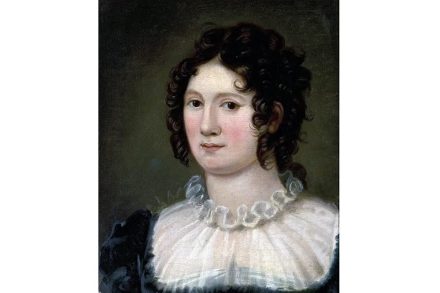
Commentary on the young Romantics can be curiously puritanical. Not on saintly John Keats, who died too young to cause any trouble. But Byron and Shelley? Beastly to women, negligent as parents, destructive as friends, oblivious to their own privilege. Feminist observers tend to resemble the English visitors to Geneva in 1816 who borrowed telescopes to spy on the renegade inhabitants of the Villa Diodati across the lake, hoping to be scandalized. A central character in the summer that saw the birth of Frankenstein was the only non-writer of the villa’s gathering, Byron’s young lover and Mary Shelley’s stepsister, Claire Clairmont.

Clairmont

Kevin Barry’s latest novel is bursting with energy, brutality and poetry

"He walked as calamity. He walked under Libra. He was living all this bullshit from the inside out. Oh, he scathed himself and harangued and to his own feet flung down fresh charges. But there were dreams of escape, too — one day you could ride south on a fine horse for the Monida Pass.” Well met by moonlight, Tom Rourke, doper and dreamer, formerly of County Cork, now a miner in Butte, Montana, in 1891. Welcome to yet another wild and whirling world made by Kevin Barry. Barry’s first collection of short stories, There Are Little Kingdoms, appeared in 2007; he was already celebrated in his native Ireland as a creator of darkly comic troubled characters compassionately drawn.

Barry

Zadie Smith’s latest novel is glittering, grand and powerful

Zadie Smith’s ambitious latest novel, The Fraud, is loosely based on the life of the little-known nineteenth-century novelist William Harrison Ainsworth. He was, at one point, as popular as Charles Dickens, his novel Jack Sheppard even outselling Oliver Twist. But Ainsworth’s fortunes and talents declined, and his forty-odd novels vanished, going out of print soon after his death. Throughout The Fraud, as he sits groaning at his desk, he is an arch reminder not only of the vagaries of literary fame, but the pains of fiction-writing. As his cousin Eliza Touchet observes: “God preserve me from that tragic indulgence, that useless vanity, that blindness!” Ainsworth’s actual writing is redolent of educated middle-class male privilege. (“‘Zounds!

fraud

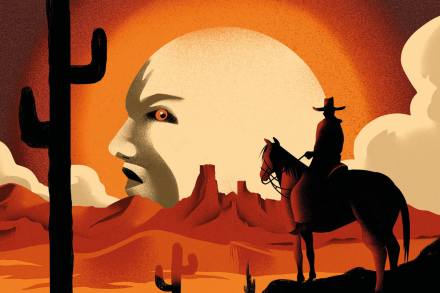
Blood Meridian is Cormac McCarthy’s masterpiece

In June, Cormac McCarthy — our greatest living writer — slipped from this world to the next and joined his forebears Melville, Twain, Faulkner and Flannery O’Connor in the American literary pantheon. By noon the following day, Blood Meridian, or The Evening Redness in the West, his magnum opus, had reached number eight on Amazon’s Top 100 Books, assuring that, for the first time, it would hit the New York Times Paperback Bestseller List; a curious development for a novel that, when it was first published in 1985, failed to sell its initial print run of 1,500 and was quickly remaindered.

blood meridian
Boyd

William Boyd’s latest novel is immense fun

William Boyd is perhaps best known for his novel Any Human Heart, which charts the adventures of Logan Mountstuart throughout the twentieth century. Mountstuart marries well, divorces, annoys the Duke of Windsor, is imprisoned, becomes an art dealer in America and has sundry diverting escapades. It’s a warm, impassioned and involving narrative, and Boyd winningly returns to a similar formula in his latest book, The Romantic. The prologue presents The Romantic as a fictionalized biography, reconstructed from notes and maps left behind by its subject. All biography, says Boyd, is by its nature fictional.

‘Slow Horses’ is thriller television at its best

It may come as a surprise to anyone who has read Mick Herron’s peerless Slough House novels, but Slow Horses, Apple TV’s high-profile adaptation of the first book in the series, is not funny. Instead, it takes Herron’s uproariously comic premise — that a group of misfit British spies, cast out of MI5 for misdemeanors exaggerated and accurate alike, have been reduced to grubbing about in a grim office on the periphery of the City of London — and plays it almost entirely straight. Gone are the laugh-out-loud one-liners and endearingly witty pieces of throwaway badinage. Instead, we have a big-budget spy thriller, polished and scripted to within an inch of its life. It’s a bit like seeing the Fresh Prince of Bel-Air reinvented as a gritty urban drama.

horses

The return of Thomas Pynchon?

The question of whether the novel is dead is one that often occupies those in the business of writing or commenting on novels, much as the question of self-driving cars doubtless occupies truckers. One’s attitude towards the question largely depends on one’s attitude towards genre fiction and Sally Rooney. Still, whatever its truth, it is inarguable that, as Joseph Bottum wrote in his 2019 book The Decline of the Novel, “art forms are not immortal or incapable of collapse when their social foundations shift.” To that end, authors have been attempting to innovate. The “alt-lit” community have been using social media for years, both as a source of thematic material and as a means of publication, and even grizzled vets are learning new tricks.