Nicola sturgeon

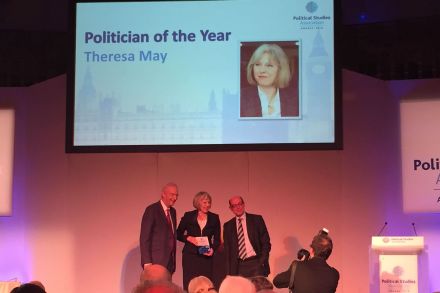
Another gong for May

What a busy week for Theresa May as she picked up a gong for Politician of the Year at the Political Studies Association awards at Church House last night. The BBC’s Nick Robinson was in full sycophant mode as he presented the Home Secretary's prize, laying it on thick for his academic hosts, thanking them for allowing the media ‘to make your wisdom, our wisdom’. He couldn't resist a crack at ‘Mother Theresa’ though, describing the voting process as a ‘non binding’ but ‘indicative vote’ much like the one on the European Arrest Warrant. No doubt Downing Street will enjoy Mrs May soaking up some more of the limelight.

Alistair Darling: the flaws in Alex Salmond’s white paper on independence

Nothing has changed as a result of today’s White Paper. There is nothing that we found out today that we didn’t already know. Yesterday Alex Salmond’s case for breaking up the UK was based on assertions. Today it is still based on assertions. The simple fact is that the nationalists have ducked the opportunity to answer any of the big questions about our country’s future. They promised us facts. What they have given us is a wish list with no prices attached. If this White Paper was going to be credible, it had to address the fundamental issues that people are concerned about. They didn’t. We still don’t know what currency we use if we vote to go it alone. We don’t know who would set our mortgage rates.

Scottish independence is a little more likely today than it was yesterday

The argument about Scottish independence which, it should be said, is not a new one is best understood in terms of the Overton Window. James Overton, an American political scientist, suggested that the general public is only prepared to contemplate a relatively narrow range of political opinions and policies. Those that fall outwith this window of plausibility are discounted; the task for politicians and other advocates is to shift the window so that ideas once considered heretical now appear orthodox common-sense. Overton suggested there were six phases to this process. A idea would move from being unthinkable to radical to acceptable to sensible to popular before, finally, becoming policy. Scottish independence is currently somewhere between acceptable and sensible.

The politician who can fill a venue quicker than Kylie

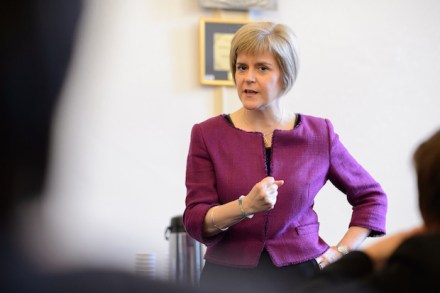
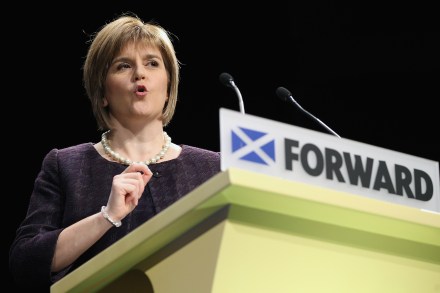
What’s the most significant political story of the week, Ukip winning Rochester or Emily Thornberry’s resignation? Well, I suspect, it might be neither of them and that the really big event this week happened north of the border, Nicola Sturgeon being sworn in as First Minister. For the new SNP leader is riding a quite remarkable wave of popularity. Right now, she’s addressing a rally at the Glasgow Hydro, a 12,000 seat venue that she sold out faster than Kylie Minogue—what other politician in Britain could hope to do that?   As I say in the column this week, what makes Sturgeon’s popularity all the more remarkable is that she is a career politician.

Farewell Alex Salmond, hello Nicola Sturgeon

And so the Age of Nicola dawns. Elected First Minister by the Scottish Parliament yesterday; sworn in this morning. Taking First Minister's Questions this afternoon. Alex Salmond's departure was a long drawn-out affair but it will not take Nicola Sturgeon anything like as long to leave her own distinct impression on Scottish politics. I am not sure why folk at Westminster thought the referendum defeat would plunge the SNP into crisis. That might have been the case if the result had been 65-35 but that, despite what some thought, was never, ever, a likely outcome. Senior SNP strategists knew winning might be difficult but they also reckoned that anything above 40 percent support for independence would be enough to change the dynamics of Scottish - and British - politics for good.

Podcast: Brendan O’Neill on Oxford’s Stepford Students, and Scotland’s new first minister

Do today's students care about free speech? On this week's View from 22 podcast, Brendan O'Neill and Harriet Brown from the University of Oxford debate this week's cover feature on the 'Stepford Students' and the rise of group think among undergraduates. Brendan and Harriet discuss the Oxford Students for Life debate cancelled this week, following a student backlash. James Forsyth and Alex Massie also look at Scotland's new First Minister Nicola Sturgeon and the significance of her ascension to leader of the SNP. Many unionists had hoped and predicted he party would collapse after a 'No' vote for independence. Sturgeon appears to have proved them wrong.

Meet the new Queen of Scots: Nicola Sturgeon’s unstoppable rise

[audioplayer src="http://traffic.libsyn.com/spectator/TheViewFrom22_20_Nov_2014_v4.mp3" title="James Forsyth and Alex Massie discuss Scotland's new First Minister" startat=730] Listen [/audioplayer]‘She sold out the Hydro arena faster than Kylie Minogue,’ said one awestruck unionist of Nicola Sturgeon this week. Scotland’s new first minister has come into office on a tide of support that many in Westminster find hard to imagine. Not only is she packing out concert venues, her party is also consistently scoring above 40 per cent in the polls. If she can keep this momentum going, she will rout Scottish Labour at the next general election. Defeat in the independence referendum has not halted the nationalists’ momentum — quite the opposite.

Scotland’s Neverendum begins and there’s nothing Unionists can do to stop it

Oh look, it's a Neverendum. Who could have predicted that the SNP (and the wider Yes movement) would treat defeat in the independence referendum as just a temporary set-back? Well, some people did. Here's a thing from April: 55-45 will now be reckoned a decent result [for Unionists] but it’s not an outcome that will settle the matter. Not even for a generation. Of course, during the campaign itself the Nationalists had to pretend that a No vote would put the question of independence to bed for a generation. They were kidding and anyone who chose to believe assurances that the SNP had no desire for a Neverendum is guilty of egregious gullibility. Because without independence what is the SNP for? What else binds its disparate parts together? What else settles all other arguments?

Alex Salmond’s School of Denial

Alex Salmond is on his way out. The First Minister gives every impression of enjoying - or at least making the most of - his farewell tour. And why not? Far from weakening the SNP, defeat in September's referendum has - at least for now - strengthened the party. Its supremacy is unchallenged and while recent polls putting the Nationalists on 50 percent of the vote are unlikely - surely! - to last forever this is the kind of problem worth having. Nevertheless, the First Minister's final days in office have also reminded us that policy and, indeed, philosophy are not necessarily Salmond's strengths. Unusually, First Minister's Questions proved a useful exercise this week. Both Jackie Baillie, Labour's temporary head at Holyrood, and Ruth Davidson pressed Salmond on education.

Scotland needs Jim Murphy (even if he doesn’t want to go back there)

[audioplayer src="http://traffic.libsyn.com/spectator/TheViewFrom22_30_Oct_2014_v4.mp3" title="James Forsyth and Isabel Hardman discuss Jim Murphy" startat=997] Listen [/audioplayer]There should, by rights, have been a stampede of candidates to replace Johann Lamont as the leader of the Scottish Labour party. With the new powers promised to Holyrood, the Scottish First Minister promises to be a more powerful figure than most of the Cabinet. Only the holders of the great offices of state will be more influential than the occupant of Bute House. Labour might well trail the SNP by a large margin in the Holyrood polls, but their position is by no means hopeless. But since she decided to step down, there was silence.

Jim Murphy has what Scottish Labour needs: energy, fearlessness and the ability to win

[audioplayer src="http://traffic.libsyn.com/spectator/TheViewFrom22_30_Oct_2014_v4.mp3" title="James Forsyth and Isabel Hardman discuss Jim Murphy" startat=1010] Listen [/audioplayer]There should, by rights, have been a stampede of candidates to replace Johann Lamont as the leader of the Scottish Labour party. With the new powers promised to Holyrood, the Scottish First Minister promises to be a more powerful figure than most of the Cabinet. Only the holders of the great offices of state will be more influential than the occupant of Bute House. Labour might well trail the SNP by a large margin in the Holyrood polls, but their position is by no means hopeless. But since she decided to step down, there was silence.

Jim Murphy is Scottish Labour’s only hope

At the risk of intruding into someone else's calamity, if you can't enjoy this what can you enjoy? By this I mean, of course, Scottish Labour's meltdown. (Suggestions the party is not actually an iced lollipop should not be taken too seriously.) The thing to remember about Labour in Scotland is they've never been as popular as they like to think. They've only ever been the largest minority. A large and zombified minority, to be sure, but a minority nonetheless. They never - ever - spoke for a majority of Scots. They only claimed to. They still do. That's the astonishing thing. They are the people's army, the political will of the Scottish people made flesh. And how dare anyone else suggest otherwise. Inconveniently, a fair few folk have dared make just that suggestion. The bastards.

The Yes movement slowly moves through the Kubler-Ross stages of grief

No-one has died. No-one has been stabbed. Someone, I suppose, may have been punched. So let's retain some sense of perspective as we consider and try to make sense of the last few days in Scotland. It is only day five. People deal with grief at different speeds. So, pace Ms Kubler-Ross, it shouldn't be a surprise that many Yes voters are still in Denial. Many others have made it to Anger. Some have got as far as Bargaining. Most are certainly still in Depression. Only a few have reached Acceptance. True acceptance, I mean. There's a lot of Yes we lost but if you look at it differently we kinda won. The settled, sovereign, will of the Scottish people is merely a flesh wound.

Scotland rejects independence – as it happened

No has won the referendum. Scotland won't become independent, but it will get new devolved powers, David Cameron promised this morning. Follow the developments on the PM's plans to change the constitution here. 08:13 The final result is in. Highland. Yes: 78,069 No: 87,739. That's 47.1% to 52.9% on a turnout of 87.0% 07.10 am: What are these 'further powers' that Scotland – and indeed the rest of the UK – might be given? If we're getting more powers I want telekinesis #indyref — Craig Rothney (@rothneychild) September 19, 2014 07.05 am: What happens next for the rest of the UK? Here's what Isabel has to say: The Prime Minister will give his response to Scotland's 'No' verdict at 7.10.

Why is the SNP endorsing Israel haters?

Regular readers will have noticed that I don’t like Islamic fundamentalists. Nor — though this is perhaps less often on display — do I much like Scottish Nationalists. Not just because their primary cause is to break up one of the two most successful political unions in history, but because so many of their secondary causes are so rancid as well. Take this poster advertising a ‘Women for Gaza’ rally in Glasgow this Saturday. The headline speaker is Nicola Sturgeon MSP. She is the Deputy First Minister of Scotland and leading light of the Scottish Nationalist Party (SNP). And one of the two other scheduled speakers is Yvonne Ridley — the notorious convert nutcase with whom I have had cross words before.

Scotland’s position in europe is weaker than the SNP would have you believe

Nicola Sturgeon, arguably the SNP's most effective asset at present, went to Brussels today to deliver a speech about Scotland's future relationship with the EU. Most of it was as bland and unobjectionable as you might expect. Move along, not very much to see here. And with some reason. I think it is all but inconceivable that the EU would make it difficult for an independent Scotland to join the club. I also think Spanish (and perhaps Belgian) fears that letting Scotland join would set a dangerous precedent are, for the most part, exaggerated. At the very least I doubt that the threat of a Spanish veto is a good argument for voting No. Nevertheless, the process of admission might not be quite as straightforward as the nationalists (understandably) suggest.

Nicola Sturgeon is ready for her close-up – Spectator Blogs

In the rabid hamster-eating-hamster world of Scottish politics Nicola Sturgeon is a rarity: a politician of obvious competence who's respected by her peers regardless of their own political allegiances. There are not so many folk at Holyrood of whom that could be said. The Deputy First Minister is not a flashy politician but she's quietly become almost as important to the SNP as Alex Salmond. This, according to one sagacious owl, makes her one of the ten most interesting politicians in Britain. Hard though it is to imagine this, there are voters immune to the First Minister's charms. Part of Nicola's remit is to reach those parts of Scotland that are disgracefully reluctant to trust Mr Salmond. So Unionists should take Sturgeon seriously.

A lesson for Alex Salmond from George Orwell

I've written a piece for today's Scotsman noting that there are some parallels between Scotland's independence stushie and the pre-Iraq War rammy a decade ago. Only this time it's the nationalists who are, if you will allow the comparison, the neoconservatives. Just as pro-war advocates back then (and I was one of them) cheerfully labelled anyone who opposed the war of being "objectively pro-Saddam" so the nationalists today essentially argue that anyone opposed to independence is anti-Scottish and, implicitly, objectively so. This is as tedious as it is stupid and the kind of thing liable to further hamper the party's already faltering attempts to win what the Americans call high information voters (that is: those on above-average incomes).

The SNP’s dismal conference

The Scottish National Party conference in Perth ought to have been a festival of ideas, showcasing solutions that only be applied by independence. Instead it has reminded everyone that the SNP is bereft of ideas*  - and why the union is not in as much danger as Alex Salmond makes out. Salmond's speech laid into the "Lord Snooties" down south, and the "London government" which would "put this first class nation in the second class carriages." His message - and that of his colleagues - seemed to be that an independent Scotland would have so much money that it'd be first class for everyone. Nicola Sturgeon’s speech suggested that the problem of Scottish poverty is not enough welfare payments.

Nicola Sturgeon: We Must Kill Britain to Save Britain

It is often said that the case for the United Kingdom needs to be made in a positive fashion. This is reasonable. Less remarked upon is the SNP's cheerful use of negative arguments for independence. Today, for example, there is the sillyness of Joan McAlpine's suggestion Scotland is somehow analagous to some ill-treated wife and, rather more importantly, Nicola Sturgeon's assertion that the Union is a threat to the welfare state. So here's another Scotch Irony: the advocates of change are the fiercest defenders of the status quo. Speaking last night, the Deputy First Minister promised there would be none of that reforming-the-NHS nonsense in Scotland and, no, there'll be no tinkering with welfare either. Not at all.