Nazism

‘Make Germany normal again’: an interview with Germany’s exiled spy chief

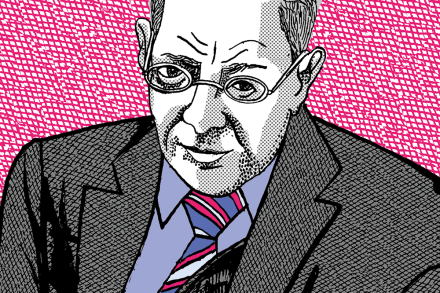
Hans-Georg Maassen is an unlikely dissident. In his trademark three-piece suits and small glasses, he looks more like a law professor. Indeed, that is what he studied, earning a doctorate on the legal status of asylum seekers in international law. This bourgeois exterior is the perfect cover for a man who was Germany’s top spy, charged with protecting the country from the far-right and Islamists. But now he is no longer under the quiet protection of the German state; he is its victim. He is under investigation from the agency he once led, the Federal Office for the Protection of the Constitution (BfV). Like George Smiley, Maassen is a remnant of an older and more powerful country, soldiering on in spite of the decline, trying to preserve what he can.

hans-georg maassen

The coming storm against MAGA

From our US edition

Economist and former New York Times opinion writer Paul Krugman has called for a post-Trump “deMAGAfication” of America, and left no mystery about the comparison he was making. “And I’m not going over the top by using a word that’s very similar to the ‘denazification’ that we pursued successfully after World War Two in Germany.” Krugman remained vague about the nature of this “thorough purging,” but said it should include “not just the MAGA ideology, but the whole structure of hugely unequal power, hugely unequal wealth that made this horrific moment possible.” Today’s left – secular, post-Christian, postmodern and postcolonial, untethered from faith, tradition or national feeling – has few moral intuitions other than “Do not be Hitler.

How interwar Germany became a breeding ground for evil

Did no one who lived through the Weimar Republic of 1918-33 see what was coming, asks Victor Sebestyen in his impressive new book. The politicians, the intellectuals, the foreign visitors who converged on Berlin in the wake of the first world war all wrote about the anti-Semitism and violence they witnessed, but virtually no one perceived where Germany was heading until it was too late. A great deal has been written about the Weimar years, much of it in hindsight; but Sebestyen, the author of bestselling books on Hungary and Russia, sets out to relate events as they unfold – to tell the story as it happened. The result is a fascinating portrait of how frighteningly easy it is for a democracy to crumble.

Is Kanye West the David Bowie of his age? 

From our US edition

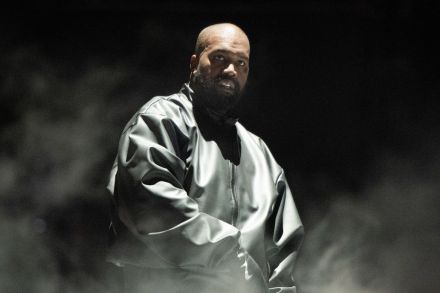
Kanye "Ye" West has been barred from appearing at London’s Wireless Festival by dint of having his temporary visa withdrawn. The move has generally been met with approval, save by those disappointed fans of his music whose pre-ordered tickets will now be refunded. “Kanye West should never have been invited to headline Wireless," said Prime Minister Keir Starmer. "This government stands firmly with the Jewish community, and we will not stop in our fight to confront and defeat the poison of antisemitism." Fair enough, many might say. Last year Ye released a single entitled "HH" (Heil Hitler) and declared himself a Nazi on social media. Ye has now made a series of groveling public apologies.

kanye west

Mitfordmania in Carla Kaplan’s Troublemaker

From our US edition

I won’t attempt to explain Mitfordmania; we’d be here all night. Suffice it to say that fascination with the British sisters – Nancy, Pamela, Diana, Unity, Jessica and Deborah, born to the 2nd Baron Redesdale between 1904 and 1920 – shows no sign of waning. This year alone, the six have inspired Outrageous, a lavish (and fatuous) multi-episode television drama available on BritBox; The Party Girls, a play by Amy Rosenthal; and Do Admit: The Mitford Sisters and Me, a graphic novel by cartoonist and fangirl Mimi Pond. Now comes biographer Carla Kaplan’s Troublemaker: The Fierce, Unruly Life of Jessica Mitford. I did wonder if there was anything left to say. Famous for the muckraking classic The American Way of Death, Jessica also wrote two well-received autobiographies.

mitfordmania troublemaker

The race against Hitler to build the first nuclear bomb

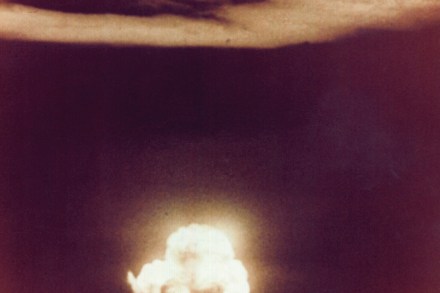
Ettore Majorana vanished in March 1938. According to Frank Close in Destroyer of Worlds, the 31-year-old Sicilian physicist ‘probably understood more nuclear physics theory than anyone in the world’, and was hailed by Enrico Fermi as a ‘magician’, in the elevated company of Newton and Galileo. Majorana was also an ardent fascist; yet he was haunted by the destructive potential of his work on mapping the nucleus. His disappearance – perhaps a suicide; more likely a new, incognito life in South America – has been related to an anguished remark he made to a colleague: ‘Physics has taken a bad turn. We have all taken a bad turn.

The self-serving delusions of the ‘Swastika Kaiser’

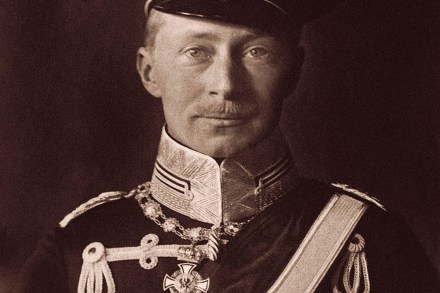
Whenever a new study of the Nazi regime appears, it is taken as a given that after Adolf Hitler seized power and became dictator of Germany in 1933 an egalitarian society emerged, very different to previous decadent, backward-looking generations. In this modern era, it is assumed, the concerns of the Kaiser and the German elite were at best ignored and at worst made another target of the Führer’s purges. In 1933, Wilhelm called Hitler a ‘torchbearer with unparalleled force of conviction and self-sacrifice’ It’s a tempting summation, but an over-simplistic one. As a biographer of the Duke of Windsor, I drew on documents that suggested that Hitler was in fact deeply impressed by the former Edward VIII.

Has the term ‘racist’ become devalued through overuse?

One of the key charges made by the hard of thinking is that because the devastating accusation ‘racist’ has been thrown around so casually in these days of febrile public discourse, it no longer has meaning. Similarly, ever since Rik called Vyv (and a bank manager and the BBC) a fascist in The Young Ones, that insult has been devalued to the point of meaninglessness. Or has it? One can never truly know the heart of another person, so short of them lighting a crucifix on their front lawn and perpetrating violence exclusively against one racially designated group over another, we are compelled to only assume that if you often say things that sound a bit racist you might be legitimately given the identity of ‘a racist’.

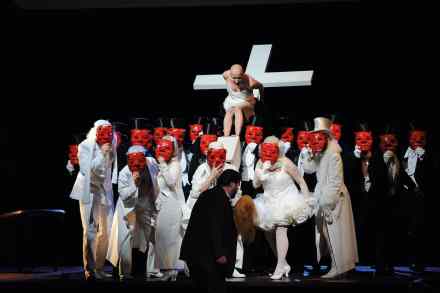
Wagner’s Ring is a mythic mishmash

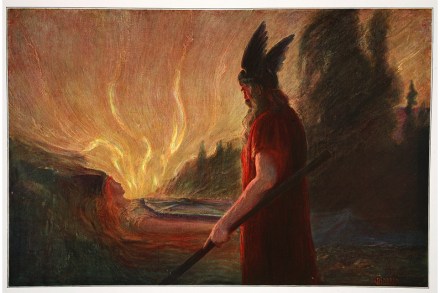
Wagner’s Ring is an ambitious cycle of four operas relating world history from Primal Swirl to End of Days. It took 26 years to write, takes 15 hours to perform, a double-size orchestra to play and a specially built opera house to stage. Michael Downes, the director of music at St Andrews University, places the fons et origo of the epic in Wagner’s frustration as a kapellmeister, when he wrote, unsolicited, to his boss the King of Saxony, proposing a total revamp of the royal music scene. No reply was forthcoming. A second proposal was also blanked. Furious, Wagner flung himself into the Dresden uprising of 1848, financing the manufacture of hand grenades and giving bloodthirsty speeches from the barricades.

When it comes to krautrock, it’s impossible not to mention the war

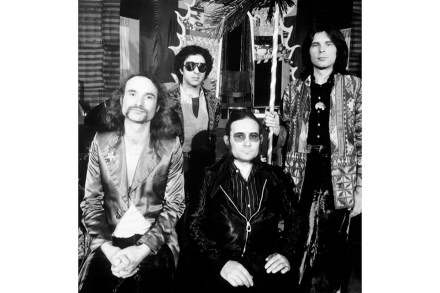
In recent years, sensitive music critics have attempted to replace krautrock with kosmiche as the consensus term for the wild and wonderful music that exploded out of West Germany during the 1970s: Can, Neu!, Cluster, Faust. A word that literally translates as herb-rock, cooked up by glib Brits who had read too many war comics, lacks a certain gravitas, and nobody would describe Tangerine Dream or Kraftwerk as rock anyway. The Hamburg journalist Christoph Dallach opens his invigorating oral history with a spirited argument about the label, but sticks with it anyway. So krautrock it remains. In this story, it is impossible not to mention the war because no country in the world has been less at ease with its recent past than Germany.

Nietzsche’s thinking seems destined to be mangled and misunderstood

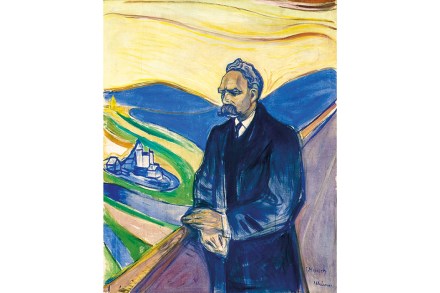
For Mussolini’s 60th birthday, Hitler gave him a de luxe edition of Friedrich Nietzsche’s complete works, bound in blue pigskin. After the war, writers vied to revile the philosopher. Then, in the 1960s, he suddenly became philosophy’s darling. How come? Enter two erotically entangled Italians: Georgio Colli, a philosophy teacher at Lucca from 1942, and his pupil Mazzino Montinari, who in 1943-4 was beaten, interrogated and imprisoned for anti-fascist activism. Both found Nietzsche’s philosophy irreconcilable with fascism. Rumours had been swirling that the Nazifying of Nietzsche emerged from the Nachlass, a mysterious hoard of Nietzsche’s manuscripts suspected to contain forgeries that were the work of his sister Elisabeth and her Nazi minions.

Has Germany finally shaken off its dark past?

In 1982, a board game appeared in West Germany. If you landed on square B9 you were sent to a refugee camp in Hesse where you became ill from loneliness, unfamiliar food and not being allowed to work. Worse still, you had to miss a go and spend the free time thinking about ‘how you would feel in such a situation’. Even if, like me, your childhood was spent crying over lost games of Monopoly, nothing could quite prepare you for the cheerless experience of playing ‘Flight and Expulsion Across the World’. It’s unlikely an updated version has been commissioned for our home secretary, with players assigned counters representing the Bibby Stockholm, inflatable life rafts and Rwanda-bound jets, but you never know.

Is Israelophobia the latest form of anti-Semitism?

Israelophobia addresses an anti-Semitic mutation ‘evolving out of reach’: the demonisation of the Jewish state. Its author, Jake Wallis Simons, is the editor of the Jewish Chronicle. His antennae are primed for anti-Semitism and he finds plenty of it. In France, 60 per cent of religious abuse is directed at Jews and in Germany anti-Semitic incidents have doubled in a decade. In his telling, Israelophobia – Leon Pinsker’s Judeophobia transformed – is the descendant of the deicide myth, the blood libel and the Shoah. Hassan al-Banna, the founder of the Muslim Brotherhood, was a fanatical admirer of Hitler You can hear it in the quality and narrowness of the discourse, he notes. Liberal Zionism is considered no less murderous by anti-Zionists than Greater Israelism.

Why did the Weimar Republic descend so rapidly into chaos?

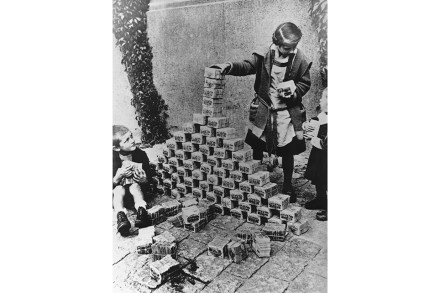
‘Thirteen wasted years’ bellowed Adolf Hitler at receptive audiences in the spring of 1932. He was talking about the first full German democracy, the Weimar Republic. Proclaimed in November 1918, it was born out of a desire to do things better after the horrors of the first world war and was an ambitious attempt to establish one of the most progressive states in history. ‘Democratic chaos,’ sneered Hitler, ‘unmitigated political and economic chaos.’ Much of the electorate agreed. Less than a year later, Hitler became chancellor and immediately set about fulfilling his electoral promise to destroy democracy. The short and tumultuous story of the Weimar Republic continues to fascinate.

Ron DeSantis’s accidental neo-Nazi rebrand

From our US edition

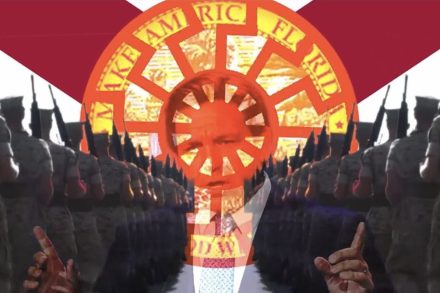
Rumors began to swirl that the Ron DeSantis team was planning a major reboot last week following plummeting polls and financial woes. But the first ad to emerge from his circles since appears to suggest that the presidential hopeful is a neo-Nazi. Cockburn never would have guessed this was the campaign-saving pivot his team had planned.  On Sunday morning a staffer for the DeSantis campaign retweeted an ad from the Ron DeSantis Fancams Twitter account. https://twitter.com/ltthompso/status/1683126430534598656 It features a “doomer,” a crudely drawn young man who suffers from depression and a crippling cigarette addiction, watching reports of Trump’s vaccine rollout and undelivered border wall promises.

sonnenrad neo-nazi desantis

The unimaginable horrors confronting the Allies in 1945

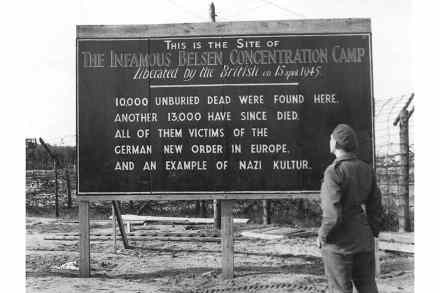
No one had prepared the Allied soldiers, as they began their invasion of the Reich early in 1945, for what they would find. The discovery by the Soviets of the extermination camp of Majdanek in July 1944, and Auschwitz in January 1945, had not really registered, not least because they had been partly emptied and demolished by the retreating Germans. In any case, no one – not the International Committee of the Red Cross, nor the Vatican, nor the British and American governments – had been able, or wanted, to believe what they had been told. The scenes of slaughter and horror that awaited the British, Canadian and American troops were unimaginable.

The opera that wouldn’t die

When Erich Wolfgang Korngold completed his third opera, Die tote Stadt, in August 1920, he’d barely turned 23. Yet such was his reputation that what followed was practically a Europe-wide bidding war for rights to the première. The young composer had his pick of companies and conductors (the Vienna State Opera tried and failed). In the end – almost unprecedentedly – Die tote Stadt was launched on the same night in two cities simultaneously. Audiences in Hamburg and Cologne both erupted into applause, but Korngold, who could be in only one place, had chosen Hamburg – where he was so dazed by the response that Richard Strauss, who was present in the audience, had to remind him to go up and take his bow.

Nobody paints the sea like Emil Nolde

In April, ten years after opening its gallery on the beach in Hastings, the Jerwood Foundation gifted the building to the local borough council. Thrown in at the deep end without a permanent collection, Hastings Contemporary, as it is now known, has to sink or swim on the strength of its exhibition programme. How to please local audiences while attracting outsiders? For a seaside gallery, nautical themes are an obvious answer: this summer’s offering is Seafaring, a dip into two centuries of maritime art from Théodore Géricault to Cecily Brown. What’s the worst that can happen? Shipwreck. The show opens with three recent canvases by Brown inspired by romantic paintings of the subject.

The history of Nazism in small objects

‘I can’t cook,’ writes the historian Karina Urbach, ‘which is probably why it took me so long to realise that we had two cookbooks on our shelf at home with the same title’ – a 1938 edition by her grandmother Alice and one from the following year attributed to Rudolf Rösch. When she did notice, however, it provided a key to unlocking some fascinating family history and a little known strand of Nazi persecution. In 1920 Alice Urbach was living in her native Vienna, ‘a 34-year-old widow with no money’. Her husband had proved a feckless gambler and her father, disappointed by her lack of ambition, had virtually cut her out of his will. Yet she found a way of turning her life round.

Fresh air and fascism in the Bavarian Alps

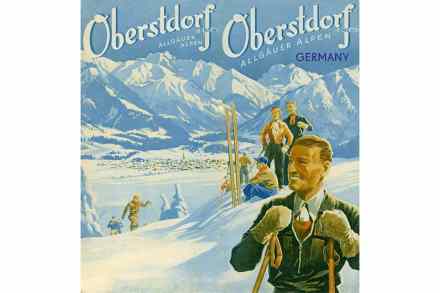
The village of Oberstdorf lies in the Bavarian Alps, geographically remote but, as this gripping book demonstrates, deeply etched by the politics and violence of the Third Reich. Julia Boyd and Angelika Patel have used diaries, letters, newspaper reports and the official papers of Oberstdorfers as a lens through which to look at the rise of Nazism in Germany. The result is a fascinating and often surprisingly discordant cacophony of experiences. Oberstdorf was a small village but it had a wide range. By the early 1920s it was a favoured tourist spot: its population of 4,000 was swelled to 9,000 by visitors who came for health cures and winter sports. There were several hotels, a cable car, a cinema and a sanatorium.