Nazis

The faked passports which saved countless lives in the second world war

From our UK edition

In the summer of 1942, the Polish poet Władysław Szlengel made a detour into light verse with ‘The Passports’: ‘I would like to have a Uruguayan passport/ Oh, what a beautiful land it is/ How nice it must feel to be the subject/ Of the land called Uruguay...’ Successive quatrains hymned the joys of Paraguayan, Costa Rican, Bolivian and Honduran citizenship before the final stanza declared that it was only with one of these citizenships that ‘one can live peacefully in Warsaw’.  The joke was serious. Szlengel was a Jewish man living in the Warsaw ghetto; and as Roger Moorhouse’s absorbing new book describes, Latin American passports were, or could be, a ticket to safety, or at least a hook on which the shreds of hope could be hung.

Historically dishonest: Netflix’s Eldorado – Everything the Nazis Hate reviewed

From our UK edition

If you don’t subscribe to every last detail of the LGBTQ+ agenda, then basically you are a Nazi. This was the subtle message of Eldorado, a documentary that pretended to inform us about the real-life background sexual milieu to Cabaret and Babylon Berlin, but was really much more interested in promoting its political view that Weimar Germany with its sexual promiscuity, rampant drug use and anything-goes view on ‘gender’ represented some kind of paradise on Earth which we should seek to emulate. A voice-over told us what to think: ‘They feel intimidated by this rapid change. The pace of change is a source of frustration to just about everybody. If you’re a radical, then change is happening much too slowly for you.

Lies about the Katyn massacre added insult to the horror

From our UK edition

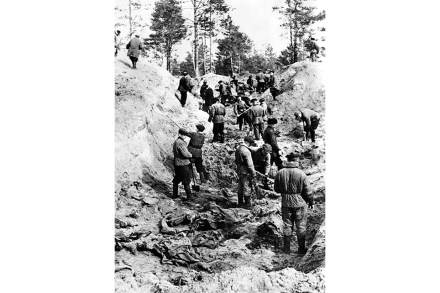
On 5 March 1940, as the USSR stamped its authority on a Poland it had partitioned with Hitler, Stalin signed a decree to murder 14,700 Polish officers in the woods by Katyn. These ‘hardened, irremediable enemies of Soviet power’ were not informed of their sentence and simply shot in the back of the head, a form of execution favoured by the secret police, the NKVD, for whom this method was just part of bureaucratic procedure. NKVD forgers changed the dates on the documents found in the dead officers’ pockets at Katyn When the Nazis turned on the Soviets in 1941 and marched east, they found the mass grave.

A deadly game of chance: The Story of a Forest, by Linda Grant, reviewed

From our UK edition

‘Like a child in a fairy tale’, 14-year old Mina Mendel walks into a Latvian forest one day in 1913. With her basket and shawl, she looks like Little Red Riding Hood, but the wolves she meets – Bolsheviks, ‘agents of the coming revolution’ – are anything but mythical. Linda Grant begins her sweeping, ambitious ninth novel The Story of the Forest with this accidental encounter. From Latvia to Liverpool – and Soho to World’s End – she tells the story of one Jewish family in the 20th century as they live through plots to overthrow the tsar, the trenches of of the Great War, the racism of Liverpudlian suburbs and the horrors of the second world war It is a novel of chances: of lives changed by the ring of a phone, a meeting in a street, or the march of global history.

Love in the shadow of the Nazi threat

From our UK edition

The 1930s saw Walter Benjamin write The Work of Art in the Age of Mechanical Reproduction, Marlene Dietrich rise to fame in The Blue Angel and Pablo Picasso paint ‘Guernica’. If history books mention these events, it’s usually as footnotes to the main European narrative of the pre-war decade. To shift the rise of Nazism, the Spanish Civil War, the Great Terror and other landmarks to the background, one could turn to the cultural history, or the micro-history. In his new book, the German art historian Florian Illies combines both genres to reconstruct the 1930s. Snippets from period documents, including private letters and diaries of notable figures of European and American culture, are distilled into short (between a couple of lines and a few paragraphs) episodes.

What the Royal Society of Chemistry gets wrong about free speech

From our UK edition

Why has the Royal Society of Chemistry published a 37 page opinion piece entitled 'Academic free speech or right-wing grievance?' in their new journal Digital Discovery? Digital Discovery publishes 'theoretical and experimental research at the intersection of chemistry, materials science and biotechnology' focusing on 'the development and application of machine learning'. So it is a little surprising for them to publish a piece that 'argues that those who wish to have an honest debate about the limits around freedom of speech need to engage that conversation in a manner that avoids resonance with the language of White (heterosexual, cisgender male) supremacy, lest their arguments provide intellectual cover to those who would attack historically marginalised communities'.

Was this footballer killed for scoring against the Nazis?

From our UK edition

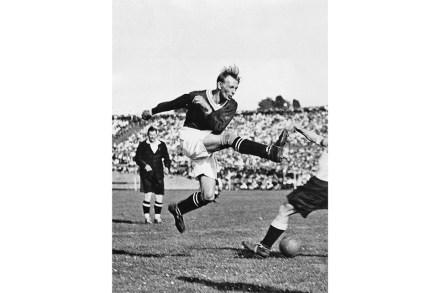
Vienna, April 1938. To mark the Anschluss, the annexation of Austria by the Third Reich, the German football team plays a match against the Austrian team, which will cease to exist when the match is over. The Austrians are much better, but can’t seem to score – aha, the match has been fixed by the Nazis. And then, in the 70th minute, Austria’s best player, Matthias Sindelar, can’t take the pretence any more and puts the ball in the German net. At the end of the match, to underline his feelings, he performs a victory dance in front of the Nazi dignitaries. This might sound like fiction but it really happened. Sindelar, the ‘Paper Man’ of this book’s title, was 35 at the time, and, in his prime, had been probably the best player in the world.

This production needs more dosh: Good, at the Harold Pinter Theatre, reviewed

From our UK edition

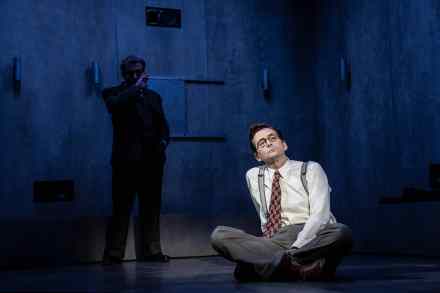
Good, starring David Tennant, needs more dosh spent on it. The former Doctor Who plays John, a literary academic living in Germany in 1933, whose cosy life is disrupted by troublesome females. His mum is a cranky basket case dying in hospital and his wife is a manic depressive who can’t look after their kids. Both women speak with Scottish accents. John has a fling with a third Scotswoman who studies Goethe at his university. Weirdly, all three women – mum, wife and girlfriend – are played by the same actress. Couldn’t the producers fork out for a proper cast? They certainly didn’t spend more than a fiver on the set, which looks like an abandoned bomb shelter made of cardboard.

The Osnabrück witch trials echo down the centuries

From our UK edition

Absent mothers resonate in the latest offerings from two heavyweights of French literature. Getting Lost is the diary kept by the prize-winning novelist Annie Ernaux while she was having an affair with a married man in 1989. Ernaux has already written a novel about this relationship. Now we have a more immediate and intimate account. Meanwhile, the octogenarian feminist and literary theorist Hélène Cixous continues her own brand of écriture féminine in Well-Kept Ruins. For the uninitiated, Cixous’s stream of consciousness is like reading Molly Bloom with a PhD from the Sorbonne, a raft of awards and a keen eye for cognitive dissonance.

The unpleasant truth about Joseph Roth

From our UK edition

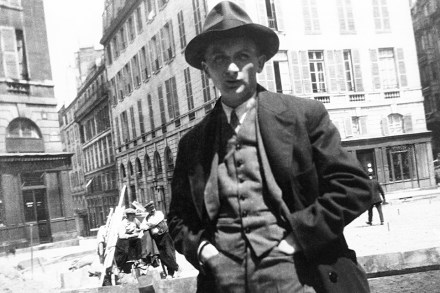
Endless Flight is the first biography in English of the novelist Joseph Roth. This is very surprising, since Roth’s short, violent life traverses some of the most compelling episodes in 20th-century European history. He was a supremely elegant, intelligent and clear-sighted writer, despite living out of suitcases, in hotel rooms, always on the run. If most of his novels are flawed in one way or another, they are all interesting in others. He also wrote what must be one of the dozen greatest European novels, The Radetzky March, translated at least three times into English since 1933. (We are now lucky to have Michael Hofmann’s superb, comprehensive translations, which perfectly convey Roth’s native skill in language.

Nazi on the run: The Disappearance of Josef Mengele, by Olivier Guez, reviewed

From our UK edition

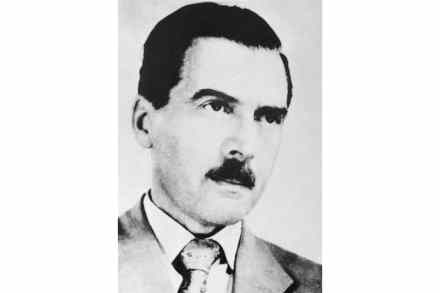
Who would have thought that someone would write a novel about Josef Mengele, the Auschwitz doctor and infamous experimenter on live human bodies? Other characters in the French writer Olivier Guez’s story are also from the Nazi gang of debased criminals: Adolf Eichmann, Franz Stangl, the concentration camp commandant, and Klaus Barbie, the Butcher of Lyons. This is a historical novel, and Guez has researched it well. He invests the structure of events with his imagination and has Mengele relate his experiences throughout his long avoidance of capture. There’s a vivid sense of reality about the crazed, unrepentant eugenist’s attempt at an acceptable fugitive way of life, and Guez holds our attention by building dramatic suspense.

The invisible man: The Glass Pearls, by Emeric Pressburger, reviewed

From our UK edition

Not all Germans were swayed by Hitler, but the majority were. Karl Braun, the fugitive Nazi doctor at the heart of Emeric Pressburger’s 1966 novel The Glass Pearls, was devoted to the furtherance of so-called ‘science’ under the Führer. In the interests of research he cut up the brains of a number of concentration camp inmates. His chosen victims – Jews and other ‘useless mouths’ – were crematorium fodder. Yet Braun sees himself as a decent, God-fearing family man. Undoubtedly he had to carry out unpleasant work, but does that mean he has no conscience? Pressburger, a Hungarian-born Jewish émigré, had reason to dislike the Germans: his mother and other close relatives were murdered at Auschwitz.

Woke Twitter wonders: did Anne Frank have white privilege?

Did you spend any time on Twitter last weekend? If not, you missed a good one. Apparently Anne Frank had white privilege. Yes, that Anne Frank. The Jewish girl murdered by Nazis at the age of 15. TMZ reports that it’s “[u]nclear how this toxic discourse first started,” but the gist is that “Jews had the benefit of their skin color to go unnoticed in public, if only temporarily, during that bleak time in history,” while “POC, historically, haven't been able to do so.” Which, of course, explains why Anne Frank spent her days in Amsterdam strolling openly along the canals, playing Cupid for cancer-stricken teens and blasting Justin Bieber’s latest album through her earbuds. Oh wait. A few examples: @Ka1zoku_Qu0d: “yeah Anne Frank had white privilege.

Why are Putin’s propagandists so bad at their jobs?

During the Cold War, the Soviets would place defectors from the West under house arrest as soon as they arrived in Russia. The assumption was that, as soon as they realized what a dump the USSR was, they would try to sneak back home. And they were probably right. Still, it’s a credit to the Soviet propaganda machine that they showed up in the first place. Back then, Russia did a great job of marketing itself. They paid top dollar to seduce high-ranking scientists and intelligence officials, while young radicals lined up to do the Kremlin’s bidding. Their disinformation was second to none. And today? Well, put it this way. Last week, Russian foreign minister Sergei Lavrov said that Ukraine’s Jewish president, Volodymyr Zelenskyy, is a Nazi.

Elon Musk and tweeting on a volcano

Of all the hilarious freakouts over Elon Musk's bid to buy Twitter, my personal favorite comes from journalism professor and self-styled "NYC insider" Jeff Jarvis (as noticed by The Spectator's Bill Zeiser last week). Jarvis tweeted — and I quote — "Today on Twitter feels like the last evening in a Berlin nightclub at the twilight of Weimar Germany." One imagines Mehdi Hasan and Molly Jong-Fast manically jazz-dancing as the Bruenigs belt out a song from a cabaret stage. And surely nothing calls down the specter of fascist totalitarianism quite like Musk's pledge to end Big Tech censorship. Because that's what the Nazis did, right? They kicked down the door to the nightclub, stormed through the horrified crowd, and barked, "ATTENTION PLEASE!

elon musk

Has the role of resistance in the second world war been exaggerated?

From our UK edition

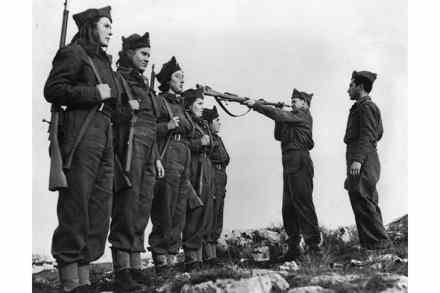
When in 1941 Winston Churchill famously declared that the newly formed Special Operations Executive, set up to encourage resistance movements, would ‘set Europe ablaze’, neither he nor anyone else could have known the extent of the help the partisans would provide to the liberation of the continent. Nor, indeed, did anyone envisage the fact that not all of them would prove as biddable to Allied wishes as they hoped. As Halik Kochanski shows in her compendious book on the six-year underground war, resisters came in all shapes and sizes, not easily controlled or corralled into categories. She divides her survey into three periods. The first runs from March 1939 and the occupation of Czechoslovakia to the German invasion of Russia in June 1941.

Our enemy’s enemy

After Nazi Germany attacked the USSR, Winston Churchill had no qualms about entering into an alliance with Stalin, whose regime he understood all too well: “If Hitler invaded Hell, I would make at least a favorable reference to the Devil in the House of Commons.” Similar thinking does much to explain the enlistment of former (and not so former) Nazis by the Western allies in intelligence work against the Soviets after 1945. With the Red Army in the heart of Europe, co-opting suitably qualified veterans of the fallen Reich — some of whom had very dirty hands indeed — made some sense, according to that Churchillian logic, but mainly when those selected were anti-Communist and now aligned with a democratic Germany.

fugitives

Eugenics will never work – thankfully

From our UK edition

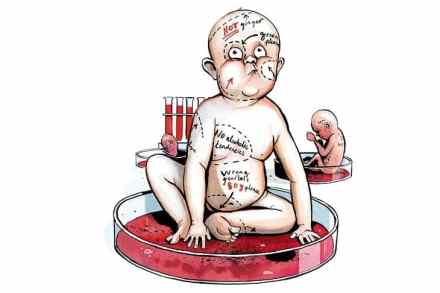
In his most recent book, How to Argue With a Racist, the geneticist Adam Rutherford set out a lucid account of how the basis for many widely held and apparently commonsensical ideas about race are pseudoscientific; and he lightly sketched, along the way, the historical context in which they arose and the ideological prejudices that nourished them. We might have some half-baked ideas about how evolution works — and have unthinkingly accepted racial categories invented by 18th-century imperialists — but, he assured us in perhaps the standout line of the book, the underlying genetics is ‘wickedly complicated’. Control is a companion piece to that one.

Robert Harris on Boris Johnson, cancel culture and rehabilitating Chamberlain

From our UK edition

Robert Harris has long been on a one-man crusade to reverse history’s negative verdict on the architect of appeasement. He argues that it was Neville Chamberlain’s duty to go the extra mile for peace and give Britain the moral authority to fight Hitler in the second world war. ‘There seems to be a general feeling that he couldn’t have done much else. He bought us precious time.’ Now the appearance of an acclaimed Anglo-German Netflix film Munich — The Edge of War, starring Jeremy Irons as Chamberlain, and based on Harris’s 2017 novel Munich, gives him the chance to bring his quixotic campaign to a mass audience.

The dark story behind Bambi, the book Hitler banned

From our UK edition

The extent of Walt Disney’s grasp of the natural world remains unclear. After the Austrian author Felix Salten sold the rights to his 1923 bestseller Bambi for a paltry $1,000, Walt is reputed to have suggested myriad unhelpful plot additions to the simple story. ‘Suppose we have Bambi step on an ant hill,’ he offered at one script meeting, ‘and then cut away to see all the damage he’s done to the ant civilisation?’ His writers knew better. The resulting 1942 forest fantasia, which leaps in swooning bounds from one extravagantly coloured and orchestrated natural history lesson to another, was nominated for three Oscars, and by 2005 had grossed $102 million. The original author did less well out of his gambolling creation.