Nazis

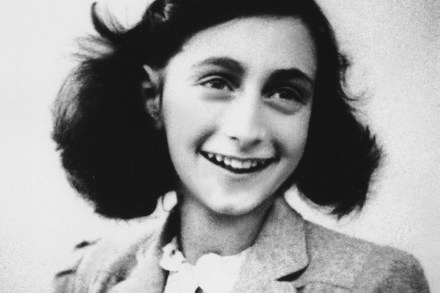
How Anne Frank’s photograph became as recognisable as the Mona Lisa

From our UK edition

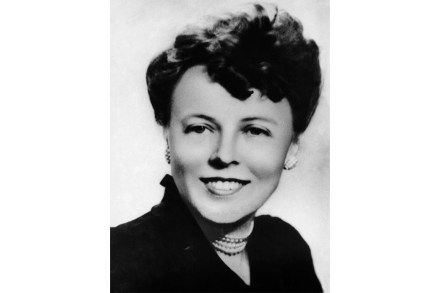
Anne Frank died of typhus in Bergen-Belsen in late February 1945. Her last days were spent in the sick barracks caring for her sister Margot, who had a high fever and smiled contentedly, her mind already wandering. Anne, too, had been feverish, but ‘friendly and sweet’, according to witnesses. Her last recorded words were: ‘Margot will sleep well, and when she sleeps I won’t need to get up again.’  Ruth Franklin’s superb and subtle book pivots around this moment, which is described in a starkly titled central chapter, ‘Corpse’. Half her study tells Anne’s story up to the tragedy of her death.

Nazis, killer dogs and weird sex: Empty Wigs, by Jonathan Meades, reviewed

From our UK edition

Jonathan Meades is, you might say, a baroque artist in a mannerist age. Whereas today’s younger and more widely feted writers think small – a Brooklyn sublet, a Camden Town love nest, the cracked mirror of the self – Meades goes big. And not just in physical terms (Empty Wigs tips the scales at nearly 3lb), but in scope. Where his contemporaries’ prose can be affectless and somehow skinless (a Paris Review interviewer said of Rachel Cusk, with apparent admiration, that her writing ‘feels contemporary, swift and “clean”’), Meades piles on the style, packing in metaphors, coinages and allusions until the crystals can’t take it, swooping between social classes, doing the police in different voices.

The world is now inexorably divided – and the West must fight to survive

From our UK edition

In The Builder’s Stone, Melanie Phillips reminds us forcefully that we must never forget how 7 October 2023 changed the world. On that day Hamas terrorists from Gaza invaded southern Israel and brutally raped women and butchered or burned alive 1,100 Jewish men, women and children. They also dragged 250 Israelis, including three-year-old twins, grandparents and young women whom they had already attacked, into Gaza as hostages. They filmed it all on their body cameras, and perhaps the most terrifying thing they recorded was the glee with which they carried out these atrocities. Phillips, a British writer who lives in Jerusalem and London, has spent many decades fighting Goliaths.

Elon Musk’s critics are more autistic than he ever could be

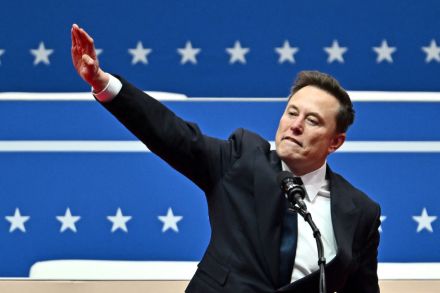
I’ve managed to keep most of my liberal family relationships and friendships intact, even after going public about voting for Trump. Most of them shrugged and applied the principle our grandparents taught us — blood is thicker than politics. That is, until Elon Musk. He has proven to be the straw that broke the liberals’ back. Realizing that they’d rendered calling Trump “literally Hitler” ineffective, many normie Democrats and liberal commentators have redirected this energy toward the “Chief Twit." First there was the hand gesture at the post-inauguration rally.

Elon

An excellent sixth-form drama project: Santi & Naz, at Soho Theatre, reviewed 

From our UK edition

Santi & Naz is a drama set in the Punjab in 1947 that uses an ancient and thrilling storyline about domestic violence. The main characters are a pair of young lesbians who plot to kill Naz’s bridegroom, Nadim, on the eve of the wedding. They discuss stabbing or poisoning him and eventually they decide to drown him in the village lake. This is a strange play. It wants to teach us about Indian society in the 1940s while assuming we’re experts There are many motives for this murder. Santi and Naz hate men. They detest the custom of marriage which forces women to endure painful sexual couplings. And Santi fears that Naz will be unsafe in her marital home because ‘Muslim husbands beat their wives’.

The international criminal justice system was prejudiced from the start

From our UK edition

Three generations ago, Britain and the United States joined forces to propose the establishment of a revamped international rules-based system to remake the world. This was initially articulated in a document that came to be known as the Atlantic Charter, signed in August 1941. Other countries, including the Soviet Union, were persuaded to join the effort, part of a grouping that came to be known as the United Nations. The new rules would address trade and other economic matters, decolonisation, war and the fundamental rights of human beings. In the summer of 1945, the Statute of the Nuremberg Tribunal was drafted, reflecting agreement on a list of international crimes and the notion of individual criminal liability, up to the very highest levels of public office.

The great Nazi moral panic

We’re in the throes of a full-blown moral panic, but this time it’s Nazis instead of Dungeons & Dragons. Nazis are everywhere in the United States. There are signs of them everywhere. Their influence is unmistakable, from beverages to hobbies to views on the nuclear family. It’s eleven o’clock. Do you know where your Nazis are? At least, that's the current state of America, according to the same industry that attempts every year to convince you that someone may sneak high-grade narcotics into your child’s Halloween candy. This week, our brilliant commentariat convinced itself that billionaire tech tycoon Elon Musk had performed two "Sieg Heils" during President Trump’s inauguration festivities.

The horror of Hungary in the second world war

From our UK edition

I suspect Adam LeBor and his publishers must have struggled to come up with the title The Last Days of Budapest: Spies, Nazis, Rescuers and Resistance, 1940-1945. The book certainly does what it says on the cover, but its pages contain other Magyar-themed subjects. We are offered a wide-ranging reflection on Hungary in the first half of the 20th century, from the harsh measures of the 1920 Trianon treaty to the devastating arrival of the Soviet army in Budapest in 1944. LeBor switches between an Olympian view of European geopolitics, trawling diplomatic archives and political memoirs and focusing on individuals – Hungarian aristocrats, Zionists and nightclub singers – to show how history felt on the ground. He is particularly concerned with the fate of Hungarian Jewry.

The ambassador’s daughter bent on betrayal

From our UK edition

In June 1933, the 24-year-old Martha Dodd, the daughter of the newly appointed American ambassador to Berlin, arrived in the German capital with her parents and older brother. She knew little and cared less about politics. To her, Adolf Hitler, who had just seized supreme power in Germany, was merely ‘a clown who looked like Charlie Chaplin’.            To all her friends in Berlin, Martha would show odd bits of information from her father’s office The Berlin in which the Dodds found themselves was a ferment of intrigue, uncertainty, plots, counterplots, sudden disappearances and febrile gaiety.

Democrats ramp up efforts to tie Trump to Hitler

Democrats including presidential nominee Kamala Harris and 2016 candidate Hillary Clinton are accusing their Republican opponent of being a Hitler-esque fascist. Spurred by a curiously thin report from the Atlantic claiming that former president Donald Trump disrespected the memory of a fallen soldier and praised Adolf Hitler and his generals, Harris held a press conference on Wednesday in front of her Washington, DC residence in which she warned Trump is “increasingly unhinged and unstable.” During a CNN town hall later that evening, Harris answered in the affirmative when she was asked if she believes Trump is a fascist. Meanwhile, Clinton likened the upcoming Sunday Trump rally at Madison Square Garden to an event held by Nazis at the same venue in 1939.

An outcast among outcasts: Katerina, by Aharon Appelfeld, reviewed

From our UK edition

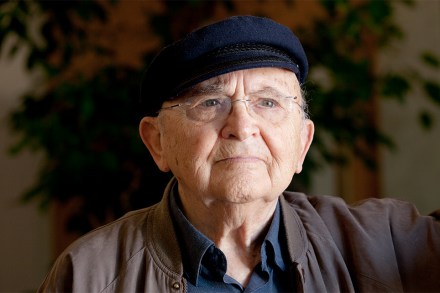
‘Nothing escape’s the wolf’s fangs,’ thinks the narrator of Katerina. Through an outlandish sequence of chances and choices, somehow its author did just that. Aharon Appelfeld, a child of assimilated parents, lived in the old Jewish heartland of Bukovina. In 1940, short-lived Soviet occupation gave way to Nazi control. His mother was murdered and his father disappeared. Young Aharon escaped the Czernowitz ghetto and survived as a wild child in the forests, sheltered by a village prostitute, then as the ‘slave’ of a Ukrainian bandit gang. When the Red Army arrived he cooked for them before, via a peril-strewn route through Italy, he migrated to Mandate Palestine.

How could Hitler have had so many willing henchmen?

From our UK edition

Eight decades after the second world war ended, for how much longer will we produce massive books about Hitler and the Nazis? Richard J. Evans, the former regius professor of history at the University of Cambridge, is one of the senior gardeners in this noxious orchard, having devoted a lifetime’s study to the subject. As a minor under-gardener in the same field, I believe that we now know all we need to about the Führer and the crimes of his vile regime, and, barring the unlikely discovery of something new, it is time that historians moved on. The damning facts can be briefly stated, and are cogently summed up by Evans in his conclusion: Hitler was a fanatic, brought to power by a German middle class traumatised by defeat in the first world war and the economic woes that followed.

What did Britain really gain from the daring 1942 Bruneval raid?

From our UK edition

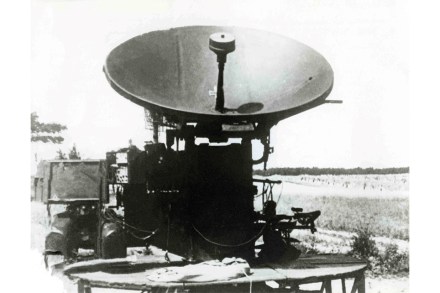
These days we use radar to help us park our cars, but during the early years of the second world war it was white hot technology and a closely guarded military secret. First used to detect aircraft in 1935, within a few years it had helped win the Battle of Britain and sink the Bismarck. It was so secret that work on it was forbidden even to physicists of genius who had fled the Nazis. (In the event, this freed up two such émigrés, Rudolf Peierls and Otto Frisch, to prove the viability of the atom bomb and thus kick-start what became the Manhattan Project.) Intelligence about what the enemy was up to with radar had a price above rubies.

A terrible tale of a French village

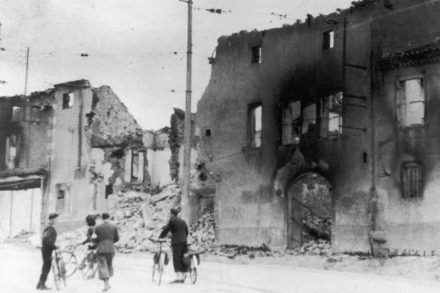
The new prime minister of France, Gabriel Attal, has promised to “take care” of Oradour-sur-Glane. The village, in west-central France, was the scene on June 10, 1944, of an infamous Nazi massacre of 643 men, women and children, shot or locked in the local church and burned alive. Only six villagers escaped to tell the tale; the last of them died in 2023. For years Oradour-sur-Glane has been a site where schoolchildren were taken to learn about what France endured during World War Two. Recently the abandoned village has become overgrown with vegetation, but with the eightieth anniversary this summer, the descendants of the victims are making sure they are not forgotten.

Oradour

Hero and villain: The Two Loves of Sophie Strom, by Sam Taylor, reviewed

From our UK edition

Counterfactual thinking can be compelling. We imagine love affairs missed out on, tragedies averted. What if I hadn’t boarded that bus or woken from that sleep? Sam Taylor throws this thinking into a vital moment in a young boy’s life that has massive, world- historical resonance. Vienna, 1933. Nazi sympathisers burn down the flat of a Jewish family. Max Spiegelman, aged 13, escapes, but his parents burn to death. Or do they? In a parallel narrative, Max awakes from this dream into the very fire he’s just dreamed about, early enough to rescue his parents.

An endurance test that I constantly failed: Occupied City reviewed

From our UK edition

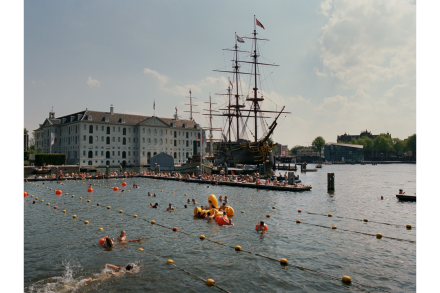
Occupied City is Steve McQueen’s meditative essay on Amsterdam during Nazi occupation, with a running time of four hours and 22 minutes. There is no archive footage. There are no witness testimonies. It’s not The Sorrow and the Pity. It is not half-a-Shoah. Instead, this visits 130 addresses and details what happened there between 1940 and 1945 while showing the building or space as it is today. It should have its own power – what ghosts reside here? What was life like for the Jews who were deported from this square and perished at Auschwitz? – but I watched it from home via a link, as I had Covid, and after the first hour started to wonder: if I die will it be from the virus? Or the boredom? After the first hour I started to wonder: if I die, will it be from Covid?

The problem with westerners seeking oriental enlightenment

From our UK edition

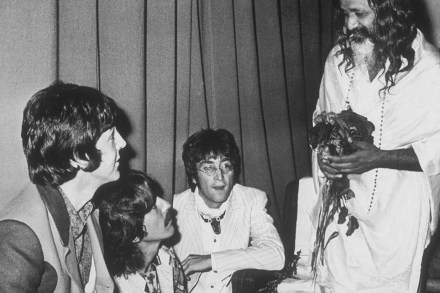
Call it a prejudice if you like. Living in Japan in the 1970s, I had a slight aversion to a particular type of westerner. He – for it was mostly a he – usually lived in Kyoto, sometimes wore a kimono and liked to sit in ancient temples chasing after that presumably blissful moment of enlightenment, awakening, satori, or whatever one wishes to call it. These seekers were less interested in Japan as a society of human beings. They wanted to float in higher spheres. As Christopher Harding explains in The Light of Asia, the Zen adepts, the Buddhist chanters, the rock-garden worshippers, the kimonoed fools (in my no doubt blinkered eyes) were part of a long western tradition. He identifies two ancient western perceptions of the ‘East’, by which he really means India, China and Japan.

Dangerous secrets: Verdigris, by Michele Mari, reviewed

From our UK edition

In everyday life – on a garden path, flowerpot or lettuce – I back rapidly away from slugs. I didn’t expect to confront them in literature, but in Michele Mari’s Verdigris they are present in abundance, from the first line: Bisected by a precise blow of the spade, the slug writhed a moment longer: then it moved no more... slimy shame transformed into splendid silvery iridescence.  So, not a novel for one who shrinks from gastropod molluscs, you would think. Yet I quickly found myself drawn into a remote corner of rural north Italy in 1969 where a lonely, bookish boy, Michelino, spends long summers with his emotionally unreachable grandparents.

The Duke of Windsor had much to be thankful for

From our UK edition

Once a King is trumpeted as ‘game-changing’, a ‘trove of never-before-seen papers which shed fresh light on the maligned Duke of Windsor’ and will ‘turn on its head long-accepted stereotypes’ about him. These are bold claims, but do they stack up? ‘The lost memoir of Edward Vlll’ actually consists of an early draft of the Duke of Windsor’s self-serving memoir, A King’s Story (1951), which Jane Marguerite Tippett found in the papers of the former king’s ghostwriter Charles Murphy in the Boston University archives. Far from being lost, the papers have been known to historians for 20 years and largely ignored in favour of more important collections elsewhere, not least the Murphy papers at the Virginia Historical Institute, of which Tippett seems unaware.

Satirical pulp: The Possessed, by Witold Gombrowicz, reviewed

From our UK edition

On 1 September 1939 Germany invaded Poland. It’s hardly an event which needs its significance re-stating, but there was one outcome which has received rather less attention than the impending crisis in Europe. After the first instalments – serialised in newspapers in the summer of that year – a bizarre, flamboyant, mock-gothic novel by an unknown writer, ‘Z. Niewieski’, was forced to cease publication on 3 September. Witold Gombrowicz, the author of The Possessed and master of Polish modernism, had penned the work under a pseudonym, and, he claimed, only for money. If that distance from the book weren’t enough, he then put an ocean between himself and the manuscript.