Nato

Enes Kanter Freedom on LeBron, Erdoğan and the earthquake

From our US edition

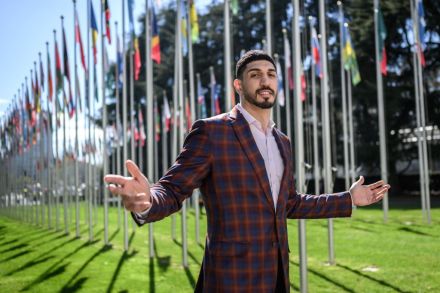
Basketball player and human rights activist Enes Kanter Freedom was invited as Leader Kevin McCarthy's guest of honor to the State of the Union last week, an address in which President Biden barely touched on foreign policy. The former Boston Celtics and Oklahoma City Thunder center spoke with The Spectator about democracy, autocracies and hypocrisy. John Pietro: How far does China’s influence reach into the NBA, in your estimation? Could you see the NBA ever standing up to China in the way the Women’s Tennis Association did in defense of Peng Shuai? Enes Kanter Freedom: I didn’t know how deep the relationship between the NBA and China was until Daryl Morey tweeted and said "stand with Hong Kong" and after that obviously the NBA lost millions and millions of dollars.

enes kanter freedom

The Baltic nations show the world how to defend freedom

From our US edition

It is not inevitable that the Baltic States of Estonia, Latvia, and Lithuania would be among freedom’s most potent defenders. Nestled between the Russian mainland and Moscow’s exclave of Kaliningrad, their only direct connection to their NATO allies is through the vulnerable Suwalki Gap. For its part, NATO only has small rotational forces stationed in the three countries. At first glance, one would expect these tiny nations (Lithuania is the largest at 2.8 million people) to prefer flying under the radar. Instead they have become some of the most vocal and powerful defenders of the Western way of life. Tiny though they may be, the Baltic countries have managed to stand up to the two greatest enemies of freedom at work today, Russia and China.

Turkey’s heavy price for pressuring the Russians

From our US edition

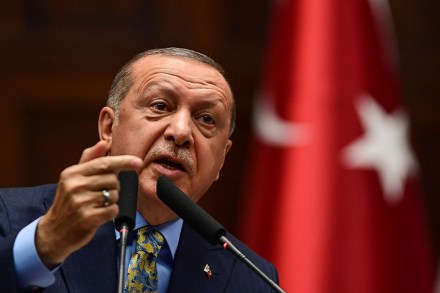
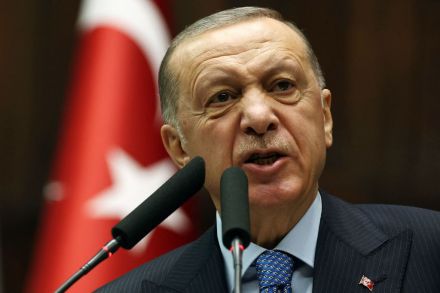
If you enjoyed the weeks-long intra-NATO spat about whether to send heavy tanks to Ukraine, then you’re going to love the ongoing kerfuffle about whether Sweden and Finland should be admitted into the transatlantic alliance. Whereas Germany was the lone holdout in the first instance, Turkey is the obstacle in the second — and going by the fiery words of Turkish President Recep Tayyip Erdogan, the squabble won’t end soon. Erdogan, in the midst of his toughest election campaign in two decades, has been using his veto over Sweden's and Finland’s NATO memberships to press both countries on one of his top priorities: cracking down on the Kurdistan Workers’ Party, a group Turkey, the US, and the European Union all label a terrorist organization.

greece

Biden is the war president Ukraine needs

From our US edition

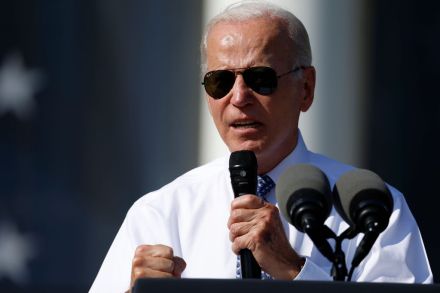
Joe Biden is upping the ante in Ukraine. Even as Vladimir Putin directs a fresh barrage of missiles, Biden is apparently planning a trip to Europe next month to deliver a major address on the anniversary of the Russian invasion and announce a substantial military aid package for Kyiv. Good for him. A speech in Poland or Lithuania — both leaders in the struggle against Russian aggression — will strengthen NATO and demonstrate that a year into the conflict, unity, not dissension, prevails when it comes to confronting Putin’s revanchist ambitions. At every step, Biden has checked Putin, who assumed he could invade and occupy Ukraine in a thrice.

Has a Quran-burning protest ended Sweden’s Nato dream?

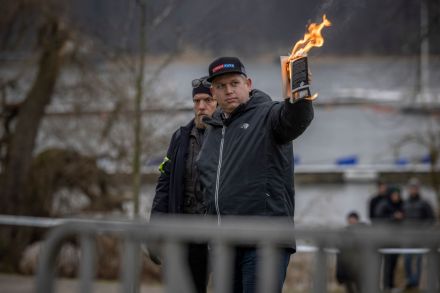
A crowd gathered outside Turkey’s embassy in Stockholm on Saturday afternoon to watch far-right politician Rasmus Paludan burn the Quran. Paludan, who leads the anti-Islam ‘Hard Line’ Danish party, was watched by dozens of photographers, police officers and bemused passers-by. Paludan is no stranger to controversy: he has previously been convicted under racism and defamation law. This latest stunt was called to show his party’s opposition to immigration and, he says, to stand up for free speech. Now, though, the stunt has become a diplomatic crisis for Sweden – and there are fears that its bid to join Nato could go up in smoke.

John Bolton’s clueless presidential dreams

From our US edition

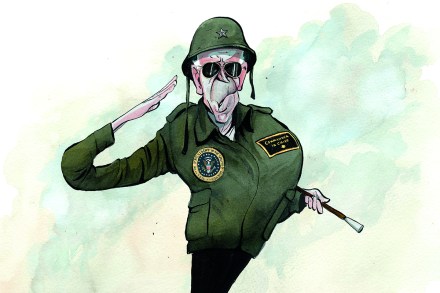
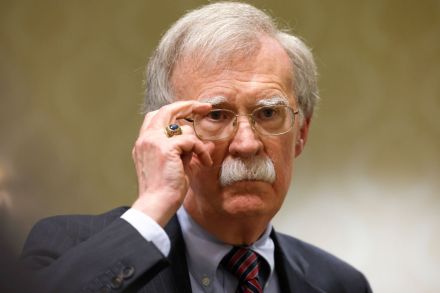
A couple of major news outlets got egg on their faces last week after reporting that John Bolton had officially entered the Republican presidential primary. Alas, that isn’t quite true. What Bolton actually said is that he’d run if he thought he had a chance of beating Donald Trump. “I wouldn’t run as a vanity candidate,” Bolton told Good Morning Britain. “If I didn’t think I could run seriously, then I wouldn’t get in the race.” I don’t blame reporters for jumping the gun. The story is too good to pass up. Even Trump’s enemies would enjoy watching him savage Bolton on the campaign trail: “We booked out this big, beautiful arena, folks. You know where Ambassador Lorax is having his rally? The high school down the street.

Germany’s broken promise to rebuild its military

From our US edition

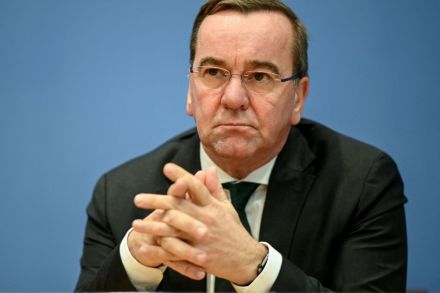
Germany has a new defense minister. The funny thing is that nobody really knows who he is, what he stands for, and whether he’s capable of doing his job. Boris Pistorius will take over the ministry from Christine Lambrecht, whose one-year tenure was about as embarrassing and gaffe-prone as the Bundeswehr itself. There are too many blemishes on her record to examine in a single post — we would be here all day. But one of the more notable misfires was her tone-deaf New Year’s Eve video, where she reminded viewers that a war was going on in Europe as a fireworks display went off behind her. For many in the German defense establishment, Lambrecht’s departure can be summed up in two words: good riddance. Not much is known about her replacement.

Why Sweden and Finland still haven’t joined NATO

From our US edition

Sweden and Finland officially applied to join NATO last May, overturning their long-standing policies of neutrality. If their membership goes through, it will be one of the most consequential accessions in NATO history, bringing two technologically advanced militaries right on Russia’s doorstep into the fold. But as the eight-month mark approaches, neither nation has received the unanimous support from the other members that it needs. To date, twenty-eight members of the alliance have approved the Scandinavian nations’ memberships, with Hungary and Turkey as the two holdouts. Hungary has indicated it will vote to accept the accession in early 2023, which will leave NATO’s most undemocratic and troublesome member, Turkey, as the last hurdle.

Biden needs to stop ceding the initiative to Putin

From our US edition

Washington will provide Patriot missiles to Ukraine, bolstering Kyiv's air defenses in the new year. This is welcome news — but it should have happened a long time ago. One word best characterizes the Biden administration’s response to the war in Ukraine: reactive. The president’s lack of proactive measures both gives Putin an edge and prevents Ukraine from achieving a swift victory. US weapons began arriving in Ukraine in December 2021 from a $60 million package approved in August, with another package worth $200 million being approved in December and arriving in January. Both lacked the firepower needed to deter Moscow. The administration knew by October 2021 that Putin might invade — and that Russia had been building up forces around Ukraine since the spring.

putin

It’s time for Pope Francis to speak out against China

From our US edition

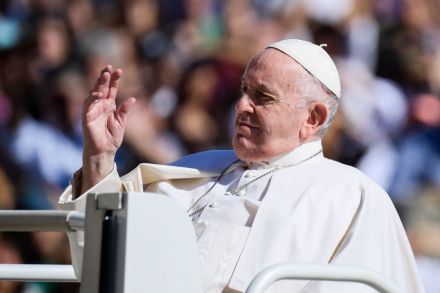
There is a lot to dig into amid Pope Francis’s recent interview with America magazine, but the most interesting tidbits might be his commentary on foreign affairs. Whereas the traditional head of state represents the interests of a nation, the Holy Father’s most important duty is the shepherding of the Catholic faithful. His message thus carries much weight, not because of the raw power at his disposal, but because it is backed by the moral authority of the Catholic Church. The pope has been in some hot water recently over both the war in Ukraine and the Vatican’s relations with China. Though he has long condemned the violence in Ukraine, he has not been as clear in condemning Russia and Putin specifically.

The West should follow Eastern Europe’s lead on foreign policy

From our US edition

Few countries know Russia’s brutal imperialism better than Poland and the Baltic states. These nations are among a handful in the West to have responded to Putin’s invasion of Ukraine with the decisiveness and clarity of vision that the security environment demands. This is why the United States, as it faces a dual threat of China and Russia, should look to Eastern Europe for inspiration. Poland has undergone the most dramatic transformation of the bunch, increasing its defense budget and boosting the size of its military, in addition to supplying Ukraine with a vast array of materiel. Warsaw has pledged to raise defense spending to 3 percent of gross domestic product (GDP) within a year, up from 2.2 percent, which will be nearly on par with the United States.

NATO acquits itself well in the Poland missile crisis

From our US edition

Mid-afternoon Tuesday, a missile struck the town of Przewodow in eastern Poland close to the Ukrainian border, killing two. The incident immediately set off alarm bells around NATO and the world, as Poland, a member of the military alliance, could invoke Article 5 of the North Atlantic Treaty, bringing all 30 members to its defense. The Polish government is considering invoking Article 4 of the treaty, which allows any member state to call a meeting of all members to discern if "territorial integrity, political independence or security… is threatened." NATO was due to meet on Wednesday anyway, but the tragedy in Poland has superseded the gathering’s planned lineup.

What price must the West pay for Crimea?

From our US edition

For centuries before Vladimir Putin arrived on the scene, Russian foreign policy has been shaped by the country’s need for warm-water ports. To be a great power in Europe and the Near East, Russia must have access to the Mediterranean. Commercial as well as military considerations dictate this. In the eighteenth century Russia conquered the khanate of Crimea and acquired a splendid location for a new Black Sea port — what is now the city of Sevastopol. The Crimean peninsula had been a gateway from Asia to the Mediterranean since the days of the ancient Greeks, who built some of their northernmost colonies there. Russia made Sevastopol the permanent home of its Black Sea Fleet.

crimea

Will Nato accept Ukraine?

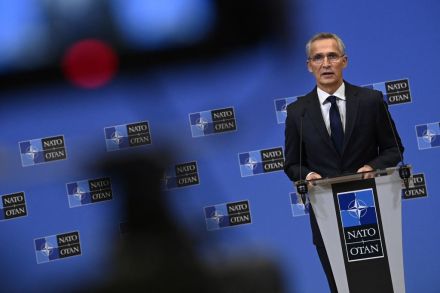
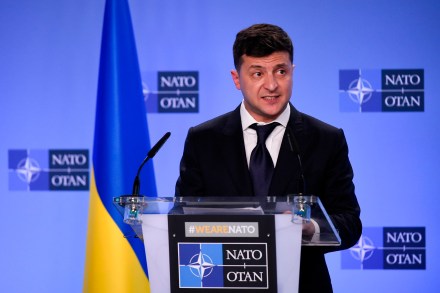
Shortly after the invasion of Ukraine, Volodymyr Zelensky made an offer to Vladimir Putin. Ukraine would drop its ambition to join Nato and would instead stay neutral, he said. It would not align with the West, in exchange for an end to hostilities. It was a sincere offer, and unpopular with Ukrainians. Yet it was significant: Putin had cited Ukraine’s Nato ambitions as the main reason for the invasion, saying it showed the West was somehow threatening Russia. But today, that offer ended and Zelensky is seeking the ‘accelerated’ Nato accession granted to Finland and Sweden this year. Will Nato accept? Jens Stoltenberg, Nato Secretary-General, dodged the question when asked today.

Letters: Britain needs the English National Ballet

Putin’s options Sir: I agree with Paul Wood that Vladimir Putin is on the back foot (‘Cornered’, 24 September). His actions, from partial mobilisation to nuclear threats to the rapid referenda in occupied Ukraine, indicate a psychopathic gambler who hopes that one last spin will turn Lady Fortune his way. However, there is a big gap between ‘losing’ and ‘lost’, and that is where the focus on the nuclear threat by the West is unhelpful and dangerous. As well as the partial mobilisation, Putin ordered in August a 10 per cent increase in the size of the military to more than a million combat troops.

Ukraine turns the tables on Russia

From our US edition

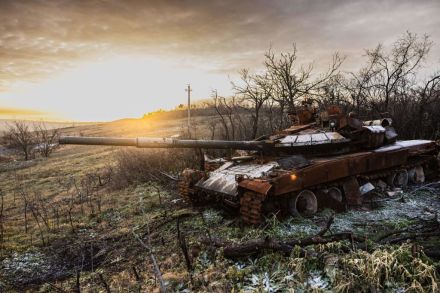
Russia’s brutal war on Ukraine has moved into a new phase, a very encouraging one for Ukraine and its western allies. In Phase 1, Russia tried — and failed — to seize the capital city of Kyiv with a blitzkrieg assault. The idea was to decapitate the Zelensky government quickly and install a puppet regime, subservient to Moscow. After that failed, Russia focused on taking the Donbas region of eastern Ukraine and forming a “land bridge” to Crimea, which Russia seized in 2014. Russia has had some success in this Phase 2 of the war, at very high cost, but movement along that front has now stalled.

In defense of Sanna Marin, Finland’s partying PM

From our US edition

Party politics is done somewhat differently in Finland. While Boris Johnson was hounded out in Britain for some miserable looking cake and wine, over in Helsinki, his counterpart finds herself in hot water for simply having too much (seemingly legal) fun. Sanna Marin, the country's thirty-six-year-old prime minister, is now facing criticism after a video of her partying with friends was leaked online. It features the Social Democrat leader throwing shapes to music with various Finnish artists, TV presenters and Instagram influencers — and all seems a fairly innocuous affair. https://www.youtube.com/watch?v=dvP84_orIXc&feature=emb_title&ab_channel=OldQueenTV Not so for her critics.

sanna marin partying

Is Germany afraid of China?

The German air force has taken off for its first deployment in the Indo-Pacific region. It will take part in Australia’s biennial warfare exercise Pitch Black from Friday, side by side with other western nations as well as regional partners such as Japan, Singapore and South Korea. Berlin’s show of solidarity will be welcomed by Nato allies, but it will also draw pushback from China. It’s an opportunity for Germany to show that it can make a meaningful contribution to the deterrence of Chinese aggression in the Pacific. But in order to do so convincingly it will have to resist pressure from Beijing with more confidence than it has in the past. Germany’s commitment looks promising.

NATO vote shows conservatives are getting it right

From our US edition

Yesterday's 95-1 vote in the Senate to support the admission of Finland and Sweden to NATO is another in a series of signs the Republican Party is figuring out what it means to have an "America First" foreign policy. The additions of the two nations serve to strengthen the NATO alliance in ways long supported by national security-minded conservatives. But they are also a vindication of the more recent arguments, advanced by Donald Trump, that members of NATO must necessarily meet their obligations in terms of military budgets. Finland and Sweden are not freeloaders — they have advanced militaries and spend a great deal on them, and have a long history of taking the threat of Russian aggression seriously.

Why expanding NATO is an America First idea

From our US edition

There is an open tug-of-war going on right now over the direction of foreign policy on the right. The attempts by various factions and individuals to seize and define the principles of an “America First” foreign policy has led to politicians and institutions using similar language and labels to defend very different positions. Yet the overarching direction of foreign policy on the right seems clearer in the results than in the conversations. Even as there are disagreements among Republicans in Washington — on Ukraine funding, for instance — they seem to have much more in common when it comes time to actually take a vote or make a decision.

america first nato expansion