Nato

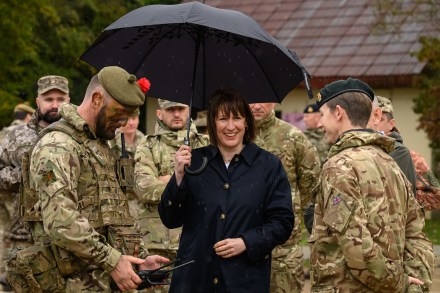
Is Rachel Reeves blocking defence spending because of ‘gender parity’?

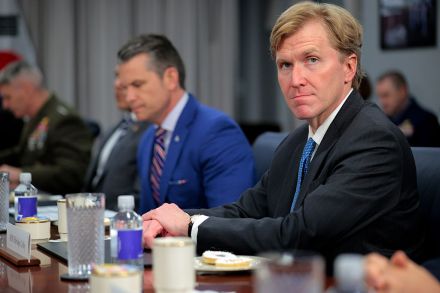
When John Healey was asked, on stage at the London Defence Conference, whether the armed forces were ‘ready’ for war, the Defence Secretary replied: ‘Yes.’ One of those present says: ‘That was greeted with near incredulity in the room.’ Another attendee compared Healey’s plight to someone ‘playing French cricket’, with critics from all sides hurling balls at his ankles while he tried to bat them away. ‘You can’t score any runs in French cricket.’ George Robertson, Healey’s most respected Labour predecessor and a former secretary general of Nato, was not present; he was in Scotland celebrating his 80th birthday. But he returned to give a withering interview to the FT

Are the Treasury & the MOD at war?

11 min listen

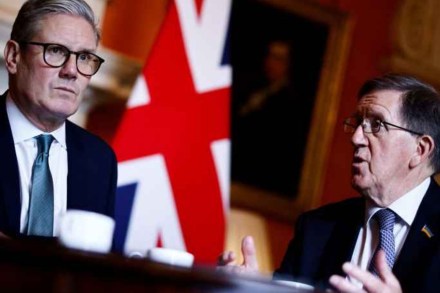
George Robertson (pictured), a former defence secretary and former NATO secretary-general, has accused the government of ‘corrosive complacency’ towards defence, which puts the UK ‘in peril’. This is all the more stinging because the Labour peer was one of the authors of the government’s Strategic Defence Review – and that makes two of the three who have since criticised it. How much trouble does this spell for Starmer? And is this just the latest battle in the ongoing war between His Majesty’s Treasury and the Ministry of Defence? Megan McElroy speaks to James Heale and Lucy Fisher, Whitehall editor of the financial times and who broke the story. Produced by

Are the Treasury & the MOD at war?

Will Trump pull the US out of NATO?

15 min listen

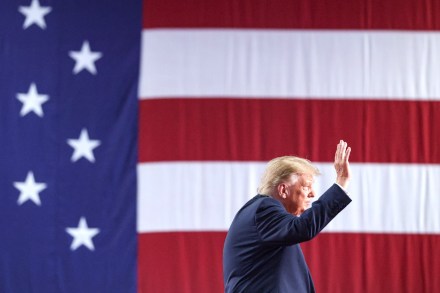
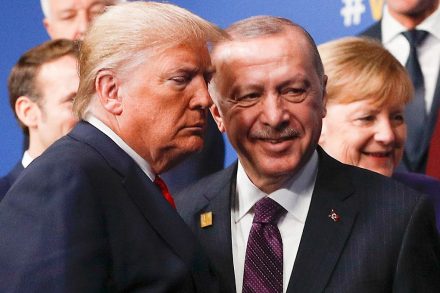
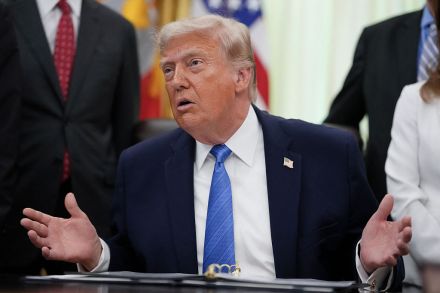
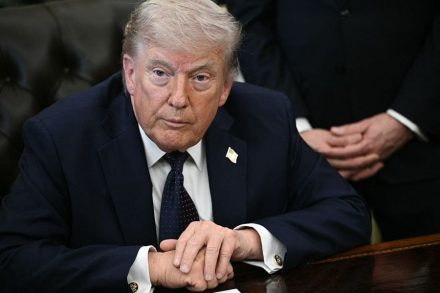
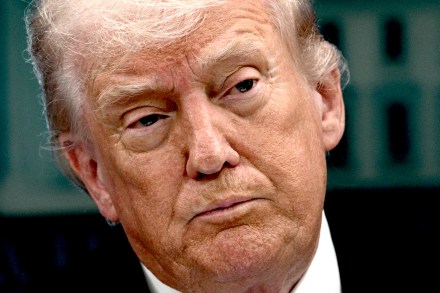
Donald Trump has said he is ‘strongly considering’ pulling the US out of NATO, in comments made to the Telegraph – and it doesn’t appear to be an April Fool. This isn’t the first time he has rallied against the Alliance so should the UK take him seriously? Plus – what is Keir Starmer’s strategy? – as he tries to balance a testing transatlantic relationship with pursuing closer relations with the EU. Patrick Gibbons speaks to Tim Shipman and James Heale. Produced by Patrick Gibbons.

Will Trump pull the US out of NATO?

How prepared is Britain for war? – with Gen Sir Nick Carter

35 min listen

General Sir Nick Carter, former chief of the defence staff, joins Tim Shipman to discuss Britain’s military preparedness – or rather, lack thereof. While a friendlier US presence at the Munich Security Conference may have provided some relief, the military threats to the UK and to Europe presented are still stark. So what choices need to be addressed to ensure that Britain is equipped to deal with these threats? Is the government doing enough to address the awareness gap with the public? And how could AI change warfare? Produced by Patrick Gibbons.

How prepared is Britain for war? – with Gen Sir Nick Carter

Can Keir Starmer keep us safe?

‘Shape without form, shade without colour. Paralysed force, gesture without motion.’ T.S Eliot’s lines from ‘The Hollow Men’ sum up in 11 words the emptiness of Sir Keir Starmer’s administration. Nowhere is the shade darker and the force more paralysed than in our government’s defence policy. At the Munich Security Conference last weekend, the Prime Minister boasted that he has demonstrated ‘Britain’s leadership on the world stage’ and pledged to augment our ‘huge defence capabilities’. A promise to increase defence spending further, faster, followed. But this is all gesture and no motion. The Prime Minister’s promises that Britain will be ready for global conflict are all shape and no form

What is Putin’s game?

What happens when you boil a frog? It doesn’t notice the warming water until it is too late. According to Margus Tsahkna, Estonia’s foreign minister, Russia is boiling Nato like a frog. He fears that Vladimir Putin’s provocations of Nato (none of which on their own would necessitate a military response) will become increasingly and slowly severe, testing and ultimately undermining Nato’s defences. There is force to his argument. Two weeks ago, Polish air defences shot down Russian drones. Last Friday, Russian jets violated Estonian airspace and forced Nato planes to scramble. More drones, operated by a ‘capable actor’, according to a Danish Police spokesman, flew over Norwegian and Danish

Ukraine’s Nato fantasy

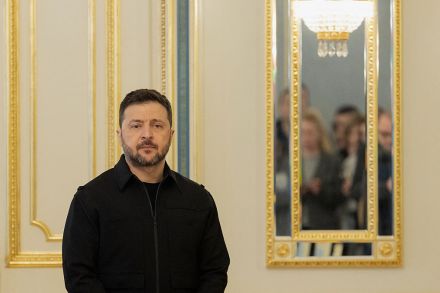
Ukraine’s President Zelensky was in Downing Street last week – as well as Paris, Rome, Berlin and Dubrovnik – asking for Nato membership. In every city, he heard the same ‘not yet’ as he’d received in Washington last month. Some of Kyiv’s western allies believe membership is the only way to guarantee Ukraine’s independence. Russia has never attacked a Nato country, because of the Article 5 guarantee that an attack against one is an attack against all. Therefore, Ukraine will never be safe from Russia unless it joins. The US government wants to avoid the war that Ukrainian membership would oblige it to fight But there’s a fundamental flaw to

100 Days of Starmer: the verdict

25 min listen

Today marks Labour’s 100th day in office. But they are unlikely to be popping champagne corks in Downing Street – even if Lord Alli offered to pay for the Dom Pérignon. This has been a disheartening time for the government and those who wished it well. The promise of dramatic change has been overshadowed by a series of errors, misjudgments and scandals that one would associate more with an administration in its dying days than a government enjoying a fresh mandate, a massive majority and an absent opposition. Former shadow culture secretary Thangam Debbonaire and former deputy prime minister Thérèse Coffey join The Spectator’s Katy Balls to discuss what went

Slating Nato won’t help Donald Trump

Reacting to Volodymyr Zelensky’s visit to Scranton, Pennsylvania, earlier this week, Donald Trump reiterated his long-standing ambition to bring Russia’s war in Ukraine to a quick negotiated settlement instead of continuing with open-ended military support to Kyiv. If he wins the election, Trump said, ‘the first thing I’m gonna do is call up Zelensky and call up President Putin and I’m gonna say, “You gotta make a deal, this is crazy”.’ Trump is often seen as mercurial and unpredictable – an impression he revels in – but his desire to solve conflicts with real estate-like deals forms a consistent pattern of his foreign policy. In the context of Ukraine, that framing

It’s time to let Ukraine join Nato

Kyiv The young amputee had a question. We were sitting once again in the rehab centre in Kyiv, and I was looking at the same sort of injuries I saw last year: the missing limbs, the cranial scars, the withered hands and feet that no longer obeyed their owners’ commands. The difference was that Vladimir Putin’s carnage had been inflicted on a new group of Ukrainians – noticeably younger than last year’s victims, and now including a woman. Once again, I shook their hands (where possible) and put my arms around them, and did my best to be reassuring to all, including the young man on the bed, who had

Has Nato been a success for Starmer?

18 min listen

Keir Starmer is on his first big diplomatic trip to Washington, attending the Nato summit. He has called on member countries to increase defence spending, had a meeting with Volodymyr Zelensky, and enjoyed a dinner with Joe Biden – all in his first week of the job. How is the trip going, are there any tensions arising, and has it been a success for the new PM?  Oscar Edmondson discusses with James Heale and Sophia Gaston, head of foreign policy at Policy Exchange. 

China’s vendetta against Nato

46 min listen

Last week, President Xi Jinping visited Serbia. An unexpected destination, you might think, but in fact the links between Beijing and Belgrade go back decades. One event, in particular, has linked the two countries – and became a seminal moment in how the Chinese remember their history. In 1999, the Chinese embassy in Belgrade was bombed by US-led Nato forces. Three Chinese nationals died. An accident, the Americans insisted, but few Chinese believed it then, and few do today. The event is still remembered in China, but now, little talked about in the West. Xi’s visit was timed to the 25th anniversary of the bombing itself. ‘The China-Serbia friendship, forged

The cost of European peace

After six months of delay, the US Senate has finally passed a $60 billion foreign-aid package which will send urgently needed ammunition and military equipment to Ukrainian soldiers. It may well be the last such cheque to be signed in Washington. Donald Trump is favourite to be the next president of the United States and the senators closest to his brand of ‘America First’ politics, J.D. Vance of Ohio and Josh Hawley of Missouri, led the opposition to the Ukraine package. Their argument, crudely put, is that Europe should bankroll its own defence. The American money confirmed this week gives Europe about a year to adjust to this new reality and

Russia will not attack Nato

There is a lot of war fever about. In January, Grant Shapps, Britain’s tiggerish defence secretary, said the UK was in a ‘pre-war’ period. The West’s adversaries in China, Russia, Iran and North Korea are mobilising, he said. Not wanting to be outdone, Shapps’s Labour shadow John Healey wrote in the Daily Telegraph: ‘If Putin wins, he will not stop at Ukraine.’ Timescales for when this conflict will come vary. Shapps said it could come within the next five years, whereas the estimates of European politicians range from three to eight years. Nato’s top military official warned that Europeans must be ready for a conflict with Russia within two decades. An

Is Nato ready for war with Russia?

38 min listen

Welcome to a slightly new format for the Edition podcast! Each week we will be talking about the magazine – as per usual – but trying to give a little more insight into the process behind putting The Spectator to bed each week. On the podcast: TheSpectator’s assistant foreign editor Max Jeffery writes our cover story this week, asking if Nato is ready to defend itself against a possible Russian invasion. Max joined Nato troops as they carried out drills on the Estonian border. Max joins us on the podcast along with historian Mark Galeotti, author of Putin’s Wars. (00:55)  Then: Lionel Shriver talks to us about the sad case of Jennifer Crumbley, the mum

Zelensky was right to feel cheated by Nato

Gitanas Nauseda stood outside his palace and checked his watch. The Lithuanian President’s guests – the leaders of the other 30 Nato countries, VIPs from Europe and Asia, Volodymyr Zelensky – were an hour late for dinner. Nauseda idled on the red carpet with his wife, and the couple stared at the setting sky. An adviser muttered down his phone and shook his head. The President shrugged. Nato had just issued a statement saying that Ukraine would become a member of the bloc ‘when allies agree and conditions are met’. The alliance needed to see ‘democratic and security sector reforms’. Zelensky tweeted that the statement was ‘absurd’. He had come

Why Nato shouldn’t let Ukraine in just yet

Deciding whether Ukraine should eventually join Nato is hotly debated. There are good reasons to favour its inclusion, but not now, while the war is ongoing. It would transform the war into a conflict between nuclear-tipped Great Powers and vastly increase the danger. Ukraine’s leader, Volodymyr Zelensky, is not happy with the uncertainty over his country’s membership. Actually, that’s an understatement. He is furious, according to reports. But that’s the decision taken by the allies meeting in Vilnius, Lithuania, and Joe Biden led the side urging delay.  In a tweet Tuesday morning, Zelensky said, ‘It’s unprecedented and absurd when [a] time frame is not set neither for the invitation nor for

Is Jill Biden calling the Nato leadership shots? 

Ben Wallace has confirmed the worst-kept secret in Westminster: he’s the likely UK candidate for the Secretary General of Nato. Speaking in Berlin on Wednesday he told reporters: ‘I’ve always said it would be a good job. That’s a job I’d like.’ It’s a position that falls vacant in October and Wallace has a good claim, having been defence secretary for nearly four years, one of the few to emerge with credit from the Kabul evacuation, and has won plaudits for fighting the Whitehall machine to equip Ukraine before Putin’s invasion last year.   Mr S learns however that a surprising obstacle is standing in his way: the First Lady of

China is playing the long game over peace in Ukraine

At the Munich Security Conference over the weekend, China’s foreign minister Wang Yi announced that his country was currently in consultations with ‘our friends in Europe’ over the framework of a peace proposal for Ukraine. It is to be laid out in full by President Xi Jinping on the first anniversary of Vladimir Putin’s invasion – 24 February. Beijing’s peace initiative would, said Wang, underscore the ‘need to uphold the principles of sovereignty, territorial integrity and the UN Charter’ but at the same time ‘respect [the] legitimate security interests of Russia’. On the face of it, it appears that Beijing is not saying anything new. Furthermore, both German Chancellor Olaf

Has a Quran-burning protest ended Sweden’s Nato dream?

A crowd gathered outside Turkey’s embassy in Stockholm on Saturday afternoon to watch far-right politician Rasmus Paludan burn the Quran. Paludan, who leads the anti-Islam ‘Hard Line’ Danish party, was watched by dozens of photographers, police officers and bemused passers-by. Paludan is no stranger to controversy: he has previously been convicted under racism and defamation law. This latest stunt was called to show his party’s opposition to immigration and, he says, to stand up for free speech. Now, though, the stunt has become a diplomatic crisis for Sweden – and there are fears that its bid to join Nato could go up in smoke. Sweden is in the middle of trying to end