National gallery

The genius of Zurbaran – and why he vanished

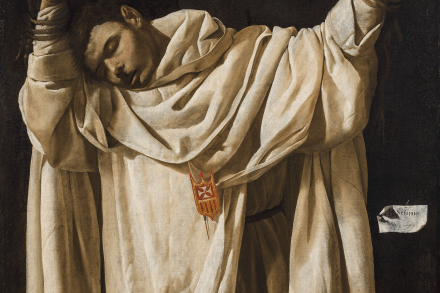
A pious Caravaggio JASPREET SINGH BOPARAI The Spanish painter Francisco de Zurbaran is sometimes thought of as a pious equivalent to Caravaggio – a Caravaggio without the bad temper, brutal vices or criminal record. But it seems difficult to argue that Caravaggio had any direct influence on his work. After all, he died when Zurbaran was 11 and a half years old. Since Zurbaran never left Spain, he could not have seen any of Caravaggio’s paintings with his own eyes. Indeed, he might never have even heard the artist’s name. Still, there are unavoidable similarities between the two men’s work. Zurbaran shared Caravaggio’s sense of drama and his love of shadows broken up by patches of strong light.

The melancholy genius of Joseph Wright of Derby

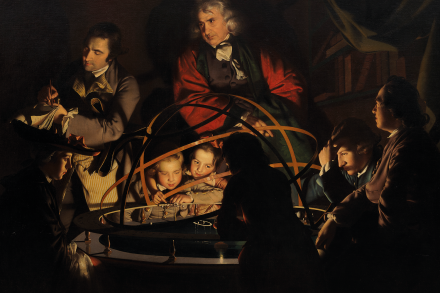
If you lived in the 1760s and were affluent enough – and curious enough – science could be a family affair. The instrument maker Benjamin Martin actually marketed scientific equipment for amateurs, complete with an instruction manual listing simple, edifying experiments for home enjoyment. And so in 1768, in ‘An Experiment on a Bird in the Air Pump’, Joseph Wright (1734-97) painted a group of family and friends attempting Experiment 42 in Martin’s manual. You’re sure to have seen it: a darkened room with a white bird wilting in a glass bulb while the faces of the participants – a magus-like scientist, a fashionable couple, a frightened little girl burying her face in her dad’s coat – are half-illumined in a pure, almost supernatural light.

Sondheim understood Seurat better than the National Gallery

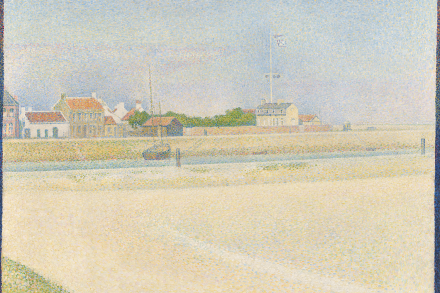
In Sunday in the Park with George, Stephen Sondheim catches something of what makes Georges Seurat so brilliant – not just his technical flair, but his engagement with ordinary life. Sondheim has Seurat sing, or rather woof, a little duet between two dogs meeting on the island of La Grande Jatte; later, Sondheim gives Seurat a pointillist melody as he works, crotchet-dabs of blue, blue, blue, red, red… Seurat’s muse, meanwhile, is called Dot. Seeing the National Gallery’s somewhat overloaded presentation made me long for the light touch of Sondheim.

Modest, interesting – no masterpieces: Millet at the National Gallery reviewed

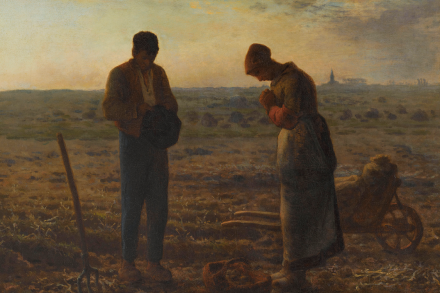
Jean-François Millet (1814-75). One Room. 14 items. Eight paintings. Six drawings and sketches. Modest, interesting. No masterpieces. The show appeals to the contemporary English preference for the unassuming, the humble, the unpretentious. Take ‘The Wood Sawyers’ (oil on canvas, 1850-2). Two figures are sawing a tree trunk with a long two-man bucking saw. Two thick sections have already been cut and the sawyers are busy with a third. The simplified trunk is like a salami, the bark corresponding to the floury skin. The main foreground figure with his blue rump has his foot braced against the trunk and commands our immediate attention. You can see the folds of flesh gathered at the back of his neck as he looks up from the task towards his fellow worker.

Picture perfect: Locatelli at the National Gallery reviewed

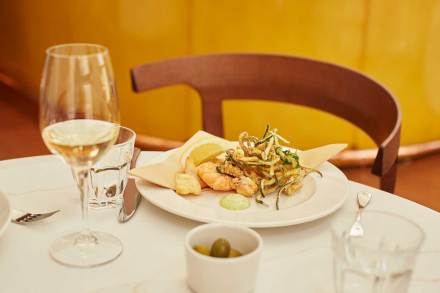
I feel for Locatelli, the new Italian restaurant inside the National Gallery, whose opening coincides with the 200th anniversary of the gallery and a rehang which I can’t see the point of because I want to watch Van Eyck in the dark. Locatelli must compete with the Caravaggio chicken, which is really called ‘Supper at Emmaus’ if you are an art historian or an adult. In the publicity photographs the chef Giorgio Locatelli is actually standing in front of the Caravaggio chicken. It looks as if Jesus is waving at Giorgio Locatelli but the chicken is unmoved. It stole all the gravitas.

Decent redesign, ravishing rehang: the new-look National Gallery reviewed

A little under a year ago, it emerged that builders working on the redevelopment of the National Gallery’s Sainsbury Wing had discovered an unusual time capsule embedded in a pillar they had been instructed to knock down. It contained a letter signed by Sir John Sainsbury, who, along with his brothers, had thrown the museum a £50 million lifeline to realise the extension in 1990; and clearly, he wasn’t happy with the way his money was being spent. He expressed this with no small amount of elegance: ‘If you have found this note,’ his missive read, ‘you must be engaged in demolishing one of the false columns that have been placed in the foyer of the Sainsbury Wing of the National Gallery.

Why was this fêted Mexican painter left out of the canon?

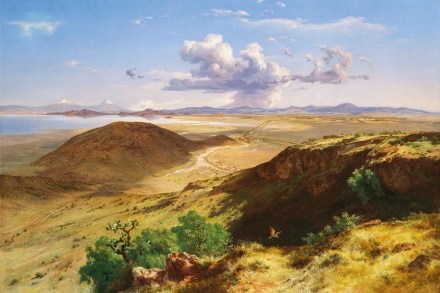
Think of a Mexican painting, and chances are you’ll conjure up an image of an eyebrow-knitted Frida Kahlo, or a riot of exotic figures by her husband Diego Rivera, or a brightly coloured guitarist by Rufino Tamayo. What you’re unlikely to have in mind is an earthy landscape with a dusty road leading to a nascent city, dotted with hyper-real plant life, and an eagle soaring under a vast, cloudy sky. This is ‘The Valley of Mexico from the Hill of Santa Isabel’ (1877), the finest work by a painter who was a household name in Mexico long before Kahlo, Rivera or Tamayo. And from next week, it and many others of his works will hang in London’s National Gallery, the first historical Latin American artist ever to have been exhibited there.

The true birthplace of the Renaissance

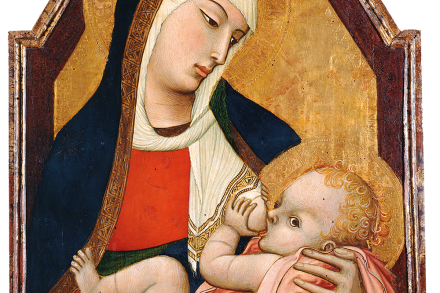
The baby reaches out to touch his mother’s scarf: he studies her face intently, and she focuses entirely on him. There is connection; there is familiarity; there is love. It could be one of the pictures on my phone from last weekend of my daughter with her six-month-old. In fact, it dates from Tuscany c.1290, and the mother and child are the Virgin Mary and Christ. It’s a small painting, tempera on wood; it’s the opener of the National Gallery’s new blockbuster, Siena: The Rise of Painting 1300-1350; and it’s there to make the show’s fundamental point, which is that its creator, the Sienese Duccio, introduced many of the painterly innovations that paved the way for the Renaissance. With this ‘Virgin and Child’, emotion takes centre stage.

Inside the mind of Vincent Van Gogh

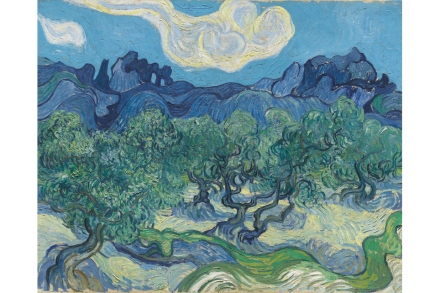
Van Gogh only got one major review in his career, and he was mystified by it. When the critic Albert Aurier described his six paintings in the 1890 Brussels exhibition of Les XX as the product of a ‘terrible and distraught genius’, the artist responded that, far from being a genius, he was ‘very secondary’ and that his sunflowers – now in the National Gallery – were no different ‘from so many pictures of flowers more skilfully painted’. If he were alive today he would probably have protested at the National Gallery making an exhibition of his work the high point of its bicentenary programme, but he would have liked its focus on his inspirations rather than his distress.

The importance of copying

The lunatics were once in charge of the asylum. The first six directors of the National Gallery were all artists: before art history became an academic discipline, artists were the leading authorities on art. Founded more as a teaching resource than a visitor attraction, until the mid-1940s the gallery was reserved for artists two days a week, when other visitors had to pay for entry. This stopped them getting in the way of artists copying from the masters, an essential part of an art education in the days before cheap colour reproduction. There’s something of the altarpiece in this image of an artist’s progenitors flanking a touchstone for his art It’s rare to see artists copying in the galleries now that they are so jam-packed with tourists.

Are you a creative or a destructive?

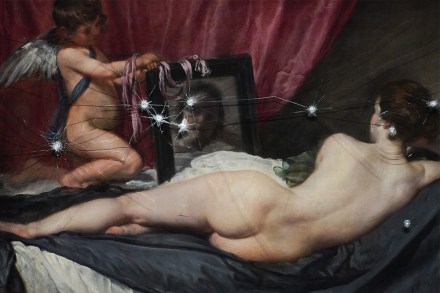
There is a stage direction in The Glass Menagerie in which Tennessee Williams describes a tune that will recur through the play. Like a piece of delicately spun glass, he says, it should summon the thought of ‘How beautiful it is and how easily it can be broken’. The cleverer young people want to live lives of hope, not demanding solutions, but finding them I think of that line often. Not least this week when two young protestors from Just Stop Oil took their hammers to the ‘Rokeby Venus’ of Velázquez at the National Gallery. Last year their cohorts threw soup over Van Gogh’s ‘Sunflowers’. Others glued themselves to the frame of another Van Gogh and others still to the frame of Constable’s ‘The Hay Wain’.

Why is Frans Hals still not considered the equal of Rembrandt?

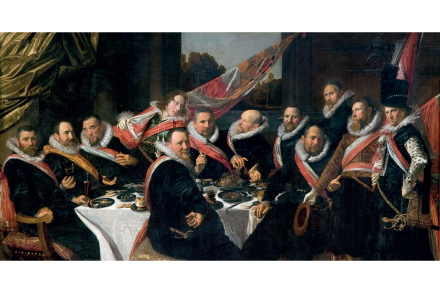
Who was Frans Hals? We know very little about him. He was baptised in either 1582 or 1583 in Antwerp. He died in 1666 at the age of 83 or 84. Approximately 220 works survive. One discredited narrative claimed Hals was a drunk – an inference probably based on his subject matter. There are several depictions of drinkers. On the other hand, there is his evident industry. Two streets in Haarlem, where he lived his entire life, have been identified, but not the actual houses. He was buried in St Bavo’s church in the Grote Markt, which was originally Catholic but became Protestant. There are two commemorative slabs next to each other in the chancel floor competing for authenticity. Which is appropriate, because there are two Frans Hals – the traditionalist and the innovator. They co-exist.

Do we need another Lucian Freud exhibition?

Do we need another Lucian Freud exhibition? After years of exposure to his paintings of naked bodies posed like casualties of a car crash in a nudist camp, we might have reached the ‘move along, nothing to see here’ point. But it seems we can’t get enough of the monstre sacré. To mark the centenary of his birth in 1922, London is being treated to a Freud fest of no fewer than seven exhibitions, the most prestigious of which is at the National Gallery.

There’s much more to Winslow Homer than his dramatic seascapes

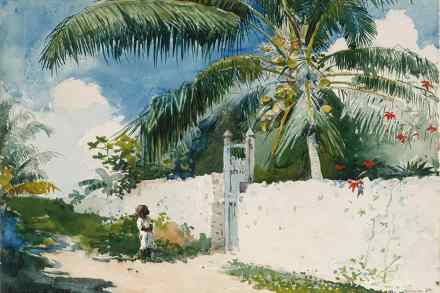
Until the invention of photography war reportage depended on old-fashioned illustration, and even after that the illustrated press took a while to catch up. Photographic reproduction didn’t work on cheap newsprint, which demanded a crispness of definition that early photography couldn’t provide. So reports on the American Civil War in the new illustrated periodicals aimed at the middle classes continued to rely on wood engraving, and it was as a print designer that the 25-year-old Winslow Homer was sent by Harper’s Weekly to cover the fighting in 1861. Apprenticed to a commercial lithographer at the age of 19, Homer had no formal training as an artist but he had a nose for the decisive moment that added drama to a reporter’s copy.

Raphael – saint or hustler?

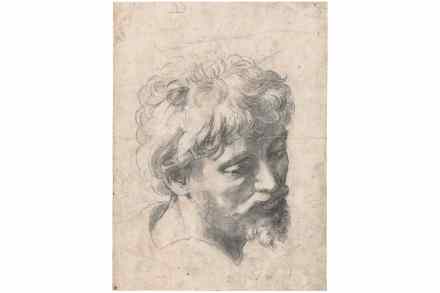
For tourists to Rome, the must-see event of 1833 was the exhumation of Raphael from his tomb in the Pantheon. For years the city’s Accademia di San Luca had been claiming possession of the artist’s skull and running a profitable line in souvenirs. That September, the question would be settled. Was the ‘most eminent painter’, lauded in his friend Pietro Bembo’s fulsome epitaph as having ‘lived virtuously 37 virtuous years’, really buried there? And did his skeleton have a head? Hans Christian Andersen was one of 3,000 ticket holders for the six-day lying-in-state. The skeleton was there all right, complete with head, but its dignity, reported Andersen, was somewhat dented by the rattle of bones when it was returned to the tomb.

Perfection: The Duke reviewed

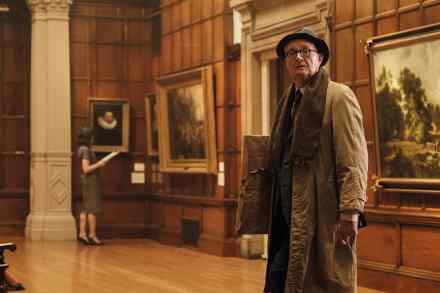
The Duke is an old-fashioned British comedy caper that is plainly lovely and a joy. Based on a true story, it’s an account of the 1961 theft of a Goya painting from the National Gallery, stars Jim Broadbent and Helen Mirren, and is directed by Roger Michell (of Notting Hill fame). Many films have all their ducks in a row yet are somehow disappointing, but this is perfect, capturing the spirit and joie de vivre of the old Ealing comedies. I could probably watch it all day every day for the rest of my life. Broadbent plays Kempton Bunton, a 57-year-old, working-class Newcastle taxi driver — although he has trouble holding down any kind of job — who has aspirations to be a playwright. We first meet him putting his latest play in the post to the BBC.

Albrecht Dürer was a 16th-century Andy Warhol

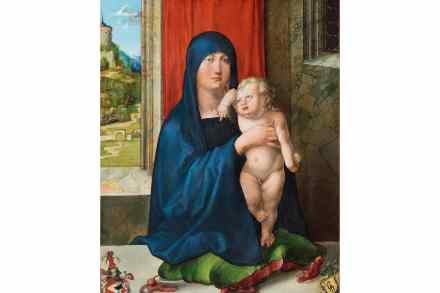
On 6 January 1506, Albrecht Dürer wrote from Venice to his friend Willibald Pirckheimer, who was at home in Nuremberg. The artist had already been in the city for a little while, and like many people who visit Venice he had spent a good deal of time shopping. Pirckheimer had asked him to buy some jewellery for him, ‘a few pearls and precious stones’, and the artist had been looking out for something suitable. There were, however, difficulties. For one thing, he says: ‘I can find nothing good enough or worth the money; everything is snapped up by the Germans.’ For another, Dürer complained, there were a lot of swindlers around. These ‘always expect four times the value for anything, for they are the falsest knaves’.

The frisky side of a classical master: National Gallery’s Poussin and the Dance reviewed

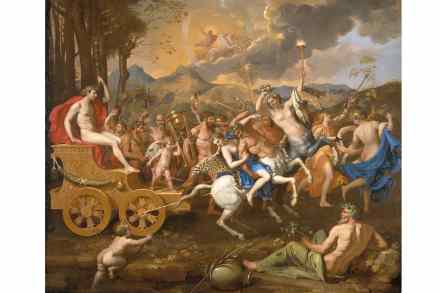
In the winter of 1861, visitors to the Louvre might have seen a young artist painstakingly copying one of the museum’s 39 paintings by Poussin. The subject was ‘The Abduction of the Sabine Women’ and the artist was the 27-year-old Edgar Degas, then at work on his own classical battle of the sexes, ‘Young Spartans’. Although lumped with the impressionists, Degas was a classicist at heart. ‘The masters must be copied over and over again,’ he believed, ‘and it is only after proving yourself a good copyist that you should reasonably be permitted to draw a radish from nature.’ A dedicated copyist himself, Poussin would have approved.

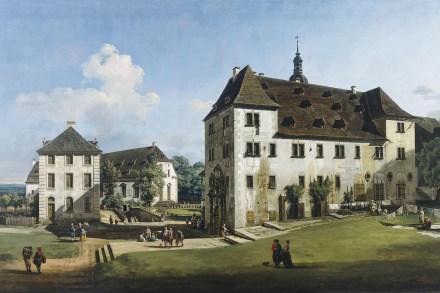
Glorious: Bernardo Bellotto at the National Gallery reviewed

What is the National Gallery playing at? Why, in this summer of stop-start tropical storms, is the NG making visitors — visitors with prebooked, time-slotted tickets, mind — queue outside and in the rain? Why are its cloakrooms still closed and umbrellas forbidden? My husband had to stash his behind a balustrade on Orange Street. Why, with a 1:45 ticket, were we not through the doors until 2:05? Why make your harassed marshals, doing the best they can, shout ticket times and field questions from furious picture-fanciers? Lousy sort of freedom this. The V&A, by the way, is just as bad.

An immensely rich show – though it consists of only two paintings: Rubens at the Wallace Collection reviewed

‘When pictures painted as companions are separated,’ John Constable wisely observed, ‘the purchaser of one, without being aware of it, is sometimes buying only half a picture.’ When he said those words at a lecture in Hampstead delivered on 9 June 1833, he had two great paintings by Rubens in mind: ‘A View of Het Steen in the Early Morning’ and ‘The Rainbow Landscape’. At that date they had already been split up, the first going to the National Gallery, the second eventually to be bought by the Marquis of Hertford. Because of the will of Lady Wallace, the eventual heir of the Marquis, or rather the way it was interpreted, the two have not been reunited since — until, that is, the current, marvellous display at the Wallace Collection.