Museums

Which are our most popular museums?

From our UK edition

Volt-face Luton’s Vauxhall plant is to close, partly because of the zero emission vehicle (ZEV) mandate which obliges manufacturers to sell increasing proportions of electric vehicles. Remarkably, the history of the electric car can be traced back half a century earlier than the combustion engine. There are several possible claims as to who built the first road-going electric-powered vehicle, but one is a Scottish inventor, Robert Davidson, who produced one in the 1830s, about the same time as Thomas Davenport in Vermont. By the end of the 19th century electric cars were competing with petrol cars, but died out for the reasons the industry is struggling today: it was hard to recharge them and they couldn’t travel far on a charge.

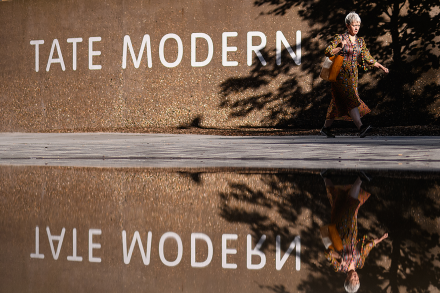
Tate’s finances are on the skids and I think I know why

From our UK edition

Among the many destructive after-effects of the pandemic, the impact of two years of lockdowns has had serious consequences for public museums and galleries, particularly so for our national museums and galleries. More than two-and-a-half years since the last restrictions were lifted, visitor numbers to many of the big London institutions have yet to return to the levels seen pre-pandemic, according to the latest figures released by the DCMS. Although the British Museum and Natural History Museum have come roaring back, surpassing their 2019/20 figures (the NHM attracting some half a million more visitors alone), the picture varies wildly, mostly between the more ‘scientific’ museums and those whose remit is visual art.

The death of the American museum

It starts with the promise of skipping school — always an illicit thrill at nine years old. My son and I, seasoned truants, hop the early train to downtown Chicago for what I’ve convinced him is a real education. The day’s agenda: two of the city’s iconic museums — grand, intimidating and, up until recently, somewhat sacred. These sprawling neoclassical behemoths, both originally constructed for the 1893 World’s Columbian Exposition, dot the waterfront like ancient ruins. They once felt like temples to knowledge, where wonder and learning collided, where static displays ignited curiosity. But as we step inside, I can’t shake the feeling that maybe, just maybe, their magic has faded. Can museums as we know them survive my lifetime?

museum

There’s more to Bordeaux than fine wine

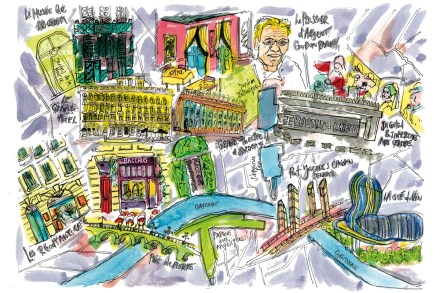
In the seminal Casablanca, there is a classic moment when the Humphrey Bogart character is asked how he ended up there. Bogie, doing laconic and world-weary as only he could, replies, “My health. I came to Casablanca for the waters.” When Claude Rains’s iconic Captain Renault purrs, “Waters? What waters? We’re in the desert!” Bogart’s response is simple. “I was misinformed.” This exchange occurred to me when I recently visited Bordeaux, a city with awe-inspiringly beautiful architecture, some of France’s most stylish places to shop and eat, situated teasingly close to the beaches of the Atlantic coast. Yet if you attempted to tell anyone that you’d come to Bordeaux for history, couture or coastline, you’d get the Bordeaux version of “What waters?

Bordeaux

How did we ever come to accept the inhumane excesses of capitalism?

From our UK edition

What was neoliberalism? In its most recent iteration, we think of the market seeping into every minute corner of human existence. We think of privatisation, off-shoring and the parcelling out of services to the highest bidder. Neoliberalism takes the proud liberal individual – in pursuit of his or her happiness, rather keen on freedom – and shreds them through a mean-spirited calculator to come up with some sort of shrunken market midget, an efficient risk-evaluating robot. Neoliberalism takes the proud individual and shreds him or her through a mean-spirited calculator Yet even though the market is supposed to be the arbiter of everything, repeated state intervention appears to be necessary to sustain this otherwise perfect economic vision.

A cultural summer in the city

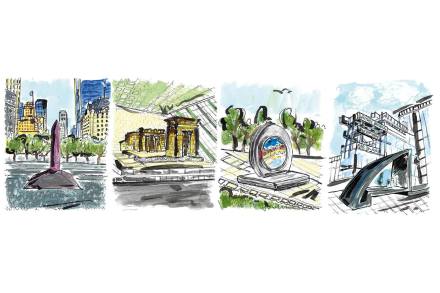
New York is gilded in beguiling art. It has an excess of riches and though summer is one of the best times to visit, quenching your cultural thirst can be difficult, as the arts patrons decamp to the Hamptons and watering holes ending in -an. From museums to galleries to street art at subway stations or parks, each borough is a canvas, so much so that it is often an afterthought against a landscape of pavement and honking cars. Will you be uptown for the first Monday in May? While the performances on the Met Gala’s red carpet are an art form in themselves, the exhibit the gala underwrites offers plenty to check out uptown as the tulips bloom on Park Avenue.

New York

The divine Dalí and his ‘Christ’

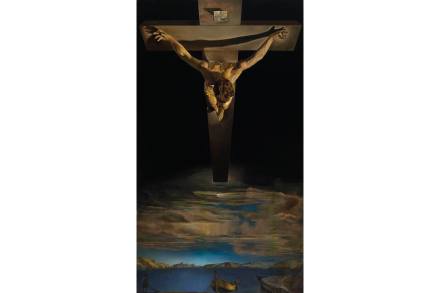
I arrived in the city of Figueres early one January morning to visit one of the most popular, and bizarre, art museums in the world, the Teatre-Museu Gala Salvador Dalí. It houses a dreamlike picture that, for the first time since it left over seventy years ago, has made a temporary return journey to Spain. Originally simply titled “The Christ,” the 1951 canvas depicting the giant figure of a man on a cross, shown at an overhead angle hovering over a moody seascape, was painted by the most famous son of Figueres, Salvador Dalí. Through April 30, it forms the centerpiece of a show exploring its creation, history, local connections and symbolism.

Dalí

Understanding museum theft with best-selling author Kirk Wallace Johnson

The recent events at the British Museum in London will probably prove to be the museum scandal of the year, if not the decade. It was revealed over the summer that hundreds, perhaps thousands, of items had gone missing from its collections in storage, with suspicion directed toward a now-former member of staff. We still don’t know exactly what was stolen, and no one has been formally charged — authorities are still investigating. Nevertheless, the British Museum’s director has stepped down and the press has had a field day generating outrage, albeit with coverage based largely upon speculation and opinion. Amid all the finger-pointing, however, no one seems to be asking why someone would even consider taking property from a museum in the first place.

museum

An extraordinary woman: The Art of Lucy Kemp-Welch, at Russell-Cotes Art Gallery, reviewed

From our UK edition

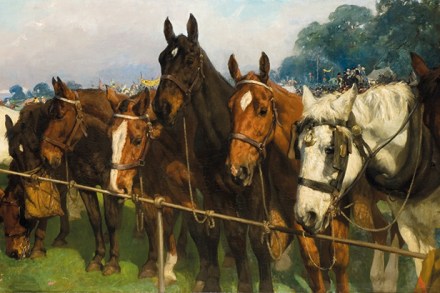
In March 1913 two horse painters met at the Lyceum Club to discuss the establishment of a Society of Animal Painters to raise the profile of their genre. Of the two, it was Alfred Munnings whose profile needed raising. Lucy Kemp-Welch had been a celebrity since her twenties when her 5x10ft canvas ‘Colt Hunting in the New Forest’ caused a sensation at the 1897 RA Summer Exhibition and was purchased by the Chantrey Bequest for the new National Gallery of British Art on Millbank. She threw herself into every activity she depicted, whether rounding up colts or hauling timber The daughter of a Bournemouth solicitor, Kemp-Welch had been riding and sketching horses since the age of five and had developed a photographic memory for catching them in action.

Are surgical museums such as the Hunterian doomed?

From our UK edition

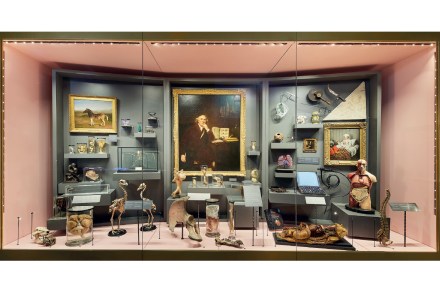
I have a soft spot for specimen jars and skeletal remains. Museums of natural history, surgical pioneering or anthropological oddities have always struck me as equally suitable for lunch breaks and first dates as for serious study and research. As far as public and casually accessible encounters with mortality go, these kinds of museums are the most straightforward way of confronting the realities of human nature. But whether we should have this kind of casual access is now increasingly being questioned. Telling history through displays of human remains presents a challenge for curators.

What museums can learn from contemporary technology

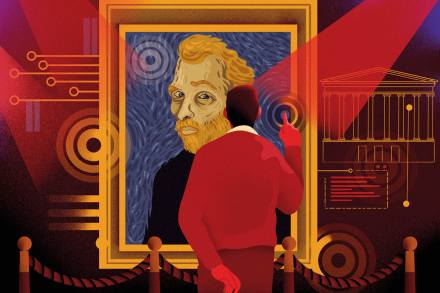
"I grew up wanting to be an astronaut,” Robert Stein, the National Gallery of Art’s recently appointed chief information officer, tells me. “I studied electrical engineering, and I got a job doing high-performance computing. And then one day, I did a project with an art museum, and I thought, ‘Wait a second, this is an area of the world that needs more technology in order to connect more people together.’ And the rest was kind of downhill from there.” The National Gallery of Art in Washington, DC — the NGA — is now ranked the most popular art museum in America.

museums
mob

Las Vegas’s Mob Museum revels in the city’s gritty past

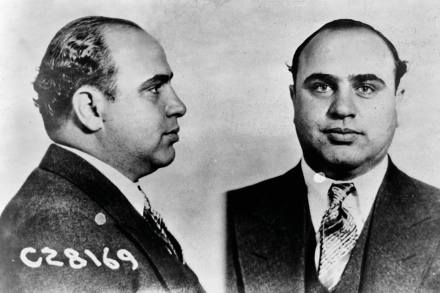
A generation or two is usually enough time for a family whose fortune may have been built upon a crime to bury its heritage. Not Las Vegas. It’s proud of its inglorious past. Housed in a four-story former federal courthouse and US post office in downtown Las Vegas, the Mob Museum revels in Sin City’s storied, unconventional and very criminal past. The building’s basement, for example, has been converted into an immersive exhibit redolent of the Prohibition era, complete with a fully operational speakeasy featuring a menu of 1920s-style cocktails. Gin-based Bee’s Knees and other drinks are served, and a traditional whiskey Old-Fashioned will be delivered hidden in a book. You’ll be invited to tour an onsite distillery where 100-proof corn moonshine is made.

Behind closed doors

Katy Hays’s involving, well-tuned debut novel takes its name from a real museum in New York, the Cloisters. Built by a Rockefeller, it resembles a medieval monastery and brims with glorious treasures. Ann, our provincial heroine (from Walla Walla, where she worked a menial job in order to fund college), would have preferred the Met, but when she’s serendipitously hired for a summer role, she finds herself swiftly pulled into the institution’s inner workings and the nefarious machinations of its well-heeled staff. The cutthroat nature of the museum is placed under the spotlight.

Why war museums matter

From our UK edition

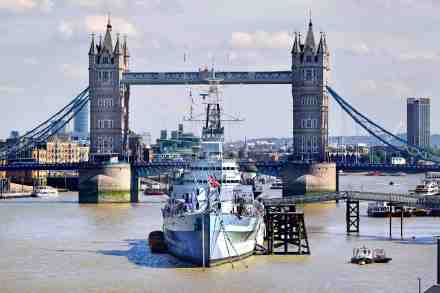
On Christmas Day 1942, the German battlecruiser Scharnhorst, along with five destroyers, left its Norwegian base and headed for a series of Arctic convoys, the British fleets transporting material and support to the Soviets. The townclass cruiser HMS Belfast, used to escort the convoys through some of the most dangerous seas in the world, played a vital role in the Royal Navy’s clever game of bait-and-blast that resulted in the destruction of the Scharnhorst, a monster that had already sunk a British carrier and two destroyers. Belfast, the most powerful cruiser in the Navy at her relaunch in 1942 (she hit a mine in 1939 and needed three years of repairs), now sits in the Thames by City Hall, a visitor attraction operated by Imperial War Museums.

Will The Parthenon Project seize the Elgin Marbles?

From our UK edition

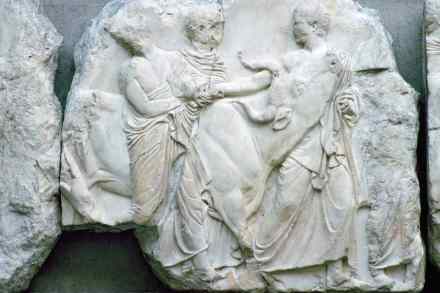
Thirty-five years ago, the late Christopher Hitchens published a book about the Elgin Marbles. Unsurprisingly, it was a polemical work; he was passionately campaigning for the return of the sculptures to Athens. But that was not the reason why I wrote a scathing review of it for The Spectator. Parts of it were plagiarised, as I showed, from the classic book by William St Clair; and in some places Hitchens dealt with the awkward fact that the evidence did not fit his claims by abbreviating the quotations, filtering out the unwanted bits. Hitchens replied with a thunderously disdainful attack on me in the letters page. I said to the then editor, Charles Moore, that I feared that if I met Hitchens at a Spectator party he would punch me on the nose.

Paris’s glittering new museums

From our UK edition

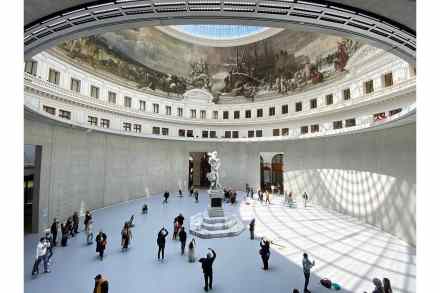
How do you manage a dictatorship? By producing ‘a succession of miracles’, according to Louis-Napoléon, that ‘dazzle and astonish’. In 1852 he inaugurated his Second Empire regime with a strategy of soft power predicated on the assumption that the loyalty of politically volatile Paris was to be won not by violent repression but by visible magnificence and grand designs. This wasn’t an original idea: it followed the policies of le Roi Soleil and Bonaparte, not to mention the Roman emperors. It worked again for Louis-Napoléon because, as well as such jaw-dropping follies as Charles Garnier’s extravagant opera house, it extended to Haussmann’s lavish investment in socially useful boulevards, sewers, housing and parks.

Why I’ve spent £68,500 on a tank

From our UK edition

Buying a tank is not as easy as you might think. When we started looking for one, people delighted in telling us: ‘Oh, you should have bought one in the 1990s. There were hundreds available for practically nothing!’ Well, not anymore. Especially not if you are picky about what sort of tank you want. I’m collecting artefacts for a new museum of totalitarianism and wanted a T-54 or T-55, two models which are pretty much the same as each other with just a few alterations and which are the most-produced tanks in history.

J.P. Morgan and our gilded age

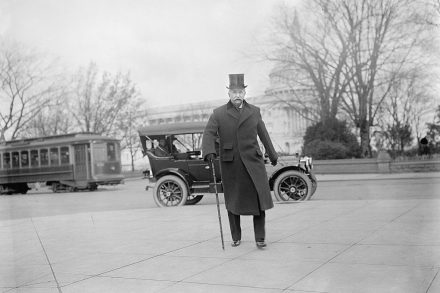
John Pierpont Morgan is the glowering face of the Gilded Age. He may have glowered at pesky men with cameras because he was too busy to sit still, but he was also self-conscious because his nose was deformed from rhinophyma. He liked beautiful things, and he was not beautiful. Born into banking family, Morgan rose to become the greatest financier of his time, building much of his empire on railroads. But he was far more than a shrewd businessman. Fluent in French and German and holding a degree in art history, he became a prodigious collector of books and art, a large portion of which were kept at his house on Madison Avenue and 36th Street — what is now the Morgan Library & Museum.

john pierpont morgan library

The supreme pictures of the Courtauld finally have a home of equal magnificence

From our UK edition

When the Courtauld Gallery’s impressionist pictures were shown at the Fondation Louis Vuitton in Paris in 2019, the Parisian public was so bowled over by the exhibition that some were inclined to claim Samuel Courtauld as an honorary Frenchman. This was not completely unreasonable; after all Courtauld (1876–1947) was a Francophile from an old Huguenot family. But it was even more of a compliment to the magnificent array of French art he had put together. In this city of impressionism, home to the Musée d’Orsay and the Orangerie, half a million visitors came to see it.

Small but perfectly formed: the Royal College of Music Museum reopening reviewed

From our UK edition

Haydn is looking well — in fact, he’s positively glowing. The dignified pose; the modest, intelligent smile: it’s only when you squint closely at the portrait that Thomas Hardy painted in London in 1791 that you clock the full peachy-pink smoothness of his complexion. It’s curious, because Haydn suffered disfiguring smallpox as a child, and a contemporary waxwork bust in Vienna is cratered like a moon in a periwig. Hardy’s portrait is a promotional image, commissioned by the music publisher John Bland. This is the Georgian equivalent of a celebrity headshot: a photoshopped, endlessly-reproduceable selling tool, so potent that it’s still being used to shift recordings 230 years later. Well, of course it is.