Migrants

Portrait of the week | 20 August 2015

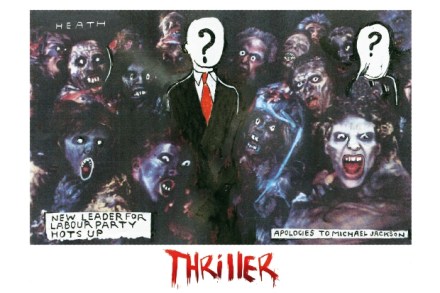
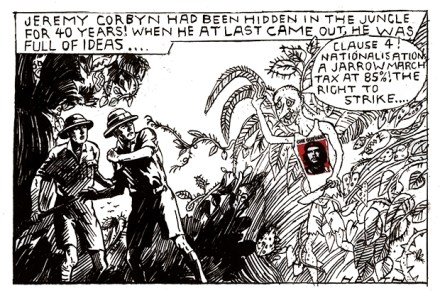
Home Andrew Burnham described calls from Yvette Cooper, a rival candidate for the Labour leadership, for him to withdraw from the contest as ‘quite strange’. The problem was how to prevent Jeremy Corbyn, a left-winger, from being elected by the alternative vote system by 610,000 party members and registered supporters. Gordon Brown, the former disastrous Labour prime minister, contributed by making a 50-minute speech in a small room at the Royal Festival Hall, during which he paced up and down continuously for an estimated 1 mile 1 furlong 5 chains and did not mention Mr Corbyn’s name. Kezia Dugdale, a Member of the Scottish Parliament, was elected leader of the Scottish Labour party; the party has only one seat in the Parliament of the United Kingdom.

Portrait of the week | 13 August 2015

Home The Metropolitan Police encouraged people to celebrate VJ Day despite reports in the Mail on Sunday (picked up from an investigation by Sky News) of plans by Islamic State commanders to blow up the Queen. The RMT union announced two more strikes on the London Underground for the last week in August. Network Rail was fined £2 million by the rail regulator for delays in 2014-15, many of them at London Bridge. A tanker carrying propane gas caught fire on the M56 motorway near Chester. England won the Ashes series after beating Australia by an innings and 78 runs at Trent Bridge; Australia had been bowled out for 60 before lunch on the first day. Unemployment rose by 25,000 in the second quarter to 1.85 million.

Déjà-lu in today’s Times — but where was the Spectator’s credit?

Mr S couldn't help but notice that the Times made for familiar reading this morning. A leader titled 'Ending the Exodus' suggested that the government ought to 'Give Syrian refugees the right to work and they will stay close to home': 'It is the apparent hopelessness of life in these camps that is propelling Syrians towards Europe. Over the years parents have seen children receive often skimpy education, their teenage boys drifting back to Syria to fight. Paternal authority is collapsing. Under the circumstances scraping together funds to pay people-smugglers appears a rational choice. The western priority should be to end the sense of hopelessness in the camps. Above all, these refugees from war must be given the chance to work.' Hear hear!

Portrait of the week | 6 August 2015

Home Tom Hayes, aged 35, a former City trader who rigged the Libor rates daily for nearly four years while working in Tokyo for UBS, then Citigroup, from 2006 until 2010, was jailed by Southwark Crown Court for 14 years for conspiracy to defraud. The government sold a 5.4 per cent stake in Royal Bank of Scotland, for 330p a share, against the 500p or so that it paid six or seven years ago to save the banking group; the government now owns 73 per cent of RBS. Monitor, the regulator for health services in England, sent out letters ‘challenging the plans of the 46 foundation trusts with the biggest deficits’. Kids Company, the charity founded by Camila Batmanghelidjh, appeared likely to close.

Podcast: how to fix the refugee crisis

Are there any immediate solutions for fixing the refugee crisis? On this week's View from 22 podcast, Paul Collier discusses this week's Spectator cover feature on this topic with Douglas Murray. Are there any easy political solutions to this crisis? Where in the world should concerned politicians look to find solutions? What can the Jordanian authorities do to help? And what should the European Union be doing to fulfil its 'duty of rescue'? Philip Delves Broughton and Freddy Gray also discuss how Hillary Clinton is winning the 2016 race — for the Republicans. Why is she failing to be an inspiring candidate? Has the Democratic party realised that Clinton is failing to deliver? Could Vice President Joe Biden be a better candidate?

Portrait of the week | 30 July 2015

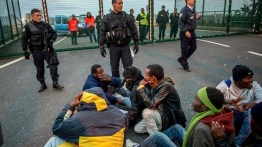
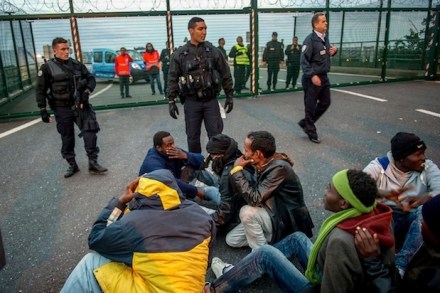
Home A man died when 1,500 migrants tried to enter the Channel Tunnel terminal in Calais in one night. The night before, 2,000 had tried. Theresa May, the Home Secretary, spoke of spending money on fences. The Foreign Office warned travellers to the Continent via Calais that they should be prepared to return by a different route, what with migrants and French strikers. George Osborne, the Chancellor of the Exchequer, visited Paris for talks with French ministers about Britain’s place in the European Union. Chris Froome won the Tour de France for the second time in three years, although some spectators threw urine at him and some even suggested that he had a little motor hidden in his bicycle.

Is David Aaronovitch taking the piss out of himself?

This job is getting harder and harder, because it is no longer possible to parody or satirise the blithe stupidity of the liberal London middle class. It now exists in a place beyond the reach of such mocking. Take a peep at David Aaronovitch’s piece today on the problems in Calais. Just have a look, and tell me you don’t think he’s actually taking the piss out of himself. David believes we should let all the asylum seekers in. He thinks that they would make excellent ‘electrical engineers’. Yup, that’s why they’re there, Dave. Itching to get their hands on a junction box, the lot of them. Not a single penny in benefits will be expended, not a single crime committed.

Nigel Farage: I wouldn’t describe migrant groups as ‘swarms’

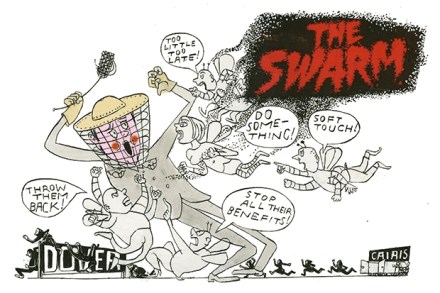
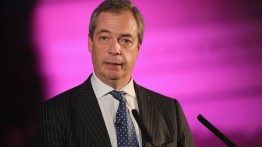
Nigel Farage briefly grabbed the moral high ground on the Calais migrant crisis this morning. He told the Today programme, rather loftily, that he wouldn’t use the word ‘swarm’ as David Cameron has done to describe those crossing the Mediterranean. 'I’m not seeking to use language like that,' he said. It’s understandable, given ‘swarm’ does depersonalise a group that already has the rather inhuman-sounding tag of ‘migrants’.

‘The smugglers don’t care’

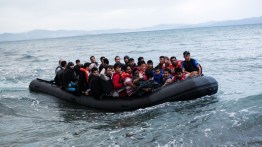
 Lesbos A young woman in a headscarf stumbled over some rocks and onto the beach. She stood there, rigid, stunned, then burst into tears. A grandmotherly German tourist hugged her. ‘It’s over now, you’re safe,’ she said. ‘You’re in Europe.’ A Burmese man from the same boat looked around anxiously and asked: ‘Will the police here beat us?’ It was after dawn on the Greek island of Lesbos, the sun glinting off the turquoise sea, an idyllic holiday-brochure landscape of hills with whitewashed houses. But the Turkish coast is so close that you can see it, and so this tiny island has become the front line in Europe’s migration crisis. Hundreds of people arrive here every day in rubber dinghies.

Labour stays oddly quiet on the Calais migrant crisis

The second, less well-attended stop for the outrage bus today after Cecil the lion is the situation in Calais. One young man died last night as he tried to enter the Channel Tunnel, while others have managed to make it through to the UK. Theresa May said this afternoon that migrants who had successfully reached their destination ‘will be dealt with in the normal way of looking at these asylum claims’. Some politicians from other parties have been commenting on the government’s handling of the situation, with Nigel Farage saying that ‘unless something radical is done, it is only a matter of time before a British holiday maker or a British lorry driver gets killed there too’.

Portrait of the week | 9 July 2015

Home In his Budget, George Osborne, the Chancellor of the Exchequer, slowed the planned rate of bringing in £12 billion of welfare cuts. He forecast a surplus by 2020. The bank levy would be reduced but a surcharge on bank profits imposed. The total of benefits that a family can claim a year would be cut to £23,000 in London and £20,000 outside it. Tax credits for those with more than two children were to be reduced. Local authority and housing association tenants in England who earn more than £30,000 (£40,000 in London) would have to pay more rent. Maintenance grants for students would be turned into loans. Income tax thresholds were raised.

Ali Baba and the 300 hostages

In the heat of the midday sun, the fields and woodlands between Greece and the Republic of Macedonia look idyllic: birds sing, the grass is smudged with wild poppies, all seems quiet. But this picture of pastoral peace is, I’m afraid, an illusion. This is Greece’s Wild West, a lawless and desperate place known as ‘The Jungle’, where people are beaten up every day. ‘It’s dangerous out there,’ says the fat Greek policeman standing with me, just north of the village of Idomeni. Then he waddles back to his car. The predators in this jungle are Afghan people-smugglers, their prey the poor migrants who have struggled here from all over Africa, Asia and the Middle East.

Long life | 2 July 2015

The Eurostar train descended gently into the Channel Tunnel, went halfway along it, and then stopped. There it remained for what seemed a very long time, the silence broken only occasionally by mumbled announcements in French and English. The speaker was French, and his English was incomprehensible, his French only slightly less so. All that we could gather was that the train was being delayed by some sort of trouble in Calais. Only much later did we learn that migrants from a refugee camp had been swarming on to lorries heading for England and generally creating mayhem. They had even lit a fire on the railway track. Eventually it was announced that we wouldn’t be going to Paris quite yet but would go backwards instead to Ashford in Kent to await the all-clear to resume our journey.

Letters | 25 June 2015

Free trade with Africa Sir: Nicholas Farrell suggests that a naval blockade is the only solution to Italy’s immigration crisis (‘The invasion of Italy’, 20 June). Examining the causes of the situation might identify other measures. Since the European Union effectively closed its borders to trade with Africa to protect European farmers from lower food prices, the agricultural economies of most African countries have been in decline. Of course there is another reason for Africa’s decline. About 60 years ago, the Europeans found it convenient to convince themselves that in Africa self-government was better than good government. It followed that aid would be a convenient substitute for the risks or inconveniences of free trade.

Europe’s great game

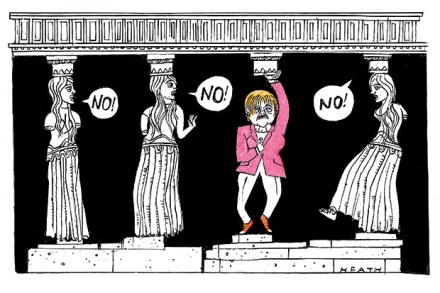
[audioplayer src="http://rss.acast.com/viewfrom22/angelamerkel-sburden/media.mp3" title="Fredrik Erixon and James Forsyth discuss the challenges facing Angela Merkel" startat=36] Listen [/audioplayer]For generations, ambitious politicians have dreamed about having the power to run Europe — but as Angela Merkel can attest, it’s a horrible job. She didn’t want to end up with the continent’s problems on her shoulders, but things have ended up that way. The Greek economic implosion, the seemingly unstoppable wave of immigrants from north Africa, the menace of Russian aggression, the euro crisis — all the multiple, interconnected, crises battering Europe have ended up as Merkel’s problem.

Portrait of the week | 18 June 2015

Home Talha Asmal, aged 17, from Dewsbury, West Yorkshire, died in a suicide bomb attack on forces near an oil refinery near Baiji in Iraq, having assumed the name Abu Yusuf al-Britani. A man from High Wycombe, Buckinghamshire, Thomas Evans, 25, who had changed his name to Abdul Hakim, was killed in Kenya while fighting for al-Shabab. Three sisters from Bradford were thought to have travelled to Syria with their nine children after going on a pilgrimage to Saudi Arabia. Britain had had to move intelligence agents, the Sunday Times reported, because Russia and China had deciphered documents made public by Edward Snowden, the CIA employee who has taken refuge in Russia. Payments expected by customers of the RBS group of banks failed to enter accounts overnight.

The invasion of Italy

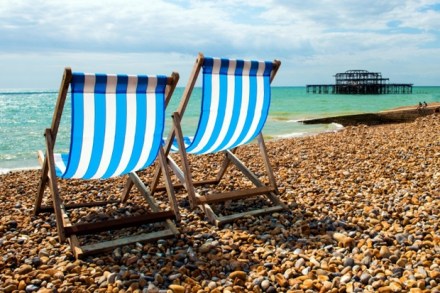
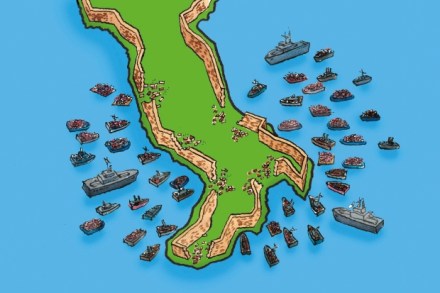
Let us suppose that along the coast of Normandy up to one million non-EU migrants are waiting to be packed like sardines in small unseaworthy vessels and to cross the English Channel. Let us suppose that first the Royal Navy, then the navies of a dozen other EU countries, start to search for all such vessels in the Channel right up to the French coast, out into the North Sea and the Atlantic even, and then ferry all the passengers on board to Dover, Folkestone, Hastings, Eastbourne and Brighton in a surreal modern-day never-ending version of the Dunkirk evacuation of 1940. Would the British government agree to take them all? What of the British people? And if they did agree, what would the British government and people do with all the migrants? How would they cope?

Portrait of the week | 28 May 2015

Home A Bill to enable a referendum on whether voters wanted Britain to ‘remain’ in the European Union figured in the Queen’s Speech. Another Bill prohibited any rise in income tax rates, VAT or national insurance before 2020. Tenants of housing associations would be given the right to buy their homes. Provision for Scottish devolution was promised in fulfilment of the recommendations of the cross-party Smith Commission. A ‘powerhouse’ in the north was to come into being through cities being given powers over housing, transport, planning and policing. Laws on strikes would be tightened. Red tape for business would be reduced, and a new quango set up to invigilate late payment to small businesses. Apprenticeships would be encouraged and childcare expanded.

Striking Middle Sea

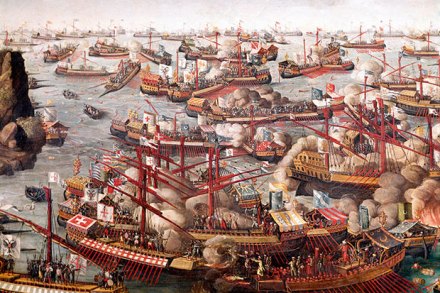
With summer on its way, thoughts turn south to olive groves and manicured vineyards, to the warm water and hot beaches of the Mediterranean. But this sea that is a place of rest and beauty for some of us is the scene of drama and often despair for many others, among them people trying to cross from North Africa. So which is it, a place of calm and beauty, of refinement and culture, or one of drama and much tragedy, buffeted by the consequences of geo-political shifts? The Mediterranean has long been used to reconciling opposites, as two new books make abundantly clear. To ancient Greeks and Romans, the Mediterranean and its neighbouring seas was literally the ‘middle earth’, the centre from which everything radiated.

Europe cannot allow an ungoverned space to exist on its doorstep

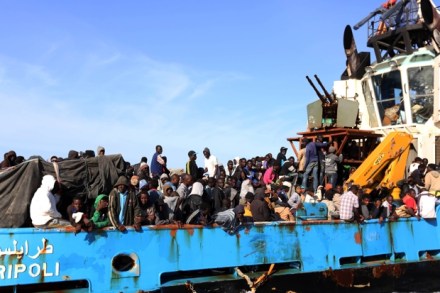
Last month, 700 migrants attempting to sneak into Europe drowned when their rickety vessel capsized in the Mediterranean. This week, the European Union announced a naval initiative to crack down on migrant smugglers. It won’t work. These tragedies are going to recur endlessly, as long as a steady fleet of unsafe boats are able to set sail from Libya. The country has become a political vacuum which no longer deserves to be identified as a sovereign state. The civil war has left no functional state; in many parts, nobody is keeping the electricity running or schools open, let alone policing the coastline to stop illegal migration or the flow of jihadists.