Migrants

Sweden’s shameful cover-up

From our UK edition

   Stockholm It took days for police to acknowledge the extent of the mass attacks on women celebrating New Year’s Eve in Cologne. The Germans were lucky; in Sweden, similar attacks have been taking place for more than a year and the authorities are still playing catch up. Only now is the truth emerging, both about the attacks and the cover-ups. Stefan Löfven, our Prime Minister, has denounced a ‘double betrayal’ of women and has promised an investigation. But he ought to be asking this: what made the police and even journalists cover up the truth? The answer can be discovered in the reaction to the Cologne attacks. Sweden prides itself on its sexual equality and has even pioneered a feminist foreign policy.
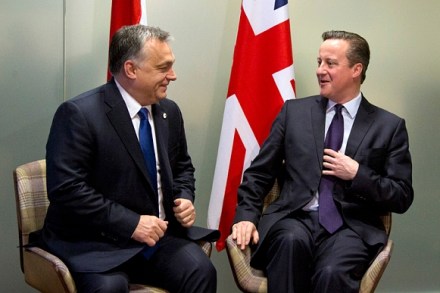
Hungary’s Prime Minister shares similar views to Donald Trump. Should he be banned too?

From our UK edition

If you are going to try to put people beyond the pale on the grounds of what they have said it pays at least to be consistent. This week, left-wing MPs were cock a hoop at achieving the required number of signatures on a petition calling for Donald Trump to be banned from the UK for the matter to be debated in Parliament.  More than 560,000 signed, with the result that the issue will be discussed in Westminster Hall on 18 January. There was no visible protest, on the other hand, against David Cameron meeting Hungarian PM Viktor Orban in Budapest this week, no audible call for Mr Orban to be banned from making a return visit to the UK. There was even praise from liberals for Mr Orban’s strong words to David Cameron complaining about negative images of Hungarians in the UK.

So governments can control the weather, but not our borders?

From our UK edition

Niall Ferguson wrote a piece recently comparing Europe’s situation to that of the Roman Empire during its late, decadent, sexual pervert days: Here is how Edward Gibbon described the Goths’ sack of Rome in August 410AD: “ … In the hour of savage licence, when every ­passion was inflamed, and every restraint was removed … a cruel slaughter was made of the ­Romans; and … the streets of the city were filled with dead bodies … Whenever the Barbarians were provoked by opposition, they ­extended the promiscuous massacre to the feeble, the innocent, and the helpless…”. Now, does that not describe the scenes we witnessed in Paris on Friday night?

A better way

From our UK edition

To say that the Paris attacks could have happened in Britain is not enough. Such attacks are being attempted here with terrifying regularity —seven have been thwarted so far this year alone. MI5’s official assessment is that a terrorist attack on British soil is ‘highly likely’. Our security services have so far been very good at keeping us safe. But as the IRA famously put it, spies have to be lucky all of the time, terrorists have to be lucky only once. So it is impossible for Britain to view events on the continent with any sense of complacency. Still, the Prime Minister was justified in pointing out last week that the more we learn about what happened in Paris, the more it justifies the policies that Britain has pursued.

The shocking rise of anti-refugee attacks in Sweden

From our UK edition

Sweden, perhaps the most open country in the world, is on course to take almost 200,000 asylum seekers this year. Adjust for population size and that's like the UK taking a refugee city the size of Birmingham. It can't cope. Yet political refusal to admit this is incubating concern - sending voters towards the anti-immigrant Sweden Democrat parties. But most shockingly, a trend is emerging of attacks on immigrants. I look at this in my Daily Telegraph column today. [datawrapper chart="http://static.spectator.co.uk/qjCco/index.html"] Sweden's government and opposition parties both dislike talking about immigration; they are too quick to dismiss concerns as xenophobia.

Portrait of the week | 12 November 2015

From our UK edition

Home David Cameron, the Prime Minister, outlined four changes he sought in Britain’s membership of the EU. He wanted to protect the single market for Britain and others outside the eurozone; to increase commercial competitiveness; to exempt Britain from an ‘ever closer union’; and to restrict EU migrants’ access to in-work benefits. Mr Cameron put the demands in a letter to Donald Tusk, the President of the European Council. David Lidington, the Europe minister, said that others in the EU could put forward ‘alternative proposals that deliver the same result’. In a speech to the Confederation of British Industry, Mr Cameron had said: ‘The argument isn’t whether Britain could survive outside the EU; of course it could.

Portrait of the week | 5 November 2015

From our UK edition

Home The all-party Foreign Affairs Committee urged David Cameron, the Prime Minister, not to press ahead with a Commons vote on British air strikes against Islamic State positions in Syria. At its conference, Scottish Labour adopted a policy of opposition to Trident renewal, though Kezia Dugdale, its leader, remained in favour, while the Labour party in the United Kingdom as a whole favoured retaining the nuclear deterrent, though its leader, Jeremy Corbyn, opposes it. Britain was smothered in fog, except in Wales, where temperatures on 1 November reached a record 22˚C. A man had his ear bitten off in a pub in Aberystwyth on Halloween.

The Australian example

From our UK edition

For many years, Australia has been turning away boats filled with migrants. From a remove, this looks cold--hearted — a nation built by immigrants showing no compassion for others who want a better life. But it is precisely because Australia is an immigrant nation that it understands the situation: if you let the boats land, more people come. People traffickers will be encouraged, migrants will be swindled, and their bodies will wash up on your shores. Any country serious about immigration needs a more effective and robust approach. Tony Abbott, the former Prime Minister of Australia, made that point clearly this week on a trip to London.

Simon Schama’s migration muddle

From our UK edition

Sooner or later, in this trade, one runs out of television historians to antagonise. I am doggedly working my way through the pack — and I don’t think any of the really big ones are left. I began by annoying Mary Beard and then swiftly moved on to David Starkey. Some time passed but eventually I found an opportunity to irritate Simon Schama, on BBC’s Question Time last week. He got very angry and his hands started waving all over the place. Someone on a social media site said he looked like a Thunder-birds puppet controlled by a person with Parkinson’s disease, which is a little cruel, I suppose. Simon ended a splenetic diatribe by calling me ‘suburban’, which raised a few eyebrows and indeed the accusation of snobbery.

Has Boris just set an impossible bar for Cameron’s EU renegotiation?

From our UK edition

Boris Johnson’s speech today was the best that I have ever heard him give. It was a potent cocktail of political vision, humour and optimism. But the most significant line it was about Europe. He declared that: ‘It should be up to this parliament and this country – not to Jean-Claude Juncker – to decide if too many people are coming here’ It is impossible to read this as anything other than a demand that freedom of movement rules are fundamentally altered as part of the UK’s renegotiation with the EU.

Portrait of the week | 24 September 2015

From our UK edition

Home In a speech at the Shanghai stock exchange, George Osborne, the Chancellor of the Exchequer, announced a feasibility study into the trading of Chinese and British shares in both countries. At least half of all British banknotes in circulation are held overseas or used in the black market, a Bank of England report suggested. The political impasse in Northern Ireland continued. Sir David Willcocks, the director of choirs, died, aged 95. Brian Sewell, the art critic, died aged 84. Jackie Collins, the author of titillating blockbusters, died aged 77. An outbreak of highly drug-resistant gonorrhoea was detected in the north of England, from Oldham to Scunthorpe.

The ‘big society’ could offer a solution to the refugee crisis

From our UK edition

At first the government was slow to react to the refugee crisis, but now things are starting to happen. It’s less than two weeks since David Cameron said Britain would take in an extra 20,000 Syrian refugees, but this week Theresa May promised that the first of them will be arriving ‘in the coming days’. Given the logistics of resettlement, this turn of speed is impressive. But if the pace of the response has picked up, the scale of it still remains disappointing. Having ruled out taking in any refugees who’ve already reached Europe, even as an emergency measure, the government really should look to increase the number it’s prepared to take through resettlement from camps in the region.

Letters | 17 September 2015

From our UK edition

What firefighters do Sir: Leo McKinstry’s vicious, misleading article ‘Out of the ashes’ (12 September) shows that he has no understanding of the real issues facing firefighters today. He implies firefighters sit around doing nothing while other emergency services are doing the real work. Nothing could be further from the truth. Firefighters rescue more than 38,000 people every year, working regularly with paramedics, ambulance staff and police. There has been reluctance in the past from the Fire Brigades Union (FBU) to sanction firefighters stepping in to help with medical rescues as a matter of course, since such moves need to be made carefully, with assurances that proper training will be given and equipment issued so that no lives are put at risk.

Portrait of the week | 10 September 2015

From our UK edition

Home David Cameron, the Prime Minister, told Parliament that he had authorised the killing, on 21 August, by means of an RAF drone, of a British citizen near Raqqa in Syria, Cardiff-born Reyaad Khan, 21, an adherent of the Islamic State. Ruhul Amin, from Aberdeen, also an Islamic State activist, whose killing had not been approved in advance, died in the same attack, along with another Islamic State supporter who was with them. Mr Cameron called the strike a lawful ‘act of self-defence’. Khan was said by government sources to have been plotting an attack during the VJ Day commemorations in London on 15 August, and although that had been thwarted, he was thought still to have a ‘desire to murder’ people in Britain.

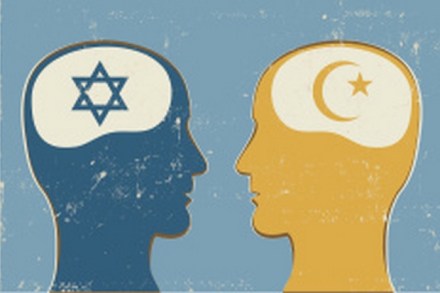
Why does the left care more about Islamophobia than anti-Semitism?

From our UK edition

Why do leftists care more about Muslims than they do about Jews? If that sounds confrontational, consider this: this week, the Met Police released the latest hate-crime figures for London. They show that offences against Jews have risen by 93% over the past year, while offences against Muslims have risen by 70%. And guess which story the BBC, Guardian and Independent, those voices of the British liberal conscience, have chosen to flag up? Yep, the 70% hike in Islamophobic attacks, not the nearly 100% hike in anti-Semitic offences. The BBC's headline is 'Islamophobic crime in London "up by 70%"'. The Guardian's is 'Hate crimes against Muslims soar in London'. The Indie opts for 'Hate crimes against Muslims in London "up by 70%"'. What about the crimes against Jews?

It’s easy to say that Aylan Kurdi died due to our lack of compassion. But the reality is far more complicated

From our UK edition

Just a thought: what if Aylan Kurdi, the poor drowned three year old child whose picture changed Europe – we are told – when it comes to the fate of Syrian refugees, had been, say, Afghan rather than Syrian? Or Eritrean, or indeed Pakistani? Quite possible, you know. Perhaps half of the migrants coming to Europe across the Mediterranean are not actually Syrian. Many of them are now arriving in German towns, expecting, and receiving, welcome and the promise of residency but may in fact be sent packing if the Germans stick to the letter of their bending of the Dublin Agreement.

The migrant crisis has presented us with a moral duty that is impossible to fulfil

From our UK edition

The migrant crisis raises the largest questions about our basic public creed, our ideology, secular humanism. Normally we pay little attention to this creed. Yes, yes, we affirm the ideal of universal human flourishing, the equal worth of all human beings, human rights. But do we believe it? This crisis forces us to wonder. As Matthew Parris says here this week, we simply do not know what our moral obligations are in relation to these people. Should we love our neighbour as ourself, and rush off to help them? How can we reconcile our universal humanism with the need to prioritise the welfare of our own tribe? Isn’t Western morality just too demanding? Its excessive demands on us leave us without a sensible, moderate, realistic sense of our moral duty.

Migrant

From our UK edition

Al Jazeera, the Qatari broadcaster, is going to use refugee instead of migrant in its English output. ‘The umbrella term migrant is no longer fit for purpose when it comes to describing the horror unfolding in the Mediterranean,’ one of its editors explained. ‘It has evolved from its dictionary definitions into a tool that dehumanises and distances, a blunt pejorative.’ Doubts about terminology are not new. ‘Please don’t speak of those arriving in Australia from Britain as immigrants,’ wrote the Sydney Daily Mail in 1922. ‘Call them rather migrants, because to go from Britain to Australia is only to pass from one part of Great Britain to another.’ Perhaps.

Spectator’s Notes | 3 September 2015

From our UK edition

Was there ever a more unilluminating political idea — for voters rather than practitioners — than triangulation? For those readers so pure and high-minded that they have not followed politics for 20 years, I should explain that triangulation came from Bill Clinton, was imported by Tony Blair, and is now practised by David Cameron. Clinton’s adviser, Dick Morris, put it thus: ‘The President needed to take a position that not only blended the best of each party’s views but also transcended them to constitute a third force in the debate.’ The Tories’ adoption of the Living Wage is the latest example.

Christianity is silent on my great moral dilemma

From our UK edition

[audioplayer src="http://rss.acast.com/viewfrom22/jeremycorbynsbritain/media.mp3" title="Matthew Parris and Theo Hobson debate the role Christianity in the migrant crisis" startat=1383] Listen [/audioplayer]Proximity shouldn’t make a difference — should it? We were on a beach on the European side of the Mediterranean, it was a beautiful late August day, and I felt so happy. The sea was fresh, the sky was clear and a stiff breeze was whipping white horses out past the headland. ‘Rough weather for migrants,’ I thought, then checked myself. What an awful thing to think.