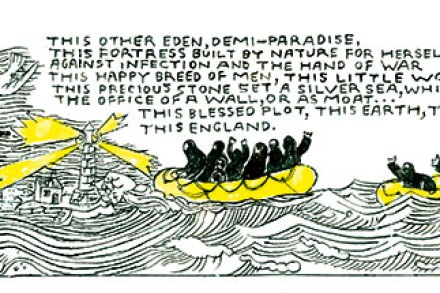
Migrants

The Calais Jungle ‘child refugee’ conundrum

From our UK edition

You just have to look at the faces of the migrant 'children' who have begun to arrive in Britain over the past couple of days from the Jungle in Calais to realise that many are not children. Just as I did when I visited the illegal shanty-town a couple of weeks ago and met a man from Afghanistan who said he was a boy. I found him inside a remarkably solid timber shack which had the words  'Welcome Restaurant' painted above the door. He was one of a dozen or so men, sitting about on divans and chairs, watching a cricket match between Pakistan and the West Indies on a large flat-screen television which was powered by a generator.

The new reality on immigration

From our UK edition

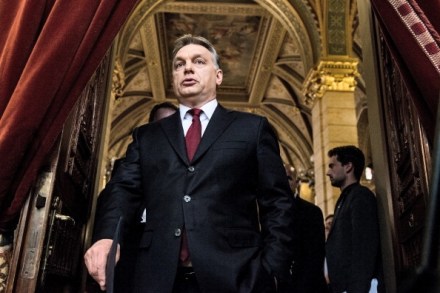
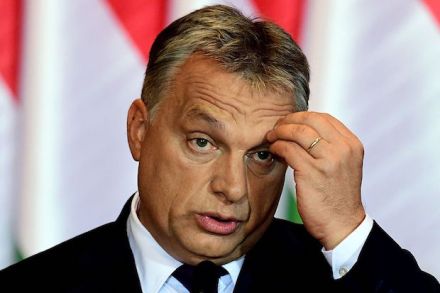
The good people of Hungary went to the polls on Sunday and voted by more than 98 per cent against accepting even a few hundred migrants, as per the European Union’s insistence. That poll result must have been gravid with nostalgia for Magyars over the age of about 35. They will remember that sort of election result being de rigueur, rather than astonishing. Indeed, in 1985 the Hungarian Socialist Workers Party succeeded in capturing 98.8 per cent of the popular vote — and even this was a bit of a disappointment, because in 1980 it had pulled in 99.3 per cent. On both occasions the ruling party was aided, of course, by the lack of an alternative on the ballot paper.

This is what a xenophobic referendum actually looks like

From our UK edition

A country votes against the EU in a referendum in which rabidly anti-immigrant sentiments are aired by senior politicians. That is Hungary, of course, where voters have just rejected -- with a majority of 98 per cent, albeit it on a turnout of 44 per cent, too low to make it binding  -- an EU plan for the country to house 1200 refugees. Now, perhaps, the Remain camp in Britain will stop trying to portray Britain as a nasty, xenophobic country out of step with European values and admit that actually we are really rather liberal in our attitudes towards migration. The only difference is that we had an in-out referendum on EU membership and no other country has yet done so.

Borderline sanity

From our UK edition

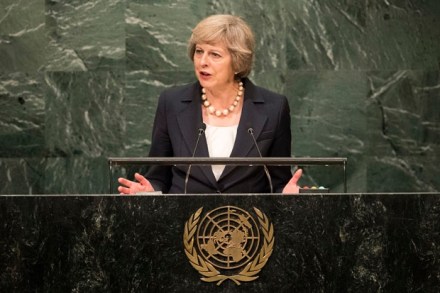
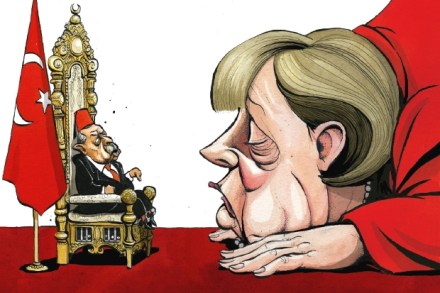
Only now does Angela Merkel concede that her admitting a million refugees last year was a mistake. It was obvious to most people in Europe at the time that her warm-hearted gesture would lead to catastrophic results. In declaring that all Syrian refugees would be welcome if they made it to Germany, she doubled the fortunes of the human trafficking industry. The asylum seekers came from Syria and North Africa through Austria and Hungary, having landed on the shores of Italy and Greece. Thousands died on the way. When Theresa May addressed the United Nations this week in New York, she was able to point to a British way of handling the crisis.

Letters | 15 September 2016

From our UK edition

What immigration debate? Sir: Henrik Jonsson says (Letters, 10 September) that Swedes ought to learn from the Brits how to maintain a broad and dynamic public debate. I can’t say I witnessed anything approximating public debate on the topic of immigration during the referendum, when the debate was carried out through the ballot box, not in reasonable parliamentary discussion. What we need is for more senior politicians to be willing to engage in public discourse and take a non-careerist approach. Too many leaders have thought it best to avoid this toxic issue rather than risk their positions. As Enoch Powell once described the typical politicians’ view on immigration, ‘It’s better for us to do nothing now and let it happen perhaps after our time.

Migrant benefits

From our UK edition

Calm is slowly returning to the debate about Britain and Europe. The shrillness of the referendum campaign, and the hysteria from people who ought to have known better, is giving way to an acceptance that the end is not nigh and that things could be as good, if not better, than before. The idea that the British public had somehow voted for a recession is being steadily abandoned. The next stage is to accept that Brexit was not a populist yawp about protecting our borders. It was not a demand to stop immigration, but to manage it better. So when Theresa May rejected an Australian-style points-based immigration system this week, it did not mean that she had betrayed Brexit or shown her desire to water down the whole process.

Sweden’s refugee crisis

From our UK edition

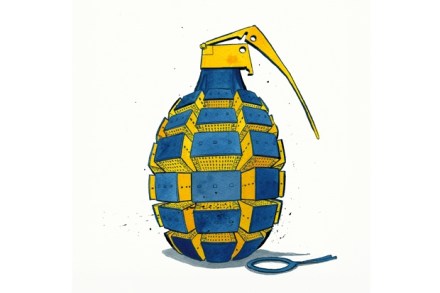
 Stockholm For a British boy to be killed by a grenade attack anywhere is appalling, but for it to happen in a suburb of Gothenburg should shatter a few illusions about Sweden. Last week’s murder of eight-year-old Yuusuf Warsame fits a pattern that Swedes have come slowly to recognise over the years. He was from Birmingham, visiting relatives, and was caught up in what Swedish police believe is a gang war within the Somali community. Last year, a four-year-old girl was killed by a car bomb outside Gothenburg, another apparent victim of gang violence.

Britain hits back over French threat to scrap Calais ‘jungle’

From our UK edition

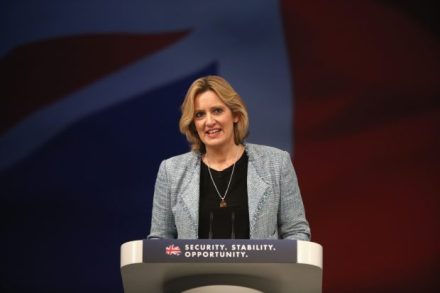
It's no surprise that demands from French politicians to scrap the Le Touquet deal and shift the migrant 'jungle' from Calais to Dover has gone down badly in Britain. Today's front pages are full of talk of 'Le Stitch up'. And the Home Office has waded in to say these plans are a complete 'non starter'. This all sets the scene for a testy meeting for Amber Rudd as she crosses the Channel to meet her French counterpart, Bernard Cazeneuve, for talks today. Their meeting will be a private one but it isn't difficult to work out that Calais will be top of their agenda. What's difficult about finding a solution, however, is that all of this talk is something of a phoney war of words, at least for now.

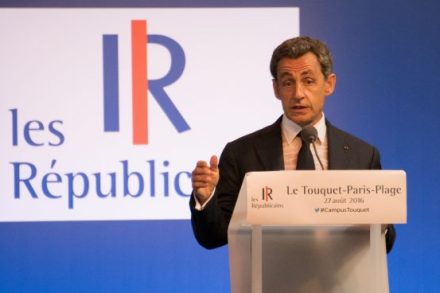
Nicolas Sarkozy threatens Britain over Calais migrant ‘jungle’

From our UK edition

During the referendum campaign, David Cameron sparked fury by suggesting the migrant camp in Calais could be shifted to Britain following a vote for Brexit. Now, that threat is resurfacing. This time, it's French politicians saying they'll tear up the deal known as the 'Treaty of Le Touquet' - a change, they say, which will allow migrants wanting to claim asylum in the UK to do so before they cross the Channel. The president of the Calais region, Xavier Bertrand, is amongst those calling for an amendment to the current deal. The good news for Britain? He doesn't have the power to do anything about the treaty, so his threats are all bluster. But there are others clambering for the top job in France who would have the authority to tear up the agreement.

Theresa May’s EU migrant stance is a chilling reminder of how nasty the Tories are

From our UK edition

There may be confusion about the role of EU immigrants in Westminster, but there’s none in Scotland. Our message is clear: this is your home, you are welcome here, your contribution is valued. Scotland needs immigration, and we’ve been delighted to welcome EU citizens here over the last few years and decades. They are the new Scots. They are our nurses, teachers, small-business owners and are an important and cherished part of our society. It’s quite understandable that people are aghast at Theresa May using EU immigrants as bargaining chips. But it is a chilling reminder of just how ‘nasty’ the Tory party still is.

In defence of EU migrants: a plea to Theresa May

From our UK edition

During the Brexit debate, there was a wide mainstream consensus that EU nationals living in Britain should not be affected. As even Ukip said, it would be unthinkable that someone here legally could later be declared illegal. Labour, the CBI, SNP, Vote Leave, pretty much everyone ruled out the disgusting idea of repatriating a single one of the three million EU nationals living in Britain. Or even putting them under the threat of repatriation. As Sajid Javid put it, they’re here because we need them – to work for the NHS, our other shops and businesses, to make our society stronger. During the referendum campaign this was not an issue because every single mainstream political party stood inside this consensus.

Why is the government missing in action?

From our UK edition

It is now almost three days since David Cameron announced his resignation. The Chancellor of the Exchequer has been in hiding ever since. And the Parliamentary Labour party is revolting against its own leader and members. It is one thing for the whole political class to be in disarray. It is quite another for the government to be missing in action. Obviously we are waiting for the Conservative party leadership contest to get going and swiftly resolve itself. But that will take months. In the meantime the country is still here. And a number of things need to happen fast. Since Mark Carney’s intervention early on Friday there has been no appearance by any public figure to assure the country on what happens next. I trust that this will start to happen tomorrow.

Even hungry migrants won’t eat the food in Italy

From our UK edition

A few months ago, Nigerian migrants housed at a government hostel in Milan suddenly refused to eat any more of the free food on offer. Italian food is monotonous and indigestable, they explained. Then they went berserk. This was not a one-off case. Far from it. There have been hunger strikes, demos, sit-ins and the odd riot in protest at the stuff. Recently, a group of mainly Pakistani migrants based in a Reggio Emilia hostel were given their own taxpayer-funded chef ‘specializzato in piatti pachistani e africani’. They had complained that Italian food was making them ill. Many migrants en route from Libya to who-knows-where are marooned in Italy for now, and they are getting fed up. They know that other EU countries have better food.

Portrait of the week | 2 June 2016

From our UK edition

Home Two British men were charged with immigration offences after the rescue by night of 18 Albanian migrants, two of them children, from an inflatable boat off Dymchurch, Kent. ‘We don’t want the English Channel turning into the Mediterranean with fleets of small boats coming over,’ said Chris Grayling, the Leader of the House of Commons and a campaigner for Britain to leave the EU.

Barometer | 2 June 2016

From our UK edition

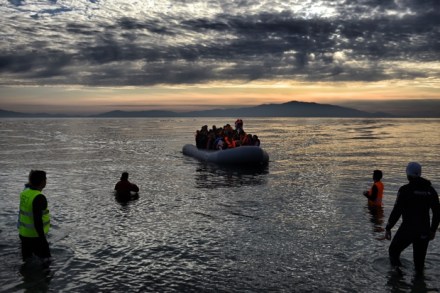
Gorilla warfare Harambe, a 17-year-old gorilla, was shot at Cincinnati Zoo after he started dragging away a boy aged four who had fallen into his enclosure. What are world’s biggest threat to gorillas? — There are approximately 100,000 left in the wild, most of them western lowland gorillas who live in the Congo. — Two per week are believed to be falling victim to poachers. — According to one estimate, a quarter of all gorillas have been killed by the Ebola virus in the past 12 years. — Gorillas contribute to their own decline through infanticide. When a dominant male dies the successor will often kill his offspring, accounting for 1.7% of all gorilla deaths, according to one study. Chill waters A dinghy full of migrants was rescued off the Kent coast.

Portrait of the week | 26 May 2016

From our UK edition

Home The government published a Treasury analysis warning that an exit from the EU would plunge Britain into a year-long recession and could cost 820,000 jobs. David Cameron, the Prime Minister, speaking with George Osborne, the Chancellor of the Exchequer, at B&Q’s head office in Hampshire, said that leaving ‘would be like surviving a fall then running straight back to the cliff edge. It is the self-destruct option.’ Downing Street said that leaving the EU would make an average holiday for four people to the EU £230 more expensive. Gillian Duffy of Rochdale, the nemesis of Gordon Brown, the former Labour leader, spoke in favour of the Leave campaign.

Turkey’s triumph

From our UK edition

Update: Since this article was published Ahmet Davutoglu has resigned as Turkey’s Prime Minister. Reports suggest this comes as a result of a rift with President Erdogan caused by the increasingly ‘Presidential’ nature of Turkey’s politics. Is Turkey part of Europe? For most of our civilisation’s history, to have even asked such a question would have been to invite derision. The Ottomans were kept out of Europe not by some early-onset prejudice, but by the armies of Europe having to beat back their repeated invasions. The question became slightly more plausible a century ago with the rise of Ataturk and the modern Turkish state (one of the only successful efforts to reconcile the Islamic religion with state power).

All is not lost | 5 May 2016

From our UK edition

Marina Lewycka’s latest happy-go-lucky tale of migrant folk in Britain takes a remark by the modernist architect Berthold Lubetkin as its epigraph: ‘Nothing is too good for ordinary people.’ In the vertical community within one of Lubetkin’s postwar blocks of flats in East London we meet hapless Bertie, resting actor caught on the hop by the spare-bedroom tax; disabled Len, thinking positive about his benefit reassessment; Violet, dreaming of her childhood in Kenya at her desk in a City insurance firm; and many more — some powering ahead in our new age of golden job opportunities and zero-hour contracts, others not so much.

Has the BBC reduced its coverage of the migrant crisis?

From our UK edition

Do you remember the migrants? All those people coming here across land and sea, from North Africa and Arabia and the Indian sub-continent? In boats, sometimes. Occasionally on foot. The BBC used to lead the news with it almost every night. I’m sure I remember them doing that. Tearful migrants who only want a better life, etc. I ask because I have seen a lot less of them recently. And yet I am prepared to bet that the numbers trying to get in have not remotely decreased – probably quite the opposite. So can anyone suggest why this is a less attractive news story to the BBC than once it was? Or am I being paranoid?

Portrait of the week | 17 March 2016

From our UK edition

Home In the Budget, George Osborne, the Chancellor of the Exchequer, kept talking of the ‘next generation’. He outlined cuts of £3.5 billion in public spending by 2020, to be ‘on course’ to balance the books. Personal allowances edged up for lower taxpayers, with the higher-rate threshold rising to £45,000. A ‘lifetime Isa’ for under-40s would be introduced. Corporation tax would go down to 17 per cent by 2020. Small-business rate relief was raised: a ‘hairdresser in Leeds’ would pay none. Fuel, beer, cider and whisky duty would be frozen. To turn all state schools into academies (removing local authorities from education), he earmarked £1.5 billion.